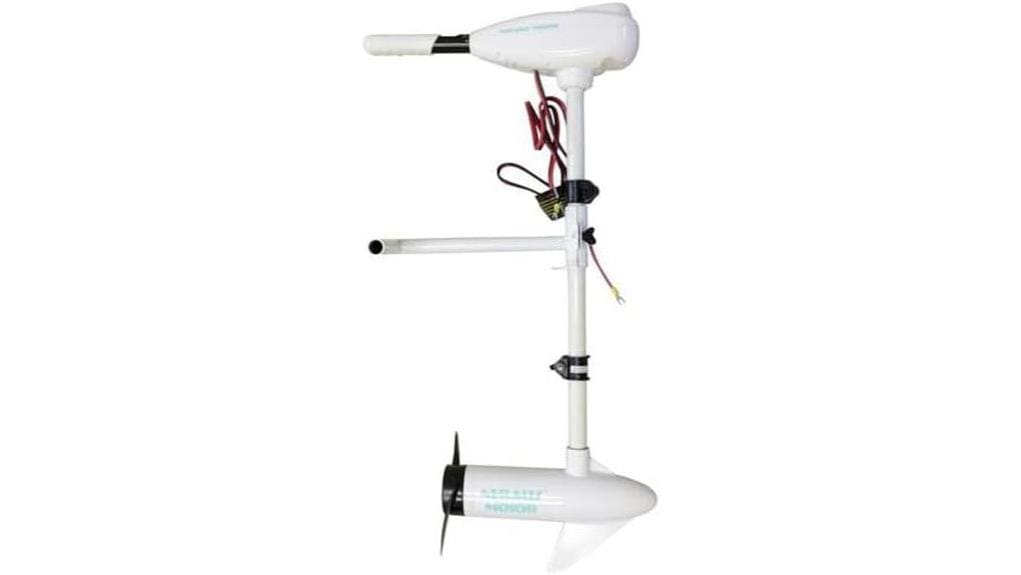

You’ll find the BKC 36‑lb trolling motor gives steady, linear thrust with low acoustic signature and predictable responses for station‑keeping and transit. It offers five forward and three reverse speeds for fine gear matching, immediate yaw control, and smooth steering inputs. At 14.3 lb it’s easy to mount, won’t overly change kayak trim, and fits PK11/PK13/PK14 quick‑release transoms. Battery range and mounting checks matter, and the full review covers setup, testing, and alternatives.
Some Key Takeaways
- Delivers 36 lbs of steady, linear thrust suitable for station-keeping and transit in light chop and moderate current.
- Exceptionally quiet and smooth even at full power, minimizing acoustic disturbance for fishing.
- Five forward and three reverse speeds with responsive steering enable precise heading control and fine thrust modulation.
- Lightweight 14.3-lb, low-profile design eases mounting/removal and minimizes trim changes on PK11/PK13/PK14 hulls.
- Quick-release plate fits factory mounts; verify shaft clearance, transom reinforcement, and perform a water trial before use.
Performance and Noise: Real-World Thrust, Speed Range, and How Quiet It Actually Is
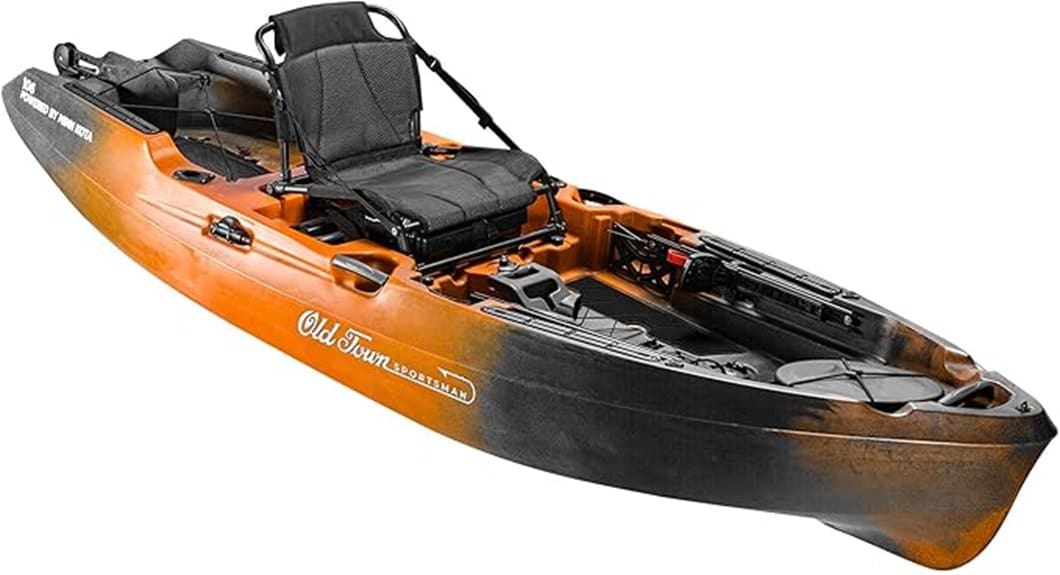
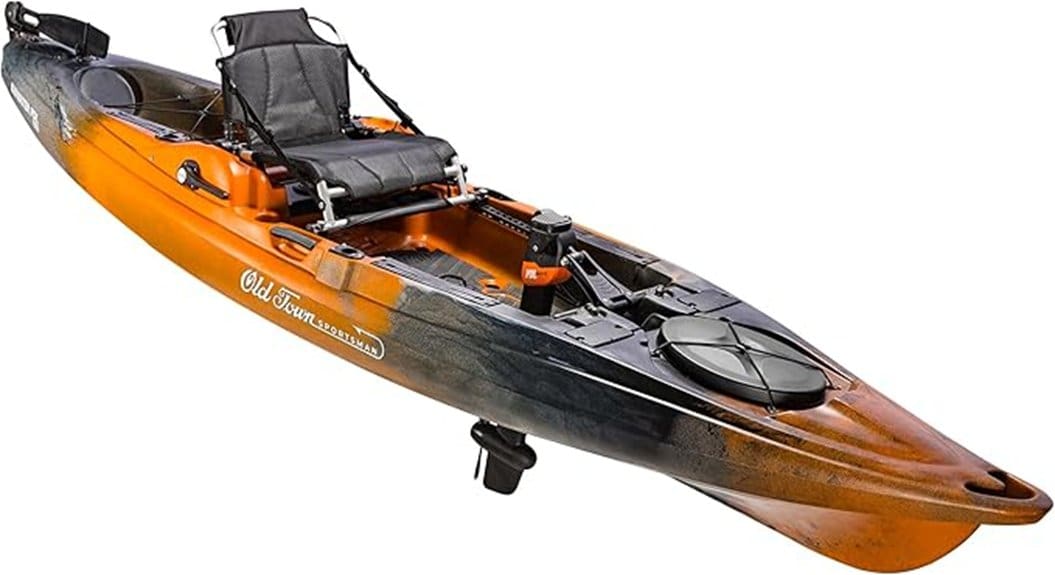
While testing the BKC trolling motor on PK Series kayaks, you'll find its 36 lbs of thrust delivers steady acceleration and holds position well in light chop and moderate current. You’ll notice thrust consistency across the speed range; output stays linear between low and high settings, giving predictable responses for station-keeping and transit. The motor runs quiet and smooth even at full power, producing a low acoustic signature that won't spook fish or disrupt solitude. Weight remains manageable, so you can mount and remove it without fuss. Overall, performance favors reliable propulsion and discreet operation for independent anglers and small-boat explorers. For kayak setups, pairing the motor with essential mounting and power accessories improves usability and durability mounting and power.
Control and Handling: Five Forward/Three Reverse Speeds, Steering Feel, and Docking Precision
Because precise control matters in tight spots, the BKC motor gives you five forward and three reverse speeds with responsive steering that translates small tiller inputs into predictable heading changes. You’ll shift through gear steps to match current and wind, maintaining course without overcorrecting. Steering feedback is direct; inputs result in immediate yaw with minimal lag, supporting precise station-keeping. Reverse range aids controlled backing and slow repositioning. Docking precision improves because you can modulate thrust finely and counteract drift instantly. Overall control suits anglers and explorers who want dependable, intuitive handling that preserves freedom to maneuver in confined waters. For safety and communication on shared waterways, pair precise handling with a VHF marine radio to stay in contact and call for help if needed.
Weight, Portability, and How It Affects Kayak Trim and Transport
When you add the BKC motor’s 14.3-lb mass to a PK-series kayak, it changes trim and handling in predictable ways: the low-profile unit keeps weight centered and low, minimizing bow rise or stern squat, and its compact form factor limits fore-aft shift so you won’t need major ballast adjustments for typical fishing loads. At 14.3 lbs transport weight stays manageable; carry handles on the motor and kayak make single-person loading realistic. Trim balance remains stable under normal gear loads. The small storage footprint lets you stow the unit in hatch or under deck straps without impeding access or freedom on the water. Consider using a dedicated portage cart to make shore-to-water transport even easier.
Mounting and Compatibility: Quick-Install Steps for PK11/PK13/PK14 and Fit Checklist
Having covered how the motor's 14.3-lb mass affects trim and transport, let’s look at the mounting options for hulls PK11/PK13/PK14. You’ll align the quick release plate to the factory mount on the transom, drop the motor into position, then secure with supplied pins and bolts. Tighten to torque specifications and verify freedom of steering and shaft angle. Run the hull reinforcement checklist: inspect stringers, transom laminate, fastener backing, and weight distribution points. Confirm prop clearance and steering range on all speeds. Installation takes minutes; perform a water trial to validate fit and secure attachments before full use. Also consider adding outrigger arms for improved stability when motoring or trolling.
Who This Motor Is Best For and Final Buying Verdict (Power, Value, and Alternatives)
If you kayak mainly with a BKC PK11, PK13, or PK14 and need a lightweight, low-noise push that won't overpower the hull, this 36-lb-thrust, 14.3-lb unit is a precise match—offering five forward and three reverse speeds, responsive steering, and quick-release mounting that keeps installation under minutes. You’ll appreciate kayak angling control for precise handling, making it ideal for anglers and new paddlers seeking independence on the water. Power suits calm to moderate conditions; battery management matters for range. Value is strong for purpose-built use. Consider upgrade options only if you need higher thrust or advanced features; otherwise this is a sensible, freedom-oriented choice. For easy transport and handling, pair it with durable carrying straps designed for kayakers.
Some Questions Answered
What Battery Type and Capacity Does This Motor Require for Optimal Run Time?
You should use a 12V deep cycle battery or a 12V lithium battery pack for peak run time; lithium batteries give longer runtime and lower weight. Aim for 50–100 Ah capacity depending on desired run length and speed settings: 50–60 Ah for moderate use, 80–100 Ah for extended runs. You’ll get better performance and freedom with lithium batteries, but deep cycle batteries remain a reliable, more affordable option.
Is There a Waterproof Rating for the Motor Electronics and Controls?
No formal waterproof certification is listed, but the motor uses ingress protection design principles and corrosion resistance materials to protect electronics and controls. You’ll find sealed housings and molded connectors to extend control longevity in wet conditions, though you shouldn’t submerge components. For prolonged exposure or saltwater use, you’ll want additional sealing and rinsing maintenance. Verify with the manufacturer if you need an explicit IP rating for your intended operations.
Are Spare Propellers or Service Parts Available and Easily Replaceable?
Yes — spare propellers and service parts are available and easily replaceable. You’ll find OEM propeller availability through the manufacturer, and common wear items (seals, fasteners, mounts) are stocked. Aftermarket compatibility exists for some components, but you should verify fit and specs before purchase. You’ll be able to perform field swaps quickly with basic tools, preserving freedom to repair and maintain the motor without specialized service centers.
Does the Motor Come With a Warranty, and What Does It Cover?
Yes — you get a limited warranty covering defects in materials and workmanship for a specified warranty duration, typically one year. It guarantees repair or replacement for manufacturing faults but excludes damage from misuse, improper installation, normal wear (including propellers), corrosion, and unauthorized repairs — those are coverage exclusions. You’ll need proof of purchase and may follow manufacturer instructions for claims; keep records to preserve your rights.
Can the Throttle and Steering Be Extended for Tandem or Sit-On-Top Kayaks?
Yes — you can extend both throttle and steering linkage, but you’ll need compatible hardware and careful routing. You’ll attach a throttle extension cable and a reinforced steering linkage to maintain responsiveness and prevent slack. Use marine-grade fittings, secured clamps, and keep runs short to reduce friction. Test full-range motion before use. If you’re uncertain, consult a dealer or marine technician to guarantee safe, reliable operation and preserve control freedom.