You’ll make faster, safer progress in a warm pool where you can repeat hip‑snap drills, try paddle and hand rolls, and get quick coach feedback without cold, waves, or fear, so bring a skirt, PFD, neoprene shorty or vest, booties, towel, spare gloves, noseplug or mask, and your paddle; start with a wet‑exit, do short hip‑snap sets, add paddle assists, then hand‑rolls, work unmasked gradually, log 8/10 successes per side, and keep going for detailed progress tips.
Some Key Takeaways
- Use short, focused blocks (10–15 minutes) with 3–5 warm‑ups and 15–20 quality roll reps to build consistency.
- Start with confident wet‑exits and dry‑immersion hip‑snap drills, then add paddle‑assisted and hand‑roll progressions.
- Train a fast, compact 45–60° hip snap on knees and in chest‑deep water before adding full paddle rolls.
- Bring noseclips, proper neoprene (shorty/vest, booties), your skirt and paddle, and a towel to stay comfortable between sets.
- Pair coached sessions with video or spotter feedback, track 8/10 success targets, and wean off mask dependence gradually.
Why Pool Rolling Accelerates Your Roll (Fast, Safe Skill Retention)
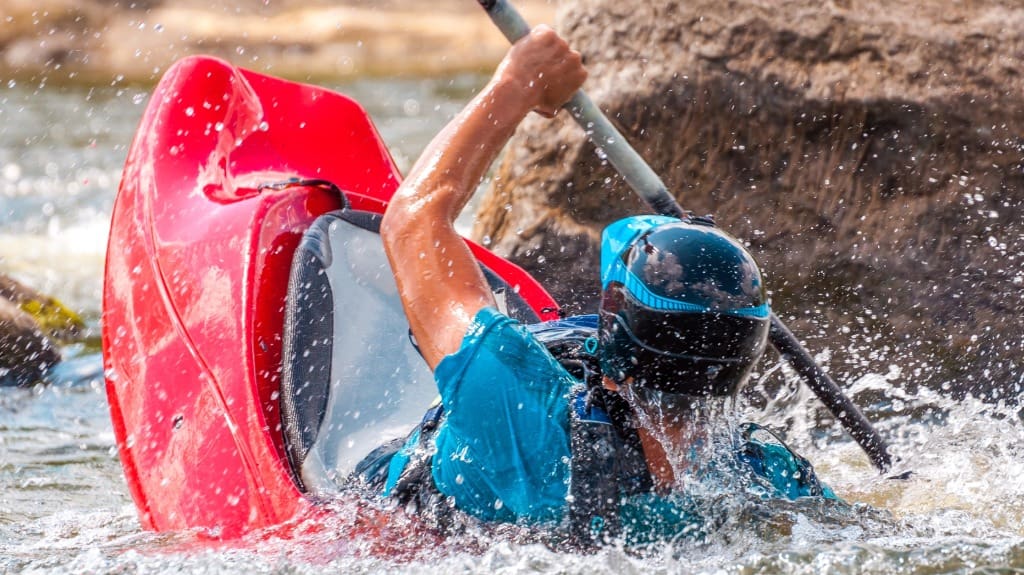
When you start in a warm, supervised pool, you get to practice the hip‑snap and paddle motions over and over without the cold, waves, or current stealing your focus, so plan on using that safety to do short, intense repetitions: watch for a clean line from your hips through your shoulders as you snap, cue your top hand to find the blade or Greenland stick just before you finish the roll, and have a coach or lifeguard give quick, specific feedback between attempts so you can adjust timing right away. In the Pool, you’ll repeat rolls in calm, predictable depth, mix paddle and hand rolls to isolate timing, and add brief gear drills for realistic feel, so your confidence grows, fear fades, and skills stick when you head outside. Practicing rolls indoors also lets you dial in equipment choices like jackets and sprayskirts in a controlled setting to ensure proper fit and comfort for rainy water adventures.
What to Bring and Wear for Winter Pool Sessions (Gear, Layers, Noseplugs)
Pack like you’re planning to stay warm between quick dunkings: bring noseplugs or a divers’ mask so you don’t get distracted by water up your nose, wear a bathing suit under a neoprene shorty or vest and neoprene booties to keep your core and feet from going numb, and toss a rash guard or lightweight paddle jacket in your bag to throw on between sets so you don’t cool off too fast. For Indoor Pool Rolling bring your own skirt and paddle or Greenland stick, a well-fitted hardshell if it’s BYO, and check helmet and PFD rules with the venue, so nothing surprises you. Pack a towel, warm dry clothes, rinse neoprene after chlorinated sessions, and keep noseplugs handy for focused practice. Consider bringing a spare pair of gloves or paddling accessories to replace wet gear quickly during long sessions.
A Simple Progression: From Wet-Exit to Reliable Paddle and Hand Rolls
You’ve got your gear sorted and you’re warm between sets, so now you’ll start building the skills that make rolling reliable, beginning with small, safe steps you can repeat until they feel automatic. Begin each session with a confident wet-exit and re-entry, one or two reps, to clear your head and prove you can escape quickly if you need to, then shift to dry-immersion hip-snap drills in chest-deep water for ten to fifteen minutes, focusing on explosive pelvic rotation, not arm strength. Once the snap is crisp, add paddle-assisted variations, practicing the sweep-to-support brace and then paddle rolls, splitting thirty to fifty attempts into short sets, and when consistent, move on to hand-rolls, guiding the torso with the free hand. Proper gear like quality spray skirts helps keep you dry and confident during practice.
How to Use Open Pool Time to Hone Freestyle Moves and Boat Control
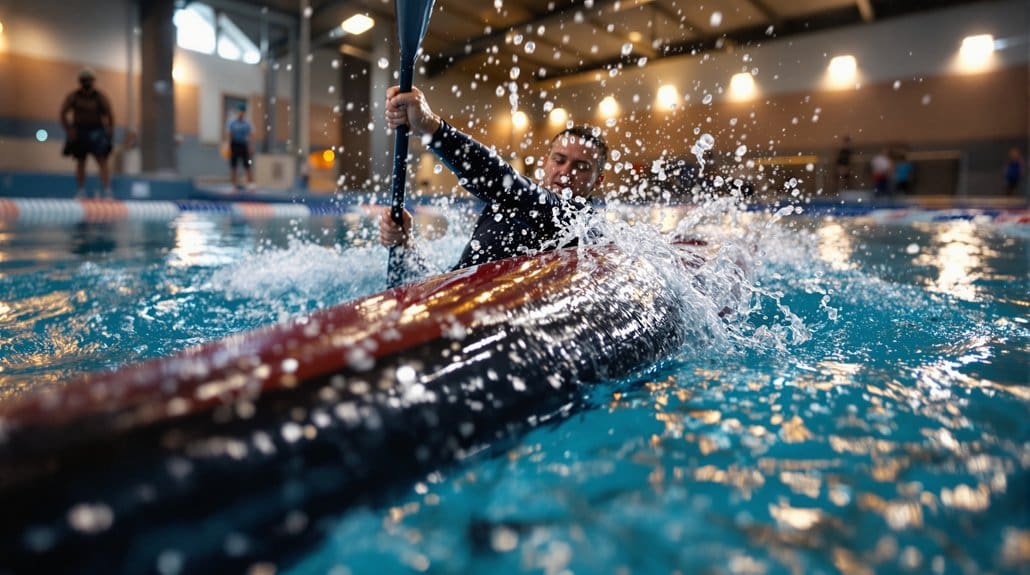
When you hit the 5:00–7:00 open pool after the clinic, use that extra hour to run short, focused blocks—10–15 minutes on pivot turns or bow/stern initiations, then a rest—so you can groove rotation and timing without tiring out. Start each block with a clear goal, bring your own boat and Greenland stick or paddle, check that your roll’s seasonally reliable before trying high‑energy moves, and have a partner ready so you can work bump‑and‑tow or T‑rescue drills under mild stress. Keep warm with a neoprene top or booties, use nose protection if you need it, and if you want to try slides or stern squirts ask for a boat demo first so you don’t wreck gear while you practice control. Consider wearing or storing your gear in quality neoprene spray skirts to protect it and stay comfortable between sessions.
Focused Technical Drills
Head into the 5:00–7:00pm open pool with a simple game plan: pick one freestyle move to drill, bring your properly outfitted boat, noseplugs, and safety gear, and block your time into short, focused reps so you actually build muscle memory instead of just spinning in circles. Start each 5–10 minute block with 3–5 warm-up reps, easy rotations and bow/stern initiations, then push range and speed, aiming for 15–20 clean reps overall. Pair Rolling practice with play moves, alternating five controlled rolls with five cartwheel or stern initiations to lock rotation and timing. Record 30–60s clips or get a spot, review between blocks, note blade angle or hip snap, and sometimes wear a PFD or helmet to simulate real conditions. Bring a paddle float and know how to rig it for re-entry and recovery drills to keep your skills practical in real-water scenarios and to practice safety re-entry techniques.
Progressive Skill Sequences
Since you’ve already picked a roll to focus on and warmed up, use the open pool like a ladder—start easy and add difficulty in clear steps so your body learns the shape before you add tricks. Split your time into 20–30 minute blocks, warm up, work stance and core rotation, then do 10–15 focused reps per set with short rests, that’s how you Learn to Roll reliably. Begin with supported rolls, drop support to off-side or no-paddle, then layer freestyle initiations like bow or stern entries and cartwheels once you’re consistent. Use video or a coach to tweak blade angle, hip-snap timing, and head position — tiny shifts, .1–.2s, change success. Practice with varied gear so your roll transfers outdoors. For gear selection and training aids, consider trying roll training aids that help build confidence and technique.
Partnered Rescue Practice
Usually you’ll start your open-pool time by slotting an hour of coached partner-rescue drills right into the middle of the session, then staying on for two hours of supervised practice where you can turn those skills into habit, so show up with your helmet, PFD, and a spray skirt (bring both skirted and unskirted options if you can) and get ready to work through boat-over-boat, parallel, and T-rescues in short, focused sets; aim for 4–6 reps per set with quick feedback, rotate partners every ten minutes so you feel different body positions and boat handling, and look for the small cues that make a rescue smooth — hand placement, hip drive, and how the receiving boat times the pull — because those .1–.2 second fixes matter more than brute strength, and if you don’t have a hard-shell demo boat requested by Thursday (call 413-339-4010) ask the coach so you can practice with the right fit.
Once the coached hour is done, use the open pool sessions to blend bump-and-tow and “hand of God” re-entries into freestyle sequences, aim for at least three successful partner re-entries every 15 minutes, and treat each rep like a tiny mission: check your kit, announce your intent, watch partner posture, and tweak one thing each time so boat control becomes instinct, letting you move freer on real water.
Also bring a basic bilge pump and know how to use it for quick water removal in the boat, as regular practice with bilge pump basics will keep your boat light and responsive.
Troubleshooting Common Problems: Mask Dependence, Breathing, and Hip Snap
Start by weaning off the mask within a session, doing three rolls with it then one without so you get used to the different head position and less visual feedback, because relying on the mask can slow your progress in open water. Focus on breathing rhythm—exhale for a second or two underwater and take one quick, efficient inhale as you finish the roll—and if timing trips you up, have a spotter hold the bow or use a paddle brace until you can do five straight unassisted rolls. Break the motion into parts on land and in the pool, practice a short, powerful hip snap (think 45–60° drive, strong and fast), rehearse that snap alone with knees tucked, then add the paddle sweep only when you’re hitting the snap 8 out of 10 times. Consider practicing these drills with a beginner kayak suited for controlled indoor training to build confidence before moving to open water.
Mask Weaning Strategies
If you want to get off the mask without losing your roll, ease into it and make each step deliberate: begin your sets wearing a full divers mask for comfort and visual bearings, then run the pattern of three masked rolls, two half-mask (just over the eyes), and one no-mask until you can do most reps unmasked, all while paying attention to a slow exhale down and a single deliberate inhale timed with the hip snap on recovery. Treat this like a Rolling Package you carry for freedom: drill 10–20 reps, use progressive visual withdrawal (mask, nose, eyes, none), add light fingertip touch on your thigh or deck for orientation, log weekly unmasked success rates, and repeat steady, deliberate sessions until the roll feels reliable without sight.
Powerful Hip Snap
You’ve been easing off the mask and logging unmasked reps, and now it’s time to lock in the power behind the recovery so the roll doesn’t depend on sight or a lucky breath. Practice a powerful hip snap on land first: lie on your back with knees bent, keep shoulders down, rotate the hips sharply, aim for an explosive flick, not a slow lift, feel the sternum lead the motion. In shallow water, press your far thigh into the hull as a cue, let the paddle brace but don’t lift with it, and exhale calmly as you capsize so breathing won’t disrupt timing. Progress shore to deck to full paddle roll, record sets, and only move on after consistent eight-in-ten snaps.
Planning a Training Block: Session Frequency, Packages, and Practice Goals
When you plan a training block, think about getting steady, guided practice without burning out, so aim for one to two coached pool sessions each week—say an instructional slot followed by open pool time—then fill the in‑between nights with one or two shorter open practice sessions of thirty to 120 minutes where you bring your own boat if you can; that combo lets you work on specific skills like the hip‑snap, paddle roll, and asymmetric rolls during coached time, and then reinforce them on your own while recovery stays healthy. You’ll choose a package that fits — Bombproof Rolling across four sessions or an Indoor/Outdoor membership — then set measurable goals, like 8/10 hip‑snap rolls both sides, add paddle roll variations, track progress after each block, practice with hardshell boats and noseplugs first, move to maskless and PFD/helmet simulations, and prioritize short, focused practice sessions so you stay free to explore while staying safe.
Some Questions Answered
How Long Does It Take to Learn to Roll in a Kayak?
You can usually learn a basic hip‑snap roll in 2–8 hours with focused practice, but expect a 10–20+ hour progress timeline to make it dependable in open water, with PFD, helmet, and gear. Start with coached pool drills, nail body position and hip snap first, then add paddle timing, off‑side practice, and stress drills; bring your paddle, PFD, helmet, mask, and patience, and schedule regular refreshers.
Where Can I Learn to Eskimo Roll?
You can learn the Eskimo roll at local classes, check rec centers, paddling clubs, or kayak shops for winter pool clinics taught by ACA-certified instructors, and you’ll want to bring a skirt, paddle, noseplugs, and maybe a dive mask for early practice. Start with a beginner roll clinic, practice weekly in a warm pool to build hip-snap, and ask about rentals and helmet/PFD rules so you can focus on technique safely.
What Is Kayak Rolling?
A kayak roll is a self-rescue Technique Basics move that lets you right an upside-down kayak without exiting, using a timed hip-snap, body rotation, and paddle brace, and you’ll practice parts like hand position and breathing until they flow together. Start by learning wet-exit, carry a noseplug and paddle you trust, work with an instructor or spotter, and repeat hip‑snap drills in calm water, building confidence and reliable reps.
How to Kayak Sweep Roll?
You start the sweep roll by setting the paddle flat, tucking your head to the boat, and driving a sharp hip snap to peel the blade, keeping the lower body connected so the torso rotation does the work. Sweep the paddle in a wide arc with a relaxed top hand and strong low‑hand push, timing the sweep to match the hip snap. Practice shallow reps, use a float or partner if needed, and build to consistent rolls.