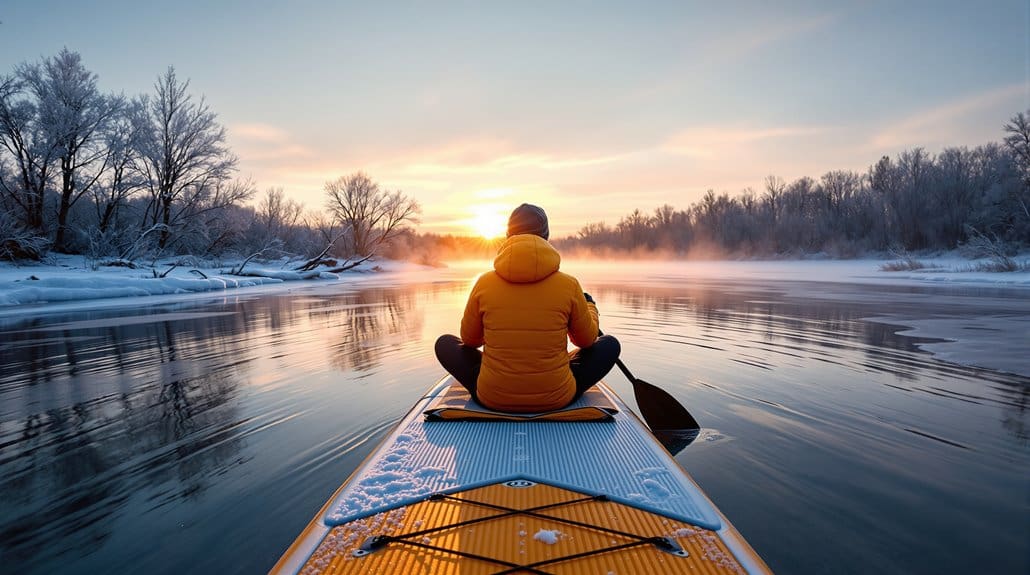
Pick a short, sheltered route, dress for immersion with a drysuit or sealed wetsuit plus warm layers, and zip on a snug PFD before you head out; warm up three to five minutes on shore with breathing and gentle joint rolls, paddle easy for the first ten minutes, sync breath to strokes (inhale on entry, exhale on exit), carry a whistle, towline, waterproof phone or PLB, check hands and core often, and pause every 10–20 minutes to reassess warmth and focus, then continue for a calm 20–45 minute practice to build the habit and learn simple adaptations as conditions change.
Some Key Takeaways
- Choose a short, sheltered route with calm water, two nearby exits, and wind under about 10 mph for safety and focus.
- Wear immersion-first protection (drysuit or sealed wetsuit), layered insulation, a snug PFD, and waterproof communication devices.
- Begin with a 3–5 minute shore intention and diaphragmatic warm-up, don PFD, and paddle easy for the first 5–10 minutes.
- Anchor breathing to strokes (e.g., inhale on blade entry, exhale on exit; try a 2:3 or 4:6 ratio) and maintain ~40–60 strokes/minute.
- Structure 20–45 minute sessions into intervals with short anchor pauses every 5–20 minutes to check warmth, sensations, and gear.
Plan a Short, Safe Winter Paddle That Supports Mindfulness
Choosing a short, sheltered paddle will make your first winter mindfulness session feel steady and safe, so look for a calm lake, a protected bay, or a slow-moving river where air temps are above freezing (around 1°C/34°F) and winds stay under about 10 mph, which cuts down on chop and the chance of flipping. You’ll plan a 30–60 minute route with two clear put‑in/exit points near shore, tell someone your plan and return time for extra peace, and carry compact safety gear like a whistle, towline, and waterproof phone in a dry bag. Sync your breath to a slow stroke cadence to keep Mindfulness front and center, and prioritize paddle safety so you can roam without worry. Dress in appropriate cold-water gear and consider a drysuit or immersion suit to reduce hypothermia risk.
Dress, Gear, and Safety Choices That Keep You Present
Dressing and gearing up the right way is the simplest thing you can do to stay calm and present on a winter paddle, so start by thinking “immersion first” — wear a drysuit or a sealed neoprene wetsuit with warm base layers like merino or synthetic next to your skin, because you want a system that keeps your core safe if you end up in the water, ideally rated to hold you comfortable down to about 32–40°F (0–4°C). Choose a Coast Guard–approved PFD that fits low and snug, pack a whistle, VHF or PLB, a quick‑release re‑boarding tether and hand warmers in a dry pouch, wear waterproof gloves and neoprene booties, and pick a stable board or touring kayak so you spend less energy correcting course and more time enjoying the freedom. For extra safety, consider carrying a compact hypothermia kit and emergency blanket designed for cold‑water paddling, which helps you manage immersion incidents until help arrives or you self‑rescue, and learn how to use these items properly (hypothermia kit).
Use Breath-And-Stroke Anchors to Settle Into Moving Meditation
Settling into a breath-and-stroke anchor will help you turn repetitive paddling into a calm, moving meditation, so start by syncing your inhales to the forward blade entry and your exhales to the exit and recovery—try a simple 2:3 count at first, and adjust as the air or pace demands. You’ll use mindful breathing tied to each stroke, keeping a steady 40–60 strokes per minute cadence when waters are calm, and if cold air shortens your inhale, lengthen the exhale to keep warmth and oxygen steady, maybe 3:4. Each minute do a quick three-part check—breath depth, stroke length, board feedback—and use a short mantra, like “in—root / out—float,” silently on each stroke-and-breath to anchor attention and let the rhythm become your moving meditation. Gear up with suitable rain jackets and layered clothing to stay comfortable and safe while practicing on winter waters, especially when choosing waterproof gear for wet conditions.
Simple Body-Focused Cues to Stay Embodied on the Water
Often you’ll find that a few simple, repeatable body cues are all you need to keep grounded and present on the water, so start by matching a four-count breath to each stroke—inhale four beats as you reach forward, exhale four beats as you pull—so your breathing and cadence become one steady habit, even when the wind picks up. Keep checking and softening your shoulders every 5–10 strokes, letting your traps drop a centimeter or two to free the arms, and place a palm on your lower abdomen when you pause to confirm gentle core engagement, an inward lift not a hard brace. Count six strokes per side, scan feet to head between sets, name one sensation, then reset with three full diaphragmatic breaths to stay present. Bringing a well-fitted beginner kayak and basic safety gear makes it easier to focus on mindfulness without worrying about equipment.
Listen and Watch: Using Sensory Prompts to Deepen Present-Moment Awareness
When you paddle in winter, make your senses the anchor—start by tuning to sound, sight, and touch in short, repeatable chunks so your attention doesn’t drift; listen for the crisp slap of your blade, the thin tick of ice, distant birds, name each sound for 60–90 seconds, then shift to a soft gaze on a mid-distance point or a slow-moving object like kelp or a floe for about a minute, letting the rest of the scene stay in your periphery without labeling it. You’ll pair that listening scan with breath counting—inhale three strokes, exhale four—so each paddle links breath and touch, board vibration and body. Pause after a short run for a two-minute body scan, noting temperature shifts and tension from toes to crown, then resume with lighter focus. Bring appropriate gear and a basic safety checklist to every outing to keep the practice safe and sustainable.
Structure a 20–45 Minute Winter Mindfulness Paddle (Beginner to Advanced)
Before you push off, take 3–5 minutes on shore to set an intention and check gear—layer a base, fleece, and wind shell, clip on your PFD and leash, decide your route and check-in plan, and warm up shoulders with slow torso twists and shoulder rolls so your body feels ready. Once you’re afloat, aim for 10–30 minutes of steady paddling at about 40–60 strokes per minute, matching inhale on the recovery and exhale on the power stroke to anchor attention and help regulate heat, and every 5–7 minutes pause for a 30–60 second “float and notice” to take three belly breaths and scan sensations like face chill, core warmth, or board wobble. If wind, chop, or cold pick up, shift to smaller strokes and a lower torso, slow your breathing to 6–8 breaths per minute, and finish with a 3–5 minute ashore cool-down where you strip wet layers, sip something warm, note one insight or gratitude, and jot time or distance so you can safely progress next time. Consider bringing thermal layers designed for cold-weather paddling to stay warm and safe on the water.
Pre-Paddle Intention Setting
If you want this paddle to feel calm and useful, set a single, clear intention in one sentence—say it out loud or write it on a waterproof note—and make it concrete enough to guide your choices, like “I will stay warm, breathe steadily, and notice three sensations,” so you know what to aim for as you launch and throughout the 20–45 minute session. Before you step on, state that Intention again, check air and water temps, zip on a PFD, stash a whistle and phone in a dry case, and plan a 10% time buffer to return early if needed. Choose one tactile anchor—breath, paddle strokes, or board tilt—decide when to scan (every 5–10 minutes), and name one measurable goal to track during your reflection. Consider layering appropriately and choosing gear with thermal protection to stay safe and comfortable on cold-water paddles.
Layered Warm-Up Sequence
Because your body will tell you a lot before the water does, start on shore with a short, purposeful warm-up that raises your core temp and wakes up your joints so you’re steady and aware when you step on the board or into the boat. Begin with 5–10 minutes of diaphragmatic breathing, slow neck rolls, shoulder circles, hip hinges and ankle rotations to prime proprioception, you’ll feel the physical ease and a clear connection to the present. Launch and paddle easy for 5–10 minutes, syncing breath to strokes, then alternate brief technique blocks with silent sensory scans to notice sound and skin temperature. Progress by skill level, finish with on-board cool-down and layered re-warm on shore to restore warmth and center. Consider wearing a quality drytop to maintain core warmth and mobility during extended winter paddles and to reduce heat loss on the water drytop selection.
Breathed Paddling Intervals
You’ve already felt how a short shore warm-up steadies your joints and breath, so now adopt a simple, timed rhythm on the water that'll keep you present and safe: aim for a 20–45 minute session made of repeating intervals, each with a steady paddling phase where you sync one smooth inhale to four counts and a slow exhale to six counts for about three minutes, then ease into one to two minutes of “sensory drift” paddling where you let sight, sound, and the feel of the board or boat take the lead; start with three to five of these 4–6 minute cycles for a beginner-friendly 20–30 minute outing, and work up to six to eight cycles with a slightly longer steady phase for a fuller, 40–45 minute practice, keeping your effort moderate so you can still speak in short phrases, wear warm layers and a PFD, and use the short anchor pause—placing the paddle across the craft for 30–60 seconds while taking three full belly breaths and scanning for tension—at each interval change to bring your attention back and check that your hands, face, and feet are staying warm.
Handle Interruptions, Cold Discomfort, and Concentration Lapses
When interruptions or cold start to chip away at your focus, set a simple plan before you push off and lean on a quick recovery cue—three slow breaths with a long exhale—to bring your attention back within five to ten seconds, so a passing boat, a curious bird, or a sudden gust doesn’t derail your whole session. You’re practicing mindfulness on the water, so protect against cold-related concentration lapses by layering moisture-wicking baselayers and a waterproof insulated shell, keep core warmth steady, and plan short stops every 10–20 minutes to check gear and hydrate. If you shiver or feel numb, pull to shore, do 30–60 seconds of brisk breathing with light movements, name distractions aloud, use micro-practices—breath, stroke, water sound—to refocus fast.
Bring the Calm Ashore: Journaling, Breath Practices, and Routine Integration
After you’ve handled a cold snap or a surprise interruption on the water, bring that calmer, focused feeling with you onto shore by doing a short, simple aftercare routine that’s easy to remember and even easier to pack: sit on your board or by your kayak for two to three minutes and try a 4-6-8 breath pattern—inhale for four seconds, hold six, exhale eight—to nudge your heart rate down, then spend five to ten minutes on a guided journaling prompt where you note what you noticed, name one thing you’re grateful for, and set one small intention for the week, and make sure you’ve got a waterproof notebook or a phone in a drybag ready to capture one clear sensory detail (like a cold pinprick on your fingertips, a dabbling duck’s call, or wind from the west) plus one word that describes how you felt, because writing this fast helps lock the memory in and stops your mind from spinning; do this twice a week with a warm drink and a few minutes of diaphragmatic breathing to make the habit stick, and keep a simple log—date, place, time, breath technique, one insight—for a month or two to watch how stress falls and present-moment awareness grows.
Some Questions Answered
How Do I Adapt Practices for Group Paddles or Guided Retreats?
You’ll adapt group paddles by balancing structure and freedom: set clear safety checks, invite paired reflections after stretches, and lead gentle circle debriefs on shore so everyone shares briefly, what worked, what felt hard. Rotate leaders with role rotations so people try navigation, timing, and quiet cueing, and carry spare layers, whistles, and a tow line; start with a short guided breath, then loosen into optional solo time, curious and calm.
Can Mindfulness Paddling Help With Seasonal Depression?
Yes — mindfulness paddling can help with seasonal depression, because nature immersion and gentle motion boost mood, and morning outings act like light therapy when you catch daylight, so schedule regular trips, even short ones, on calmer days. Bring layers, a PFD (personal flotation device), hot drink, and a headlamp for low light, focus on breath and slow strokes, note sun, wind, and body, and keep outings small, frequent, and realistic.
What’s the Best Way to Teach Kids Winter Paddle Mindfulness?
Teach kids by starting with short, safe outings, using playful prompts like “find the quiet splash” to focus attention, and a sensory scavenger where they name cold smells, bird calls, or ice textures, so they stay curious. Establish buddy rituals—check gear, high-five, timeout signal—so everyone feels free and secure. Bring warm layers, dry bags, hot drinks, and simple breathing cues, model calm, and praise small successes as you go.
How Do I Maintain Regular Practice During Icy or Stormy Months?
You’ll keep a steady practice in icy or stormy months by planning weather flexible routines, using layered gear, and carving micro practice windows into your day: check forecasts, pick sheltered launch spots, wear base, mid, and waterproof layers, bring spare gloves and a dry bag, and commit to short focused sessions when conditions allow, paddling close to shore, practicing breathing and posture, and accepting that consistency beats long, risky outings.
Are There Breathing Techniques for Avoiding Hyperventilation in Cold Air?
Yes, you can avoid hyperventilation by using nasal breathing, paced inhalations, and slow exhalations, which calm your reflex and keep CO2 steady; start by breathing through your nose, count a gentle inhale to three, hold briefly if comfortable, then exhale slowly to four or five, repeat until steady, carry a warm buff to protect your face, watch for lightheadedness, and stop to reset if you feel dizzy, you'll stay safer and freer.


