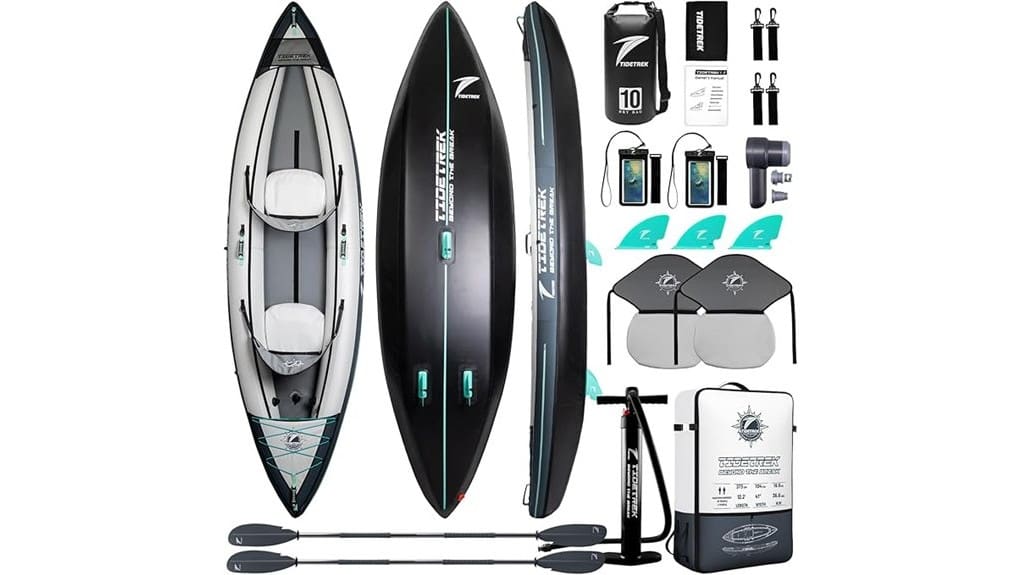

You’ll get a nimble, easy-to-carry solo kayak for quick day trips or a heavier tandem that swaps to solo when you need extra gear or a partner. Both use puncture-resistant PVC bladders, 600D waterproof skins, and a 4-inch drop-stitch floor for near-rigid tracking and steady stability. Setup takes about 8–18 minutes; carry in the supplied waterproof pack. Check capacity, floor stitch density, valves, pump type, and included fins to match your touring needs—keep going to see full comparisons and tips.
Some Key Takeaways
- Choose single for solo agility and lighter transport (29.1 lbs, 220 lb capacity); tandem for extra gear or companion (36.6 lbs, 330 lb capacity).
- Inspect construction: puncture-resistant PVC bladder, 600D waterproof polyester outer fabric, and reinforced seams for durability.
- Evaluate on-water performance: drop-stitch floor yields near-rigid stability, triple-fin system ensures tracking and controlled turns.
- Consider setup and transport: single inflates in ~8–12 minutes, tandem in ~12–18 minutes; use pump, repair kit, and waterproof backpack.
- Match use case: single for day trips and light touring; tandem for partnered paddling, fishing, and heavier gear carrying.
How This Inflatable Touring Kayak Compares: 1-Person vs 2-Person at a Glance
Often you’ll pick the one-person model for solo agility and lighter transport, while the tandem suits pairs or heavier gear; the single weighs 29.1 lbs and carries 220 lbs, the tandem 36.6 lbs with a 330 lb capacity, and both share the same drop-stitch floor, puncture-resistant PVC bladder, and triple-fin tracking for similar stability and straight-line performance. You’ll notice seat configuration changes how you move: single centers you, tandem spaces two with adjustable seats for solo flexibility or shared load. Transport convenience favors the single for quick trips, but the tandem wins when you need extra gear or a companion. Consider the kayak’s convertible design for switching between solo and tandem use convertible kayaks to match your needs.
Build & Materials That Affect Durability and Performance
Because the kayak’s core materials determine how it handles punctures, impacts, and long days on the water, pay close attention to construction details: a puncture-resistant PVC bladder wrapped in 600D waterproof polyester with high-elastic PVC backing gives the hull both toughness and abrasion resistance, while the 4-inch drop-stitch floor delivers near-rigid stiffness for improved tracking and shock absorption. You’ll appreciate fabric longevity from waterproof coatings and reinforced seams that resist UV and abrasion. Inspect sealing techniques at valves and seams; quality glues and heat-welds reduce leaks and air migration. These build choices let you roam confidently, carry gear, and paddle farther. Check product specifications for drop-stitch construction to ensure the floor thickness and stitch density match your touring needs.
On-Water Stability, Tracking, and Handling for Fishing, Touring, and Recreation
When you paddle this inflatable touring kayak, the drop‑stitch floor and reinforced hull hold a near‑rigid shape that gives you steady primary stability and predictable edge control, so you can cast, lean, or load gear without worrying about sudden roll; combined with the triple‑fin system (center plus two aft fins) it tracks straight in wind and chop yet lets you make deliberate turns when you feather the paddle or shift your weight. You’ll notice refined paddle ergonomics from the lightweight shaft and non‑slip grip, reducing shoulder fatigue on long runs. Wind handling stays manageable; brace strokes and weight shifts keep you moving where you want. Be sure to carry essential inflatable kayak gear like a pump, repair kit, and PFD for safety and convenience on the water, especially when touring or fishing essential gear.
Inflation, Transport, Storage, and Real-World Setup Time
Good on-water stability and tracking matter, but you’ll also want to know how quickly and easily the kayak gets from bag to water. You’ll follow an inflation checklist: unpack, connect the premium electric pump for bulk fill, finish with dual-action manual bursts, install drop-stitch floor and fins. Real-world setup takes about 8–12 minutes solo for the single, 12–18 for the tandem. The heavy-duty waterproof backpack rides comfortably with chest and waist straps, simplifying travel logistics whether you bike to a launch or stow in a car. Deflate, rinse, dry, and fold; storage fits a closet or trunk. Many beginners prefer hard-shell inflatables for the blend of portability and on-water performance.
Who Should Buy Which Model: Weight, Capacity, Use Cases, and Buying Checklist
If you plan solo day trips or want a lightweight, easy-to-handle craft, the single model is your best bet: at 29.1 lbs and a 220 lb capacity it inflates in about 8–12 minutes, packs into the included waterproof backpack, and gives stable tracking with the center fin for recreational paddling and light touring. Choose the tandem if you carry a partner, heavy gear, or fish—36.6 lbs, 330 lb capacity, better load sharing and comfort. Consider weight distribution for stability, plan gear organization with dry bags and seat pockets, check dimensions, accessories, pump type, and warranty before buying. For lake kayaking outings, also remember essential gear like life jackets, bilge pumps, and paddle leashes to stay safe on the water and enjoy your time with essential gear.
Some Questions Answered
Can I Tow This Kayak Behind a Motorboat?
Yes — you can tow it behind a motorboat, but prioritize tow behind safety considerations. You’ll secure a reinforced bow tow point, use a floating tow line with a quick-release, and avoid high speeds or rough chop that stress the drop-stitch floor and seams. Keep passengers out, monitor pressure, and stay within load capacity. You’ll communicate signals, maintain slow steady speed, and check the kayak and fittings after each tow for damage.
Are Replacement Fins and Parts Sold Separately?
Yes — you can buy replacement fins and repair patches separately. Order fins if you need improved tracking after wear or impact, and grab repair patches for quick field fixes to the PVC bladder or polyester cover. You’ll appreciate having spares in your waterproof pack so you’re free to paddle without delay. Contact the support team for exact part numbers, fit guidance, and warranty-compatible repair recommendations before you head out.
Is the Kayak Compatible With a Fishfinder or Accessory Mounting?
Yes — you can mount a fishfinder; the kayak offers mounting compatibility for accessories and transducer placement. You’ll attach a transducer on the hull near the rear or alongside the drop-stitch floor using adhesive or a transducer arm, keeping chambers sealed. You’ll also use universal accessory plates or clamp mounts on the seat or gunwales. You’ll enjoy reliable tracking and freedom to rig electronics for fishing and touring.
Can the Inflatable Be Used in Saltwater Without Extra Care?
Yes — you can use it in saltwater, but you’ll want corrosion prevention and UV protection steps. Rinse the kayak, paddle, and metal fittings with fresh water after each outing, dry fully, and apply marine-grade anti-corrosion spray to exposed hardware. Store inside the waterproof backpack away from direct sun, and use a UV protectant on fabric seams. These simple routines keep performance reliable and let you roam saltwater confidently.
How Noisy Is the Hull When Paddling at Speed?
You’ll hear minimal hull vibration and modest paddling noise at speed; the drop-stitch floor and triple-fin tracking keep the ride smooth and quiet. You’ll notice some surface slap in chop, but the PVC bladder and polyester cover dampen resonance so you can focus on open-water freedom. Use snug seat positioning and trim to reduce noise further, and you’ll enjoy steady, low-profile sound when cruising fast.


