You’ll want to pick storage by space and season: if you’ve got shelves or straps, keep the kayak partly inflated so seams aren’t stressed by cold-to-warm swings, check pressure monthly, and tuck desiccants near valves; if you’re squeezing into a closet or trunk, rinse, dry, open valves, then burrito-roll tightly into a breathable bag with desiccants and label it. Pack a pump, patch kit, spare fin, and valve tool, and plan a pre-launch inspection to catch leaks and mold, more tips follow.
Some Key Points
- Clean and fully dry your inflatable kayak, wiping seams, valves, and recesses to prevent mold and trapped moisture.
- Choose inflation level by storage type: deflate and burrito-roll for tight spaces, or partly inflate for quick relaunches.
- Loosely roll or fold to avoid hard creases in drop-stitch/PVC and relieve pressure before storing inflated.
- Store off the floor in a breathable bag or on shelving/straps with desiccant packs and UV protectant applied.
- Inspect valves, seams, and accessories monthly and keep a compact pump, patch kit, and spare fin ready for relaunch.
How to Decide: Store Inflated or Deflated for Small Spaces
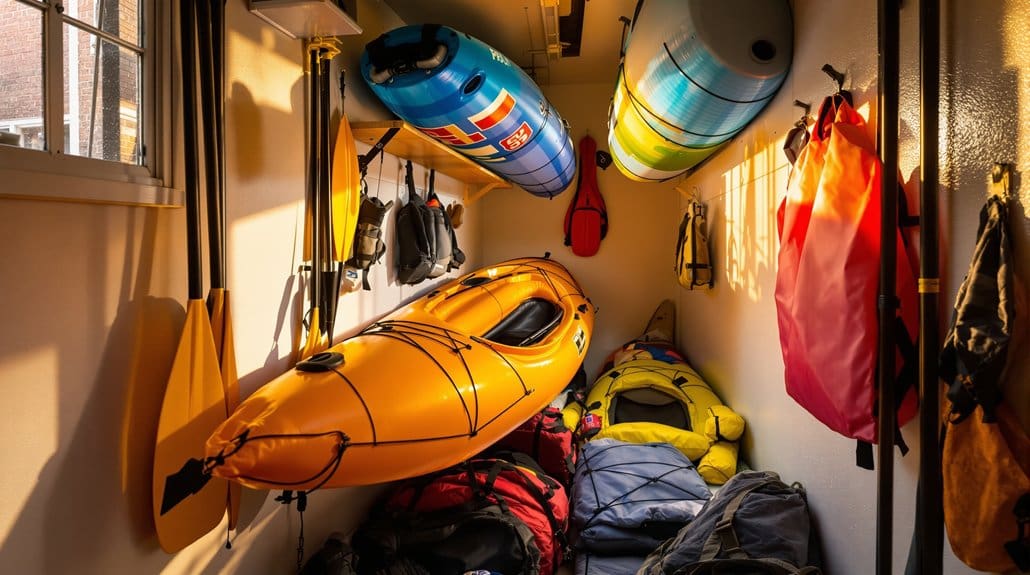
If you’re tight on space, go with deflating and rolling your inflatable kayak — the “burrito” method squashes bulk down so it fits in a closet or the trunk, and it’s the fastest way to make room for other gear — but if you hate fussing with pumps every time you want to paddle, storing it partly inflated can save setup time, provided you back the pressure off below normal so seams aren’t strained by temperature swings. You’ll want to decide based on your storage spot, how often you’ll get out, and whether moisture control is realistic where you live, so plan to rinse and dry before packing, use desiccants to absorb trapped dampness, keep it in a cool dark bag to block UV, and tuck in pest deterrents. For longer-term storage and to protect seams and valves, consider keeping gear like paddles and life jackets organized in a dedicated storage system to make spring launches easier.
Prep Checklist: Clean, Dry, and Decontaminate Before Packing
Start by rinsing your kayak with warm fresh water and a little mild soap to wash off mud, sand, and salt, then towel the seams and any recessed floors so you don’t trap moisture that breeds mold. Make sure every chamber, seat pocket, valve, and crevice is bone-dry in a well-ventilated spot before you pack—check valves and seams for leaks or abrasions and patch any problems first so repairs don’t get harder later. If you’ve been on different waterways, wipe exposed areas with a diluted disinfectant or mild bleach per the maker’s advice, rinse well, let it dry, and consider a UV protectant for PVC if it’ll be stored outside. Store your deflated kayak in a compression dry bag to help keep it clean and dry during winter storage.
Rinse With Fresh Water
After you’ve hauled your inflatable kayak out of the water, give it a thorough rinse with warm fresh water and a little mild soap so salt, sand, and mud don’t hang around to eat at the fabric or invite mildew during storage; pay special attention to seams, valve areas, and any under-deck crevices where grit hides, then towel those spots dry so trapped moisture won’t linger. You’ll want to flush chambers and spray fittings if you’ve been in salt or algae-prone water, use a light disinfectant then rinse again to prevent corrosion and bio-growth, and check valves for leaks while you’re at it. Rinse with fresh water, treat PVC with UV protectant, and handle repairs before rolling up, because smart prepping makes storing your kayak simple and stress-free. For best long-term results, store your kayak in a cool, dry place away from direct sunlight and sharp objects, and consider using a padded bag or suspended straps to protect the Advanced Elements hull.
Thoroughly Dry All Seams
You’ve already rinsed the kayak clean, so now give the seams special attention, because that’s where moisture and grit like to hide and later cause mildew or weaken the glue; grab a microfiber towel and pat along every seam under bungees, around valves, and inside hatch lips, open valve caps and hatches so you can feel for damp spots, and run a soft-bristled brush where dirt clings before you dry. Work slowly, feeling for cool or damp areas, rinse and repeat if salt or grit remains, then use a low-heat blow dryer or a fan in a well-ventilated spot until seams are dry to the touch, place desiccant packets in the bag, and air-dry several hours away from direct sunlight to prevent mold and mildew. Also consider storing the kayak with breathable covers and mildew prevention products from outdoor specialists to keep it fresh during winter storage.
Sanitize Valve And Surfaces
Give the valves and nearby surfaces some honest attention before you pack up, because those small spots trap salt, sand, and moisture that’ll turn into mildew or sticky valves if left alone; rinse valve housings and seams with warm fresh water and a bit of mild soap to loosen grime, open valve caps and press the pressure reliefs so the chambers air out, then gently blot everything dry with a microfiber or soft towel so you’re not pushing water into crevices. Then wipe housings with a cloth dampened in 70% isopropyl to disinfect, inspect valve cores and O-rings for cracks, lightly lube with silicone grease if the maker says to, sanitize cockpit and recessed decks with diluted bleach or marine disinfectant, rinse, air-dry fully, drop desiccants near openings, and store semi-deflated in a cool UV-free spot, whether you’ve used an inflated vs one inflatable kayak, you’ll thank yourself later. For best long-term results, consider treating the hull with a gel-coat restorer designed for kayaks to preserve finish and resist UV damage gel coat restorers.
The Burrito Method: Step-by-Step Rolling for Tight Closets
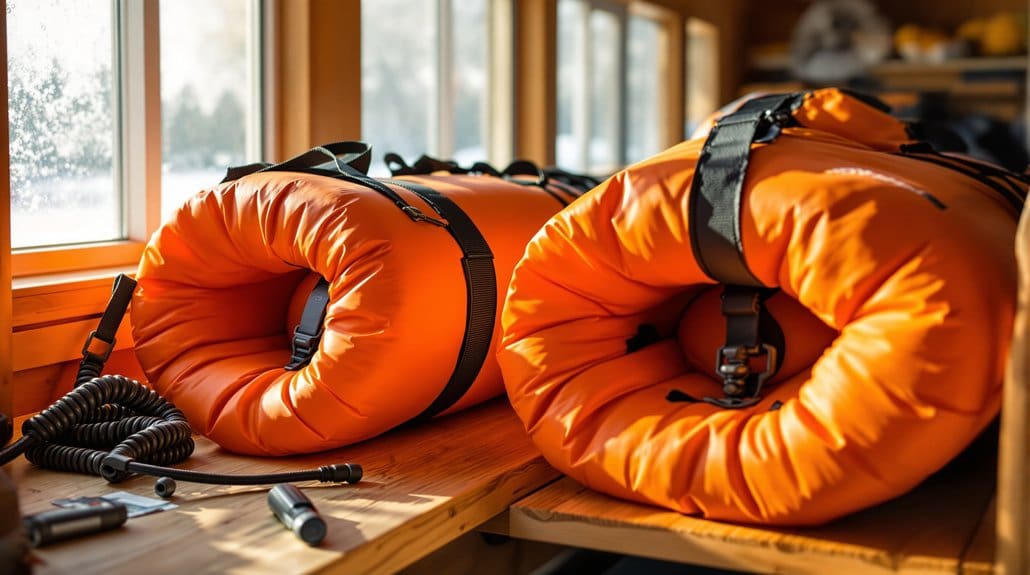
Start by laying the kayak flat on a clean surface, open all the valves, and pull out the seats and any gear so you can push air out evenly as you roll; this makes the whole burrito technique work, because trapped pockets of air or a folded seat can make the roll lumpy or too thick for your closet. You’ll start at the bow, rolling tightly in short, firm strokes toward the stern, smoothing seams with your hands to avoid sharp folds that stress drop‑stitch fabric, and you’ll push remaining air out as you go so the final diameter matches your bag, typically 10–12 inches for tandems. Secure with straps, tuck valves inside, label it, and leave a valve slightly open for storage over an extended period. For long-term protection consider using a breathable storage bag designed for drop-stitch kayaks to prevent moisture buildup.
Semi‑Inflated Storage Options for Garages, Sheds, and Balconies
When you’re storing an inflatable kayak semi‑inflated in a garage, shed, or on a balcony, aim for about half to two‑thirds of its max PSI so the seams aren’t strained but the hull still holds shape for easy top‑offs, and before anything else make sure it’s completely clean and dry—rinse with fresh water, mild soap if needed, towel the seams, and air dry out of direct sun to avoid mold and UV damage. Next, keep your kayak off the floor on shelving or hanging straps, use a breathable cover with vent strips and desiccant packets for humidity control, seal the space against pests and consider dryer sheets, check pressure monthly and top off or bleed as needed, and inspect valves and seams so your Best Inflatable waits ready. Store it near your other paddling gear on kayak storage racks for easy access and organized gear management.
Protecting From Sun, Cold, Moisture, and Rodents in Small Storage Areas
In a small storage spot like a closet, basement nook, or balcony cupboard you'll want to think like a caretaker: rinse and really dry the kayak—seams, valves, and any crevices—before anything goes in, because trapped moisture equals mold and mildew fast in tight spaces, and if you plan to store it inflated ease the pressure a bit so seams don't get stressed by cold-to-warm swings, otherwise roll it loosely to avoid hard creases in drop-stitch or PVC. Keep your Sea Eagle or Advanced Elements away from sunlight and heaters, treat PVC with UV protectant first, tuck desiccant packs in the bag and raise it off the floor to cut humidity and deter rodents, swap dryer sheets now and then, and check valves and fabric periodically for moisture or damage. Gear Up for Epic Water Adventures offers durable water storage gear to help protect your kayak and accessories.
Packing Smart: Compact Accessories, Pumps, and Patch Kits That Save Space
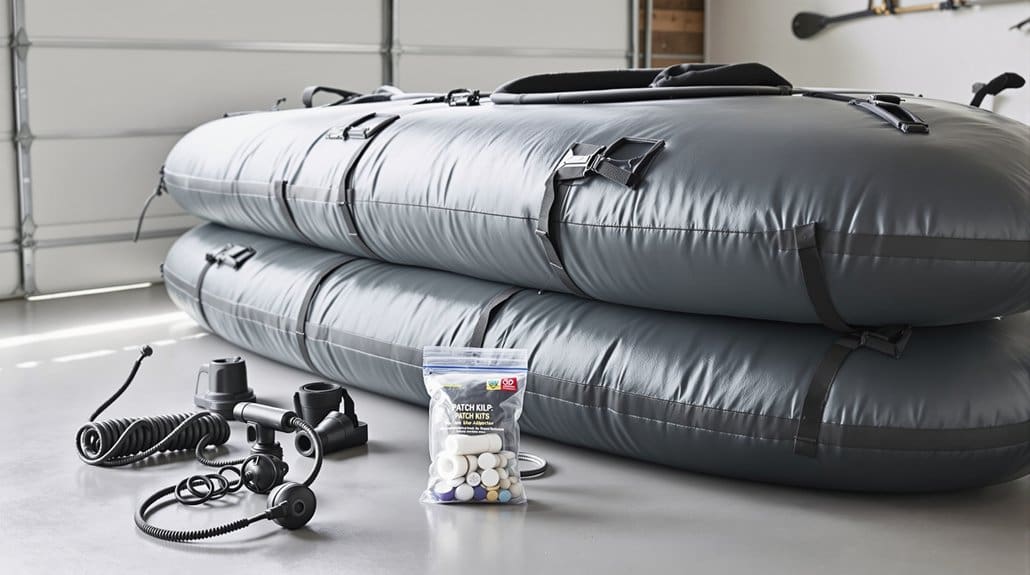
Think about fitting things smartly so you don't end up digging through a tangle every time you need the kayak; pick a compact high-pressure hand pump that matches your drop-stitch or PVC floor, toss in a small 12V electric pump for quick inflation or deflation, and keep both in a labeled pump bag so hoses and adapters stay together and ready. You want freedom on the water, so stash a shore-ready patch kit in a waterproof pouch, a 3"x3" patch sheet and tiny tube of adhesive, plus valve adapter, and tuck a spare fin and seat cushion into a soft cooler or dry bag that doubles as gear storage. Add desiccant packets, a microfiber towel, and collapse accessories into an organizer roll so everything’s reachable, tidy, and ready for higher pressure needs, like those kayak guides recommend.
Seasonal Maintenance Schedule: What to Inspect Monthly and Before Relaunch
You’ve packed your pumps and patch kit neatly, so keep that same habit when you move into seasonal maintenance; start by scheduling two quick checks — a monthly look while it’s stored and a full once-over right before you relaunch — because small problems grow into big headaches if you miss them. Each month, inflate to recommended psi, about 12 for drop-stitch floors, watch pressure over 24–48 hours for slow leaks at valves and seams, and scan the hull for UV fading, soft spots, punctures or abrasions, patching with the maker’s kit if needed. Wash or wipe cushions, check buckles and straps. Before relaunch rinse with fresh water, dry fully, apply UV protectant, test valves, pressure reliefs, and fit accessories so your kayak stays a top pick.
Some Questions Answered
What Are the Disadvantages of an Inflatable Kayak?
You’ll trade some stiffness and storage space for portability, and you’ll need repair kits, careful packing, and constant puncture resistance checks; inflatables can be heavy to wrestle, track poorly if underinflated, and flare or ruin seams if left in sun or wet storage, so you should carry patches, a pump with PSI gauge, inspect valves, avoid sharp rocks, dry and UV-protect the hull, and practice packing to save time and gear.
What Is the 120 Rule for Kayaking?
The 120 Rule says you should wait about two hours after a meal before paddling, since digestion can sap energy and affect paddle technique and water safety, especially in cold conditions, so you’ll avoid cramps or chill. Before you launch, check how full you feel, carry a whistle and warm layers, sip water, plan an easy route, and start with gentle strokes to test comfort, scaling up only if you feel steady.
How Easy Is It to Store an Inflatable Kayak?
Very easy: you’ll get compact storage after a quick deflation, you just rinse, dry, deflate, then loosely roll or “burrito” it to avoid creases and shove it in the bag, keeping a desiccant if it’s humid, and store indoors out of sun to protect seams. Carry a pump, mild soap, towel, and a PVC protectant if recommended, and check pressure or condition before next launch, simple and freeing.
What Is the Best Inflatable Kayak on the Market?
The best inflatable kayak depends on your goals: for overall performance comparisons, pick the Advanced Elements Airvolution if you want drop‑stitch rigidity, longer hull speed, and premium materials; choose the Sea Eagle SE370 for budget toughness and huge capacity; go Oru or ultralight inflatables for packability. First, match use (recreation, fishing, whitewater), then check weight, capacity, construction (drop‑stitch vs PVC), and carry/storage options before buying.