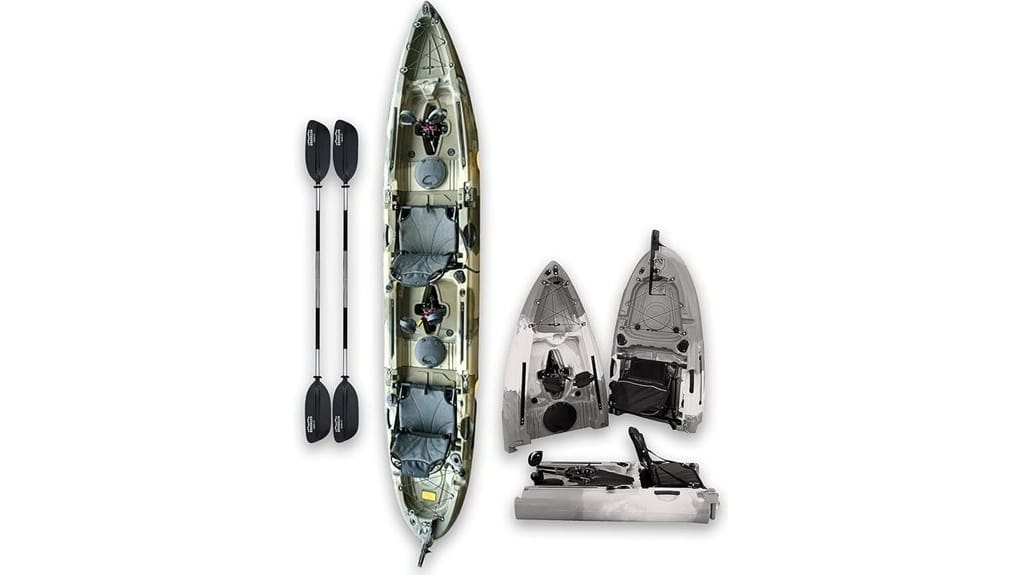
You’ll find the Brooklyn 13.0 is a rugged, three-piece sit-on-top tandem kayak that snaps apart for roof-rack friendly transport and tool‑free assembly. It’s built from durable HDPE, carries about 440 lb, and uses dual flipper pedal drives for hands‑free propulsion plus a hand rudder for precise steering. Adjustable seats, rod mounts, watertight hatches and open deck space suit anglers and family paddlers on lakes, bays, and calm rivers. Keep going to get full specs, pros, cons, and alternatives.
Some Key Takeaways
- Two-person HDPE sit-on-top with modular three-piece hull offers durable, 440 lb payload capacity for anglers and recreational paddlers.
- Tool-free cam locks and aligned fittings let the 156″ kayak break down for roof-rack transport and easy snap-together assembly.
- Dual flipper pedal drives provide hands-free propulsion with balanced thrust, good acceleration, and improved straight-line tracking.
- Rudder steering enables precise course corrections in wind or current; seats and fishing mounts suit tandem angling and family outings.
- Pros: modular versatility and accessory compatibility; cons: 92 lb hull weight and less wind/shelter comfort than covered touring tandems.
What the Brooklyn 13.0 Tandem Modular Kayak Is and Who It’s For
Although it breaks down into three pieces for easier transport, the Brooklyn 13.0 Tandem 3-Piece Modular Kayak is a robust, two-person sit-on-top craft designed for anglers and recreational paddlers who want versatility without sacrificing performance. You’ll find HDPE durability, dual flipper pedal drives, rudder steering, and adjustable seats that support 440 pounds. It suits lakes, bays, and calm rivers, offering watertight hatches, cargo areas, and fishing mounts for practical use. You’ll appreciate the hands-free pedaling on solo or tandem trips. Ideal for beginner anglers seeking stability and for family outings where adaptability and freedom matter. It’s a great choice for those exploring options in solo convertible kayaks.
Modular Configurations: How the 3‑Piece Design Packs, Assembles, and Breaks Down
If you liked the versatility and hands-free pedaling of the Brooklyn 13.0, you’ll appreciate how its three-piece modular layout makes transport and storage practical without compromising on-water performance. You break the 156″ hull into three manageable HDPE sections to ease transport logistics; each section fits on roof racks or in most trucks. Assembly time is reasonable: aligned fittings and cam locks snap together without tools, letting you rig a tandem or combine front and rear for a compact solo setup. You’ll appreciate clear attachment points, predictable balance, and EU spare part support for long-term modular upkeep. The design also offers proven modular kayak convenience for paddlers who need quick transition between trips.
Propulsion, Steering, and On‑Water Performance: Pedal Drives, Rudder, Speed, and Handling
When you pedal the Brooklyn 13.0, the dual flipper-style drives convert leg power into steady, hands-free thrust that makes long outings less tiring and keeps your hands free for fishing or navigation. You’ll notice immediate flipper efficiency: short, powerful strokes translate to consistent forward motion with minimal drag. Dual drives balance the boat and reduce yaw, while the hand-controlled rudder gives precise course corrections and excellent rudder responsiveness in current or wind. Top speed is modest but reliable for touring; acceleration is strong from a stop. Handling feels stable and predictable, letting you explore freely without fighting the kayak. For beginners, choosing the right pedal drive setup and gear can make learning more comfortable and efficient.
Capacity, Storage, and Fishing/Touring Features for Day Trips and Expeditions
After you’ve experienced the pedal drives and responsive rudder, the Brooklyn 13.0’s storage and load capacity determine how long you can stay out and what you can bring. You get a 440 lb payload, large front and rear cargo wells with bungee tie-downs, and watertight hatches for dry gear. Cargo management is straightforward: modular sections let you balance loads between riders. Gear organization benefits from accessory rails, flush-mounted rod holders, and open deck space that supports bait storage coolers and additional bags. Tackle mounting is flexible—you can add mounts and platforms to outfit the boat for fishing or multi-day touring. Consider pairing your kayak with a suitable portage yoke to make transporting and balancing heavy loads easier.
Real‑World Pros, Cons, and Buying Verdict (Who Should Buy and Alternatives)
Although the Brooklyn 13.0 shines in modular versatility and hands‑free propulsion, you should weigh practical tradeoffs before buying: its three-piece HDPE construction makes transport and storage far easier than a full-length tandem, and dual flipper pedals with rudder steering deliver efficient, precise propulsion on lakes, rivers, and calm coastal waters, but the 92 lb hull still requires effort to move solo and the sit‑on‑top layout sacrifices some wind protection and long‑haul comfort compared with covered touring kayaks. You’ll appreciate real world durability, strong accessory compatibility, decent resale value, and straightforward maintenance requirements. Buy it if you value modular freedom; consider a covered touring tandem if you want extended comfort or easier solo launches. Modular kayaks offer convenient customization and storage benefits through interchangeable sections and accessories, making them ideal for modular kayakers who prioritize adaptability.
Some Questions Answered
Can the Kayak Be Trailered While Assembled on a Standard Roof Rack?
Yes — you can trailer the kayak assembled on a standard roof rack if your crossbars and mounts support its 92 lb weight and 156″ length. Check roof compatibility, use quality rack adapters and heavy-duty straps, and secure the bow/stern with safety lines. Remove loose gear, distribute weight over supports, and confirm local load-overhang rules. With proper adapters and tie-downs you’ll tow safely and keep your freedom to explore.
Are Replacement Flippers Sold Separately or Only as Complete Drive Units?
You can get replacement flippers only as part of the complete drive units; individual flipper-only spares aren’t typically sold. If you want standalone parts, you’ll need to check aftermarket options—some third-party suppliers and communities offer custom or compatible flipper kits that free you from full-unit swaps. Verify fit, materials, and return policies before buying, and prioritize vendors with clear compatibility info and good reviews.
Does the Camo Finish Fade With Prolonged UV Exposure?
The camo finish won’t hold perfectly; prolonged UV exposure will gradually degrade UV resistance and affect color retention. You should expect slow fading over seasons, especially with heavy sun and salt spray. To preserve color retention you’ll want sunscreen-like care: rinse after use, apply UV protectant sprays, store covered or indoors, and avoid prolonged rooftop storage. With routine care you’ll maximize UV resistance and extend the camo’s appearance.
Can the Seats Be Upgraded to Standing Kayak Conversion Kits?
Yes — you can upgrade the seats using standing conversion kits, but check compatibility first. You’ll keep adjustable footrests and removable backrests functionality on many kits, letting you switch between seated and standing modes for freedom on the water. Confirm mounting points and weight limits, and make certain the kit supports pedaling and rudder control. If unsure, contact BKC or the kit maker for fitment details and safety recommendations.
Is Assembly Possible Solo Without Tools in Under 10 Minutes?
Yes—you can assemble it solo without tools in under 10 minutes if you plan. Use the quick setup by laying sections on a flat surface, align hull joints, lock clips, and secure seat mounts methodically. Balance tips: brace the middle section on your knee, keep parts close to your body, and tighten fittings sequentially. You’ll save time by practicing once and organizing components for a smooth, independent launch.


