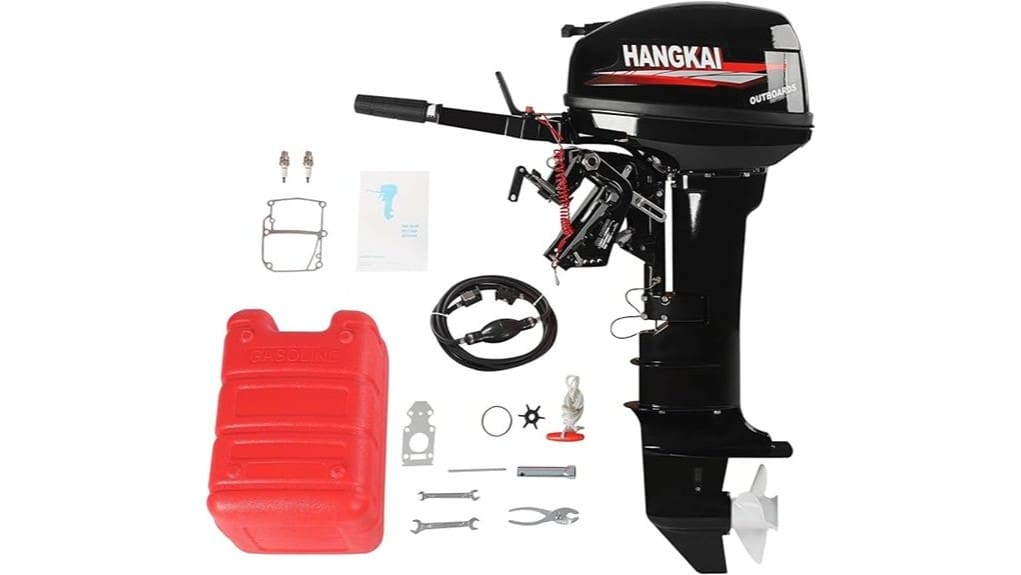
You’ll get a compact, no‑frills 18HP two‑stroke that’s light (≈28 kg) and tiller‑controlled for solo mounting and maneuvering. It delivers reliable thrust for small to medium boats, fishing, and aquaculture with crisp midrange response and conservative top speed depending on hull and prop. Maintain simple TCW‑2 fuel mixes (start 25:1 then 50:1), check seals, spark and gear oil, and match mount height; keep spares for jets and impeller — continue for fit, tuning, and service tips.
Some Key Takeaways
- Compact, lightweight 246cc two-stroke 18HP long-shaft outboard delivers strong thrust for small-to-medium boats and easy solo mounting.
- Manual-start tiller control offers crisp midrange throttle response and simple, reliable operation for fishing and weekend use.
- Treat thrust and propeller pitch as primary sizing metrics; prop changes significantly affect acceleration and top speed.
- Maintenance is simple: TCW-2 oil (25:1 first 50 hrs, then 50:1), carb cleaning, gear-oil change after break-in, and spare water-pump parts.
- Long-shaft fits transoms >15″, but check transom thickness, torque clamps, and reinforce mounting to avoid handling and vibration issues.
Quick Verdict and Who This 18HP Outboard Is Best For
While compact and simple, this 2 Stroke 18HP long-shaft outboard gives you reliable, high-thrust performance for small to medium boats—ideal if you need a lightweight, manual-start motor for fishing, aquaculture, or weekend outings. You’ll appreciate its lightweight portability: 28 kg, long shaft, and tiller control let you mount, launch, and maneuver solo. It delivers predictable thrust, stepless speed change, and 360° steering for flexible navigation. Maintenance stays budget friendly maintenance with straightforward two-stroke service and minimal parts. Choose this if you want rugged, no-frills propulsion that maximizes independence on water without complex systems.
Real-World Specs and What They Mean for Performance
Because real-world conditions change how specs translate to performance, you should read the core numbers as practical limits rather than guarantees. You’ll evaluate displacement, rpm band, and weight against hull type to predict usable power. Use thrust measurement instead of raw HP when sizing for heavy loads; it shows how propeller load converts to forward force at various rpm. Inspect the three-blade propeller profile and pitch options — small changes shift acceleration and top-end efficiency. Run simple efficiency mapping by logging fuel flow versus speed and rpm to find the sweet spot for range and autonomy on your boat. Also consider matching engine weight and mounting height to the kayak’s stability characteristics to avoid negatively impacting handling.
On-Water Performance: Speed, Handling, Load Capacity, and Noise
Expect this 18HP, 246cc two-stroke to deliver usable thrust for small boats rather than blistering top speed: in practice you’ll see moderate acceleration and a conservative top-end governed by hull type, prop pitch and load. You’ll get crisp throttle response at midrange; stepless speed control lets you hold cruising RPMs without hunting. Prop wash is focused and predictable, aiding low-speed maneuvering and reducing erratic steering. Wake shaping is subdued—good for fishing or towing light gear. Under heavy load watch for prop cavitation if trim and pitch aren’t matched. Noise is controlled by the silencer cover but remains audible. For longer outings, consider carrying a compact GPS backup battery to keep navigation devices powered and ensure safe returns.
Fit and Compatibility: Boat Types, Shaft Length, and Mounting Tips
Having covered on-water behavior, let’s look at how this 18HP long-shaft outboard matches different boats and mounting setups. You’ll find its long shaft suits inflated, aluminum, fiberglass, plastic and wooden hulls listed under boat types, keeping prop immersion secure in choppy conditions. Check transom compatibility: match transom height and thickness, confirm engine mount clamping range, and reinforce thin transoms. For shaft length, measure from transom top to keel; long shaft is ideal for transoms >15 inches. Mounting tips: center the unit fore-aft, torque clamp bolts evenly, use anti-corrosion fasteners and a safety lanyard for tiller control. These recommendations are particularly useful for beginner kayaking enthusiasts choosing a hard-shell inflatable-compatible motor.
Maintenance, Fuel Mix, Common Issues, and Warranty Notes
When you maintain this 2-stroke 18HP outboard regularly, it’ll run cooler, use less fuel, and last longer. You’ll perform regular inspections: check prop, seals, and cooling passages. Use TCW-2 two-stroke oil; mix 25:1 for first 50 hours, then 50:1. Change gear oil before first run and after break-in. Replace and gap the spark plug per intervals. Prioritize carburetor cleaning if idle or throttle response deteriorates. Common issues include fouled plugs, clogged jets, and water pump wear—carry spares. For winter storage drain fuel, fog the cylinders, and follow the 1-year warranty and 30-day return terms. Also consider keeping a bilge pump onboard for added safety when paddling or operating small watercraft.
Some Questions Answered
Can This Engine Be Used in Saltwater Without Extra Corrosion Protection?
No, you shouldn’t use it in saltwater without extra corrosion protection. You’ll need regular saltwater maintenance and fitted sacrificial anodes to prevent galvanic corrosion on the aluminum housing and lower unit. Rinse with fresh water after each use, flush cooling passages, inspect and replace anodes periodically, and apply anti-corrosion spray to exposed metal. Follow gear oil and oil-fuel mix guidance to keep the engine reliable and free.
What Replacement Parts Are Commonly Needed Over Time?
You’ll typically replace spark plugs, fuel filters, impeller kits, and gear oil seals/gaskets over time. Inspect spark plugs and replace every season; swap fuel filters frequently to avoid clogging. Replace the water-pump impeller (impeller kit) every 1–2 years or if overheating; service the cooling system seals too. Change gear oil after run-in and yearly or with contamination. Keep spare parts aboard so you can repair and stay free on the water.
Is an Electric Start Retrofit Available or Compatible?
No — the engine isn’t shipped with electric start, and retrofitting is limited. You can fit an electric start kit only if you add a compatible starter assembly, mounting brackets and a small battery; confirm battery compatibility (12V marine battery, sufficient cranking amperage) and space on the long shaft housing. You’ll need wiring, a solenoid and some fabrication. Consult a marine mechanic and manufacturer specs to guarantee safe installation and retained warranty.
How Loud Is It at Idle in Decibels Near the Operator?
Around 78–85 dB at operator proximity when idling. You’ll hear steady two-stroke tone filtered by the silencer cover and water-cooling, so idle decibels stay moderate but noticeable. You’ll want hearing protection for prolonged exposure and expect louder peaks under load. For quieter operation, maintain the silencer, make sure cooling passages are clear, and avoid running wide-open at close range. Measurements vary with mounting and environment.
Are Spare Propellers or Different Pitch Options Sold Separately?
Yes — propeller options are sold separately. You’ll find replacement propellers and pitch variations available from the manufacturer or aftermarket suppliers. Choose based on load, boat type and desired RPM range: lower pitch for acceleration and heavy loads, higher pitch for top speed. Confirm spline count and hub fit before buying. You’ll need to source compatible three-blade props matching shaft size and mounting pattern to guarantee safe, efficient operation.