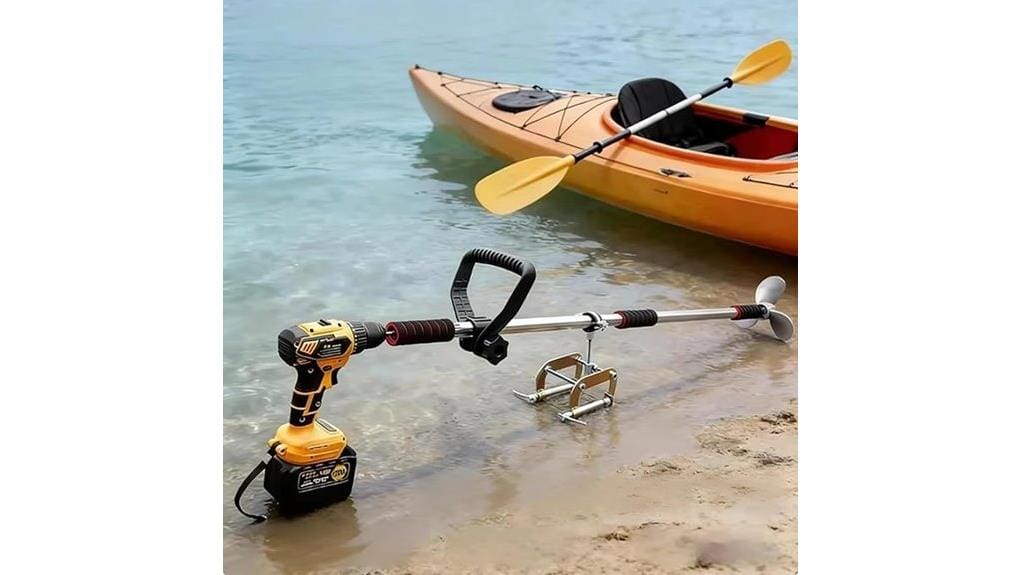
You’ll get a compact, clamp-on prop driven by your cordless drill that’s ideal for kayaks, inflatables, and small dinghies on calm water or as an emergency backup. It’s aluminum-alloy, quick to fit (clamp to 7.5 cm, bracket to 40 cm), weighs about 7.05 lb, and gives precise, quiet low-speed thrust but depends on drill battery life and torque. Fit and trim are simple; basic maintenance deters corrosion. Keep reading for setup, performance, pros, and buy-vs-alternatives.
Some Key Takeaways
- Portable, drill-powered propellers offer compact, lightweight propulsion ideal for kayaks, canoes, inflatables, and small dinghies.
- Performance depends on cordless drill voltage and battery life; higher-voltage drills give noticeably better thrust and runtime.
- Aluminum-alloy construction resists rust and deformation, but rinse after saltwater use and inspect for nicks after each trip.
- Clamp fits transoms up to 7.5 cm and bracket adjusts to 40 cm; choose 100 cm or 125 cm shaft for proper prop immersion.
- Pros: quick deployment, low cost, one-handed steering; cons: limited range, variable torque, and battery dependence compared with trolling motors.
Who This Drill-Powered Boat Motor Is Best For (Boats, Conditions, and Use Cases)
If you need a compact, low-cost propulsion option for small watercraft, this drill-powered propeller fits the bill: it converts a cordless drill into an ultralight outboard substitute that's ideal for kayaks, canoes, inflatable boats, dinghies, float tubes, rafts and small wooden or metal fishing boats. You’ll deploy it on calm lakes, slow rivers, ponds, or as emergency backup against currents. Kayak anglers will appreciate precise, quiet positioning for casting; emergency responders can use it for rapid, portable access in shallow or confined waters. It’s for solo operators seeking mobility, low weight, tool-free fitment, and reliable short-range thrust. Beginner paddlers often buy starter packages that include compact motors and essential gear like life jackets and paddles to get on the water quickly, making this an appealing add-on for starter paddle packages.
What’s in the Kit and How It’s Built (Materials, Dimensions, Weight)
Since you’ll likely be fitting it to a kayak or dinghy for short trips or emergency use, it helps to know exactly what comes in the box and what the unit is made from. The kit includes one drill-powered propeller (drill not included) with clamp/bracket, handle, and shaft. Construction is aluminum alloy—rust-proof, wear- and deformation-resistant—for improved material longevity in fresh and saltwater. Blades measure 16 cm; lengths are 100 cm or 125 cm. Clamp fits up to 7.5 cm thickness, bracket adjusts to 40 cm. Item weight is 7.05 pounds. The simple assembly process is tool-free and quick. This makes it a practical option for hard-shell inflatable kayaks and beginner paddlers.
Real-World Setup and Performance Test (Installation Steps, Handling, Speed, and Steering)
Begin by mounting the unit on a stable transom or gunwale using the quick-adjust clamp: align the bracket, tighten the tool-free clamp to the boat thickness (up to 7.5 cm) and set the bracket width within its 40 cm range, then secure the shaft so the propeller sits vertically in the water with the blades fully submerged. You’ll time installation timing at three seconds in practice. Attach your cordless drill, verify battery compatibility, and run torque testing at low speed. Handle with one hand for steering, note top speed in calm water, monitor noise levels, and trim shaft angle for efficient tracking. Secure tie-downs and straps to prevent movement while underway, following best practices for kayak tie-downs.
Pros, Cons, and Safety/Troubleshooting Tips (Durability, Saltwater Use, Common Issues)
After mounting and verifying operation, evaluate durability, saltwater suitability, and common faults to judge long‑term reliability and safe use. You’ll gain portability and quick deployment; aluminum alloy resists wear, and quick‑detach design maximizes freedom. Pros: lightweight, easy blade swaps, minimal storage footprint. Cons: drill dependency exposes battery limitations and inconsistent torque; prolonged saltwater use needs routine corrosion prevention. Troubleshooting: check shaft alignment first for vibration; inspect blades for nicks and do blade maintenance after each trip. Safety: remove drill before stowing, secure clamp, and rinse all metal parts with fresh water after salt exposure to prevent degradation. Also consider carrying a small can of silicone spray for hinge and clamp maintenance to reduce sticking and corrosion.
Should You Buy It? Buying Checklist and Alternatives to Consider
If you want a compact, low-cost backup motor for light watercraft, this drill‑powered propeller is worth considering because it gives you quick deployment, easy storage, and adjustable mounting without adding much weight. Decide if it fits your use: boat type, clamp range, shaft length, and aluminum corrosion resistance. Check cordless drill specifications for battery compatibility and torque — higher voltage gives better thrust. Consider weight (7.05 lb), storage space, and one-handed steering requirements. For alternatives, evaluate small electric trolling motors for range and higher resale value, or gas outboards for sustained power and long trips. Many kayakers also carry emergency gear like power banks and signaling devices for safety on the water, especially when paddling alone or in changing conditions; see emergency power banks.
Some Questions Answered
Can I Run the Propeller With a Corded Drill or Only Cordless?
Yes — you can use a corded compatibility setup, but know power differences matter. You’ll be able to run the propeller with a corded drill, and it often delivers steadier torque for longer runs. However, corded drills limit mobility and risk water exposure; cordless gives freedom and portable control. Make certain your corded drill’s RPM/torque suit the propeller, keep connections dry, and secure the drill per the clamp’s quick-detach mounting.
What Drill Chuck Size and RPM Range Are Recommended?
You should use a high‑torque, variable‑speed drill; preferably a 5/8‑inch chuck for best fit, though many adapters accept a 1/2‑inch chuck. For general push and maneuvering run 1500–3000rpm; for low‑speed precision, trolling or heavy current use 800–2000rpm. Keep speed control smooth, avoid sudden stalls, and pick a drill with consistent torque across the 800–3000rpm range for reliable, freedom‑focused on‑water control.
Is a Propeller Spare Blade or Repair Kit Available?
Yes — the manufacturer offers spare blades and basic repair kits for the propeller. You can order replacement spare blades and a small repair kit (pins, mounting hardware, seals) through the seller or support. Keep spares on board for quick swaps; the aluminum blades are replaceable without special tools. Contact the seller for part numbers, compatibility by shaft length, and warranty-covered components so you stay mobile and independent on the water.
Does Using Left- Vs Right-Side Mounting Affect Warranty?
No — mounting orientation (left vs right) doesn't void warranty as long as you follow instructions and don't force clamps beyond specified limits. You’ll still be covered for manufacturing defects; warranty implications arise if you alter, misuse, or install improperly. Keep within clamp thickness and bracket width specs, detach drill before flipping handle, and contact the seller for claims. Document installation and damage to support any warranty request.
Can I Tow the Boat While the Drill Is Attached?
No — you shouldn't tow the boat with the drill attached. For a tow test, remove the drill and secure the propeller to avoid rotation or damage. Follow a safety checklist: clamp tight, drain water, stow loose parts. Use proper trailer setup and tie-downs to prevent movement. Consider legal considerations for road transport and local regulations. Towing with the drill risks damage, water ingress, and voiding warranty.


