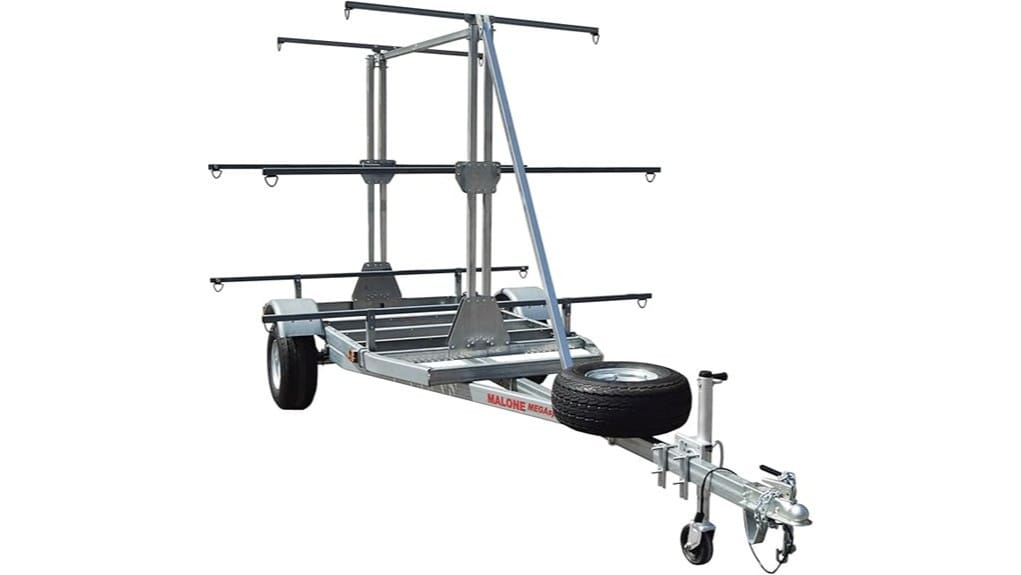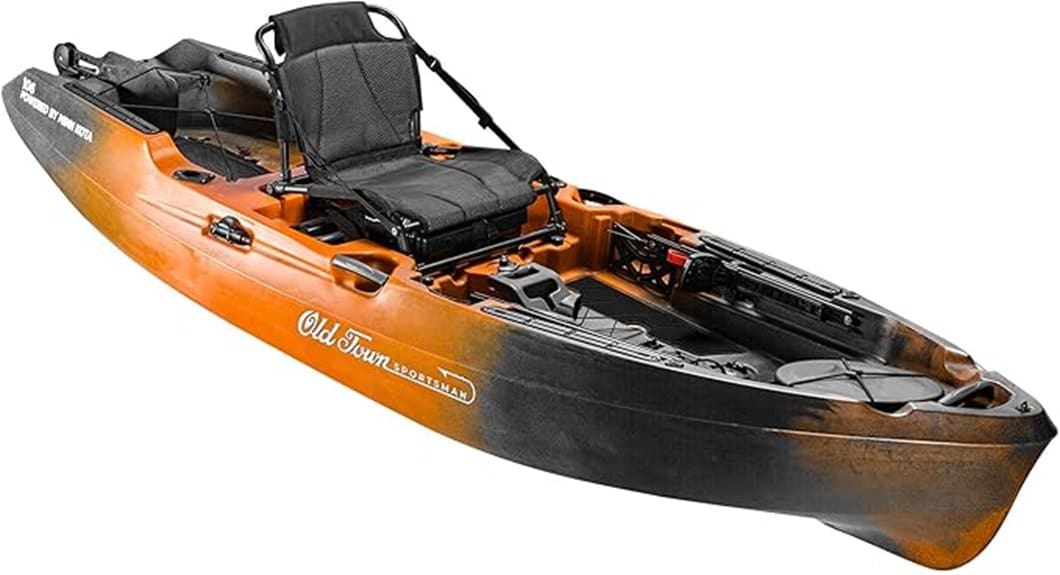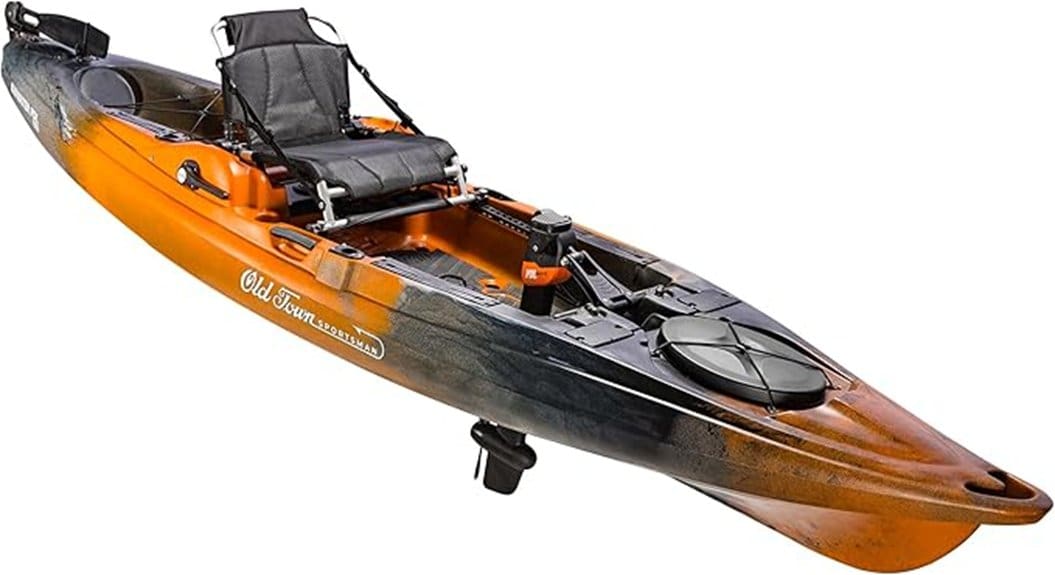
You’ll like the ReRackiT Poly if you want a low‑maintenance, portable kayak rack that’s sturdier than wall hooks and more flexible than welded shelves. It’s a recycled‑plastic, freestanding unit that fits up to four solo kayaks or SUPs, is quick to assemble, and resists rot and rust. Arms are padded and adjustable, and it’s best for beginners or small fleets who value mobility. Keep going and you’ll get setup tips, compatibility notes, and buying tradeoffs.
Some Key Takeaways
- Freestanding recycled‑plastic rack holds up to four kayaks/SUPs with adjustable padded arms for gentle, space‑saving vertical stacking.
- Portable, low‑maintenance design resists rot and rust, ideal for garages, docks, or trailers and harsh winters.
- Simple assembly with included hardware and tether; instructional video guides on anchoring for windy sites.
- Best suited to solo kayaks, SUPs, rowing shells, and surf skis; not recommended for canoes or large tandems on 4‑level units.
- One‑year parts warranty; consider two 4‑levels for flexibility or compare cheaper metal/custom options for longer coverage.
ReRackiT Poly Rack: Quick Verdict and Who It’s Best For
Although it’s simple in design, the ReRackiT Poly Rack delivers reliable, low-maintenance storage for paddlers who need sturdy versatility. You’ll appreciate clean storage aesthetics that don’t dominate your space while freeing gear for spontaneous outings. It’s tougher than flimsy wall hooks and more flexible than fixed shelving, so you can move setups as your needs change. You’ll weigh capacity against footprint and consider transport logistics when choosing levels; portability means you can shift racks between garage, dock, or trailer without hassle. Best for independent paddlers or small fleets who want durable, low-fuss storage that supports a free, mobile lifestyle. This rack is ideal for beginners looking for smart kayak storage solutions that balance durability and space efficiency.
What the 4‑Level ReRackiT Includes and Technical Specs
When you buy the 4‑Level ReRackiT, you get a freestanding, portable tiered shelf built from 100% recycled plastic that’s ready for four kayaks or SUPs straight out of the box—padding and a tether are included, and the unit ships as a single rack requiring assembly (an instructional video helps). You’ll find included accessories limited but practical: four padded arms, a tether, and hardware. Technical dimensions are straightforward: a four-place footprint sized for stacked kayaks with adjustable arm spacing. It’s lightweight to move, rugged outdoors, quicker to set up than welded racks, and gives you flexible, no-fuss storage freedom. The design also complements guidance for paddlers choosing gear with a focus on portage yokes and beginner kayaking needs.
Load Capacity and Compatibility: Kayaks, SUPs, Canoes, and More
Because the 4‑Level ReRackiT is built as a modular, freestanding shelf, it handles a wide mix of boats without fuss: up to four kayaks or SUPs on a single unit, larger craft like canoes or tandem kayaks fit only on the lower arm of the 3‑level setup, and the 4‑level is optimized for solo kayaks, SUPs, rowing shells and surf skis (not canoes). You’ll like the clear kayak stacking pattern — predictable, space-saving. Check published weight limits per arm before loading heavy craft. Canoe fitment works best on the 2‑level or 3‑level lower arm. Board compatibility is broad; match hull width to arm spacing. The site also offers essential accessories and guidance for freestanding rack buyers, including storage essentials to help beginner kayakers choose the right setup.
Setup, Durability, and Outdoor Maintenance in Real Conditions
If you set up the ReRackiT on level ground and follow the simple assembly steps, you’ll have a sturdy, maintenance‑free platform that stands up to real outdoor conditions. You’ll finish fast with clear assembly tips in the video and manual; anchor on concrete or pavers for windy sites. The recycled‑plastic frame resists rot, rust, cracking, and needs minimal upkeep compared with metal racks. For freedom‑loving users, simple weatherproofing routines—periodic rinse, check padding and tethers, reposition off wet soil—keep boats ready. In harsh winters, leave craft on higher tiers; the rack keeps shape and protects gear season after season. Many new kayakers also benefit from pairing the rack with transport covers to protect hulls during storage and transport.
Buying Considerations: Price, Warranty, Alternatives, and Final Recommendation
You’ve seen how the ReRackiT holds up outdoors and how little fuss it needs, so now weigh cost, coverage, and options before buying. Consider pricing tiers: single 2-, 3-, or 4-level units scale cost by capacity; buying two 4-levels back-to-back gives maximum flexibility. Factor portability and recycled-plastic durability against cheaper metal or DIY racks. Note warranty limitations — a 1-year parts replacement program covers defects but not weather wear or misuse. If you want low maintenance and freedom to move gear, it’s a strong pick; if you need longer coverage or lower upfront cost, compare metal racks and custom builds. For beginner paddlers, also consider storage solutions that prioritize ease of use and protect hull shapes.
Some Questions Answered
Can Multiple Racks Be Linked Together for Greater Stability?
Yes — you can link multiple racks to boost stability and capacity. You’ll get stackability benefits when you place two units back-to-back or side-by-side, which creates a sturdier footprint and doubles storage. During installation spacing, leave enough room to access each craft and align arms before fastening. You’ll find this comparative setup gives more freedom to reconfigure storage, improves overall balance, and handles larger or more boats securely.
Does the Rack Require Anchoring on Floating Docks?
No, you don’t have to anchor it, but you’ll likely want to on a floating dock for safety and slip alignment. The freestanding design works on stable surfaces, yet anchoring to dock pilings prevents shifting with tide, wind, or boat wakes. If you crave freedom, compare unanchored convenience versus anchored security: tether to pilings for long-term peace of mind or keep it portable for occasional moves and flexible slip alignment.
Are Replacement Pads and Tethers Sold Separately?
Yes — you can buy replacement pads and tether kits separately. If a pad wears or a tether frays, you’ll swap them without replacing the whole rack. You’ll appreciate the modular options: pads cushion hulls, tether kits secure craft in wind or waves. Order spares to match your storage needs and freedom to relocate; keeping extras on hand avoids downtime and keeps your setup ready for adventure.
Can the Rack Support Boats With Trailers Attached?
No — it won’t reliably support boats with trailers attached. The rack’s arms and spacing aren’t sized for trailer compatibility, and you’ll run into hitch clearance issues. You’ll want to compare lifting the craft off its trailer or using a dedicated trailer-friendly stand. If you value freedom to move boats on trailers, choose a heavier-duty, trailer-compatible rack or keep the trailer separate and load/unload craft before storing on this unit.
Is There a Weight Limit per Individual Arm?
Yes — each arm has a specific weight capacity so you can judge arm strength before loading. You’ll find the rack’s arms rated to support typical kayaks, SUPs and canoes within published limits; compare craft weights to the listed weight capacity per arm. You’ll feel free to mix levels knowing arm strength matches common boat weights. If in doubt, contact support for exact per-arm specs and safe loading guidance.