
You’ll want to check Buford/Lake Lanier release forecasts and local USGS gauges first, call an outfitter for recent beta, and pick runs that match your kit and heat—aim for Metro Hooch or Etowah for easy February flows, Cartecay or Broad for mellow Class II, and scouts for seasonal forks after rain; dress a drysuit or thick wetsuit with hood and booties, bring throw bag, tow rope, spare clothes and warm thermos, plan extra shuttle time, and keep an eye on triggers and hazards to decide if you’re good to go, more practical tips follow.
Some Key Takeaways
- February flows in GA/AL vary widely: check USGS gauges and Corps release schedules before committing to a run.
- Buford Dam releases can rapidly raise Chattahoochee flows; monitor Lake Lanier forecasts and Corps targets (often up to ~4,500–5,000 cfs).
- Beginner stretches (Powers Island–Paces Mill, Lower Etowah) are often runnable at moderate winter flows; confirm current gauge readings and trip reports.
- Cartecay and other Class II runs commonly hit ideal winter windows around 400–600 cfs; verify with recent USGS and American Whitewater notes.
- Dress for cold water: wear a drysuit or thick wetsuit, neoprene hood/gloves/booties, and carry cold‑water rescue and post‑swim warming gear.
What February Flow Levels Mean for Paddlers on the Chattahoochee and Etowah
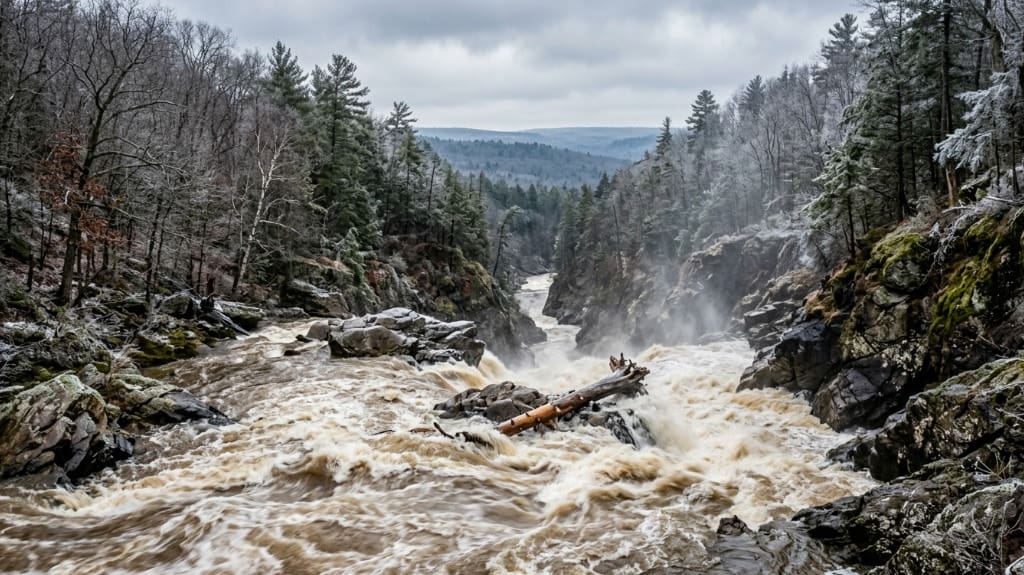
When you’re planning a February paddle on the Chattahoochee or Etowah, start by checking flows and thinking like a safety-first paddler: Buford Dam releases often hold Metro Hooch around 388 million gallons a day (roughly 600 cfs at some spots), which usually keeps Powers Island to Paces Mill runnable for beginners, but if the Corps is pushing toward its system target near 5,000 cfs—or even the drought‑adjusted 4,500 cfs—you’ll feel much stronger currents and more push through upper reaches, so look up Corps release schedules and USGS gauge readings before you put in; bring and wear cold‑water gear since February water is dangerously cold, pack a throw bag and helmet, practice eddying and ferrying in an easy eddy first, scout put‑ins for exposed shoals on the Etowah when reservoir fills are low, and if you see a recent rise after rain or a sudden release, treat class II sections as potentially continuous, technical II–III runs and reconsider your route or group skills rather than assuming the same trip will feel the same as last season. Also bring essential safety gear and use trip checklists like those recommended for beginner kayakers.
Best Beginner-Friendly Runs in February: Metro Hooch and Etowah Takeaways
When you head out to Metro Hooch in February, watch Buford Dam release times and local gauge readings so you pick a stretch with steady flow from Powers Island to Paces Mill, and pause if the water looks glassy-cold or unnaturally swift. For the Etowah below Allatoona, launch at the established access points, stick to the mild Class I–II sections for practicing basic strokes and eddy turns, and choose shorter runs with nearby take-outs to limit time in cold water. Always suit up for cold runoff—wetsuit or drysuit, neoprene gloves and booties, a snug helmet and PFD—and tell someone your plan, check gear, and be ready to bail to shore quickly if conditions change. Pick launch spots with attention to access points and shoreline features when planning your run.
Metro Hooch Flow Tips
Get out there, but check the gauges first: for a beginner-friendly Metro Hooch trip from Powers Island to Paces Mill you’re aiming for a steady, moderate flow that gives a continuous, gentle current without leaving rocks sticking up, so look up the GA USGS gage near Atlanta and pick a stage that keeps the channel smooth and forgiving. You’ll paddle the Chattahoochee River with more confidence if you watch the USGS gage, know that winter flows stay chilly, and bring a wetsuit or drytop to stay warm in case you swim. Carry a spare paddle, whistle, pump or spare dry bag, and a simple throw rope, check Corps or local outfitter release notes, practice lake launches first, and go enjoy the flow. For beginners shopping for charts and gear, consult current essential gear and river charts to plan safer, more comfortable trips.
Etowah Launch Spots
If you liked the steady, forgiving flow on the Metro Hooch, you’ll find the Etowah below Lake Allatoona is a natural next stop for winter practice, because its mild February currents let you get comfortable with lake-to-river entries, keeping the channel mostly deep enough to avoid scraping rocks while still giving that moving-water feel. You can pick a gentle stretch near Etowah Falls or the lower Etowah River that runs Class I–II, scout a put‑in/take‑out ahead of time using A Canoeing and Kayaking Guide to Georgia or American Whitewater, and paddle short, repeatable laps to refine ferrying and edging. Bring proper cold‑water layers, plan exits where parking is legal, and watch for seasonal hazards before you launch. Also bring essential gear like a well-fitted PFD and cold-water layers to stay safe and comfortable on February paddles.
Safety And Cold Gear
Because cold water and even easy winter currents demand respect, you should gear up and plan like you’re running a safety checklist before you push off, starting with a drysuit or a thick 7mm wetsuit, neoprene booties and gloves, and a high‑buoyancy PFD that’s rated for swiftwater, plus a snug helmet and either a spray skirt or splash deck so you stay warmer if you swim. Dress in layers under your dry suit, add a neoprene hood for head and neck, and stash extra warm clothes in a dry bag, an insulated blanket, and a waterproof first‑aid kit in your shuttle. Check US Army Corps release info and local reports, scout unfamiliar stretches, carry a hot thermos, and rehearse quick rewarm steps so you can paddle free and safe. Always include essential safety gear like a whistle, throw bag, and rescue knife in your kit and practice using them regularly, as proper essential safety gear can be lifesaving.
Where to Find Reliable Class II Outings: Cartecay, Broad River, and Seasonal Forks
If you’re scouting reliable Class II runs this February, watch the Cartecay’s flow windows closely—Lower Cartecay Road to Blackberry Falls is a summer staple but needs a certain level to feel right, so check gauges and time your trip for after rain or planned releases. For year-round mellow paddling, the Broad River near Athens is great for instruction, and in Alabama look to the Locust and Mulberry Forks in winter/spring, but always confirm seasonal access and recent flow reports before you pack your gear. Start by checking online gauges and release schedules, bring a throw bag, helmet, and basic rescue kit, and plan for a quick scout at the put-in so you can adjust or turn back if flows aren’t what you expected. Beginner paddlers should also consider watching instructional DVDs and practicing basic strokes and safety drills at low flows to build confidence and skills before tackling moving water, especially when planning Class II trips with friends or groups and learning proper beginner paddling fundamentals.
Cartecay Flow Windows
When you’re scouting for a dependable Class II day on the Cartecay this winter, start by watching the USGS gauge and aim for readings roughly in the 400–600 cfs band, which usually gives continuous, forgiving water from Lower Cartecay Road to Blackberry Falls without nasty surprises, and if the gauge dips toward 300 cfs you’ll want to weigh alternatives like the Broad River (US 281 to US 172) that often stays fuller longer, or the Etowah below Allatoona and seasonal forks on the Toccoa or Upper Hooch that can run after cool-season releases or rain. Check recent American Whitewater reports, bring cold-water gear like a drytop or wetsuit, plan short shuttle windows, and expect shorter daylight; read the gauge, dress for immersion, and go.
Seasonal Forks Access
Start by scouting the usual spots and reading the gauges, because seasonal forks—those lower tributaries and small release-fed runs off the bigger North Georgia rivers—can pop up fast after rain or a reservoir let‑down, and you’ll want to know whether you’re heading into a mellow Class II cruise or a colder, shoal‑y slog. Aim for the Lower Cartecay stretch or the Broad River near Athens when gauge levels sit in the moderate range, check recent rainfall and planned reservoir releases, and confirm local put‑ins on American Whitewater or with guides. Bring cold‑water gear early season, practice basic lake skills first, carry a throw bag and spare paddle, scout tricky shoals on foot, and turn back if conditions feel marginal. Consider packing essential river-running gear like a properly fitted PFD and helmet to stay safe on moving water and river-running basics when you head out.
Intermediate Challenges: Practicing Eddy Turns, Ferries, and Rolling on Nantahala-Style Runs
Even on a steady Class III run you can make big gains by breaking the trip into small, repeatable moves, so watch for a clean eddy behind a rock or foam line, catch it, and practice a quick peel-out to the downstream eddy in under three strokes; aim to hit an eddy every 30–60 seconds on continuous stretches, use visible read lines like seams or wave trains to pick targets, and carry a plan—paddle, stern draw, and a shove of forward sweep—to get you across a fast 10–30 meter seam without getting swept past the take-out. You’ll work eddy turns, ferries, and rolling on Nantahala-style water, drilling ferry angles of 20–40° against 2–4 knot lines, rehearsing combat rolls and wet exits on calm flats first, linking entry, peel, ferry, and downstream punches so shiftovers feel natural, using landmarks for targets, and aiming for 70–80% success before stretching distance, so you stay free and in control. Consider bringing essential creek boat gear like a buoyant paddle float and helmet and PFD to stay safe and efficient on practice runs.
Chattooga Stretches to Try in Winter: Read Lines, Scout Access, and Expect Cold Water
Start by reading the water from shore, watching for flow lines, boils, and eddy seams so you can pick safe ferries and the cleanest lines through the lower Class II riffles before you reach the Bull Sluice drop. Scout put-ins and take-outs at established access points like the GA 28 bridges and trailheads, check USGS gauges for recent rises, and walk the Bull Sluice drop to decide whether to run, scout more, or portage. Wear full cold-water gear—drytop or wetsuit, neoprene booties, splash helmet—and carry a throw bag and a plan so you’re ready if a line gets choppy or the water proves colder and faster than you expected.
Read The Water
You’ll want to read the water first and think like a moving map: look for lower-elevation stretches such as Thrifts Ferry to Bull Sluice when flows are moderate, scout any big features from shore, and plan your eddy turns and recovery lines before you push off, because cold, fast water in February eats reaction time and holds eddies and hydraulics tighter than in warm months. On the Chattooga, watch current seams, holes, and far-side eddies, check gauges and dam releases before you launch, and scout put-ins so you know approach angles and exit options, because a missed line in near-freezing water gets serious fast. Wear cold-water gear, carry a throw bag, and rehearse your recovery moves on shore first.
Scout River Access
When you walk the bank to scout a put‑in, move slowly and look for the low spots, obvious eddy lines, and any hidden snags, because in February the water runs faster and colder, eddies hold you tighter, and a missed line can get serious fast. You’ll scout put-ins like Thrifts Ferry and Bull Sluice from shore, read lines for eddy catch points and ferry lanes, and decide if a portage is smarter than risking a short Class IV drop, right? Expect icy banks and muddy trails that limit access, so use designated pullouts and stick to paths; check flow forecasts and releases before you commit, and carry proper cold-water gear — drysuit or heavy wetsuit, gloves, booties, and a helmet rated for cold rescues.
Preparing for Higher-Volume Days: Safety Gear, Group Skills, and Rescue Basics
Even if you’re used to mellow flows, treat higher-volume days like a different sport: check the gauges and pick a conservative put-in and take-out, tighten your Coast Guard–approved Type III or V PFD so it won’t ride up, and swap to a low-profile whitewater helmet rated to ASTM/CE standards because stronger currents make pinning and strain more likely. You’ll want a practiced crew, a throw rope in a bag, and a basic rescue kit with a sling, carabiner and simple pulley for quick hauls, designate a rescue leader, agree hand and whistle signals, and rehearse eddy turns, peel-outs, upstream ferries and wet exits until they’re muscle memory; practice a shore bowline and self-release under load, plan bailouts, and keep calm, steady communication on every run.
Reading Gauges and Forecasts: What River Data Paddlers Should Monitor in February
You’ve gone over gear and practiced rescues, now make reading the river your next habit—start by pulling up the nearest USGS gauge for the stretch you want to run, look at both the current height and the discharge (cfs), and compare that to the runnability notes in American Whitewater or your local guide so you know whether a Metro Hooch shakedown or a mellow float is coming. Then check nearby USGS gauges for trends, watch release forecasts for Buford Dam/Lake Lanier since Corps releases shape Chattahoochee flows downstream, and monitor short‑term precipitation forecasts and the US Drought Monitor, because rain or melt can boost levels fast; if numbers don’t match your skill or kit, postpone or pick an easier section.
Launch, Put-In, and Shuttle Tips for Winter Trips in Georgia and Alabama
Start by scouting your put-in and take-out like you’d check a map before a hike, because winter changes access fast, and a good plan now saves a cold, sticky shuttle later. You’ll want to verify Lake Lanier releases and Corps targets so downstream levels on the Chattahoochee match your run, and check trip reports for ice, debris, or low-flow stretches. Launch from paved, well-lit ramps in winter, avoid muddy banks, and pick alternate Cartersville or Gainesville access if roadside spots freeze up. Plan extra shuttle time on Metro Hooch runs, use ARC utility access points when allowed, and bring a winter shuttle kit — gloves, tow rope, shovel, traction mats — so you’re ready if a launch goes sideways.
Cold-Water Risk Management: Layering, Hypothermia Prevention, and Emergency Plans
You checked the ramps and shuttles, now make sure your body and your plan can handle a cold flip, because winter water takes heat fast and mistakes are unforgiving. Dress to keep your core warm, layer a 3/2–5/4 wetsuit or a neoprene steam/hooded drytop under a drysuit when needed, add a 3–5 mm neoprene hood, mitts and booties, and use insulating fleece or polypropylene layers, because head, hands and feet bleed heat fast. Watch air and water temps, limit swims to under 20–30 minutes without full drysuit protection, rehearse an emergency rescue plan with a designated rescuer, throw bag and warm-up area, and carry a waterproof kit with thermal blanket, hot packs and spare dry clothes to treat hypothermia signs before they worsen.
Local Resources and Guidebooks: American Whitewater, Outfitters, and Up-to-Date Beta
When you’re planning a February run, lean on local beta as your first line of defense—check American Whitewater for run notes and recent trip reports, then cross‑check those pages with real‑time USGS or Corps gauges and a quick call to a nearby outfitter, because listings can lag and outfitters will tell you how releases, reservoir ops, or ice are actually affecting flows. You’ll want to use guidebooks for put‑ins, take‑outs, and typical ranges, but treat them as baseline info, not minute‑by‑minute truth, so call local outfitters for current hazards, clothing tips, and rentals. Watch flow gauges, read recent trip reports, ask about trigger levels for releases, and confirm safety gear and shuttle plans before you go.
Some Questions Answered
What River Flows Toward Alabama and Georgia?
The Chattahoochee River flows toward both Alabama and Georgia, you’ll follow it through Chattahoochee Riverways and Interstate Riverflows where Borderwater Currents shift, so watch water levels, carry a life jacket and river map, and check Tributary Connections for sudden inflows. You’ll use basic Watershed Management ideas, monitor releases from upstream dams, plan exits where eddies form, and start with a short reconnaissance paddle to scout hazards before committing to a longer run.
What Is the Most Famous River in Georgia?
The most famous river in Georgia is the historic Chattahoochee, and you’ll love exploring Chattahoochee recreation spots, learning Chattahoochee ecology, honoring Chattahoochee heritage, and joining Chattahoochee conservation efforts. Start by scouting easy access points, pack water, map, life jacket, and weather gear, watch for fish and tidal influence downstream, ask locals about safe routes and permits, and volunteer for cleanups to learn the river’s story while you help protect it.
What Is the Water Dispute Between Georgia Alabama and Florida?
It’s about who controls water, you’ll see interstate waterrights fights over Lake Lanier and the ACF/ACT river basins, where river basinmanagement, urban waterdemand, agricultural irrigationconflict, and environmental flowrequirements collide, so you watch legal suits, Corps decisions, and state talks, check reservoir levels, track court filings, carry maps and simple data, talk to local officials, pressure representatives, and start conserving water now while pushing for fair, science‑based rules.
Where Do the Coosa and Tallapoosa Rivers Meet?
They meet at a river confluence near Wetumpka, Alabama, where the Coosa and Tallapoosa join to form the Alabama River, right around the county boundary northwest of Montgomery. If you go, treat the river town as your base, carry a map and life jacket, watch currents at the tributary junction, and respect the ecological corridor for wildlife. Start at public access points, scout flows, and plan a safe, enjoyable trip.