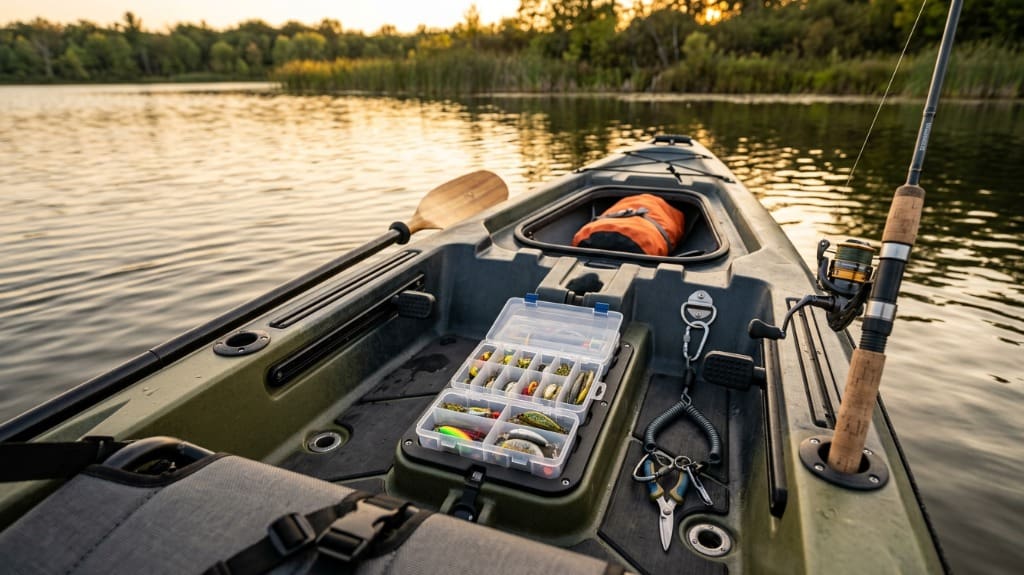
Strip down to essentials: pick 6–8 trip-specific lures in a clear 4×6 photo case or slim Flambeau satchel, stash small hooks in snack zip bags, and carry one or two ready rods on deck with spares in the center hatch, so swaps are fast and safe. Secure a crate or BlackPak for heavier gear, mount a tiny terminal box within reach, weatherproof metal bits, and route lines to avoid tangles—do this first, and you’ll want the next tweaks for speed.
Some Key Takeaways
- Build a minimalist game-day tray with 6–8 trip-specific lures in a slim Flambeau half-satchel or clear 4×6 photo case for on-deck access.
- Store small hooks, split rings, and jig trailers in labeled snack-size zip-lock bags to prevent tangles and corrosion.
- Organize crates by purpose: waterproof Kayak Krate for hauling, YakAttack BlackPak for batteries, and stack labeled photo cases vertically.
- Keep only one or two ready rods on deck, stow spares in holders, and place heavier backups in a labeled center-hatch tray.
- Secure the game-day tray to the tank well or crate lid with bungees/Velcro and orient gear within arm’s reach for safety and efficiency.
Start by Trimming Gear: What to Bring and What to Leave
Start by stripping down what you carry to the essentials, because a lean kit makes fishing from a kayak safer, faster, and more fun—so think about the water you’ll be on, the species and presentations that work there, and then only bring those things. When you set out in your first kayak, research the water, pick 3–5 jerkbaits that match size and color, swap bulky boxes for a clear photo case or a small Plano tray, and keep just a couple square bills plus 2–3 soft plastics for backups. Limit rods to one or two, stash spares in holders, and pack hooks and leaders in snack bags in the center hatch so a single day of fishing feels free, focused, and effortless. Consider investing in a purpose-built kayak fishing rod rack to keep rods secure and organized while paddling.
Build a Minimalist “Game-Day” Tackle Tray for On-Deck Access
You’ll pick trip-specific lures — the six to eight baits you trust for the water and conditions — and tuck them into a slim Flambeau half-satchel or a clear 4×6 photo-case so you can see and swap rigs without digging. Keep small metal hooks and jig trailers in snack-size zip-locks inside the tray to stop rust and tangles, label the lid or use a clear top so you can confirm contents while side-saddled, and stash the tray on your middle tank well or crate lid secured with a bungee for true on-deck reach. Limit what’s on-deck to essentials, keep one or two rods ready and a tiny terminal-tackle box nearby, and carry five soft-bait backups in your shirt pocket so you spend time fishing, not searching. Consider pairing this setup with an adjustable rod holders system to keep your rods secure and within easy reach while paddling.
Choose Trip-Specific Lures
Think like a scout: pick a single clear satchel or a small photo case and pack only the baits you’ll really use for the water and species you’re targeting, so you’re not wasting time digging. Use a flambeau super half satchel or a 4×6 clear photo case as your game‑day tray, limit it to 8–12 targeted lures—square bills, two crankbaits, two jerkbaits, three plastics—so you’ve got the right actions and profiles for the day. Keep 3–5 primaries in shirt pockets for instant casts, stash 2–7 others in the satchel for quick swaps, and bag hooks and small tackle in snack‑size clear zips inside the case to stay dry and sort fast. Store backups in the hatch, keep the tray on deck. For kayak anglers and beginners, using a tackle bag system designed for kayaks helps keep gear secure, accessible, and organized on the water with features like padded straps and waterproof compartments tackle bag systems.
Compact Tray Organization
Nothing fancy: pick a slim Flambeau half‑satchel or a clear 4×6 photo case and build a single “game‑day” tray that lives on deck where you can grab it without breaking stroke or losing a fish. You’ll limit that tray to confidence baits—three primaries, two backups, and a couple specialty plastics—so you spend time casting, not fiddling, and you’ll stash hooks and tiny terminal bits in clear snack bags to stop rust and tangles while keeping things visible. Strap the tray in the middle tank well or to a crate lid with bungee or Velcro so it won’t slide when you paddle or land a fish, and leave heavier, less-used spares in a labeled center-hatch tray for true backups. Waterproof storage is essential for protecting gear and gear longevity, so consider using waterproof tackle cases for on-deck trays.
Quick-Change Hook Protection
Start by picking a slim “game‑day” box that fits your middle tank well—something like a Flambeau Super Half Satchel or a clear 4×6 photo keeper—and lay out only the baits you trust so you can swap hooks fast without digging. You’ll want clear plastic compartments or a clear lid so you can spot a jerkbait or squarebill in seconds, and seal individual hooks inside tiny clear snack zip-lock bags to keep them from tangling or corroding, that’s simple hook protection. Limit yourself to 6–12 confidence pieces, add a couple spare hooks and a weight, and stash backups and tools in a sealed bag in the hatch, leaving the on‑deck tray uncluttered and ready for quick changes while you fish. Many kayak anglers prefer low-profile, waterproof storage options for durability and easy access tackle box essentials.
Choose the Right Crate: BlackPak, Kayak Krate, or Soft Crate
When you’re picking a crate for your kayak, focus first on what you’ll actually carry and how you’ll use it—will you be hauling a battery and heavy tackle, want waterproof storage for a phone and snacks, or just need a light, cheap box to stash a few lures and a dry bag? If you need rugged, waterproof hauling, a Kayak Crate like the Wilderness Systems Kayak Krate gives you a sealed main compartment, clear lid pockets, and rod holders, or choose the YakAttack BlackPak for stiff, lockable construction and built‑in rod tubes, both handle batteries and rough use. Want mounts and compact fit? Railblaza suits accessory setups; prefer lightweight, cheap freedom, then grab the YakGear soft crate and protect gear inside. Consider crate features like rod holders and lockable lids to match your fishing setup.
Pack Smarter Inside Crates: Boxes, Photo Cases, and Snack Bags
Start by slipping a clear 4″ x 6″ photo case into your crate for hard baits so you can spot colors and shapes at a glance, swap lures fast, and avoid opening half a dozen boxes when a bite shows up. Before you toss metal hooks or treble-equipped lures into the same space, seal each one or small groups in snack‑size zip‑locks to keep corrosion and tangles off your other gear, and label the bags if you want even quicker grabs. If you carry a Flambeau Super Half Satchel or a medium Plano/ProLatch tray as your “game day” setup, keep it in the crate for easy swaps, roll soft plastics with Lure Wraps or tuck them in gallon bags to save room, and you’ll be ready to pull the exact lure you need without a second thought. Many kayakers pair these crate setups with horizontal rod holders to keep rods accessible and secure horizontal rod holders.
Photo Case Hard Baiting
Think of your photo cases like a small tackle cupboard you can grab and go, and aim to pack them so you can tell a crankbait from a jerkbait at a glance, without digging through a jumble of lures; use clear 4×6 photo-case keepers, bag any metal trebles or hooks in little clear snack zip-locks first to stop rust and tangles, and then group cases by presentation—topwater, suspending, deep-diving—so you’ve got one “game day” box (a Flambeau Super Half Satchel or similar) holding just the day’s choices; label each case with the lure type and diving depth or action (for example, “squarebill—3–6 ft” or “jerkbait—suspend”), stack them vertically in your crate so the labels face up and you can flip to the right one in seconds, and if your crate’s open secure the stack with a lid or a dry bag to keep spray from soaking your baits. For quick access on the water, pair your labeled cases with a compact kayaking technique routine so you can transition lures efficiently.
Snack Bag Hook Care
Zip up those tiny snack bags and you’ll save yourself a lot of headaches on the water, because keeping hooks, split rings, and small swivels in clear, labeled sandwich-size bags stops them from tangling, lets you spot rusty pieces at a glance, and keeps moisture off where it matters. You’ll want snack-size zip-lock bags for every hook type, labeled by size and purpose, pack each photo case hard bait with a matching bag of spare hooks so you can change rigs fast, then stash the bagged bits inside a milk crate dry bag or lid compartment to block splashes. After a salty day, rebag wet hooks into fresh snack bags and return labeled boxes to your satchel or Plano, and you’ll prep for the next trip in minutes.
Position Essentials in the Cockpit for Reach and Safety
Keep the things you use most within arm’s reach, and you’ll stay safe, fish longer, and avoid the frantic scramble when a big bite comes. Keep your paddle within arm’s reach, side or laid across the cockpit, and clip pliers on a coiled lanyard at your side so you can grab them without leaving the seat; that little habit saves time and keeps you upright. Mount your sonar in a middle-tank or cockpit spot you can reach to tweak settings, tuck spare batteries in a labeled drybag nearby, and keep PFD accessories in an exterior pocket or clipped pouch for emergencies. Put a Flambeau Super Half Satchel or small tray in the cockpit for today’s lures, and orient the crate so key gear’s close.
Secure and Stow Rods: Up, Down, or Clipped to the Crate
When you rig your rods, aim for a setup that keeps them secure but also gives you options, because whether you run them up, down, or clipped to the crate will depend on water, cover, and how you move. Set rear rods upright in tank-well holders at a trolling angle, rotate them inward or oppose slightly so tips stay inside the kayak and don’t tangle. Fit a milk crate with purpose-built holders or bolt-on mounts, add four rod holders or Tether Tubes, then clip rods with bungee lanyards so waves or paddling won’t send gear overboard. When you punch docks or timber, drop rods down or clip horizontally to the crate, keep safety clips on each rod and route lines so they don’t cross.
Weatherproof and Protect Terminal Tackle From Moisture
You’ve got your rods sorted and clipped so nothing swims away, now think about the little stuff that’ll ruin a day fast if it gets wet—hooks, swivels, blades, soft plastics, and your spare leaders. Stash metal bits in clear snack-size zip-top bags to keep them dry and visible, then tuck those into a water resistant tote or a labeled dry bag so splashes and rain can’t reach them, you’ll thank yourself later. Roll soft plastics in Lure Wraps or put them in gallon zip-locks, place hard baits in waterproof boxes like a Plano ProLatch, and keep everything inside an open crate in sealed trays or a dry bag with a lid. Save one “game day” dry compartment for trip-ready terminal tackle, close at hand.
Mount and Organize Powered Gear, Batteries, and Accessories
Since heavy batteries and powered gear change how your kayak sits and paddles, start by picking a sealed, vented battery box or a waterproof compartment that fits a 12V deep‑cycle and lets you run wires through a gasketed port, so you protect the battery from spray but still feed power where you need it. Mount that box low and near the center deck or rear tank well to keep trim steady, use tiedown straps or GridLoc ports for wiring, and choose a Systems Kayak Krate or similar crate with panels to attach conduit and adhesive cable clips. Fit quick‑disconnects, fused inline breakers sized to each draw, and a compact fuse/bus panel, then stash small lights and spare cells in labeled dry bags so everything’s ready and obvious.
Iterate Your Layout: Simple Tweaks That Save Time on the Water
Now that your battery box, wiring, and crate sit where they won’t upset trim, start tweaking the layout so you spend more time fishing and less time rooting around. Angle rod holders and crate-mounted holders away from each other so tips don’t tangle when you punch through waves, and keep pliers on a leash plus one or two rods and a small “game day” Flambeau satchel within arm’s reach in the cockpit or middle tank well, you’ll save minutes every drift. Secure kayak crates with elastic straps or track tie-downs, mount a couple tackle trays and tools on the lid for side-saddle access, protect plastics and spare hooks in labeled bags, and iterate layout seasonally, adding only what you actually use.
Some Questions Answered
Can I Bring a Cooler for Food and Catch on Short Trips?
Yes, you can bring a cooler, portable coolers work best for short trips, pick a lightweight, low-profile model that fits behind or between your legs, and use soft-side options to save space. For catch storage, pack a separate, vented bag or small livewell if you keep fish alive, bring ice packs, drain melts away from your kayak, secure the cooler with straps, and test balance before launch so you’re stable and ready.
How Do I Secure Loose Items During Rough Water or Capsizing?
You secure loose items by using bungee retention straps over gear, packing important stuff in dry bags, and tethering tools you can’t lose, like pliers or a knife, so they stay with you if you flip. Add foam inserts in rod holders or hatches to snug things, check knots and attachment points before launch, and practice quick stow moves, so when water gets rough you’re ready, calm, and in control.
Are There Recommended Weight Limits for Milk Crate Setups?
Yes, you should follow weight limits, most milk crate setups handle about 20–40 lbs depending on mounting methods and crate quality, so don’t overload it. Start by checking your kayak’s load capacity, pick sturdy mounts like bolt-down plates or heavy-duty straps with backing, secure with marine-grade hardware, spread gear to lower center of gravity, and test in calm water before rough conditions, you’ll know quickly if you need stronger anchors or lighter gear.
What’s the Best Way to Charge Electronics While on the Water?
You’ll want a dual approach: carry a high-capacity portable powerbank with USB-C PD for fast phone/GPS top-ups, and pack a compact solar charger as backup, ideally foldable and rated for marine use, so you can trickle-charge while drifting. Secure both in dry bags, mount the powerbank near your cockpit for easy access, and prioritize waterproof connectors, surge protection, and enough amp-hours to recharge devices twice, just in case.
Can I Retrofit a Sit-On-Top Kayak With These Crate Solutions?
Yes, you can retrofit a sit-on-top, you’ll want cradle mounts screwed into reinforced points, use marine sealant, and space them for balance so crate weight won’t rock you. Add bungee modifications around the crate, loop through molded handles and pad edges, so gear stays tight but accessible, and test stability with weight near shore. Carry stainless screws, sealant, a drill, spare bungees, and a small wrench for quick tweaks.