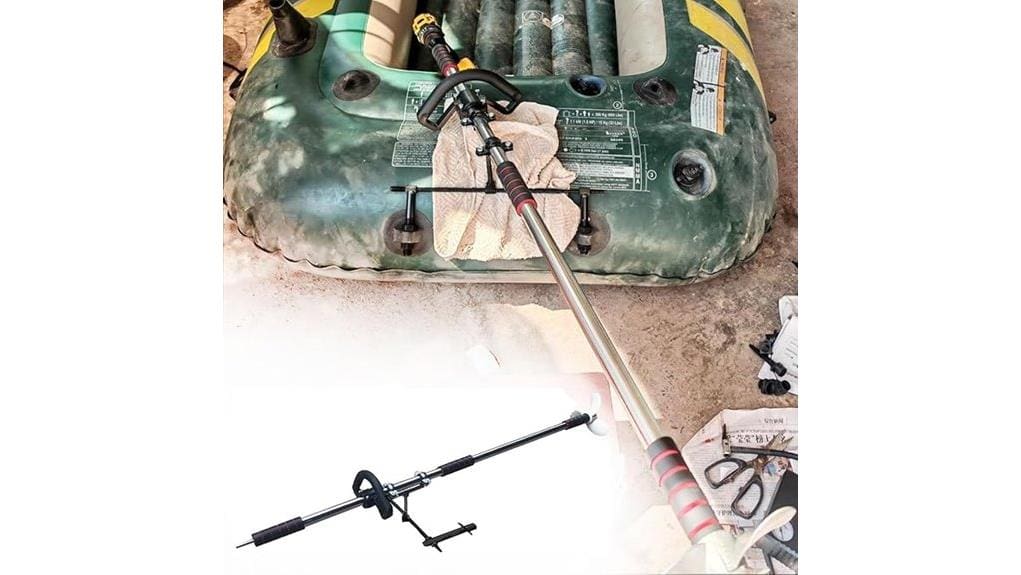

You’ll get a compact, drill-driven emergency paddle that clamps to small hulls and gives predictable low-speed thrust for docking, short hops, and precise repositioning. It uses a 16 cm propeller and aluminum-alloy body, fits hulls up to 7.5 cm with a quick clamp or up to 30 cm with an adjustable bracket, and relies on your cordless drill for drive. Expect modest speeds, conservative handling, and simple maintenance; keep torque and seals in check — more operational details follow.
Some Key Takeaways
- Compact drill-driven prop is best as an emergency paddle substitute for docking, short hops, and precise repositioning.
- 16 cm aluminum-alloy propeller delivers modest thrust; expect a few knots in calm water depending on drill RPM.
- Two mounts: quick-lock clamp fits hulls up to 7.5 cm; adjustable bracket extends reach to 30 cm for better steering.
- Pivot steering yields predictable, linear response but a wider turning radius and limited acceleration compared with outboards.
- Rinse after use, inspect seals, lubricate pivots monthly, and match drill torque to avoid slippage or bent mounts.
Quick Verdict and Key Specs for the Canoe Drill Propeller Emergency Paddle
While you won’t use it for long-distance cruising, the Canoe Drill Propeller Emergency Paddle gives you a compact, drill-powered backup that’s effective for docking, short hops, and emergency maneuvering. You get a compact design that balances portability with durable aluminum-alloy construction. Key specs: 16 cm propeller blades, clamp fits hulls up to 7.5 cm, adjustable bracket to 30 cm, pivot steering, cordless-drill drive (drill sold separately). You’ll appreciate quick setup and simple attachment options for rapid deployment. Performance expectations: short-range thrust, precise low-speed handling, reliable emergency propulsion when primary systems fail. Keep your paddle secure with a proper leash to prevent loss during deployment and retrieval paddle leash.
How It Performs on Water : Speed, Handling, and Real-Use Scenarios
Because it's driven by a standard cordless drill and a 16 cm propeller, expect modest thrust suited to low-speed maneuvers rather than sustained cruising: in calm water you'll typically achieve slow, controlled forward speeds adequate for docking, short transits and repositioning (think a few knots at best, depending on drill RPM and hull drag). You’ll notice limited top speed and conservative acceleration; plan trips accordingly. Handling stays predictable: torque is low, response linear, and wake minimal. Turning radius is relatively wide compared with powered outboards, so you must anticipate wider arcs when piloting tight channels or approaching docks. Ideal for emergency mobility and precise repositioning. For paddlers and beginners, pairing this setup with a simple bilge pump can improve safety during longer repositioning maneuvers.
Mounting, Steering, and Drill Compatibility You Need to Know
When you fit the Canoe Drill Propeller, pay close attention to the two mounting options—clamp and adjustable bracket—and how they affect alignment, leverage, and hull compatibility. You’ll test clamp fit on hulls up to 7.5 cm; it locks quickly but limits mounting angles. The adjustable bracket extends reach to 30 cm, giving greater steering range and improved leverage for varied hull contours. Match your drill torque to prop size and intended speed; excessive torque risks slippage or bent mounts. Pivoting steering requires secure fasteners and repeatable angle stops. Verify clearance, balance, and secure attachment before any open-water use. For reliable performance, choose mounting hardware rated for deck-mount pumps and appropriate kayak and beginner setups.
Build Quality, Corrosion Resistance, and Maintenance Tips
Several design choices govern the Canoe Drill Propeller's long-term durability: its aluminum alloy body, reinforced joints, and sealed fasteners minimize weight while resisting deformation under load. You’ll appreciate material longevity driven by corrosion-resistant alloy and compact geometry. Implement a strict maintenance schedule: rinse with fresh water after use, dry components, and lubricate pivot points monthly during season. Perform seal inspection before every trip; replace compromised seals immediately. Monitor sacrificial elements and perform anode replacement annually or when depletion exceeds 50%. Store dry, avoid galvanic contact, and torque fasteners to spec. These steps preserve performance and extend service life. Regular application of marine-grade protective coatings can further reduce corrosion risk and surface wear, especially for sacrificial anodes.
Who Should Buy It : Use Cases, Limitations, and Alternatives
If you prioritize a lightweight, portable emergency propulsion option for short distances and tight docking maneuvers, this drill-powered propeller suits you well; it’s ideal for anglers, casual paddlers, and small-boat owners who need a compact backup when primary propulsion fails. You’ll value it for fishing access and quick repositioning, and as a camping accessory for minimalist trips. Limitations: not for sustained open-water transit, limited thrust, depends on drill battery life, and requires secure mounting. Alternatives: small electric trolling motors for sustained power, foldable paddles for simplicity, and gas outboards for higher speed and range. Consider also pairing it with a suitable kayak anchor for improved station-keeping anchor selection.
Some Questions Answered
Is a Cordless Drill Included With the Kit?
No, a cordless drill isn’t included. You’ll provide your own drill; check battery compatibility and drill adapters before use. You’ll use the propeller attachment options with standard cordless drills via supplied adapters or compatible chucks, ensuring the battery voltage and torque match the propeller’s demands. You’ll use appropriate adapters to secure fit and prevent slippage. This lets you stay mobile and self-reliant while ensuring safe, reliable short-distance propulsion and emergency backup.
Can It Be Used in Saltwater Environments?
Yes — you can use it in saltwater, but you’ll need corrosion prevention measures to maintain marine compatibility. Rinse thoroughly with fresh water after each use, dry components, and apply a marine-grade anti-corrosion spray to aluminum joints and the propeller. Inspect clamps, fasteners, and the drill interface regularly for pitting or looseness. Store dry and lubricated; follow these routines and the unit will resist saltwater degradation while preserving performance.
How Loud Is the Propeller During Operation?
You’ll hear moderate motor noise from the drill-driven propeller, comparable to a handheld drill under load, not silent but not overpowering. Paddle vibration transmits mildly through the mount at higher RPMs; tightening clamps and using the bracket reduces tremor. You’ll still detect steady mechanical hum and occasional cavitation at top speed. For discreet use, run lower drill speeds and stay nearshore to preserve your freedom and stealth.
Can It Be Left Mounted While Transporting the Boat?
Yes — you can leave it mounted for transport if you secure it properly. Make certain clamp or bracket is tightened, check roof rack compatibility, and confirm vehicle clearance to avoid strike risks. Lock pivot and protect the propeller with a cover or padding. Periodically inspect fasteners during long trips. For freedom-focused users, this lets you stash the unit ready for quick launches while minimizing drag and damage during transit.
Are Spare Propeller Blades Sold Separately?
Yes — spare blades are available, but replacement availability depends on the vendor. You’ll want to confirm compatibility with the 16 cm propeller design and aluminum alloy hub. Order from the manufacturer or authorized reseller to guarantee fit and balance; generic blades may impair performance. Keep a matched spare set aboard for emergencies, and inspect blades after use. Promptly replace any deformed or corroded blade to maintain safe propulsion and control.


