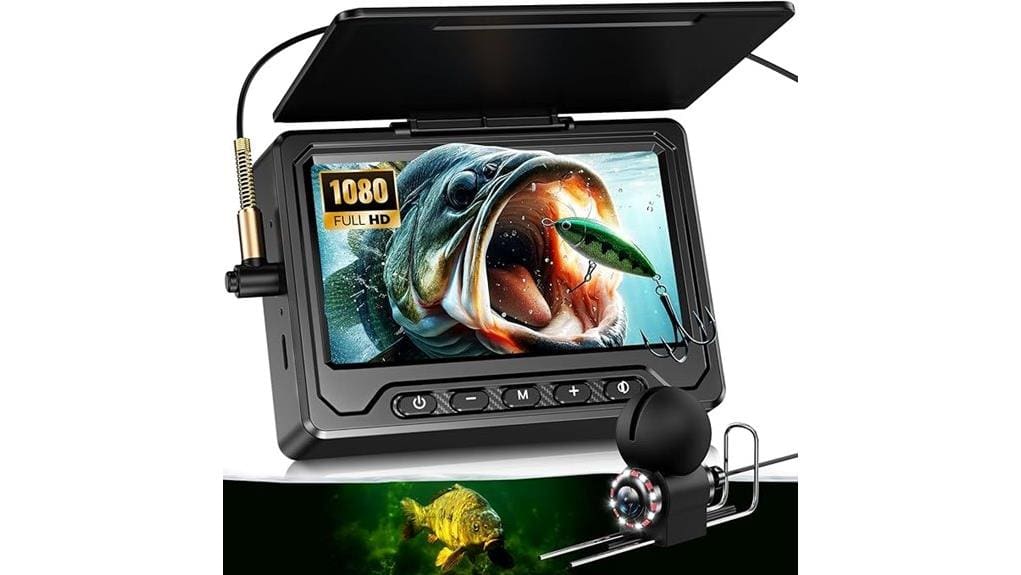
You’ll get a rugged, plug-and-play underwater viewer with a crisp 4.3" IPS screen and a 65 ft cable that’s great for boat, kayak, or ice-fishing scouting. It delivers clear daytime images, usable IR for low light, and about five hours of battery life, though distant targets soften and there’s no recording. It’s ideal if you want instant live visuals rather than data logging; keep cable management and battery limits in mind, and more setup and use tips follow.
Some Key Takeaways
- Portable plug-and-play underwater camera with a sharp 4.3" IPS screen for real-time viewing.
- 65 ft cable gives extended reach for boats, kayaks, and many ice-fishing situations.
- 5000 mAh battery provides about five hours of continuous runtime under normal conditions.
- IP68-rated housing allows full immersion (to ~20 m) but requires careful handling to protect seals.
- No built-in recording; good for live scouting but consider alternatives if you need footage or longer battery life.
Quick Verdict: Is the 4.3 IPS 65FT Camera Worth Buying?
If you want a straightforward, portable underwater viewer that’s ready out of the box, the 4.3" IPS 65ft camera is worth buying — it gives clear real-time visuals, long cable reach, and reliable battery life without the complexity or cost of higher-end systems. You’ll appreciate compact camera ergonomics compared to bulky rigs and a simple user interface that keeps controls intuitive on the water. In direct comparison, it trades advanced features for dependability: you get plug-and-play convenience, solid battery life for typical outings, and proven field testing in lakes, sea, and ice scenarios. It’s freedom-focused gear. For paddlers focused on protecting gear while on the water, pairing the camera with a durable waterproof case can help keep it safe during trips.
Real-World Performance: Image Quality, Night Vision, and Lighting in Lakes, Sea, and Ice
Now let’s look at how the camera actually performs on the water. You’ll see crisp daytime images on the 4.3" IPS, wider than rival compact cams, but expect depth dependent focus—nearby targets pop, distant structure softens. In clear lake water you’ll enjoy natural tones; in sea or murky conditions the high-brightness LEDs help, though a slight low light colorcast can appear with IR engaged. Ice fishing benefits from stable framing and IR that won’t spook fish. You’ll switch lights instantly from the monitor, comparing modes to suit visibility. Overall, it’s practical, predictable, and built for hands-off freedom. Capture more with purpose using underwater camera gear designed for kayakers.
What the Specs Actually Mean: Battery, IP68 Waterproofing, Cable Length, and Load Tolerance
While specs can look similar on paper, they'll affect how you actually use the camera: the 5000 mAh battery gives about 5 hours of continuous viewing so you can run a full day on the ice or a long kayak trip without swapping power. That runtime depends on Battery health — avoid full discharges and extreme temps to keep capacity high. IP68 means full immersion to 20 m, so you won't worry about rain or brief submersion, but rough handling still risks seals. The 65 ft cable offers reach; practice Cable management to prevent tangles and reduce strain. 100 kg load tolerance adds rugged reliability. Beginners should also consider light placement to ensure optimal visibility and safety while paddling.
Use Cases and Setup: Boat, Kayak, and Ice-Fishing Deployment Tips
Those specs shape how you'll set up and use the camera on a boat, kayak, or through ice—battery life, cable length, and IP68 rating inform placement, handling, and session length. On a boat, mount near the transom for steady boat trolling; keep the cable clear of propellers and prioritize simple line management so the camera won’t tangle. In a kayak, pair camera use with mindful kayak anchoring to hold position and avoid drift; clip the cable and monitor within reach. For ice fishing, focus on ice hole positioning and stable shroud against wind; short deployments conserve battery while you scout. Consider pairing the camera with a portable fish finder to enhance situational awareness and make targeted casts.
Pros, Cons, and Who Should Buy (Best Alternatives to Consider)
Because it balances ease-of-use with rugged specs, this underwater camera is a strong pick if you want straightforward, real-time scouting without fiddly setup. You get clear 4.3" IPS viewing, long 65ft cable, and durable IP68 build — pros include simple plug-and-play, solid battery life for half-day trips, and versatile mounting options for boat, kayak, or ice. Cons: no recording, limited 5-hour runtime if you need overnight use, and fixed cable length if you want deeper dives. Buy it if you value freedom, quick deployment, and live scouting. Alternatives: models with onboard recording or longer battery life. It’s also a good match for paddlers who want compact optics and accessories for kayaker use.
Some Questions Answered
Does the Camera Interfere With Fish Behavior Beyond Visible Light?
No — you won’t notice behavioral changes beyond visible light. The camera uses passive optics, so electromagnetic emissions are minimal compared with active sonar, and it doesn’t produce ultrasonic disturbances that spook fish. Compared to sonar or motorized rigs, it’s less intrusive, letting you observe natural activity. You’ll retain freedom to fish without altering patterns, though very cautious species might still react to close proximity or added lights at night.
Can the Monitor Mount Fit Standard Rod Holders?
Yes — the monitor mount fits many standard rod holders, but you'll want to check rod compatibility before buying. The included mounting adapters let you adapt the mount to common holder sizes; some anglers prefer aftermarket adapters for nonstandard rails or kayak setups. You’ll enjoy freedom to reposition quickly, compare setups, and swap mounts between boats or kayaks. If you need a specific fit, measure your holder and choose compatible adapters.
Is There Customer Support or Warranty Included?
Yes — you get warranty coverage and customer support. You’ll find a standard warranty covering defects and a clear return policy for buyer freedom. Customer support handles setup and issues; service response times are reasonable compared to peers. You can expect direct help for replacements or troubleshooting, and a return process if it’s not right for you. That balance gives you protection without tying you down.
Can the Cable Be Repaired or Extended if Damaged?
Yes — you can repair or extend the cable, but you’ll want proper splice techniques and marine-grade materials. You’ll compare DIY splices (cheaper, riskier) with professional repairs (more reliable). If you extend, use waterproof heat-shrink, marine connectors, and consider signal boosters for long runs to prevent image loss. You’ll keep freedom to customize, but choosing expert service preserves waterproof integrity and restores dependable viewing.
Does the System Work With External Displays or Recorders?
No — the system won’t natively feed HDMI output or Wireless streaming to external displays or recorders; it’s designed for its built-in monitor only. If you want freedom to use other screens or capture devices, you’ll need an external HDMI encoder or a wireless transmitter tied to the monitor’s AV output (if present) or modify the cable. That adds complexity and cost, but lets you record or mirror to bigger displays.