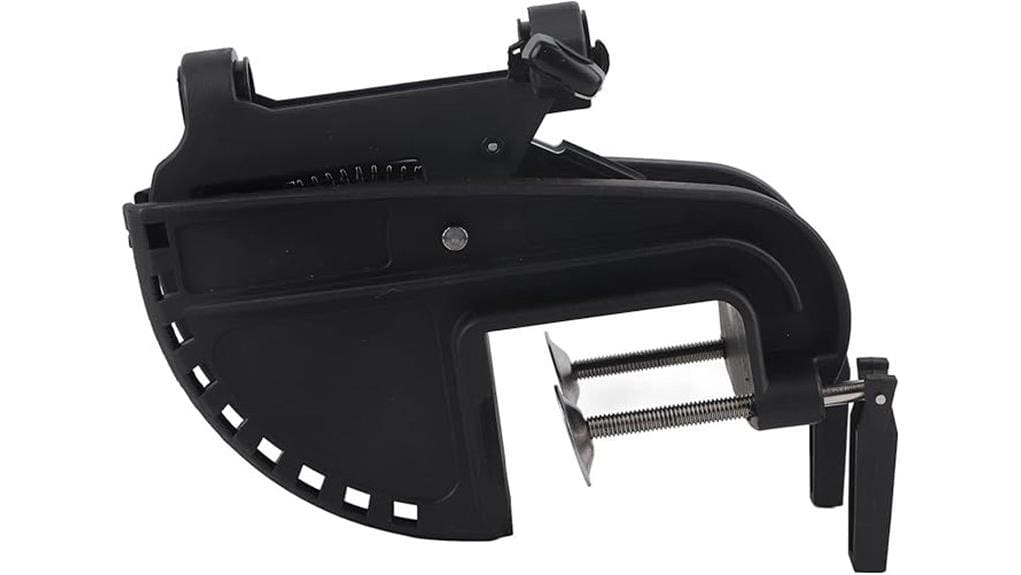
A 12V motor thruster bracket secures your outboard or trolling motor to small craft while the spring suspension soaks up shocks and reduces stress on the motor and hull. The 90° swivel lets you retract and tilt without transferring forces, improving steering and lowering peak power draw. Check spring travel, sealed swivel bearings, corrosion-resistant metals and UV-stable plastics for longevity. Install with padded mounts, quick-release clamps and routed wiring. Keep going to learn fit, performance and buying tradeoffs.
Some Key Takeaways
- Check spring suspension travel and dampening ratings to ensure it absorbs shocks without bottoming out.
- Verify a true 90° swivel with sealed or corrosion-resistant bearings for smooth retraction and steering.
- Confirm load ratings and materials (high-grade polymers, stainless or powder-coated metals) for saltwater durability.
- Inspect plastic components for UV and salt resistance to avoid premature cracking or brittle failure.
- Test quick-release clamps, mounting alignment, and wiring routing during installation for secure, user-friendly setup.
What a 12V Motor Thruster Bracket Does and Who Needs One
A 12V motor thruster bracket secures your outboard or electric trolling motor to small craft while absorbing shocks and reducing stress on both the motor and hull; its spring-loaded suspension and 90-degree swivel let you retract, tilt, and steer smoothly without transferring impact forces. You’ll attach it quickly, gaining steadier propulsion, lower peak power consumption during trims, and improved marine safety by minimizing sudden jolts that strain wiring and mount points. You’ll benefit if you run kayaks, inflatables, or light tenders and want reliable control, reduced maintenance, and the freedom to navigate varied waters without compromising safety or efficiency. These brackets are especially useful for skeg-equipped kayaks and beginner paddlers who need stability and control when adding motorized propulsion.
Key Features to Check: Spring Suspension, 90° Swivel, and Build Materials
When you inspect a 12V motor thruster bracket, focus first on the spring suspension, the 90° swivel action, and the materials used for load-bearing parts; each directly affects durability, control, and safety. Check spring dampening ratings and travel to make certain shocks absorb impacts without bottoming out. Verify the swivel mechanism resists swivel corrosion—look for sealed bearings or stainless hardware. Assess plastic longevity in UV and salt exposure zones; high-grade polymers reduce fracture risk. Inspect material coatings like powder coat or galvanizing on metal members to prevent rust. These checks give you reliable, freedom-promoting performance with minimal surprises.
Real-World Performance: Stability, Motor Stress Reduction, and Handling
Having checked suspension, swivel, and materials, you’ll notice how those specs show up on the water: the spring suspension soaks up chop and reduces shock loads to both motor and hull. You’ll feel improved ride comfort as the bracket isolates vibration, letting you maintain control without constant corrections. Stability increases during turns and following seas because the mount keeps thrust aligned, reducing yaw. Motor stress reduction extends prop and gearbox life and supports consistent fuel efficiency by avoiding throttle spikes. Handling becomes more predictable; you’ll push harder into wind or current with confidence and less mechanical risk. For kayakers and beginners, adding a bracket like this also makes maintenance and water removal easier by pairing well with basic bilge pump practices.
Installation Checklist and Quick-Fit Tips for Kayaks and Inflatable Boats
Because quick, secure installation matters on the water, follow a focused checklist to get your 12V motor thruster bracket mounted correctly on kayaks and inflatable boats. Inspect hull attachment points, confirm bracket alignment for the 90-degree swivel, and test spring-loaded suspension travel before finalizing. Use quick release clamps for rapid mounting and removal; torque clamps to spec without over-tightening. Apply padding solutions where the bracket contacts hull or tubes to prevent chafing and seal gaps. Route wiring clear of moving parts, secure battery connections, and perform a dock-side functional test. Pack basic tools and spare clamp screws for freedom on the water. Consider using an all-terrain kayak cart to transport your rig and reduce strain when moving between launch points and parking areas, as stability on varied surfaces can prevent damage during transport.
Buying Guide: Compatibility, Durability, and Value-for-Money Criteria
If you want a bracket that performs reliably across boats and seasons, focus first on compatibility, durability, and real-world value: verify hull or tube attachment dimensions and clamp types against your kayak or inflatable, prioritize corrosion-resistant materials and a robust spring mechanism that maintain preload and travel under repeated loads, and weigh features like the 90° swivel and plastic bearing quality against price and warranty to judge true cost-per-use. Check installation footprint, load ratings, and swivel torque so the bracket won’t impede your freedom on the water. Run price comparisons and scrutinize warranty terms before you buy. Consider also industry-tested anchor systems that complement thruster brackets for best overall performance.
Some Questions Answered
Are Replacement Springs or Swivel Parts Available Separately?
Yes — you can get replacement springs and swivel assemblies separately. You’ll order them to maintain the spring-loaded suspension and plastic swivel components without replacing the whole bracket. Check manufacturer parts lists or marine suppliers for compatible spring sizes and swivel assemblies specified for kayaks and inflatable boats. You’ll want exact fit measurements and materials to preserve durability, maneuverability, and stress reduction on the motor and hull during use.
Will the Bracket Corrode in Saltwater Over Time?
Yes — in saltwater the bracket can corrode over time if you don’t maintain it. You’ll want to watch for galvanic corrosion between dissimilar metals and for metal fatigue from repeated loads and vibration. Rinse with fresh water after use, apply corrosion inhibitor, and inspect springs/swivels regularly. Use sacrificial anodes or compatible fasteners to reduce electrochemical attack, and replace components showing pitting or cracking to keep performance reliable.
Can It Support Electric Trolling Motors Heavier Than Specified?
No — you shouldn't exceed the specified weight capacity. Pushing heavier motors risks failure of spring-loaded supports and plastic swivel parts, compromising mount compatibility and safety. You can, however, verify your motor’s weight against the bracket’s rating and choose a reinforced mount or professional reinforcement if you want extra freedom. Always test securely before use and prefer brackets designed for higher loads rather than overloading a lighter unit.
Is There a Warranty or Customer Support for Defects?
Yes — you get a limited warranty; warranty duration typically covers manufacturing defects for a set period (check your purchase docs). If you find defects, contact customer service promptly; they’ll guide replacements or repairs. You’ll need proof of purchase and photos of the issue. Keep installations and load within specs to avoid voiding coverage. Customer service aims to resolve things quickly so you can get back on the water.
Does the Bracket Affect Trailer Loading or Storage?
No — the bracket won’t appreciably hinder trailer loading or storage. You’ll maintain trailer balance if you mount it per instructions and center weight properly; the spring-loaded design actually eases shock loads during transport. Storage access stays convenient because the 90-degree swivel lets you stow the motor compactly. You’ll still verify clearance on your specific trailer and secure the assembly to prevent movement during transit for safe, free roaming.