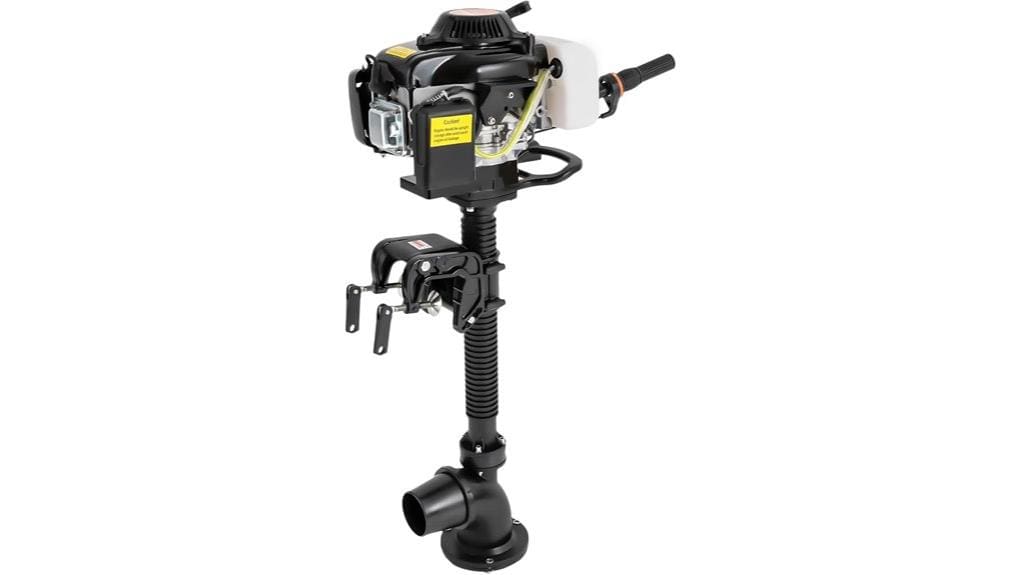

You’ll find the 4HP 55cc jet-pump outboard gives immediate, linear acceleration with responsive thrust in the 4,500–5,500 RPM band and low vibration thanks to its four-stroke design. It’s fuel-efficient for its size, cools via directed airflow and CDI ignition for stable combustion, and makes compact, low-energy wakes ideal for inflatables, kayaks and shallow skiffs. Controls offer step-less throttle, tilt and 360° rotation for tight maneuvering. Keep basic spares and routine maintenance for long life and check the details below.
Some Key Takeaways
- 55cc four-stroke jet outboard delivers responsive mid-range thrust around 4,500–5,500 RPM with smooth, step-less throttle control.
- Ideal for inflatables, dinghies and kayak conversions; not suited for heavy-displacement hulls or open-ocean runs.
- Jet pump offers compact, low-wake operation and safer shallow-water use compared with propellers.
- Fuel-efficient for its class, aided by CDI ignition and steady torque, but cooling airflow and vents must be clear.
- Maintenance needs: check fuel system, spark plug, impeller and tilt/rotation linkages; change oil and store with stabilizer.
How This 4HP 55cc Jet Pump Performs on Water
When you mount the 4HP 55cc jet pump, you'll notice responsive thrust and predictable handling across the 4,500–5,500 RPM band. You get immediate acceleration with linear throttle response, letting you vary speed smoothly via the step-less control. Water handling stays neutral at low trim and tight when you trim down for speed, so maneuvering around shoals or docks feels secure. Wake characteristics are compact and low-energy compared with propellers, reducing wake impact and improving stealth for fishing. Reverse via 180° head rotation is effective for quick stops and tight turns. Controls are simple, rugged, and freedom-focused. Many new kayakers prefer hard-shell inflatables for their stability and durability when using small outboard motors.
Key Specifications That Affect Speed, Fuel Use, and Durability
Because engine speed, displacement and cooling directly dictate thrust, fuel consumption and longevity, you should focus on rpm range, cc rating, and thermal management when judging this 4HP/55cc jet pump. You’ll use the 4,500–5,500 RPM window to balance top speed against fuel draw; staying near mid-range optimizes thrust per liter. The 55cc four-stroke gives efficient combustion and steady torque, reducing sudden engine vibration that wastes energy. Check cooling airflow paths, wind-cooling and exhaust vents to keep temperatures low and parts lasting. CDI ignition stabilizes burns; variable throttle control lets you tune performance for range and reliability. Consider also pairing the motor with electric bilge pumps to improve safety and prevent water-related engine issues.
Real-World Use Cases: Best Boats and When It Falls Short
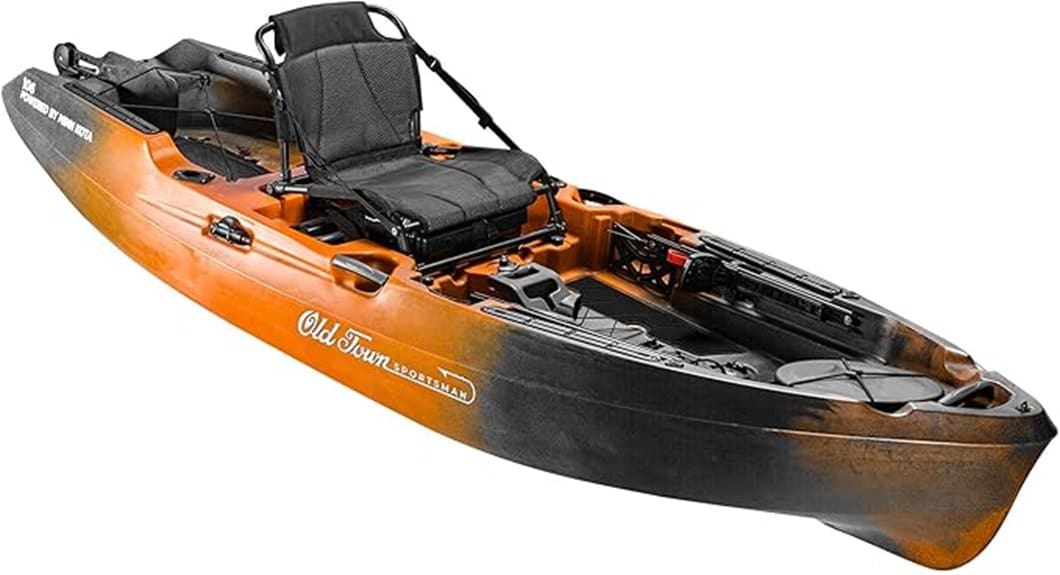
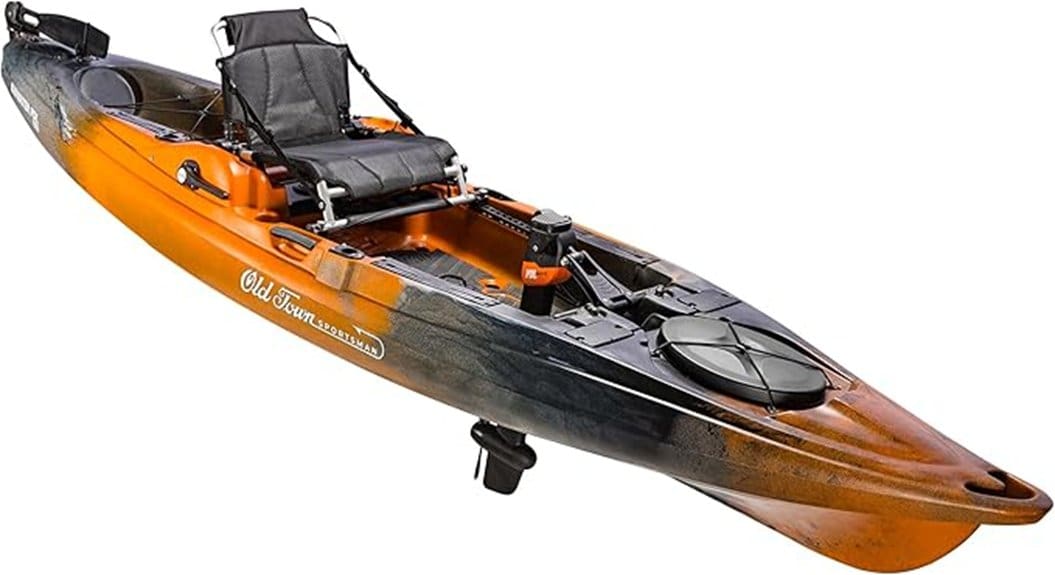
If you’re outfitting a small craft for fishing, light-duty transport, or leisurely days on calm waters, this 4HP/55cc jet pump delivers efficient, reliable propulsion with minimal fuss; its mid-range RPM band and four-stroke efficiency give steady thrust and reasonable fuel economy for inflatable boats, dinghies, and small aluminum or fiberglass skiffs. You’ll love it for kayak conversions, shallow draft craft, and beach launching where propellers are a liability. It’s competent for sheltered river running and calm bays, but it falls short on heavy displacement hulls, open-ocean runs, strong currents, or sustained high-speed needs where power and seakeeping matter. Perfect Pedal Kayaks offers specialized pedal kayak gear and accessories that make small-craft conversions and outfitting easier.
Controls, Handling, and Maneuverability (Tilt, Reverse, 360° Rotation)
Although compact, the controls give you precise authority over trim, direction, and thrust: a step-less throttle lets you dial RPMs smoothly within the 4,500–5,500 range, the tilt mechanism lets you set propulsive angle for launch, beaching, or shallow water, and a 180° head rotation engages reverse quickly without a separate gearbox, while full 360° rotation capability provides excellent lateral maneuvering for tight docking and shallow-water turns. You get immediate thumb steerability feedback through responsive linkages and ergonomic handles that reduce fatigue. Tilting is positive and ratcheted, reverse is instant, and 360° rotation keeps you free to position the boat precisely. For safety-conscious paddlers, pairing an outboard like this with a personal locator can provide added peace of mind on the water.
Buying Checklist and Maintenance Tips for Long Life
Now that you’ve seen how the controls and maneuverability let you place and power the boat precisely, focus on what to check and maintain to keep that performance over time. Inspect fuel system, spark plug, CDI ignition, and cooling vents before each outing. Verify tilt, 360° rotation and reverse linkage for smooth operation. Use recommended oil and run the engine to circulate after refuel. Follow a routine maintenance schedule: change oil, clean filters, and check impeller wear. For seasonal storage, drain fuel or add stabilizer, fog the cylinder, and store upright in a dry, ventilated spot. Keep spare prop and basic tools. Also pack an essential repair kit including spare fuel lines and patch materials for quick on-water fixes.
Some Questions Answered
Is This Engine CARB or EPA Emissions Compliant?
No, it’s not EPA-certified; you’ll need to confirm local emissions testing requirements. You’ll perform carburetor tuning for peak combustion and reduced pollutants, and you’ll document results if authorities require emissions testing. You’ll rely on the four-stroke design and CDI ignition to improve fuel efficiency versus two-strokes, but regulatory compliance isn’t automatic. If you want legal operation in regulated areas, plan for certification, testing, or aftermarket controls before use.
What Warranty Duration and Coverage Are Included?
You get a limited warranty that typically lasts one year from purchase; it covers defects in materials and workmanship. You’re offered parts coverage for specified components—engine internals, ignition, and fuel system—within that term, excluding wear items, misuse, or improper maintenance. You’ll need proof of purchase and to follow maintenance schedules to keep coverage. Optional extended plans may be available if you want longer protection and broader parts coverage.
How Noisy Is the Motor at Typical Cruising Speed?
You’ll hear a moderate noise level at cruising speed—roughly 75–82 dB by decibel measurement near the transom. You’ll notice low-frequency cabin vibration transmitted through the hull, but jet design cuts prop noise compared with exposed propellers. You’ll want to check mounts and dampers to reduce vibration. For freedom on the water, expect audible engine tone without intrusive prop slap; it’s workable for fishing and short cruises.
Are Spare Parts and Service Centers Widely Available?
Yes — you’ll usually find local dealers stocking common wear items and offering service, and aftermarket parts are widely available for routine repairs. You’ll want to confirm dealer coverage in your area before buying; carry key spares like spark plugs, impeller components, and throttle cables. That lets you stay on the water longer and maintain independence. If you’re remote, source a parts list and compatible aftermarket parts beforehand.
Can the Engine Be Used in Saltwater Without Extra Corrosion Protection?
No, you shouldn’t use it in saltwater without extra corrosion protection. Saltwater maintenance is essential: flush with fresh water after each use, rinse cooling passages, and lubricate controls. Fit sacrificial anodes on the lower unit and replace them as they erode. Apply corrosion-inhibiting sprays to exposed metal and fasteners, and inspect seals regularly. These steps preserve performance, extend service life, and let you enjoy saltwater freedom without premature damage.