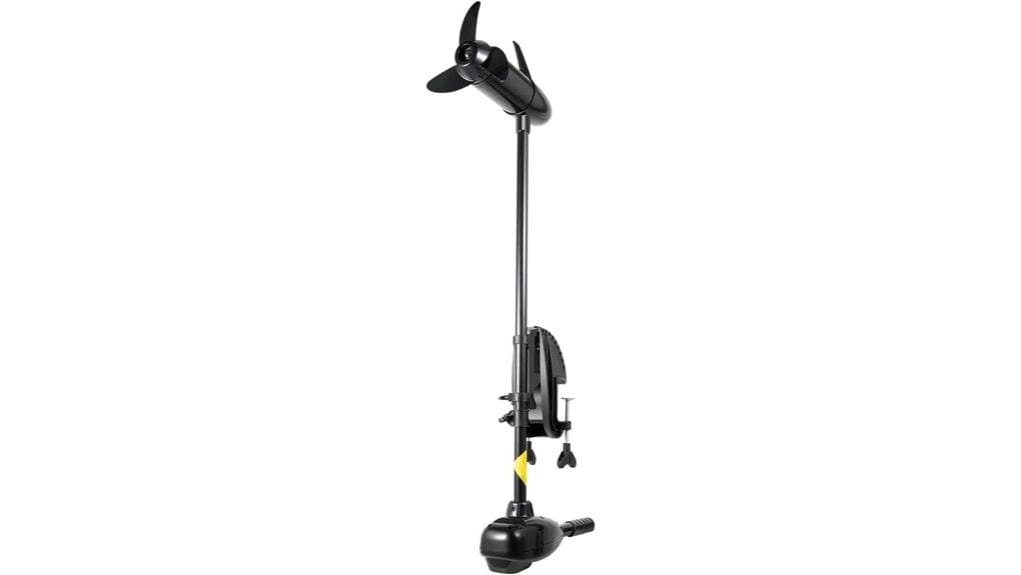

You’ll find the 1.2HP electric trolling motor gives you steady, quiet thrust and precise control for small to mid‑size boats, favoring reliable cruising over raw speed. It uses a copper motor and anti‑winding three‑blade prop for smooth, low‑noise operation, an 8‑speed gearbox for fine maneuvering, and adjustable mounts to fit most kayaks and fishing boats. Battery life varies by throttle and load, so monitor charge and recharge after trips — keep going for full specs and tips.
Some Key Takeaways
- 1.2HP motor delivers steady, quiet thrust with up to 1900 r/min and consistent torque across gears.
- Top speed about 4.34 mi/h on a 7.54 ft boat carrying ~198 lb; run-time varies by throttle and battery.
- Eight-speed system (5 forward, 3 reverse) offers precise low-speed crawling and smooth acceleration.
- Adjustable transom mount, retractable handle (17.7–22 in), and corrosion-resistant hardware support secure, ergonomic installation.
- Anti-winding three-blade prop and copper windings reduce noise and line tangles, ideal for stealthy fishing.
How Fast and Powerful Is the 1.2HP Motor in Real Use?
While the 1.2HP pure copper motor might sound modest on paper, it delivers real-world performance that punches above its class: you can expect up to 1900 r/min and a top speed around 4.34 mi/h on a small boat (7.54 ft) carrying about 198 lb in calm water, and the motor’s traction force rating up to 4,078 lb means it provides confident thrust for boats carrying 6–8 people or towing light gear; in short, it’s optimized for steady, quiet cruising and reliable acceleration rather than high-speed sprinting. You’ll experience controlled power delivery with consistent torque output across gears, smooth starts, and controlled acceleration, making maneuvering and trolling easier and more freeing. Consider pairing this motor with anchor systems designed for kayaks and small boats to maximize holding power and safety.
Battery Life, Monitoring, and Practical Run-Time Expectations
Because battery life depends on throttle setting, load, and battery capacity, you should plan run-time around realistic use rather than the motor’s peak numbers. You’ll typically get several hours at low throttle but far less at top speed; expect run-time to vary with boat weight and conditions. Use the top-mounted battery indicators to monitor state-of-charge in real time and avoid surprises. Develop disciplined charging habits: recharge after every trip, store batteries partially charged, and avoid deep discharges. That routine preserves capacity, extends life, and keeps you free to stay out longer without worrying about getting stranded. For added peace of mind on the water, consider carrying a compact emergency power bank designed for kayakers to maintain essential electronics and small batteries charged while paddling and ashore, especially on longer trips with limited charging options and portable power needs.
Mounting, Adjustability, and Fit for Kayaks or Fishing Boats
Getting the motor mounted right makes all the difference for performance and safety, so you’ll want to check fit and adjustability before you head out. You’ll like the adjustable transom design: it fits most kayaks and fishing boats when you confirm mount compatibility. Inspect bracket materials for corrosion resistance and strength so the motor holds under load. Use the adjustable suspension bracket to set height and angle for prop clearance and efficient thrust. Test handle ergonomics — the retractable control handle (17.71–22 in) should feel natural for long runs. Secure fasteners, then enjoy confident, liberated time on the water. Consider pairing the motor with rudder pedal systems to improve steering precision and control.
Propulsion, Gearing, and Handling (8-Speed + Anti-Winding Prop)
If you want precise boat control, the motor’s 8-speed system gives you it—five forward gears and three reverse gears let you fine-tune speed and maneuvering without jerky shifts. You’ll appreciate distinct gear ratios that let you crawl along weeds or sprint to a new spot, keeping the boat steady and responsive. The anti-winding three-blade propeller reduces line tangles and improves thrust, so you waste less energy fighting snags. Prop noise stays low thanks to balanced blades and the motor’s quiet copper windings, helping you stay unnoticed. Handling feels deliberate, predictable, and tuned for freedom on the water. For kayakers looking to outfit their craft, consider a dedicated kayak rod rack to keep rods secure while maneuvering.
Who Should Buy This Motor and Troubleshooting Tips
When you want quiet, efficient thrust for a small to mid-size boat, this motor is a strong choice—its 1.2 HP copper motor, up to 4.34 mph top speed, and traction force near 4,078 lb handle loads for 6–8 people and various conditions. You should buy it if you value stealthy fishing, easy portability, and adjustable mounting for kayaks or bass boats. Follow a straightforward maintenance schedule: rinse after salt use, check connections, and inspect the propeller monthly. Troubleshoot by confirming battery charge, testing throttle response, and consulting warranty coverage before DIY electrical repairs to keep your freedom afloat. Many new paddlers choose hard-shell inflatables for their combination of stability and portability, making them a popular option for beginners and casual anglers hard-shell inflatables.
Some Questions Answered
Does It Come With a Warranty and What Does It Cover?
Yes — it includes a limited warranty covering defects in materials and workmanship. You’ll get parts coverage for major components, and the policy explains repair or replacement options. Service centers handle authorized repairs; you’ll need proof of purchase for claims. The warranty is typically non-transferable to keep terms clear, so check your paperwork if you plan to sell. Keep receipts and register the product to simplify future service.
How Heavy Is the Motor for Transport and Installation?
The motor weighs around 28–32 lbs, so you can transport and install it solo or with a partner. Its compact weight makes it easy to lift into a kayak or small boat, and built-in carry handles let you grip securely while maneuvering. You’ll appreciate the adjustable bracket and retractable handle for quick mounting and alignment, letting you get on the water fast and maintain freedom without wrestling heavy gear.
Is Freshwater Vs Saltwater Maintenance Different?
Yes — maintenance differs. In saltwater you'll rinse thoroughly with fresh water after each use, check for corrosion prevention on mounts and prop, and apply protective spray to metal parts. In freshwater you still rinse occasionally and inspect seals, but corrosion risk is lower. For both, monitor and manage battery charging habits, store the battery charged to recommended level, and periodically tighten fasteners so you're ready to go when freedom calls.
Can I Use a Trolling Motor With a Livewell or Other Accessories?
Yes — you can use a trolling motor with a livewell and other accessories, but you’ll manage power carefully. You’ll install accessory mounts for pumps and electronics, use battery isolation to protect starting batteries, and run dedicated circuits or a marine switch panel. You’ll monitor amp draw so the motor and livewell don’t deplete one battery, and you’ll secure wiring and mounts for reliable, freedom-minded fishing without surprises.
Are Spare Propellers and Parts Readily Available?
Yes — propeller availability is good; you’ll usually find OEM spares and common aftermarket options. You can source blades, shafts and mounting parts from dealers or online, and aftermarket compatibility is strong for standard three-blade designs. You’ll want to verify shaft size and pitch before buying, but you’ll enjoy freedom to replace or upgrade parts quickly, keeping you on the water with minimal downtime and flexible repair choices.