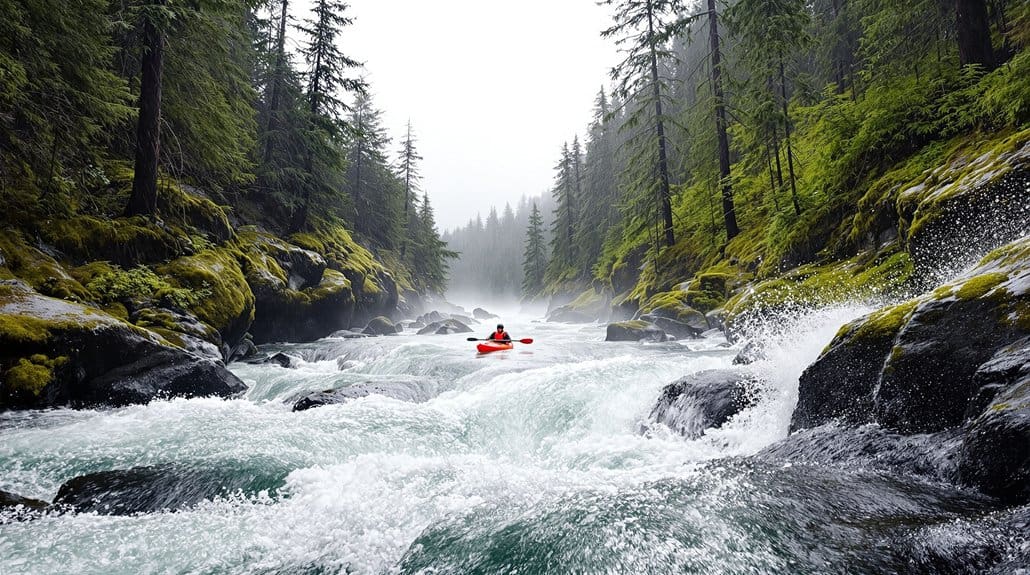
When the Pacific Northwest’s rain season fires up, you’ll chase punchy creeks like White Salmon’s Husum Falls, the short brutal Wind River stretch, or technical Skykomish reaches, but first check USGS gauges, freezing levels and dam releases, pack a drysuit, helmet, throw bag, spare clothes and a bilge pump, scout every rapid from shore, and don’t go solo—book a guide if unsure; follow access rules and leave no trace, and if you want timing, flow beta and run-specific tips keep going.
Some Key Takeaways
- Focus on coastal, low-elevation, and rain-on-snow Cascade/Olympic runs for reliable high flows during Pacific Northwest rain seasons.
- Top quick picks: White Salmon (Husum Falls), Wind River upper six miles, and Skykomish technical reaches.
- Monitor USGS gauges, SNOTEL, NWS/AHPS forecasts, and freezing-level trends to time storm-driven high-water windows.
- Prioritize drysuits/thermal layers, helmet, high-buoyancy PFD, throw bag, and team rescue protocols for cold-water runs.
- Use local outfitters for scouting, shuttle help, and guided runs on technical winter drops; book 2–4 weeks ahead in peak periods.
Best Winter Whitewater Runs in the Pacific Northwest : Quick Hits and Who They’re For
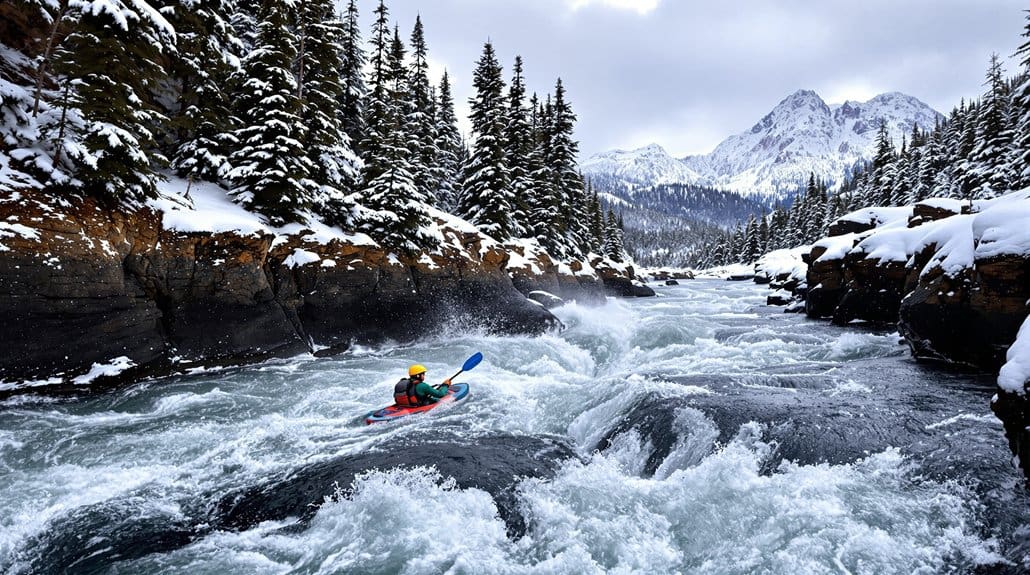
If you’re tempted to chase winter flows, start with runs that match your skills and kit, because the Pacific Northwest serves up a lot of power this time of year and you don’t want to be caught underdressed or out of your depth. You’ll want reliable options first: the White Salmon River’s Husum Falls gives steady Class III–IV water about an hour from Portland, so pack a drysuit, solid helmet, and strong swim skills, and scout or shuttle with a buddy. If you’re newer, pick guided trips with local outfitters who use high-end safety gear and modified lines; if you’re pushing limits, aim for Wind River’s upper six miles or technical Skykomish runs, but only with prior Class IV experience and a practiced rescue plan. Consider outfitting with purpose-built gear for creek boat adventures, like specialized kayaks and accessories from a trusted creek boat outfitter.
When and Why the Rain Season Turns Rivers On (Timing by Basin)
You’ll watch different basins wake up at different times — coastal and low-elevation rivers can go from trickle to runnable within hours of a big warm storm, while inland, alpine-fed drains usually need rain-on-snow or a rise in the snowline to turn runoff into big flows. Start checking basin-specific stage gauges, recent snowpack reports, and freezing-level forecasts before you go, and carry warm layers, a throw bag, and a helmeted, experienced partner or guide when storms are in the forecast. Ask yourself if the rain’s been heavy and sustained, if soils were already wet, and if forecasts show an atmospheric river with high freezing levels, because those three things together usually give you the multi-day, high-water windows that make winter runs worth it. Also bring a compact hypothermia kit and other essential cold-water gear, like a drysuit or thermal layers and a personal flotation device, and learn how to use them cold-water gear.
Rainfall Timing By Basin
When rain hits the Cascades and Olympics, you’ll notice rivers flip from low and skimpy to full and runnable in just a day or two, so pay attention to weather models, recent storm tracks, and short-term forecasts before you head out. You’ll watch coastal basins and the Columbia Gorge respond fastest, often within 24–48 hours, so you check gauges and go when forecasts show a solid frontal push, while glacier-fed runs can stay up longer when melt joins the rain. Eastern basins lag, needing warm storms or melt pulses, so plan for March–May windows there, and remember dam schedules can override nature on some reaches, so call or check release charts before committing. Also pack the right gear for river trips and consult current charts to plan routes and hazards.
Snowpack And Runoff
You’ve already seen how fast rain can flip a river from skinny to runnable, and now you’ll want to watch what’s sitting up in the mountains — snowpack controls a lot of the timing and how long rivers stay big. You check SNOTEL snow-water equivalent and USGS gages, you scan forecasts for atmospheric rivers, and you know coastal low basins light up fast within 24–72 hours of big storms, so you pack for swift, technical runs and move quick. In the Cascades and Olympics, deep snow can hold river power until spring melt, so expect extended windows when rain-on-snow hits, or rely on dam release schedules where present. Keep real-time data top of mind, plan trips with backup days, and stay flexible. Also carry essential safety gear like a rescue pulley and high-quality throw bag for swiftwater rescue.
Top Washington Runs to Chase High Water: Wind, White Salmon, and Skykomish
If you want big winter lines, start by scouting the Wind River’s upper run near Carson for short, intense Class III–V rapids—watch for the Ram’s Horn flip zone and aim for late fall through spring high flows. For longer, glacier-fed pushy water, check the White Salmon around Husum Falls and plan trips when storms and melt lift the river, keeping your shuttle just under an hour from Portland; bring a wetsuit or drysuit, helmet, PFD, and at least one experienced partner or a guide. When you’re targeting technical, boulder-strewn power, treat the Skykomish like a full-commitment run—read gauges, time windows with rain and snowmelt, carry cold-water gear and throwbags, and if you’re not solid Class V, hire a local outfitter. Consider fitting your boat with a sea kayak rudder to help maintain control in strong current and surf.
Wind River Winter Lines
Grab your gear and plan for a short, intense blast of whitewater on the Wind River, a winter run that starts near Carson and drops roughly six river miles through tight, technical rapids before you hit the take‑out with road access for a one‑vehicle shuttle. You’ll want neoprene or wool layers, a good helmet and PFD, and a hardy boat—R2 rafts or catarafts are common, because Ram’s Horn can flip you fast, so only paddle it if you’ve got skill or a guide. Watch flows after heavy rain or warm spells, check with local outfitters like Northwest Rafting or Wet Planet, and book a guide if you’re unsure, because this reach rewards bold, prepared paddlers. Bring a reliable bilge pump and know how to use it in case of swamping, since proper drainage gear can make rescues and self‑recovery much safer bilge pumps.
White Salmon High Flows
Chase the White Salmon when the spring melt and Pacific storms line up, because this river turns into a high‑water playground—fast, punchy, and not shy about throwing you into big holes at Husum Falls and Hospital Bar—so you’ll want to treat it like a serious project, not a casual day trip. You’ll feel free blasting big water, but respect is nonnegotiable: scout entry lines, watch for powerful hydraulics, and ferry with purpose to avoid holes you can’t punch through. Bring a high‑buoyancy boat, throw bag, foam, helmet, and a VHF or phone in a dry pouch; paddle with a solid team or guide, talk exit plans before you push, and check snowpack plus storm forecasts so you know when to chase and when to wait. Consider pairing your trip with high-float life jackets and other safety gear recommended for paddling in big water.
Skykomish Technical Runs
When the Skykomish comes up in winter or spring storms, you’ll see it change from a mellow canyon into a technical, surf-and‑boulder beast that rewards exact moves and hard scouting, so don’t treat it like a casual run—you’ll want to approach it like a project. You’ll feel drawn to the Skykomish River when rain and melt spike flows, but plan for sustained Class V lines near Index, scout on foot for house‑sized boulders and strong hydraulics, and time runs around Pacific storms. Pack a hard‑shell, full drysuit, helmet, and a throwing system, paddle with experienced people or a guide, know road exit points along the canyon, and be ready to bail or portage if a line looks wrong. Bring a reliable floatation bag as part of your essential gear to improve boat recovery and safety in big-water swims.
Top Oregon Runs to Chase High Water: McKenzie, North Santiam, and Upper Clackamas
If you want punchy, reliable winter runs in Oregon, start with the McKenzie, the North Santiam (Packsaddle/Upper), and the Upper Clackamas, since each gives you distinct cold-season thrills and clear things to watch for before you put on water. You’ll find the McKenzie River runs year-round Class III, with rock gardens and long eddy lines that shine in rain events and spring melt, so scout lines and pick exits where eddies form. Packsaddle and the Upper North Santiam hit Class III–IV in the rainy season, watch for house-sized boulders and scout tricky drops. Upper Clackamas is creek-style winter fun, steep put-ins off Highway 224 often slick. Dress for hypothermia, use drysuits or thick wets, wear helmet/PFD, don’t run solo, check USGS and call outfitters for flows.
How to Choose a Run by Difficulty and Conditions (Class III–V Decision Guide)
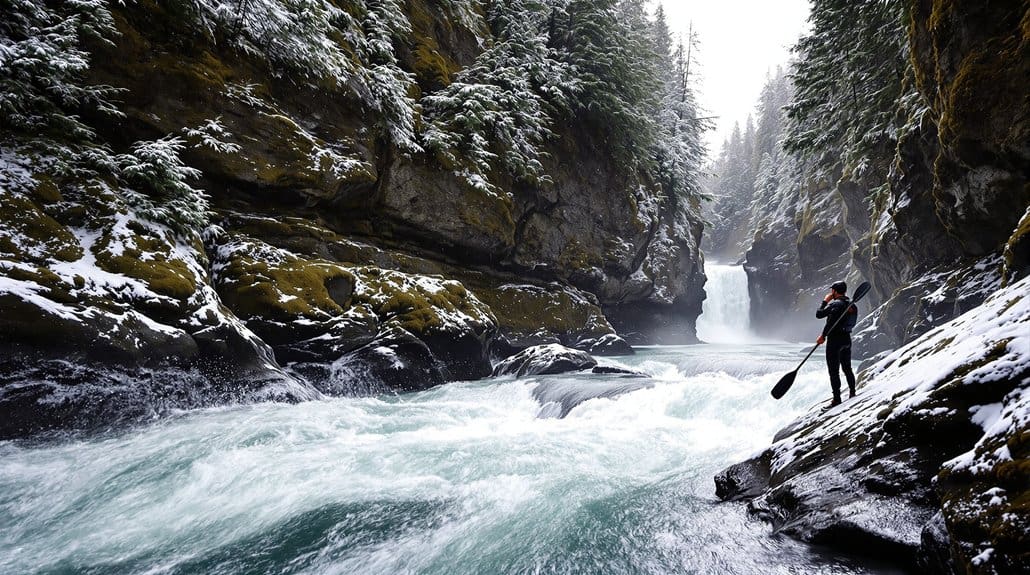
Because picking the right winter run comes down to matching the river to your skills and the day’s flow, start by checking real-time gauges and asking a local outfitter what the river’s doing, then choose a Class III, IV, or V line that leaves you a clear margin for error. You’ll lean Class III when flows are moderate, like lower Wenatchee or Methow stretches, to practice ferrying and eddy turns without too many mandatory swims, and you’ll step up to class IV only when you’ve logged solid moving-water time, can land precise ferries, and gauges sit above base but below extreme peaks. Save Class V for teams with technical rescue skills, scout first, and don’t hesitate to hire a guide who’ll dial the run to the day.
Safety Essentials for Rain‑Season Boating: Cold Water, Scouting, and Swim Response
When you run winter rivers you’ve got to respect cold‑water risks, so suit up for immersion with a drysuit or thick neoprene, expect numb hands and face within minutes at 40–50°F, and plan for rapid hypothermia if you end up swimming. Before committing to a big rapid, scout from shore every time—walk the line, note eddies, holes, safe bailouts and downstream rescue zones, and mark where someone should wait with a throw bag and paddle ready. Run with experienced partners or a guide, carry a helmet, Level‑rated PFD, quick‑release knife and throw bag, and practice a swimmer response—stay on your back with feet downstream, free any trapped feet, and use a defensive V to keep your head up for rescue.
Cold‑Water Exposure Risks
Cold water is sneaky, so you’ve got to treat every winter run like a cold‑exposure scenario from the moment you pull up to the put‑in, because 35–50°F water will start knocking down your body heat fast and hypothermia can begin in 30–60 minutes without the right kit. You want freedom on the river, but respect the risk: high water changes everything, so assume eddies, holes, and strainers will be stronger, scout what you can from shore, and brief your crew on exits. Wear a drysuit or solid neoprene layers, booties, and wool or synthetics, carry redundant rescue gear, insulated blankets and spare dry clothes, and rehearse a swim response—face up, feet downstream, swim for the nearest eddy while rescuers get throwbags ready.
Rapid Scouting Protocols
Start your scouting mindset before you step out of the shuttle, because quick, calm eyes on the river will keep everyone safer once you’re on the water; look upstream and downstream for big wave trains, strong hydraulics, eddies you can catch, strainers and undercuts to avoid, and any obvious boofs or pinning rocks, and pick a clear, conservative line to scout from shore if the flow’s high. You’ll scout rapids from shore when you can, assign a lead and spotters, and prep a swim‑rescue team with throw bags, tethered paddle and clear whistle signals, then check lines on foot if a rapid looks Class IV–V. Dress cold, stash a thermal kit in shuttle, rehearse a downstream peel‑out and quick evac plan.
Gear Checklist for Winter High‑Water Runs (Clothing, Boats, and Emergency Kit)
Because winter runs leave you exposed to cold water and fast changes, you need kit that keeps you safe, mobile, and ready to get out fast if something goes wrong, so start by thinking in three zones: what you wear next to your skin, what you wear over it, and what you bring in the boat. For whitewater rafting or one‑man cataraft trips pick a 3mm farmer‑John or full drysuit in really cold zones, add wool or neoprene socks, a fleece midlayer, and a splash top, no cotton, shoes with toe protection, plus insulated pogies or paddle gloves and an insulated helmet liner. Choose stable, well‑repaired inflatables with grab lines and thigh straps, check PFDs and helmets, and carry a dry bag with foil blanket, throw bag, whistle, knife, pump, repair kit, waterproof comms, hand warmers, and spare clothes.
When to Go With a Commercial Outfitter or Join a Local Guide Group
You’ve already covered the kit that keeps you alive and moving, now think about who’s steering the trip and what experience they bring—if you don’t have a long record of paddling cold, fast water, hire a commercial outfitter for winter Wind, White Salmon, Hood, or Little White Salmon runs, because they bring scouting, rescue gear, drysuits/wetsuits, and the local flow know‑how that keeps a casual group out of trouble. Choose River Outfitters or the named companies when flows spike, when roads and access look sketchy, or when you want logistics handled, and book 2–4 weeks ahead in peak windows. If you opt for a local guide group, make sure everyone has frequent cold‑season experience, practiced rescues, matching drysuit layers, and agreed signals before you push Class V lines.
Shuttle Planning, Access, and Common Takeout Logistics in the Gorge and Cascades
When you’re planning shuttles and takeouts in the Gorge and Cascades, treat route details like part of your safety kit — confirm exact put‑in and takeout coordinates, parking rules, and the access road described in local trip notes so you’re not guessing where a rescue or GPX pickup will meet you, and call your outfitter 24–48 hours before launch to verify conditions. You’ll find many winter runs use short shuttles, roughly six river miles, so one car or a shuttle van usually works, but still confirm takeout coordinates and parking limits with companies like River Drifters or Wet Planet, plan routes that follow the access road for emergency egress, scout unfamiliar rapids at the take-in, and pad time for cold‑gear changes.
Reading Flows and Forecasts: Where to Check River Levels and Weather Beta
Before you head to the river, get into the habit of checking a few key sources so you know what the water’s likely to do: pull live gage readings from the USGS for the specific gage ID on your run to see current cfs and recent trends, scan the NWS/AHPS forecast for predicted rises or drops and any watches or warnings, and glance at HRRR radar and the latest SNOTEL reports to judge whether rain-on-snow or warm spells could send a sudden spike downstream. You’ll want the USGS gage page for peak, median, and historical daily stats to compare current cfs to normal winter numbers, watch local NWS watches for fast runoff, check paddling forums or call outfitters for fresh beta, and fold that into a go/no-go decision.
Respecting Rivers in Winter: Stewardship, Leave No Trace, and Local Community Tips
You’ll often find the winter river asks a little more of you than the summer runs do, so start by thinking like a steward: stick to official access points and established trails, pack out everything you bring (that means wag bags for human waste where posted), and don’t widen put-ins or take-outs where roots and shrubs are trying to hold the bank together. You’ll want to choose outfitters that give back, like local guides who help with cleanups, and check permissions before launching on rivers such as the Wenatchee River, respecting tribal and private rules. Travel small, avoid shore fires, carry a trash bag and wag bag, and donate or volunteer with river groups, that way you protect habitat, reduce erosion, and keep freedom to paddle.
Some Questions Answered
What Is the Best Month to Go White Water Rafting?
February is usually your best month—Peak February often brings sustained high flows, so you’ll find punchy Class III–V runs when storms line up. Check gauges and guide reports first, wear a drysuit, helmet, and sturdy shoes, bring spare layers and a simple repair kit, and plan shuttle times around storms. If flows drop, pivot to lower-elevation runs in November or try a guided trip in December for shorter, punchy water.
Do Class 6 Rapids Exist?
Yes, Class VI rapids exist, they’re the Extreme Classification for nearly unrunnable, deadly whitewater, and you shouldn’t treat them lightly. If you’re drawn to that level, scout thoroughly, carry a solid throw bag, helmet, rescue kit, and plan exits, lines, and comms, and only paddle with elite partners who’ve run it before; otherwise aim for high-end Class V, train with a guide, and build skills before chasing anything labeled Class VI.
What Temperature Is Too Cold for White Water Rafting?
You should treat water below about 60°F (15.5°C) as a hard cold limit for open-boat rafting, and below ~50°F (10°C) you’re in serious hypothermia risk, with 35–45°F (2–7°C) being very dangerous. Wear a wetsuit or drysuit, neoprene boots and gloves, helmet and PFD, cancel if anyone lacks gear or cold-water experience, and carry throw rope and a warm shelter, because quick planning, proper kit, and calm self-rescue save trips.
What Is the Best State to Go White Water Rafting In?
Oregon rivers are the best pick if you want reliable summer flows, outfitters, and varied runs that match your skill, so head there first, scout the Rogue or Deschutes, check flow reports and guide options, pack a wetsuit or drysuit, helmet, PFD, spare paddles and waterproof kit, book a guided trip for technical Class IV–V runs if you’re new to them, and practice rescue basics before you push bigger rapids.