You’ll usually save money and learn faster by buying a well‑inspected used kayak about 50–60% of new retail, especially if you’re okay fixing small dings, checking sealed bulkheads, testing the seat, footbraces, and skeg/rudder, and budget $50–200 for outfitting, but buy new when you want a full warranty, pristine hatches, dealer setup, and the latest features; bring a flashlight, tape, and a paddle/PFD for a test paddle, and keep looking because the next section covers specifics.
Some Key Takeaways
- Choose used to save money while learning if hull and bulkheads are sound and you accept minor repairs or upgrades.
- Buy new for a warranty, pristine condition, factory outfitting, and latest comfort features if budget allows.
- Target used prices around 50–60% of new retail, adjusting down for UV fade, damage, or missing gear.
- Inspect visuals, bulkheads, hatches, deck rigging, seat comfort, and test-paddle for warps, soft spots, and tracking.
- Factor total first-season costs (paddle, PFD, racks, taxes, small repairs) into your buy vs. new decision.
Primary Intent: Should I Buy New or Used This Season?
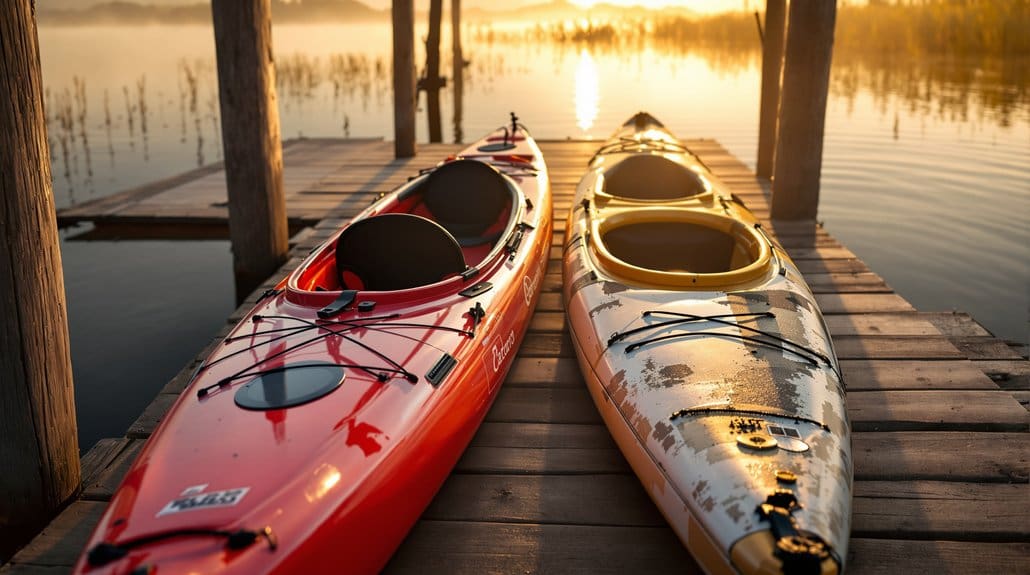
If you’re trying to decide whether to buy new or used this season, start by thinking about how much risk and extra work you want: a new kayak gives you a full warranty, known specs, and the comfort of being the first owner, while a used boat can save a lot up front if it’s priced right and been looked after, but you’ll need to inspect it closely for material-specific problems and missing gear. You’ll want to buy used if you’re learning and don’t mind trade-offs, aim for roughly half to 60% of retail, check storage history, look for polyethylene warping or deep scratches, and spot gelcoat chips or delamination on composites, test hatches, bulkheads, perimeter lines, and factor paddle, PFD, racks, taxes, and repairs. Consider also investing in kayak floatation bags to improve safety and buoyancy on all your paddling trips.
How Much Should You Budget for a Beginner Kayak Purchase?
Start by figuring out what you really want to spend and what you absolutely need this season, because that will steer every choice from boat type to safety gear: expect a solid new beginner setup—boat, a basic paddle, and a comfortable USCG-approved PFD—to land around $800–$1,200 if you already have a way to carry it, but don’t be surprised if entry-level new boats are advertised as low as $299 and end up needing upgrades, and if you’re open to used you can often get a well-cared-for kayak for about 50–60% of retail which saves several hundred dollars while you should still budget $50–$200 for small repairs or outfitting; also factor in extras like a better paddle ($50–$200), spray skirt or cockpit cover if you need one ($30–$150), and roof racks or straps ($80–$300) unless you already have transport, plus possible sales tax or dealer fees on new purchases, so a realistic total for your first season—boat, decent accessories, safety gear, and basic transport or storage—comes in around $900–$1,500, which gives you a clear target to shop toward and a way to compare new versus used offers without getting blindsided by hidden costs. Consider also adding essential safety and comfort items like a life jacket to ensure safer and more enjoyable outings.
When New Makes Sense: Benefits of Buying a Fresh Kayak
If you're weighing new versus used, buying new makes sense when you want the manufacturer's warranty and the peace of mind that comes with no hidden damage, so check the warranty terms, ask what it covers, and keep the paperwork. You'll also get that "first scuffs" pride and fresh outfitting—sealed bulkheads, new hatches, deck rigging and the latest seat and footbrace options—so try the exact trim in the dealer's demo, adjust the seat and footbrace for comfort, and bring your own paddling clothes to test real range of motion. Finally, look for current features that matter to you, confirm any dealer setup or accessory discounts up front, and remember that paying a bit more now can save you time, repairs, and worry later. Our shop focuses on expedition kayaks and accessories, so you can ask about expedition-ready features specific to extended trips.
Manufacturer Warranty Coverage
Peace of mind matters, and buying a new kayak often brings that in the form of a manufacturer warranty, which can cover defects in materials and workmanship for a typical 1–5 year period and save you hundreds or even thousands if a composite hull or molded part fails. You’ll want to read that warranty closely, know what’s excluded like normal wear, UV fade, punctures from misuse, and shipping dents, and check whether coverage is prorated or only for the original owner, because that affects resale and protection. Find out required maintenance, authorized repair steps, and who pays return shipping or dealer inspections, consider adding an extended or accessory warranty for seats or pedal systems, and carry proof of purchase and serial numbers. Wilderness Systems offers a range of kayaks and accessories for adventurous paddlers, so compare models and features when choosing your first boat and consider dealer support for warranty service.
Pristine Condition Pride
You’ll get a tidy, worry-light start with a brand-new kayak, and that matters when you care about pristine condition, factory-fit comfort, and knowing exactly what’s inside every bulkhead and hatch seal; before you launch, check the serial number and paperwork for the warranty, run your fingers along the hull and cockpit for any shipping scuffs, ask the dealer to walk you through seat and footbrace adjustments so you leave with a proper fit, and make sure any included accessories—PFD, paddle, cockpit cover—are on hand and explained. Buying new gives you zero UV fade, no hidden repairs, and intact bulkheads, plus dealer setup and sometimes accessories, so you avoid surprise costs, limit early depreciation, and enjoy a fresh, unmodified boat you can claim as yours. Many paddlers also prefer new boats for the manufacturer warranty and support that comes with purchases from reputable dealers.
Latest Features/Outfitting
Because the latest models pack small but meaningful upgrades into the cockpit and hull, you’ll notice the difference right away in comfort, control, and what you don’t have to go buy after the first weekend. When you pick a new boat, you get adjustable high-back seats that fit your spine, molded footrests and improved thigh braces that give precise control, and lighter laminates that cut carry weight so you can go farther without sweating the haul. Check for a clear warranty, solid deck rigging, full perimeter lines, and tight hatch seals before you buy, so you won’t be fixing basics later. Size the cockpit for your body, test seat height, and ask about materials and warranty length. You’ll leave feeling ready. Our shop also offers a range of deluxe comfort seats designed to upgrade fit and support on new boats.
When Used Makes Sense: Advantages of Buying a Pre-Owned Hull

Looking for a great kayak without paying full price? Buying a used hull makes sense when you want freedom to try different boats, save cash, and still get a reliable craft, but you’ll need to inspect carefully. Check for covered storage signs, intact deck rigging, unworn seat and bulkhead seals, and probe for soft spots or warped poly, deep gouges, or delamination on composites, since some damage is pricey to fix. Expect to haggle and factor in extras like paddles or a PFD, and bring a tape, flashlight, and a screwdriver to test hatches and fittings on the spot. If you’re okay with minor outfitting and repairs, a well-kept used kayak lets you paddle now and upgrade later. Consider keeping a small kit of repair essentials in your car so minor fixes won’t stop your trip.
How to Compare Price : Retail vs Realistic Used Values
When you’re sizing up price, start by comparing the current retail for that exact model to what the seller’s asking, and don’t forget to adjust for condition, included gear, and any likely repairs, because a boat with faded gelcoat, deep hull gouges, or a soft spot should be worth a lot less than a mint example. Use the 50–60% rule-of-thumb as a baseline, then move it down for heavy UV fade, warped hulls, or delamination, and up if the seller includes a good paddle, PFD, or roof racks. Remember taxes, shipping, and repair bills, and check dealer closeouts—new boats with discounts plus warranty can beat used prices. Decide what you’ll pay to buy freedom and confidence on the water. For rudder-equipped kayaks, also consider the benefits of a rudder system when comparing new vs. used.
What to Inspect on a Used Kayak Before You Buy
Start by giving the hull and deck a close look, running your hands and a flashlight over the surface for deep gouges, cracks, soft spots or signs of delamination, because surface scratches are normal but any flexing or holes mean serious trouble. Next check the cockpit and outfitting—open hatches, press on bulkhead seams, wiggle seat adjustments and cables, smell for mildew, and make sure seals, grab lines and replacement parts for that model aren’t brittle or missing. Finally, do a brief on‑water test or flotation check to feel tracking, stability, and comfort, watch for leaks or handling quirks you can’t see on land, and don’t buy if any of these steps raise red flags.
Visual And Hull Check
Because the hull is the kayak's backbone, you want to give it a careful once-over with your hands and eyes, feeling along the keel and chinos for any soft spots, deep gouges, or warping that could mean trouble, while remembering that small surface scratches on polyethylene are normal. With used kayaks, open hatches and shine a flashlight into bulkheads to check for dry rot, delamination, stains, or cracked seams that kill flotation, and look for chalky, faded patches or brittle plastic from UV that could hide weakness. Inspect deck rigging, lines, handles, and seat mounts for fray or poor repairs, flip the boat to test straightness, then paddle briefly to confirm no leaks, odd tracking, or hull flex before you commit.
Cockpit And Outfitting
Sliding into the cockpit will tell you more than a quick glance ever could, so sit down, tighten the foot braces, and pay attention to how the seat, thigh braces, and coaming feel under real load — does the seat hug you or pinch, do the thigh braces make solid contact or leave gaps, and do the foot braces move smoothly and lock firmly when you push back? While you’re at it, check hatch rims and rubber covers for cracks or flattened seals, run your fingers along deck lines and bungees for frays or loose stitching, tug fittings to confirm solid backing, and inspect skeg/rudder cables for smooth travel and corrosion. Flip the boat to probe bulkhead seams with a light, because intact sealed bulkheads keep you afloat, and make sure the coaming will accept a sprayskirt if you want to find a kayak that fits your goals.
On‑Water Performance Test
Take the boat out for a short paddle and really work it—trim your strokes, turn hard, edge, and change speed—because that’s when tracking, stability, and hidden hull problems show up: feel for any odd pull or wobble that could mean a warped hull or internal damage, note whether the kayak sits steady (primary stability) or rocks easily (secondary stability), and listen and look for leaks around hatch seals, bulkheads, and scupper plugs as you lean and shift weight. Test any rudder or skeg through turns and speed changes to confirm smooth deployment and cable action, check cockpit fit while edging so seat, thigh and foot braces don’t pinch, then haul the boat and feel for soft spots, deep gouges, delamination or visible keel bends.
Test-Paddle Checklist: On-Water Signs That Matter

When you paddle a boat for the first time, start simple and keep your eyes and hands busy — sit low in the cockpit with the rim just above the water and watch and feel for any wetness around hatches, the cockpit coaming, and bulkhead seams, because a slow leak will show up as tiny drips or a creeping dampness long before a puddle forms. On a test paddle, spend 50–100 yards rowing steady to judge tracking and glide, note yaw or extra corrections, then lean and edge 15–30° to check primary and secondary stability so you know how the hull resists capsize and rights itself. Work the skeg or rudder, listen for creaks or hollow thumps under load, and trust your hands and ears.
Damage Types, Repairability, and Material Differences
When you inspect a used kayak, pay attention to material-specific damage: soft spots, flexing, or layer separations on composites mean costly structural repairs, deep gouges in polyethylene can change tracking and need plastic welding or patches, and ABS can get brittle from UV so big cracks may be hard to fix at home. Check for small scuffs and gelcoat chips—those are usually cosmetic and you can sand and touch-up or replace seals and deck lines yourself—but probe for hidden problems too, like water in bulkheads or warped hulls that kill performance and resale value. Bring a flashlight, a magnet or coin to test for filler in rotomolded hulls, a flexible straightedge to spot deformities, and ask the seller about past repairs so you can estimate whether fixes are DIY, affordable, or call for a pro.
Material-Specific Damage Types
Start by running your hands and eyes over the hull and deck, because different materials fail in different ways and spotting the right signs will save you time and money: polyethylene boats shrug off knocks and dings but watch for deep gouges, holes, or warped sections from long sun exposure that can change how the boat tracks and usually need heat-forming or a welded patch; composites like fiberglass, Kevlar, or carbon will show small gelcoat chips and surface scratches that are mostly cosmetic, but if you see cracks that go through the gelcoat or soft areas where the skin separates from the structure (delamination), that’s a big repair, often requiring resin and fiberglass work; thermoformed/ABS boats sit in the middle—more impact-resistant than composites and stiffer than polyethylene, yet repeated UV or years of stress can make them brittle and produce hidden stress fractures; wooden boats look beautiful but pry a little at seams and check inside bulkheads, because rot and internal delamination aren’t fixed by a new coat of varnish and usually mean plank or frame replacement. You'll want to know what to carry—a soft brush, flashlight to inspect seams, a small pry bar to test bulkheads, and foam tape for quick hatch sealing—so you can judge whether a kayak’s condition matches your freedom plan, and whether it’s worth hauling home or walking away.
Repairability And Costs
Think like a mechanic for a minute and run through what repairs really mean for your budget and time, because the material the boat’s made of tells you almost everything about what’s fixable, what’s cosmetic, and what’ll eat your weekend (or wallet). You’ll see polyethylene boats shrug off scratches and small gouges, you can plastic-weld or patch them for about $20–$150 DIY, but watch for severe warping from bad storage, that can ruin handling and wreck resale if you try to buy or sell. Composite hulls mean cheap gelcoat fixes ($20–$100) but costly structural work ($200–$800+). ABS is tougher, repairable $50–$200, but ages with UV. Replace worn seats, gaskets, or rigging for $20–$200 to restore most value.
Accessories and Outfitting That Change the Value Equation
Don’t overlook the small stuff, because paddles, seats, hatches, and racks can change a kayak’s real cost as much as the hull does, so you should size up accessories before you even haggle. You want the right kayak and the right kit, so check paddle type and condition, a comfy aftermarket seat, and whether a rudder or skeg works, since those items shift value and comfort fast. Inspect sealed bulkheads and hatch covers for dry storage and flotation, replaceable but worth money. Look for intact deck rigging and grab handles as signs of care, and factor roof racks, tie‑downs, and cockpit covers into your total price. Ask about high-end extras like electronics or pedal drives, they raise asking price but rarely return full cost.
Buy-to-Learn Strategy: Start Used, Upgrade Later (Or Don’t)
If you want to learn what kind of kayak really fits you without blowing your budget, buy a gently used boat and treat it like a hands-on class: aim for hulls priced around 50–60% of new so you’ve got real savings and room to upgrade, check that the fore and aft sealed bulkheads hold dry air (they’re your flotation and resale safety net), feel the seat and cockpit for comfort—could a padded aftermarket seat fix it? Start used to test lengths and styles, carry a good PFD and a decent paddle, verify deck lines and no serious UV crazing, and tally extras like racks and taxes so you truly save; if used prices near new, buy the right new boat instead.
Where to Buy and Negotiating Tips to Get the Best Deal
Start by casting a wide net—check dealer used racks, Craigslist and Facebook Marketplace, local paddling clubs, and outfitters who sell trade-ins—because comparing lots of listings is the best way to spot a true bargain and to back up your offers with real numbers. You’ll Choose The Right seller by asking for model/year, original receipt, storage history, and photos or access to hull interior and bulkheads, and never buy sight unseen, insist on a test paddle to check warping, soft spots, delamination, cracked gelcoat, hatch damage, and skeg/rudder function. Aim for roughly 50–60% of new retail, adjust up for near-new condition or included gear, factor in taxes, warranty, shipping, and accessories, and negotiate with comparable ads, a deposit hold, then final payment after inspection.
Some Questions Answered
What Is the 120 Rule for Kayaking?
The 120 Rule says you should keep your kayak plus gear under 120% of its rated capacity, so if a boat lists 350 lb, aim for no more than 420 lb total. You’ll weigh yourself, add clothes (~10 lb), food, water, and gear, then compare; if you’re over, get a bigger hull or ditch nonessentials. This protects buoyancy, stability, and freeboard, so you stay safer and enjoy more freedom on the water.
What Is the Average Lifespan of a Kayak?
Typical longevity runs from about 10 to 25+ years for plastic kayaks, and decades for well-kept composites or thermoformed boats if you avoid hits and UV, but heavy rental or whitewater use shortens that a lot. You’ll want to inspect hulls for cracks, delamination, gelcoat chips, rinse and store in shade or indoors, use padded supports and a UV cover, carry repair kits, and test a used boat on calm water first.
What Are the Three Golden Rules of Kayaking?
The three golden rules of kayaking are: wear a USCG‑approved PFD, know your limits and choose conditions and boat that match your skills, and learn self‑rescue plus basic assists so you can get back in or help others, fast. Start by checking weather and gear, carry a whistle, pump or sponge, spare paddle and leash, practice wet exits and re‑entries in calm water, and build skills before pushing distance or rough water.
What to Look Out for When Buying a Used Kayak?
Inspect hullsides for cracks, soft spots, or sun-bleached chalky gelcoat, because UV damage weakens the boat and costs money to fix; open hatches to check dry bulkheads and brittle seals, run your hand for delamination or warping, and test paddle for tracking, stability, leaks, and comfy seat fit. Compare price to new, factor repairs and transport, and bring basic gear, a pump, spare paddle, and common-sense patience.