January's dry, cooler weather makes paddling the Everglades comfy and low-mosquito, so start at Flamingo Marina, grab a map and pick a route—mangrove tunnels like Buttonwood for calm wildlife watching or Florida Bay for open-water flats that need a skeg-equipped kayak, tide chart or GPS, and stronger skills. Bring a USCG life jacket, lots of water, waterproof bags, spare paddle and whistle, and book a wilderness chickee or ground site in advance; more trip details follow.
Some Key Points
- January offers cooler, drier weather with fewer mosquitoes, ideal for comfortable paddling and wildlife viewing.
- Launch from Flamingo Marina for rentals, maps, clear return times, and up-to-date conditions.
- Choose mangrove tunnels (Buttonwood/Coot Bay) for calm viewing or Florida Bay for challenging open-water crossings.
- Reserve wilderness campsites on Recreation.gov within the 90-day window; confirmation is required as your permit.
- Pack one gallon water per person per day, USCG life jacket, charts/GPS, paddle leash, and a waterproof phone/VHF.
Why January Is the Best Time to Paddle the Everglades
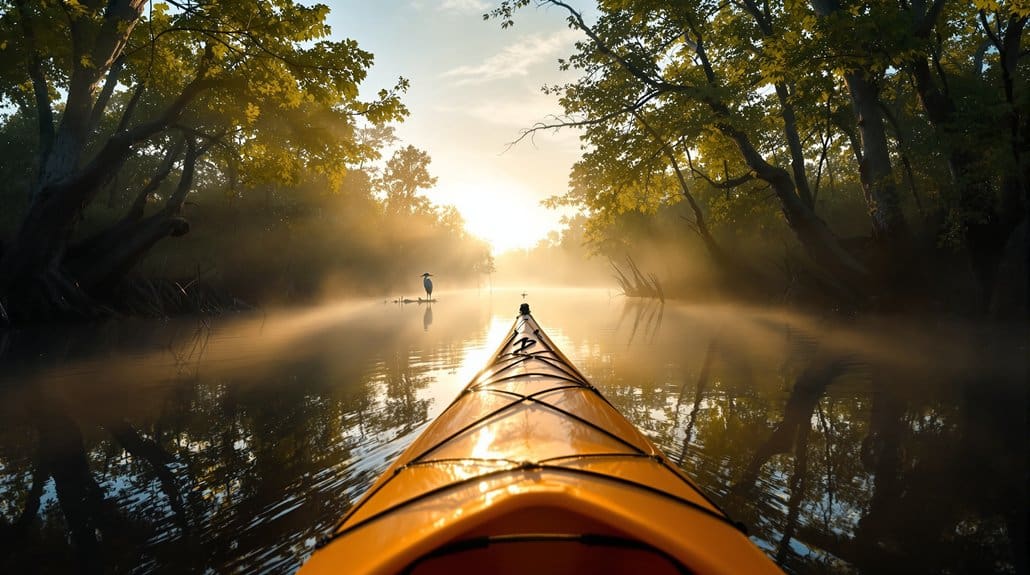
Because January sits in the dry season, you’ll find cooler days, less humidity, and far fewer mosquitoes, so start your trip expecting comfortable paddling instead of sticky slogging. You’ll launch from Flamingo Marina when it fits your rhythm, rent a kayak if you like, grab a map, and set a clear return time to beat afternoon winds and tide shifts, because winter breezes still matter. Water drops expose flats and shallow channels, so watch your route through mangrove tunnels, keep an eye out for manatees in open water, and bring binoculars for spoonbills and herons. Carry sun, wind, and insect protection, a waterproof map or phone, extra water, and a plan that lets you cut the day short if weather or tide turns. Consider packing a compact repair kit and spare paddle for day-trip kayak touring in case gear fails.
Choose Your Route: Flamingo Launch, Buttonwood Canal, or Florida Bay
Start at Flamingo Marina, check in, grab a map and any rental gear, and pick the route that matches your skill and energy for the day, because each option gives you a very different Everglades experience. From there, if you want calm, shaded tunnels and a short, sheltered trip, head into Buttonwood Canal/Coot Bay where mangroves hug the water and you’ll practice tight turns and slow wildlife watching, carry a paddle leash and a waterproof phone case. If you crave open water and longer miles, aim for Florida Bay, where tides, wind, and shallow flats matter, so carry charts or a GPS, watch tide times, pack extra water and layers, and file a float plan with park dispatch. Consider choosing a skeg-equipped kayak for better tracking and control on longer bay crossings skeg-equipped kayaks.
Permits, Reservations, and Fees You Must Book Before You Go
If you’re planning to camp or paddle beyond a day trip, you’ll need to get your permits and reservations locked in before you go, since the park doesn’t hold walk‑up sites and space fills quickly, especially in winter. You should book wilderness campsite reservations on Recreation.gov within the rolling 90‑day window, pick chickees, ground, or beach sites, and treat the confirmation as your wilderness permit, because all overnight paddlers must have one and pay the $21 admin fee plus $2 per person per night. Every visitor also needs a valid Everglades entrance pass, digital or printed, non‑transferable. Call Flamingo Visitor Center for last‑minute questions or shuttle help, check stay limits mid‑Nov–Apr, and plan your shuttle and tide timing before you launch. Consider bringing an essential gear checklist so you have the right kayak and safety equipment for paddling and camping.
Gear, Navigation, and Safety Checklist for Winter Trips
When you’re planning a winter paddle in the Everglades, treat gear and navigation as the trip’s backbone: get at least one gallon of fresh water per person per day in hard-sided containers and keep electronics and maps in waterproof dry bags, wear a U.S. Coast Guard–approved life jacket at all times and carry a whistle, mirror, and a waterproof VHF or cell phone, plus an anchor and signaling light if you might be out after dusk. Know nautical charts and a compass or GPS, especially on the Wilderness Waterway where channels shift and some passages need high tide, check tide and wind forecasts before launch, file a float plan with someone ashore, and plan to call park dispatch if you’re overdue. Also make sure your kayak and paddles are well-maintained and you have basic repair items like a paddle float and spare paddle secured before launch.
Campsites, Fires, and Backcountry Rules for Overnight Paddling
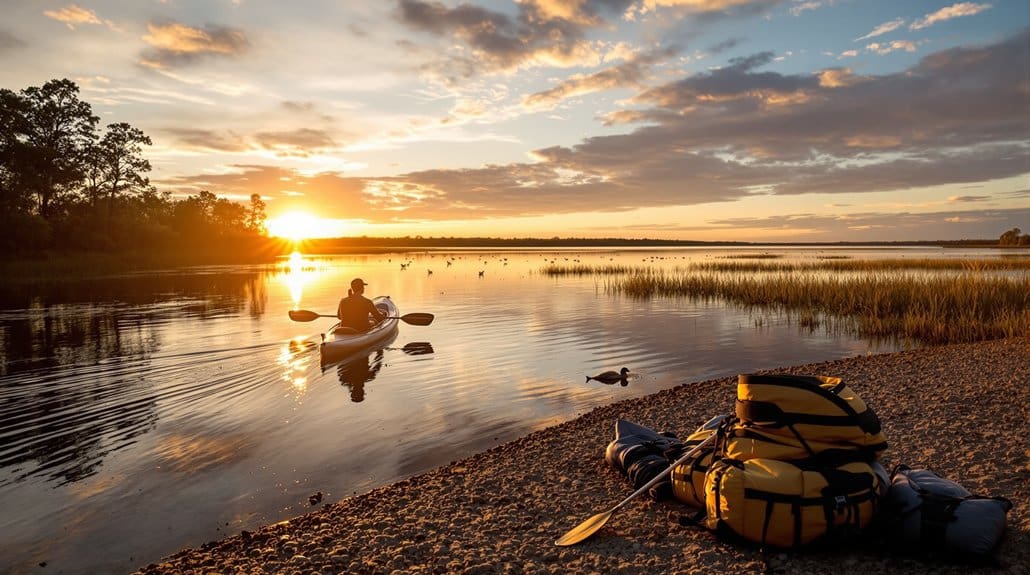
Before you pick a campsite, make sure you've got the permit printed or saved on your phone and your fee taken care of, because you can't legally sleep in the backcountry without that confirmation and the small administrative charge; know that campsites come in three flavors—chickees (raised platforms with a roof and a walkway to a toilet), ground sites (mounded earth), and beach sites (sand only)—and each has different rules about fires, staking gear, and insects, so choose the kind that fits your group and gear. In Everglades National Park you'll pay a $21 admin fee plus $2 per person per night, fires only on designated beach sites below high tide using dead wood, no fires on chickees or ground sites, pack out toilet paper or dig a 6" cathole where allowed, sleep aboard a boat only out of sight and a quarter mile from sites, and obey stay limits and noon checkout so everyone gets a fair share of freedom. Bring essential safety gear like a paddle float, bilge pump, and rescue rope in case you need to assist or be assisted on the water.
Some Questions Answered
What Are the Everglades Like in January?
In January the Everglades feel cool and clear, you’ll enjoy milder daytime temps, longer daylight hours for paddles, better water clarity in shallows, and big bird migrations like spoonbills, herons, and ospreys to watch. Check wind and tides, pack layers, sun protection, a dry bag, map or GPS, and binoculars, launch early from Flamingo or a canal, and plan your return around changing weather and falling tides so you stay safe.
Can You See Alligators in the Everglades in January?
Yes, you can see alligators in January, they bask or float more in cooler air so you’ll often spot them along shorelines, and you’ll want to watch alligator behavior, keep several meters back, never feed or approach, and be extra careful near nests. For photography tips, bring a telephoto lens, steady your kayak, use quiet paddling to get closer. Carry a phone, whistle, and binoculars, and always prioritize safety precautions.
What to Wear in the Everglades in January?
Wear light layers and breathable fabrics, start with a quick-dry shirt and a light insulating layer you can stash, add a windproof shell for open water, and pick waterproof shoes or neoprene booties with good grip for landings; fit a USCG-approved PFD over your outer layer, bring a wide-brim hat, UV sunglasses, reef-safe sunscreen, and a small dry bag for essentials, and keep a change of dry camp shoes for evenings.
Are There Mosquitoes in the Everglades in January?
Yes, you’ll usually find few mosquitoes in January, because winter breeding drops with cooler temps and lower water, but local warm spells or recent rain can lift numbers, so check forecasts first. Pack a small repellent, consider a bug jacket for mangrove channels or dusk paddling, and look for standing pools or damp flats that hint at vector control needs; if you see them, move to breezier, open water to stay comfortable.