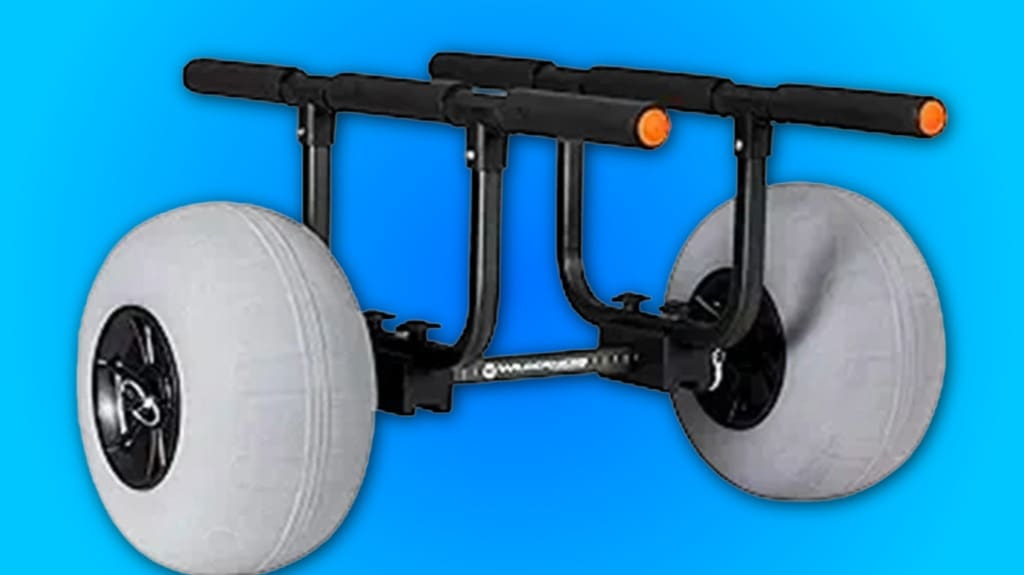
You’ll like the Wilderness Systems Heavy Duty kayak cart if you haul big, awkward boats often, since its bunker‑bar cradle and wide stance keep heavy sit‑on‑tops stable, the marine‑grade aluminum frame resists flex and corrosion, and the 12" flat‑free wheels roll well on packed dirt and ramps; strap it centered over the bars, carry a spare axle pin and anti‑seize for remote put‑ins, swap to balloon wheels for soft sand, and collapse it for hatch or garage storage — more tips ahead.
Some Key Points
- Heavy-duty bunker-bar frame and wide stance provide stable support for 100–200+ lb kayaks without twisting or slipping.
- Marine-grade aluminum alloy frame and flat-free 12" wheels resist corrosion and handle mixed firm terrain reliably.
- Adjustable height and centered hull placement prevent sagging; rated capacity up to about 450 pounds.
- Straps secure hull during transport; inspect welds, fasteners, and straps regularly for wear.
- Performs well on packed dirt and gravel; consider balloon beach wheels for soft sand or long beach carries.
How This Cart Handles Heavy Kayaks (Real-World Weight and Stability Test)
When you're loading a big, heavy boat onto this Wilderness Systems cart, you'll notice right away how its bunker bar frame and wide stance keep the kayak from twisting or slipping, so you don't have to wrestle with awkward balance while one end wants to drop, and that's a huge relief with boats that weigh close to 100–200 pounds or more. You’ll test weight distribution by centering the hull over the bars, watching how the cart holds without sagging, and you’ll push until you near the tipping threshold to feel stability, carry straps handy, and choose a steady path to freedom. This is an excellent choice for outdoor enthusiasts who want reliable gear for paddling adventures, especially those who favor Wilderness Systems kayaks.
Load, Adjust, and Collapse: Step-by-Step Setup and Storage Tips
You’ve felt how the bunker bar and wide stance steady a heavy hull, so now let’s get that kayak onto the cart and tucked away without fuss: start by laying the cart next to the kayak with the bars aligned under the widest part of the hull, then lift the stern or bow just enough to slide the bars under—no scupper posts or kickstand needed—making sure the straps and wheels are on the side you’ll be rolling toward, because positioning matters for balance and ease of loading. Tighten straps with mindful strap positioning, adjust height for clearance, then collapse the frame for compact storage orientation in your hatch or garage. Sea Eagle customers often pair carts with their kayaks for easier transport and storage, making their gear more user-friendly.
Frame, Wheels, and Straps: Materials and Durability You Can Expect
Check the frame and wheels first, because that’s where durability starts and what’s going to keep your kayak rolling across gravel, sand, and packed dirt without drama; the Wilderness Systems cart uses a marine-grade, heat-treated aluminum alloy frame that’s built to resist corrosion and flex under heavy loads, so inspect welds and fasteners before long trips, wipe saltwater off after use, and carry a small tube of anti-seize or a spare bolt if you’re headed to remote put-ins. You’ll appreciate the flat-free 12" wheels for wheel longevity, and the straps for security, but still check wear, tightness, and aluminum corrosion signs regularly. Lifetime’s kayak and gear selection complements carts like this with durable accessories and paddling essentials, making it easy to outfit day trips and longer expeditions with confidence; see their kayak accessories for compatible options.
Terrain Performance and Accessory Options (Beaches, Rocks, and Beach Wheels)
If you plan to haul your kayak across sand, rocks, or uneven launch paths, pay close attention to wheel size and surface conditions, because the Wilderness Systems cart’s flat-free 12" wheels handle packed dirt and gravel really well but can bog down on soft, deep sand or bounce over sharp, jagged rock fields. You’ll want beach traction for sandy launches, so consider swapping in balloon-style beach wheels for softer stretches, they spread weight and reduce sinking. For rocky shores, check rock clearance and raise the cart to the higher setting to avoid wheel rubbing, secure the straps, test a short run first. Wilderness Systems also offers compatible accessory options for solo kayaks like padded straps and cart adapters for easier transport kayak accessories.
Who Should Buy It : Pros, Cons, and When to Choose an Alternative
When you need a reliable way to move a heavy sit-on-top or touring kayak without wrestling it by hand, the Wilderness Systems Heavy Duty Kayak Cart is a great fit for paddlers who value strength and simplicity, especially if you frequently launch from boat ramps, packed dirt paths, or short, firm beaches; it’s built to haul up to 450 pounds, uses a bunker-bar cradle and adjustable height so your hull won’t twist or rub the wheels, and it collapses to stash in a dry well when you’re done. You’ll love it if you’re families weekenders or urban anglers, carrying big kits, kids’ gear, or fish coolers, but consider lighter carts or beach wheels if you hike long soft sand, need ultra-compact travel packing, or prefer inflatable balloon wheels for deep sand; pack the included straps, test the high and low heights before launch, and keep a simple multi-tool and spare axle pin in your box. Wilderness Systems also offers a range of kayaks and accessories designed for reel yaks kayaks enthusiasts.
Some Questions Answered
Can This Cart Fit Inside a Kayak Dry Hatch While Collapsed?
Yes, the cart’s collapsed dimensions (about 32 x 25.5 x 16 inches) often fit inside many cockpit dry hatches, but hatch compatibility depends on your hatch opening and dry well depth, so measure first. You’ll want to remove wheels or fold parts if needed, carry straps and a pump, and test fit before launch; if it won’t clear, keep it strapped to deck or in a vehicle, and consider optional balloon wheels for beach runs.
Are Replacement Straps or Wheels Sold Separately by the Manufacturer?
Yes — you can get replacement parts like straps and wheels, but you’ll want to contact the manufacturer’s customer service first, because Wilderness Systems (Confluence Accessories) handles parts and can confirm availability and part numbers, price, or warranty coverage. Call or email them with your model/part details, ask about flat-free wheel swaps or strap kits, and request shipping options so you can carry spares on trips and avoid being stranded.
Is Assembly Required Out of the Box Before First Use?
No, full assembly isn’t required out of the box, you’ll find only a quick setup is needed to fold out the frame, snap the wheels on, and thread the straps, which takes minutes. Bring a flat surface and maybe a small wrench or mallet just in case, check wheel fittings and strap loops, then test load with a light lift before rolling. You’ll be ready to move your kayak confidently, putting your paddling skills to good use.
Will the Cart Corrode in Saltwater Environments Without Rinsing?
Not if you rinse it, but salt will speed corrosion if you don’t: the cart’s marine-grade aluminum resists rust better than steel, yet salt, sand, and moisture can still cause pitting or hardware wear over time. For corrosion resistance, rinse with fresh water after each salt outing, dry it, lubricate moving parts lightly, and store collapsed indoors or covered; carry a small brush and spare straps, and check bolts regularly, okay?
Does the Cart Work With Stand-Up Paddleboards (SUPS)?
Yes, it’ll work for many SUPs, but you’ll want to check paddling stability and strap placement first, since wider or softer boards can wobble; use the included board transport straps low and snug around the hull to stop slipping, pick the high height if your board’s irregular to avoid wheel rub, and consider wider beach wheels for sand, so you’re free to haul your board without fuss or surprise.