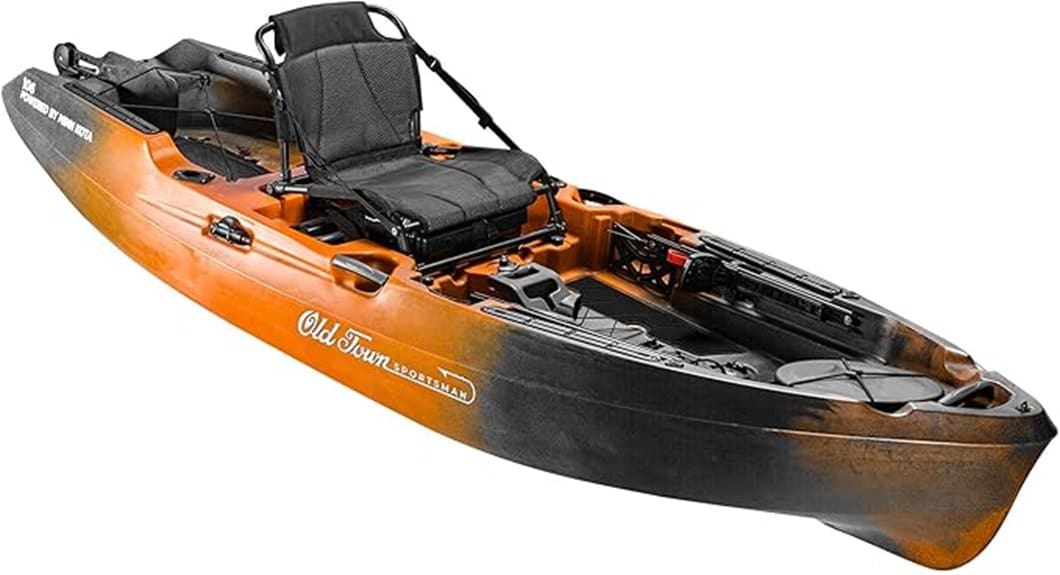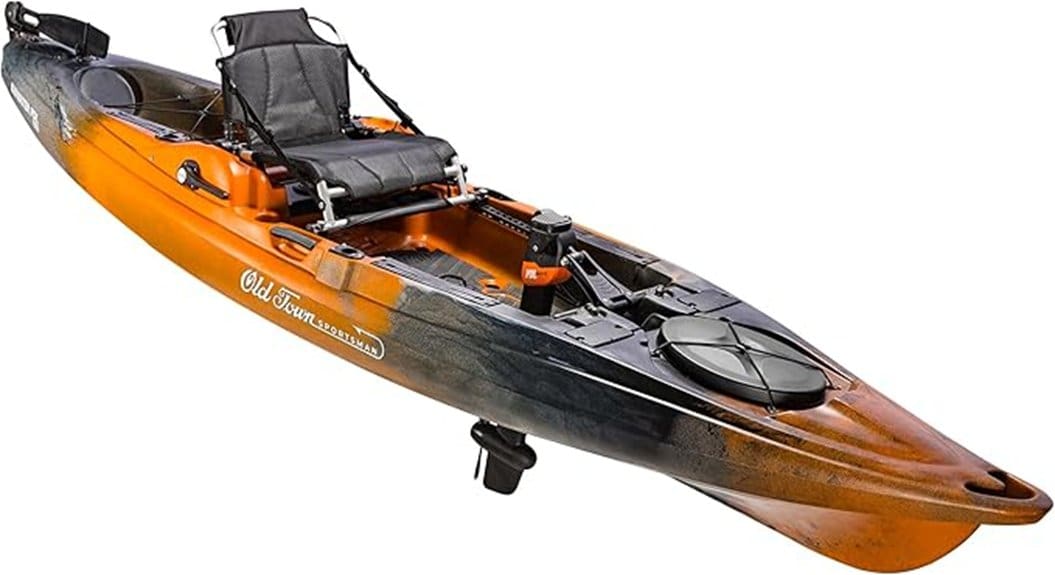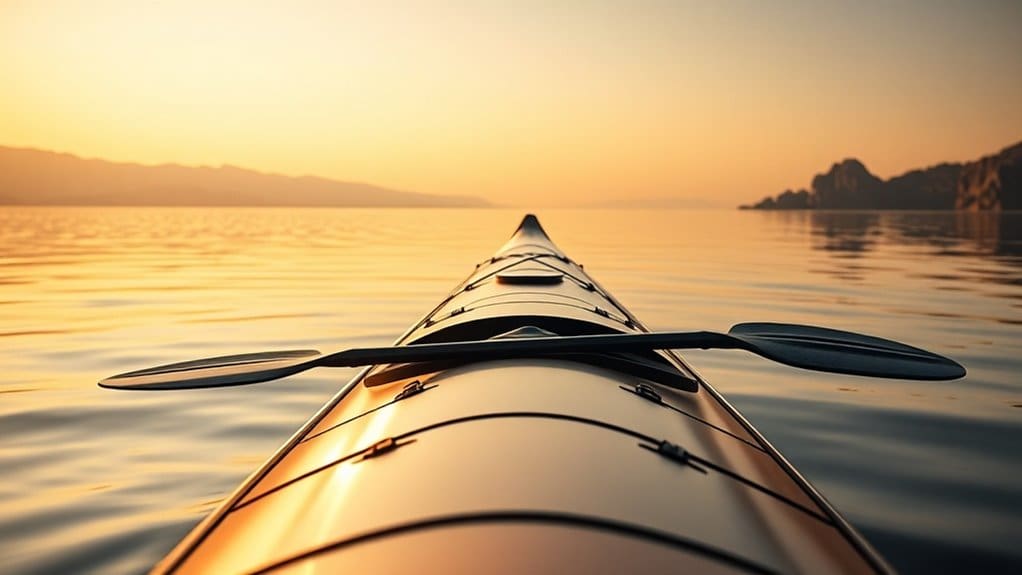

You’ll want a long, efficient hull (about 15–18+ ft for open water) that matches your trip length, a shape that balances speed and handling (more rocker for turning and surf, V‑shaped for tracking, flat for initial steadiness), and enough internal volume to carry your packed kit plus water. Try each boat loaded with your actual gear, check cockpit fit, thigh braces, skeg vs rudder, and material/repair needs, bring tools and cash for used buys, and keep testing to learn more.
Some Key Takeaways
- Choose a longer waterline (15–18+ ft / 4.5–5.5 m) for higher cruising speed and efficiency on long hauls.
- Test‑paddle boats both unloaded and loaded to trip weight to evaluate true speed, tracking, trim, and stability.
- Pack low and centered with gear fore/aft adjusted to maintain optimal trim and prevent bow or stern burying.
- Match hull shape to conditions: V‑hulls and pronounced keels for open water tracking, flatter hulls for strong initial stability.
- Prioritize adequate internal volume, hatch storage (2–3 hatches), and adjustable ergonomics (seat, footbraces, thigh pads) for comfort and gear capacity.
Primary Intent and Format: A Practical Explainer for Choosing Touring Kayaks
Thinking about a touring kayak for long trips, what matters first is purpose: are you planning day trips, weekend jaunts, or week‑long crossings, because that choice drives everything else from length and hull shape to storage and handling. If you want freedom to roam, pick touring kayaks sized for your plans—longer kayaks for open water and long hauls, shorter for shelterand lakes—check internal volume and deck height by test‑packing, because some 17′ boats still won’t swallow seven days’ gear. Think hull shape tradeoffs, a moderately V hull tracks and handles chop, a flatter hull feels steadier initially. Decide skeg vs rudder by conditions and whether you can spare rear hatch space, and factor material and weight for carries and repairs. Also consider outfitting and comfort, since proper cockpit fit makes long days paddling far more sustainable.
How Kayak Length Affects Speed, Tracking, and Range
When you’re choosing a touring kayak, remember that longer waterlines generally mean higher cruising speed and less effort over miles, so aim for boats in the 15–18+ foot range if you plan to cover ground, but also ask how much gear and how much rocker you’ll actually carry into the boat. Rocker and heavy loads shorten the effective waterline and cut your theoretical hull speed and tracking, so pick a hull with moderate rocker for surf or tight launches and be ruthless about packing—straps, drybags, and weight low and centered will keep the boat running true. If you need more range, consider a boat around 17 feet for speed and efficiency, but test one for handling and transportability first, because a faster kayak that’s hard to load or feels too tippy around the dock won’t make your trips any easier. Consider also investing in essential expedition gear like drybags and straps to protect and organize your kit.
Waterline Length Matters
Because the length of a kayak’s waterline mostly sets how fast and efficiently it can move, you’ll want to pay attention to that measurement before you commit to a boat or a big trip, so bring it up when you test‑paddle. If you want freedom to cover miles, choose a longer the kayak waterline length in the 15–18+ foot range, it raises your hull speed and saves energy, but remember rocker — bow and stern curve can shorten the effective waterline and cut top speed. Test with your loaded gear, notice if it tracks straight or needs constant correction, and feel whether narrow, long hulls trade some initial stability for better chop handling. Start by comparing unloaded and loaded rides, then pick the balance you can live with. Consider how a multi-chine hull can influence initial stability and tracking characteristics for beginner paddlers.
Rocker And Effective Length
You’ve already looked at waterline length, but don’t stop there—rocker, the curve up at the bow and stern, actually shortens the kayak’s effective waterline and changes how the boat behaves on a long trip, so pay attention to both measurements when you test‑paddle. Rocker gives you freedom to turn and play with waves, but more rocker cuts top speed and makes tracking looser, so choose a low‑rocker, long, narrow hull if you want steady, efficient long-distance cruising and fewer corrective strokes. Try the boat loaded to trip weight, notice how the effective waterline shifts, then see how a rudder and skeg help hold course without burning energy, remembering both add drag, so balance maneuverability and range before you commit. Consider how hull stability and touring-specific design affect comfort and endurance on multi-day trips, especially when selecting gear and fitting your cockpit for long hours paddling with a stable touring kayak.
Load And Waterline Change
As you load your kayak for a trip, pay close attention to how it settles in the water, because that changed waterline is the single biggest thing that will alter speed, tracking, and range on a multi‑hour paddle. You’ll notice a longer effective length raises hull speed, so touring kayaks around 4.5–5.5 m cruise farther with less effort, but rocker or heavy loading can shorten that waterline and slow you down, so pack smart. Keep weight low and centered, test trim before leaving shore, and use a skeg or rudder to help with wind or current; skegs save hatch space, rudders give active course control. Aim for narrow, long hulls if speed and straight tracking matter more than initial stability. Choosing the right skeg for better tracking can make a big difference on long paddles, so consider kayak skegs when deciding between skeg and rudder.
Hull Shape Explained: Rocker, V‑ vs Flat‑Bottom, and Stability Tradeoffs
When you’re choosing a long‑distance kayak, pay close attention to rocker — more rocker shortens the waterline so the boat turns and maneuvers easier, while low rocker gives a longer waterline for better straight‑line speed and tracking, so think about how much turning versus speed you’ll need on your typical trip. Also notice the cross‑section: a V‑shaped (rounded) hull will slice through chop and feel steadier when you lean into waves, whereas a flat bottom gives strong initial stability and a snappier roll, so try both with your gear aboard to see which one makes you feel more secure when loaded. Start by paddling each model with the weight and trim you’ll actually carry, test tracking with and without a skeg or rudder, and if you’re unsure pick the shape that lets you recover comfortably and keep moving rather than the one that only looks fast on paper. Many v‑hull designs are offered by specialty retailers focused on v-hull kayaks, which can help you compare models optimized for long-distance touring.
Rocker And Waterline
If you want a kayak that turns easily and handles surf or tight rivers, look for more rocker—the gentle curve from bow to stern—which shortens the effective waterline so the boat pivots and responds quicker, but keep in mind that extra rocker also cuts top speed and makes straight-line tracking livelier to correct. You’ll watch waterline length for speed and tracking, because a longer effective waterline wins on long hauls, so pick a hull that balances a bit of rocker with enough immersed length to track better when loaded, and trim gear fore and aft to tune that. Choose a V‑shaped hull if you want smoother secondary stability in chop, expect a tippier feel at rest, and practice edging to use that wave resistance confidently. For day touring, also consider essential gear like a spray skirt, PFD, and drybags to stay safe and comfortable on long outings, especially when paddling varied conditions and distances with day touring kayaks.
V‑Hull Versus Flat
Because your paddling goals and skill level really steer the choice, start by thinking about where you’ll spend most of your time on the water: a V‑hulled kayak, with its pronounced keel line, will slice through waves and give better secondary stability in chop so you’ll feel more secure on open-water tours and rough days, while a flat‑bottom kayak sits broad and steady at rest, so it’s kinder for beginners, calm lakes, and short day trips. If you want freedom to roam offshore, favor V‑hulls for better tracking and higher hull speed, accept a tippier feel up front, and pay attention to rocker and length; for easy, stable paddling choose flat‑bottom hulls, pack light, trim carefully, and practice turns. Consider also selecting paddling gear and accessories tailored to narrow touring kayaks, like ergonomic seats and low-resistance paddles to improve comfort and efficiency on long trips and essential gear.
Stability Types: Initial vs Secondary and What Each Feels Like on Trips
You’ll often notice two different kinds of “steady” in a kayak, and learning to tell them apart will save you from surprises on a multi‑day trip: initial stability is how solid the boat feels sitting flat in calm water—wider, flatter hulls feel rock‑steady under your knees—while secondary stability is how well the boat resists tipping when you edge it into wind, chop, or waves, and that usually comes from a narrower, more rounded or V‑shaped hull. On a test paddle, pay attention: initial stability tells you comfort at rest, secondary stability tells you confidence when edging and bracing in rougher water, and your loaded waterline will shift both, so try the boat with gear, lean it progressively, simulate chop, and note how it holds an angle.
Volume and Load Capacity: Matching Internal Space to Multi‑Day Gear
When you’re planning a multi‑day trip, think of a kayak’s volume and load capacity as its packing rules—how much gear it really swallows, where that gear sits, and how the boat will ride once you’ve loaded it; look for at least two watertight hatches (three is better), roomy bow and stern cavities, and a published payload that comfortably exceeds the weight of your kit plus water, because 1 litre of water equals 1 kg and that adds up fast on trips without resupply. You’ll check internal volume in litres to judge gear storage, compare load capacity to your pack weight plus fuel and water, and test‑paddle a loaded boat, because distribution fore and aft, low in the hull, changes tracking and feel more than hull length does.
Skegs vs Rudders: Control, Drag, and Storage Implications
When you’re choosing between a rudder and a skeg, think first about how you steer and what you’re willing to trade for it: a skeg gives straighter tracking with less drag when it’s down and hardly affects speed when retracted, while a foot‑steered rudder lets you make sharp corrections in tide or tight spots but creates more drag when angled and can cost speed if misused. Check the kayak’s layout before you buy or pack—skegs tuck into a well and eat rear hatch space and some internal room for the control cable, whereas rudders sit on the deck and keep hatch volume clear but add weight and deck clutter you’ll need to secure and maintain. Try to test both in conditions you expect to paddle, practice deploying and retracing the control feel, carry basic spares for the control lines or pedals, and if you want max efficiency and cargo space pick a skeg, but pick a rudder if you want confident, low‑effort steering in tricky water.
Rudder Versus Skeg
If you want steady tracking on long stretches with as little fuss as possible, think about a skeg, since that fixed or deployable fin drops into a stern well to tame weathercocking with almost no footwork and usually adds less drag when it’s centered, but remember it eats into hatch space and can make packing a bit fiddly so pack lighter or rearrange gear to clear the well. You’ll choose a skeg on touring kayaks for long distances when you want simple, low‑maintenance correction and fewer moving parts to worry about, but pick a rudder if you need tight steering for docking or fighting crosswinds, expect more maintenance, check pedals and pivots, and leave hatch space open.
Steering And Drag
You’ve already thought about how a skeg keeps you tracking straight with almost no fuss, now let’s look at how that choice—skeg or rudder—changes what you feel paddling, what slows you down, and how you pack, because those things matter on long miles. A skeg sits in a stern well, nudges the hull to track by shifting yaw, adds almost no drag when down, and needs a simple cable you’ll rarely fuss with, though the box eats rear hatch room. A rudder gives stronger steering in wind or tight spots, controlled by foot pedals, but it creates more drag when angled, adds windage, and brings linkages to maintain. First, decide which trade-off—low drag and sealed space, or powerful steering—matches your routes, then test both.
Storage And Deck Space
Think about your storage and deck the way you’d plan a long road trip: what you carry, where it lives, and how easy it is to grab when the route gets interesting. You’ll weigh skeg versus rudder by asking how much rear hatch space you can spare, since a skeg well sits inside the stern and eats into internal storage and can complicate watertight packing, so expect to reorganize gear and use dry bags differently. A deck-mounted rudder leaves hatch volume intact, gives extra control in wind and surf, but adds lines, pedals, and snag hazards you’ll need to manage and repair. For freedom, pick a skeg if you want simplicity and lower upkeep, choose a rudder if you need active steering and don’t mind extra deck hardware.
Cockpit, Seating, and Thigh‑Brace Fit for Long‑Day Comfort
When you’re planning long days on the water, your cockpit and seat should feel like an extension of your body, so start by checking how your hips, thighs, and feet actually sit in the boat—measure hip width and thigh thickness or do a test-sit, because a low-volume cockpit hugs smaller paddlers and a big one makes re-entry and gear access easier. You want thigh braces that hit around 11:00–1:00, cradle your legs, and let torso rotation translate into each stroke, and seat design that tilts the pelvis with firm support and a low-profile backband so you can rotate freely. Check legroom and footbrace reach for a slightly bent knee, add adjustable thigh pads or hip pads to fill gaps, and tweak footpegs until your hips lock in without strain.
Materials and Weight: Durability, Repairability, and Handling Ashore
Balancing weight, toughness, and fixability starts with knowing how and where you’ll use the boat: if you’re dragging it over rocky beaches and climbing in and out on barnacle‑riddled wharves, heavier rotomolded plastic will forgive bumps and take field patches, but if you’re hiking to a remote put‑in or shoulder‑carrying between lakes you’ll want a lighter thermoformed or composite hull that makes portaging and car‑loading much easier. You’ll choose rotomolded kayaks for forgiving durability and easy field repairability, thermoformed kayaks for a stiffer, lighter middle ground, fiberglass kevlar kayaks for lighter weight and better glide but needing workshop fixes, or carbon fiber boats if weight is everything and you can accept specialist repairs; carry a basic plastic welder or an emergency repair kit, and learn simple patching.
Real‑World Testing: Why You Should Paddle a Boat Loaded for a Trip
Loaded up for a trip is the only honest way to test a touring kayak, because the gear you carry changes the waterline, the feel, and the way the boat slices through waves; bring the actual kit you’ll use—tents, stove, food and especially water (about 1 kg per liter)—pack it the way you plan to on the trip, and then paddle, trim, and note differences from the unloaded boat. When you test-paddle, pay attention to speed, tracking, and stability, try moving gear fore and aft to feel trim changes, and see how extra stern weight buries the bow or how bow weight drags. Practice launches, landings and a loaded capsize, and try a skeg or rudder in wind so you know how control and drag shift when you’re really out there.
Buying Strategy: New vs Used, Budget Ranges, and What to Inspect
If you’re shopping for a touring kayak, start by deciding whether you want the peace of mind that comes with a new boat or the bargains you’ll find in the used market, because each route changes what you’ll spend up front and what you’ll need to inspect and possibly fix afterward. New touring kayaks span from rotomolded poly at about $2,400–$2,600 to carbon/kevlar near $5,500–$6,200, so set your budget and expectations, while used kayaks often go for one‑half to one‑third of new price, but prices vary by region. When you view a used hull, check hull integrity for cracks or repairs, verify hatches and hardware, then test‑paddle it loaded, bring tools, gloves, and cash for small fixes.
Some Questions Answered
How Do Touring Kayaks Perform in Ocean Surf and Beach Launches?
They handle surf pretty well if you pick the right boat and use smart launch technique: keep speed into breaking waves, angle the bow slightly seaward, and time gaps. Bow buoyancy helps lift you over waves, so favor a fuller bow for rough surf. For surf re entry, approach from behind waves, brace, and use a quick paddle stroke to slip in. For beach strategy, scout rip currents, carry a tow, and commit confidently.
Can I Outfit a Touring Kayak for Occasional Whitewater or River Running?
Yes, you can, but you’ll need careful mods and skills: fit removable thighbraces for better boat control, add a heel‑secured skeg to help tracking when currents shift, carry swiftwater rescue gear and practice rescues, bring an inflatable spraydeck for rapids when waves spike, and learn recreational playboating moves to handle waves safely; start with mellow rivers, test gear, take a rescue course, and upgrade gradually as your confidence grows.
What Safety Gear Specifically Complements Touring Kayak Expeditions?
Yes, you should carry key safety gear: a personal locator or EPIRB integration for open-water distress, a throw bag for river rescues, a signal mirror and whistle for visual and short-range alerts, and a flotation harness (a PFD with built-in flotation harness for river work) for secure attachment and flotation, plus spare paddle and bilge pump; check batteries, practice signals, and stow gear reachable, so you can act fast and confident.
How Do Carbon Vs Fiberglass Vs Polyethylene Affect Repair Options Abroad?
Carbon repairs are best done by pros, but you can carry epoxy and peel-ply for temporary fixes, since international parts may be scarce, so plan ahead; Fiberglass repairs are more user-friendly, bring resin, cloth, and sandpaper for reliable field patching and longer fixes, and you’ll find supplies more often abroad; Polyethylene repairs rely on melting or plastic weld kits, so pack a hot-air tool or repair rod, practice beforehand, and know local repair shops.
Are There Ergonomic Accessories to Reduce Wrist and Shoulder Strain?
Yes, you can reduce wrist and shoulder strain with ergonomic paddles, winged grips, adjustable footbraces, padded cockpit, and shoulder supports, and you should try each. Pick an ergonomic paddle that fits your stroke, test winged grips for rotation control, set adjustable footbraces to lock your hips, add a padded cockpit for comfort, and fit shoulder supports or a brace for long days; try gear before trips, tweak fit, and carry simple spares.