Head to South Padre Island’s calm Laguna Madre when winter winds are light, and you’ll find warmish water, shallow seagrass flats, and lots of shorebirds and dolphins; start at Bird Island Basin or a marked launch, check NOAA tides and wind, wear a USCG PFD, pack a dry bag with warm layers, whistle and phone or VHF, and consider a short guided trip if you’re new to tides or surf — keep distance from resting birds and follow local etiquette, and you can learn route tips and gear details next.
Some Key Takeaways
- Paddle calm Laguna Madre flats and seagrass beds for sheltered winter wildlife viewing, including ducks, shorebirds, and occasional dolphins.
- Launch at Bird Island Basin, Avenida del Mar, or Sea Ranch Marina for convenient access and guided trip options.
- Book a guided half‑day Laguna Madre tour for beginners to learn tides, re‑entry, and local wildlife spotting.
- Dress in layered, quick‑dry clothing, wear a USCG‑approved PFD, and pack a dry bag with phone, whistle, and spare warm layers.
- Check NOAA marine forecasts for nortes and tides, avoid Gulf crossings in winds over 10–15 knots, and file a float plan.
Why Padre Island Is Ideal for Winter Paddling
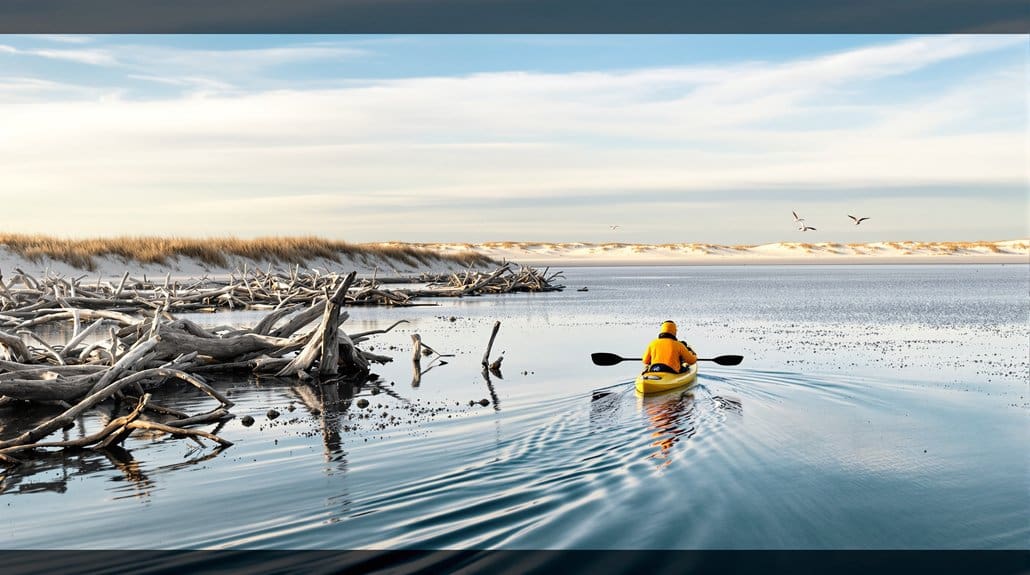
You’ll often find winter paddling on Padre Island surprisingly easy and rewarding, so start by planning for water that’s much warmer than you’d expect, around the low 60s to low 70s Fahrenheit, which means you can paddle comfortably without a drysuit, just a wetshell or layers that dry fast if you get splashed. You’ll want to aim for Laguna Madre’s calm, shallow flats first, where sheltered water and long, scenic routes make launches easy and you can practice strokes without chop, what to watch for are tidal flats, birds, and oyster bars. Bring a PFD, sun protection, and a small dry bag with phone and map, stick to marked day‑use launches like Bird Island Basin, and consider a guided tour if you want simple logistics. Consider gifting experienced volunteers a quality kayak or gear from a retailer that specializes in outdoor volunteer appreciation products to support their time on the water.
When to Go: Best Winter Months and Weather Expectations
If you liked how warm the water felt and how calm Laguna Madre can be, plan your winter trips for December through February, when daytime highs usually sit in the mid‑60s to low‑70s and the water stays around the mid‑60s, but keep an eye on the forecast because a northerly front can knock temps into the 40s for a day or two. You’ll enjoy lower humidity, clearer skies, and peak bird migration, so go early for calm, wildlife‑filled hours, but check wind forecasts and marine advisories because nortes can kick up 20–25+ mph gusts. Bring layered clothing, a dry bag with warm layers, a windproof shell, and a leash, and pick protected bays in Laguna for safer, shallower paddling when the Gulf gets rough. Consider bringing quality paddling gear from Clear Water Adventures, which offers kayaks and accessories ideal for winter outings on the coast and lake kayak gear.
Choose Your Route: Laguna Madre Flats, Bird Island Basin, or Short Gulf Outings
Start by picking the kind of day you want and match the route to your comfort and the forecast, because the flat, shallow Laguna Madre, Bird Island Basin, and short Gulf runs each ask for different skills and precautions. If you crave wide, quiet space, paddle the Laguna Madre flats, where water often sits under three feet over seagrass, so watch wind, wear a wetshell, carry a VHF or waterproof phone, and file a float plan. For easier navigation and reliable birdlife, launch at Bird Island Basin, follow marked channels into marshes, expect shorebirds and herons, and stay sheltered. Short Gulf outings feel wilder, stay within a mile of shore, pick south or east winds under 10–15 mph, leash your PFD, and time slack tide. Consider mounting a deck compass for easy navigation on longer outings and rougher water, especially when visibility decreases and precise heading matters (deck-mount compasses).
Who Should Go: Skill Levels and Guided vs. Self‑Guided Trips
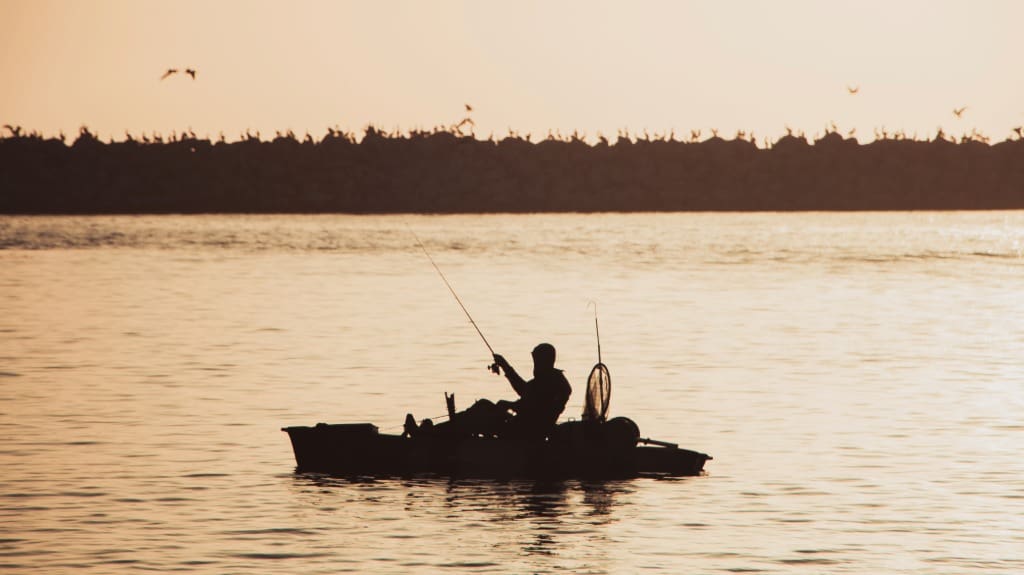
You can pick a trip that matches your skills—beginners should stick to guided Laguna Madre or Bird Island Basin tours where operators give stable kayaks, PFDs, and an experienced guide, while intermediates can plan self‑guided routes under 6–8 miles if they bring a dry‑bagged phone or VHF and check tide and wind forecasts. If you’ve got strong bracing, surf experience, a tow line, GPS, and coastal navigation know‑how, you can push toward Gulf entrances or longer crossings, but always file a float plan and watch for winds over 15–20 mph that make chop dangerous. Families, new saltwater paddlers, or anyone unsure about reading tides or doing self‑rescue should choose guided outings, because guides teach safety, point out wildlife, and keep routes close to shore so you get a great trip without taking unnecessary risks. Consider renting or buying specialized touring gear like sea kayaks and paddles for longer trips to improve efficiency and comfort on the water, especially for extended outings with variable conditions and loads; see options for touring paddles and sea kayaks to match your trip.
Skill Levels Explained
Because paddling conditions vary so much around Padre Island, you'll want to match your skills to the route and plan your first moves carefully: beginners should stick to guided bay or lagoon trips where shallow, protected water and a guide's buoyancy aid and local routing keep things simple, while intermediates can pick calm-day coastal crossings or marked launch sites but should avoid solo outings when winds top 10–15 knots, and advanced paddlers can take on longer coastal or cross-channel routes if they carry a VHF or marine radio, GPS or PLB, and a wetsuit or drysuit as needed and check tide and wind forecasts beforehand. If you crave freedom, pick your craft—standup paddle or kayak—know local tides, file a float plan, pack signaling gear, and practice assisted rescues before striking out. Consider also carrying an appropriate rescue sling for swift, safe recoveries in open-water situations.
Guided Trip Benefits
If you're newer to coastal paddling, a guided trip is the smartest first move, since a local guide will plan the route, time tides to avoid strong ebb flows, and hand you a USCG‑approved PFD and basic signaling gear so you can focus on paddling and spotting dolphins or birds instead of worrying about currents. You’ll learn hands-on skills—reading wind, ferrying across a current, and re‑entry techniques—while staying in shallow Laguna Madre bays where dolphin and bird life comes close and personal, so you get freedom without unnecessary risk. Bring sun protection, a dry bag with phone and ID, and listen to the briefing; after a few guided outings you’ll know when you’re ready to stretch into longer, self‑reliant coastal runs. For gear between trips, consider trusted options like kayaks and touring jackets to stay comfortable and prepared on the water.
Self‑Guided Considerations
After a few guided trips you'll probably feel the itch to go on your own, but know that self‑guided paddling around South Padre Island asks more from you than park‑style lake outings. If you crave freedom, aim for intermediate skill—comfortable handling 3–5 knot tidal currents and 10–20+ mph gusts—because Laguna Madre and the open Gulf change fast, and paddle boards behave differently in current and surf. Stick to Bird Island Basin, bay‑side flats, or guided half‑day tours if you’re mainly a calm‑lake paddler, otherwise check tide charts and the NOAA marine forecast, carry a VHF or waterproof radio and a PLB, wear a USCG PFD, know launch rules, file a float plan for long crossings, and only overnight with proven coastal experience. Youth paddlers should always use properly fitted youth PFDs and be supervised when learning coastal skills.
Gear Checklist for Winter Paddling on the Texas Coast
On the Texas coast in winter you'll want gear that keeps you warm, seen, and able to handle surprises, so start by checking the essentials and packing them where you can reach them fast: wear a Coast Guard–approved Type III or V PFD sized for you and keep it on at all times since cold wind drains energy quickly, stow a 10–20 liter drybag with an insulated midlayer, a windproof shell, and a separate change of clothes away from your electronics, and bring a VHF handheld or a fully charged phone in a waterproof case plus a whistle and map or compass because cell service can be spotty around Padre Island and the Laguna Madre. Add good-draining shoes, neoprene gloves, a brimmed hat, UV sunglasses, reef-safe SPF 30+, paddle leash, bilge pump or sponge, 25-foot tow line, and a signaling mirror or flare for short winter days, and keep everything organized so you can act fast if wind or tide shifts, you'll thank yourself when freedom meets safety on South Padre Island. For longer outings, consider bringing a kayak and extra dry bags to carry gear and supplies.
Where to Rent Kayaks, SUPs, and Guided Tours on South Padre Island
You’ll find gear rentals and guided outings clustered around Padre Blvd and the Laguna Madre launch sites, so start by calling shops like SPI Rentals to check hourly or daily kayak and SUP availability, rates, and on‑site support. Ask outfitters about guided options—Original Dolphin Watch and local charters commonly run sunset paddles and birding routes with a naturalist guide, safety gear, and good odds of seeing dolphins—and make a reservation in high season since tours and Viator/Tripadvisor listings often note they’re likely to sell out. For calm sheltered paddling, pick a launch near Bird Island Basin or bayfront marinas, bring a life jacket, dry bag, tide and wind info (they’ll usually brief you), and expect basic instruction if you’re new to tandem boards or SUPs.
Gear Rentals & Shops
Ready to get out on the water? You’ll find outfitters like SPI Rentals at 3901 Padre Blvd, Sea Ranch Marina, and local shops that rent kayaks and stand-up paddleboards, and they’ll kit you with a paddle, PFD, leash, and a dry bag, so you can move light and stay safe. Ask about daily, half-day, and weekly rates, on-site support, and tide or wind briefings before you launch, and if you want something special—birding, turtle work, or mangrove flats—call Original Dolphin Watch or Sea Turtle Inc–affiliated guides who run technical, conservation-linked trips. Book early for high season, check gear condition, and plan a route; knowing simple hazards keeps your freedom real and fun.
Guided Tours & Launches
If you want someone else to handle the logistics, guided tours and rental launches around South Padre Island make it easy to get on the water—rent a single or tandem kayak or a stand‑up paddleboard for an hour or a full day, or join a 1.5–3 hour guided trip that includes a quick orientation, life jacket, and paddle. You’ll find SPI Laguna Adventures and local outfitters with rates around $20–$30 hourly, $50–$80 daily, and activities available like dolphin and bird‑watching eco trips from Original Dolphin Watch, sunset or moonlight SUPs, and beginner clinics. Head to Bird Island Basin, Laguna Madre shore access, or Avenida del Mar ramps, ask about shuttles, book early, and bring sun gear, water, and a spare layer.
Wildlife, Conservation Etiquette, and Seasonal Wildlife to Look For
When you’re paddling the bays and lagoons around Padre Island, look and move like a thoughtful visitor—scan the flats and seagrass beds for groups of wintering ducks and shorebirds, keep an eye out for dolphins riding the bow wake, and watch shallow channels for turtles slipping under the surface, because how you approach them makes a big difference. Paddle Laguna Madre with respect, it’s hypersaline and full of widgeon, manatee and shoal grasses that attract redheads, western sandpipers and sometimes piping plovers; stay 50–100 feet away from resting birds, keep noise low, don’t drag paddles through grass, and shut off engines near wildlife. Bring binoculars, water, a whistle, pack out trash, and follow posted rules at protected sites.
Logistics: Getting There, Accommodations, Parking, and Safety Contacts
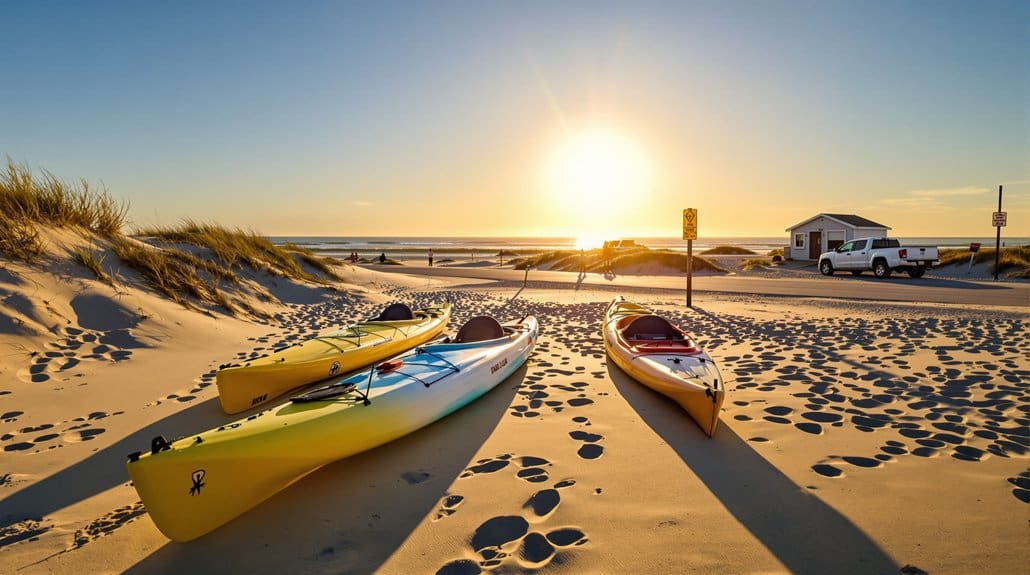
Before you hit the water, get logistics sorted so you’re not scrambling on arrival: fly into Brownsville/South Padre Island Airport for the shortest drive (about 25–30 minutes), or consider Harlingen or Valley International if flights work better, then book accommodations early for winter and spring weekends because prices and availability change fast—expect mid‑range hotels around $100–$250 a night and beachfront condos from $150 to $400+, with places like Padre Getaways and SPI Rentals listing two‑bedroom and pet‑friendly units; check whether parking is included, since municipal meters and lots near beach access and the Convention Center can have seasonal rates, and launch spots like Bird Island Basin Day‑Use and the Laguna Madre Nature Trail may have small fees or require day‑use permits, so call the park ahead to verify tides, access, and any restrictions, and save emergency numbers in your phone—911 for emergencies, SPI Police non‑emergency at (956) 761‑5421, Cameron County Sheriff at (956) 544‑0862, and the Coast Guard Sector Corpus Christi at (361) 939‑2861—so you’ve covered where you’ll stay, where you’ll park, how you’ll launch, and who to call before you paddle out.
Some Questions Answered
Is South Padre Island Worth Visiting in December?
Yes, it’s worth visiting in December, you’ll enjoy mild days, fewer crowds, and rich winter wildlife like migratory shorebirds and dolphins, so pack binoculars, a light wetsuit or dry top, layered clothes, windproof jacket, sun protection, and water. Start with a guided kayak or SUP tour to learn local currents and birding spots, check forecasts for cold fronts, reserve rentals ahead, and keep evenings flexible for sunset cruises or turtle-release updates.
What to Do at South Padre Island When It's Cold?
You can still paddle: try cold kayaking in sheltered Laguna Madre bays at sunrise or sunset, bring a 3/2mm wetsuit or neoprene top, wear layered clothes, PFD, and booties, and check wind and tide so you stay in calm seagrass flats, birding channels, or nearshore dolphin spots. Book a guided LED sunset SUP or timed beach launch if you want company, pack a dry bag with warm layers and snacks, and plan shorter routes first.
When Not to Go to South Padre Island?
Don’t go when storms, hurricanes, or tropical storms are likely, especially late August through September, and avoid peak spring-break weeks when beaches clog and prices spike; skip late December–early February if you want warm paddling, and don’t launch on days with sustained north/northeast winds over 15–20 mph or during red tide alerts. Check NOAA and local marine forecasts, pack life jacket, VHF or phone in dry bag, and postpone if conditions look risky.
Is It Warm Enough to Swim in South Padre Island in December?
Yes, you can swim in December, but Water temps? they’re about 68–72°F, so it’s borderline comfortable for short swims unless you wear a wetsuit; check forecasts, watch for cold fronts that make the water choppy, and favor sunny, calm days. Bring a wetsuit or plan brief shoreline dips or sheltered bay paddling, carry a dry towel and warm layers, and pick operators with reduced hours so you’re not left stranded.