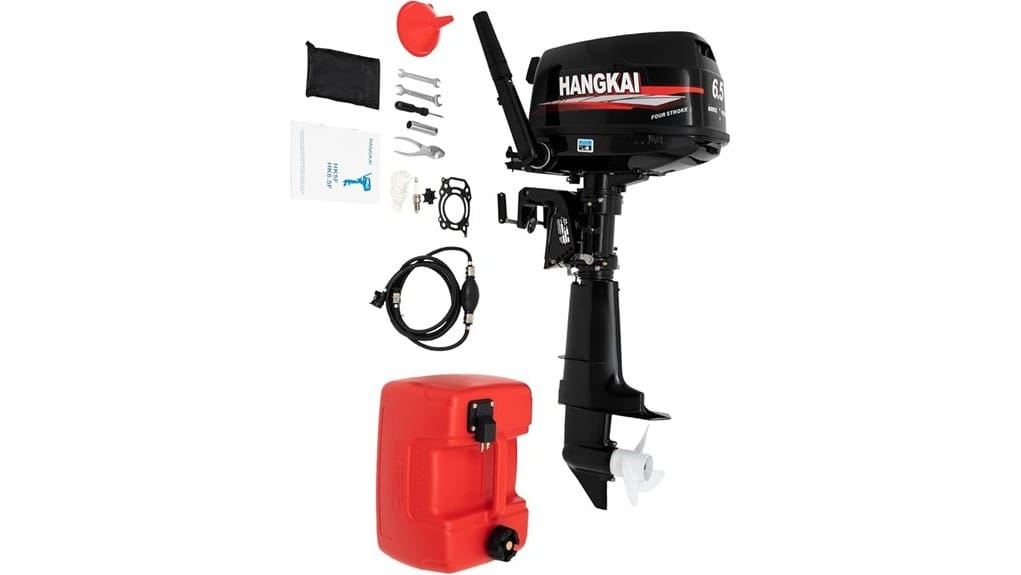

You’ll find the 4‑stroke HANGKAI 6.5HP is a compact, lightweight outboard that’s ideal if you run inflatables, kayaks, small skiffs or need a low‑maintenance utility motor. It delivers about 6.5 HP from a 123 cc single‑cylinder, uses CDI ignition, water cooling and a 12 L tank, and fits a 15 in shaft/transom setup. Expect modest top speed, ~2 L/h cruise fuel use, and simple tiller control—keep going for detailed specs, fitment and tuning tips.
Some Key Takeaways
- Lightweight 6.5 HP four‑stroke engine (123 cc) ideal for inflatables, kayaks, canoes, and small skiffs.
- Reliable CDI ignition, water cooling, and manual start deliver low maintenance and fuel efficiency (~2 L/h cruising).
- 38.1 cm shaft (fits transoms ≤44 cm) requires transom reinforcement and stainless backing plates for secure mounting.
- Tiller control with three gears (F‑N‑R) provides intuitive handling, though vibration and noise increase at higher rpm.
- Pros: fuel‑efficient and portable; cons: modest top speed, parts variability, and unclear warranty from some sellers.
Quick Summary and Who the HANGKAI 6.5HP Is Best For
While it’s compact and straightforward, the 4-stroke HANGKAI 6.5HP delivers practical propulsion for small boats and light commercial uses: you get a 123cc single‑cylinder engine with tiller control, three‑gear (F‑N‑R) drive, water cooling and CDI ignition that’ll push inflatables, kayaks, canoes, small sailboats and aluminum/fiberglass skiffs at roughly 5–20 km/h. You’ll appreciate its compact portability for transport and storage, simple manual start and tiller throttle for intuitive handling, and predictable fuel use. It suits weekend explorers, fisheries workers and beginner anglers who want reliable, low-maintenance thrust without sacrificing independence on the water. For easy launches and improved shore handling, consider using a kayak cart with sturdy wheels like those designed for kayak cart wheels to move light boats to and from the water.
Key Specs at a Glance: Power, Displacement, Shaft, Fuel and Weight
Even if you’re swapping between boats, the HANGKAI 6.5HP’s core specs stay straightforward: a nominal 6.5 HP (max output ~4.8 kW) driven by a single‑cylinder 123 cc four‑stroke (note one spec sheet field lists 169 cc), with a 38.1 cm (15 in) shaft, water‑cooling and CDI ignition. You get a 12 L fuel tank, recommended #92 gasoline, and a net engine mass of ~24.95 kg for easy mounting and transport. These specs favor engine durability with routine upkeep; follow the maintenance schedule for oil and cooling checks. Emissions compliance and aftermarket support are adequate for basic freedom-oriented use. For paddlers and small-boat owners, pairing this motor with a reliable emergency power bank can help keep essentials charged during outings.
Real-World Performance: Speed, Fuel Use, Handling, and Noise
Having covered the specs, let’s look at how the HANGKAI 6.5HP performs on the water. You’ll reach 5–20 km/h depending on load; proper top end tuning and choosing the right prop keeps speed predictable. Expect about 2 L/h fuel use at cruise; light loads stretch range, heavy loads raise consumption. Handling is direct with tiller control; watch for mount vibration at higher rpm and trim to reduce it. Wet exhaust lowers audible signature, but engine noise and propeller cavitation remain noticeable under load. Overall it’s simple, tunable, and gives you reliable, free-spirited propulsion. Consider pairing the motor with a stable kayak stand to protect your craft when transporting and tuning.
Fit & Installation: Transom Height, Shaft Length, Propeller and Control Setup
Because a correct transom fit and setup determine performance and safety, start by confirming your boat’s transom height and mounting depth against the HANGKAI’s 38.1 cm (15″) shaft and ≤44 cm (17.32″) adaptive transom plate spec. Reinforce the transom where mounting bolts concentrate; use stainless backing plates and marine-grade sealant. Select a prop within the 3–7 x 9 range and check propeller balancing and pitch for vibration-free thrust. Fit tiller controls for clear control ergonomics—adjust joystick and handle length to avoid reach strain. Finish with anti-corrosion measures: flush, grease pivot points and apply shaft corrosion prevention coatings. For kayak users, consider carrying a compact bilge pump to manage any water ingress during transport or on the water.
Pros, Cons, and Final Buying Recommendation
Now that you’ve confirmed fit and control setup, weigh the HANGKAI 6.5HP‘s strengths and weaknesses against your boating needs. You get a lightweight, fuel-efficient 4-stroke with reliable CDI ignition, manual trim/tilt and broad vessel compatibility — ideal for exploration and utility. Downsides: modest top speed, occasional parts variability and unclear warranty coverage from some sellers. Maintenance tips: change oil regularly, flush cooling passages, inspect prop and seals, use recommended #92 fuel. Consider resale value if you customize; keep records. If you want affordable, portable power and accept basic dealer support, it’s a practical buy. Also consider carrying a waterproof GPS backup battery for kayakers when using this motor on small boats.
Some Questions Answered
What Warranty and Customer Support Options Are Available?
Warranty terms typically vary by seller and region; you should check your purchase listing for duration, coverage limits, and exclusions. Support channels usually include email, phone, and seller platform messaging; some dealers offer parts and service referrals. Keep receipts, serial numbers, and photos to speed claims. If you need independent help, use consumer protection or payment-dispute routes. Save all correspondence and follow specified return or repair procedures promptly.
Are Spare Parts Readily Available Internationally?
Yes — you’ll usually find spare parts internationally, though availability varies by region. Source OEM parts through regional dealers or opt for aftermarket accessories where OEM stock is limited. You’ll want to verify part numbers (prop, carb, CDI, gaskets) and shipping times before ordering. Keep a basic spares kit aboard for remote trips, and register with dealers or online suppliers to assure quicker access and freedom to repair where you roam.
Can This Motor Be Used in Saltwater Long-Term?
Yes — you can run it long-term in saltwater if you maintain it. You’ll need regular freshwater flushes, corrosion inhibitors on exposed parts, and install sacrificial anodes on the lower unit. Rinse after every use, change oil and inspect seals frequently, and keep moving parts lubricated. With disciplined upkeep and replacement of anodes, you’ll preserve performance and avoid galvanic corrosion while enjoying maritime freedom.
What Maintenance Schedule and Costs Should Owners Expect?
You should service every 50 hours or seasonally: change oil and filter, inspect spark, gearbox, prop, and fuel lines; flush engine flushing with fresh water after each saltwater use; add fuel stabilizer when storing. Expect routine parts (oil, filters, plugs, fuel hose) ~$60–$120/year if DIY; professional service roughly $150–$300 per visit. Replace lower unit seals or prop $100–$300 as needed. Keep logs and spare parts aboard.
Is This Model Compliant With Emissions/Noise Regulations?
You likely won’t have guaranteed emissions compliance or noise certification from the standard kit; manufacturers don’t list EPA, CARB, or CE approvals for this model. You should request official certificates from the seller or test reports before purchase. If you value freedom to operate in regulated waters, plan for possible aftermarket mufflers, catalytic devices, or localized testing to meet emissions compliance and noise certification requirements.