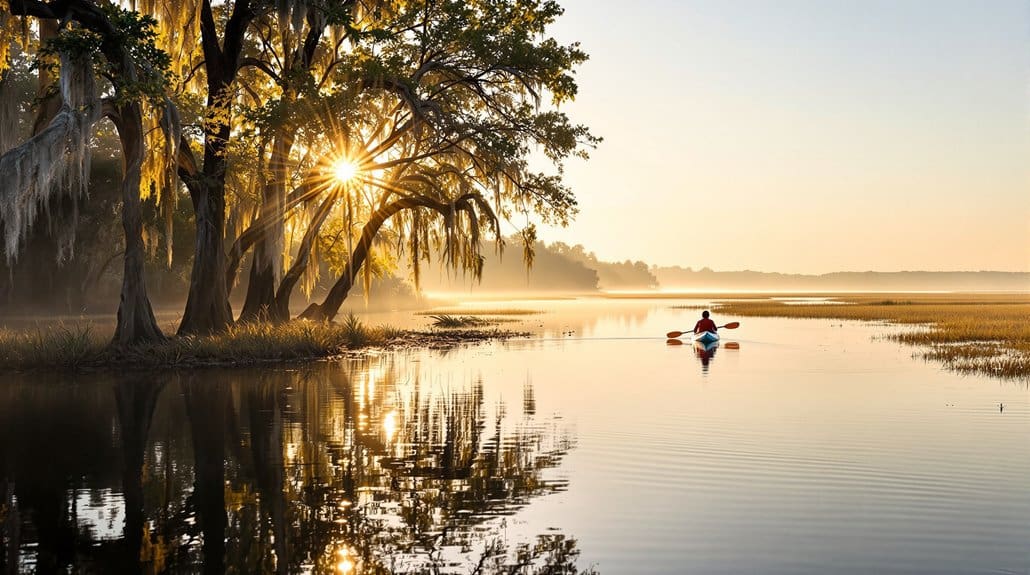
Pick springs, mangrove tunnels, or sheltered bays for winter paddles—you’ll get warm water, calm glassy conditions, and lots of wildlife; try Rainbow or Silver Springs for clear spring water and manatees, Caladesi or Weedon Island for mangrove tunnels, or the Winter Park Chain for an easy urban loop. Bring a dry bag, reef‑safe sunscreen, PFD, water, and check tide and weather; book guided clear‑kayak tours if you want underwater views and strict manatee rules, and keep going for route ideas and gear tips.
Some Key Points
- Choose warm, clear springs like Rainbow, Silver, and Merritt’s Mill for year‑round 70–72°F water and relaxed paddles.
- Paddle manatee havens (Crystal River, Kings Bay) midmorning, follow passive‑observation rules, and expect small‑group guided tours.
- Explore mangrove tunnels and estuaries (Calusa Blueway, Weedon Island, Tarpon Springs) for calm waters and abundant birdlife.
- Use urban lakes and chains (Winter Park Chain, Tampa Bay area launches, Fort De Soto) for convenient launches, facilities, and family‑friendly routes.
- Plan trips around tides, bring dry bags, reef‑safe sunscreen, PFD, and book guided clear‑kayak tours for safety and better wildlife viewing.
Top Winter Paddling Picks: Where to Go and Why
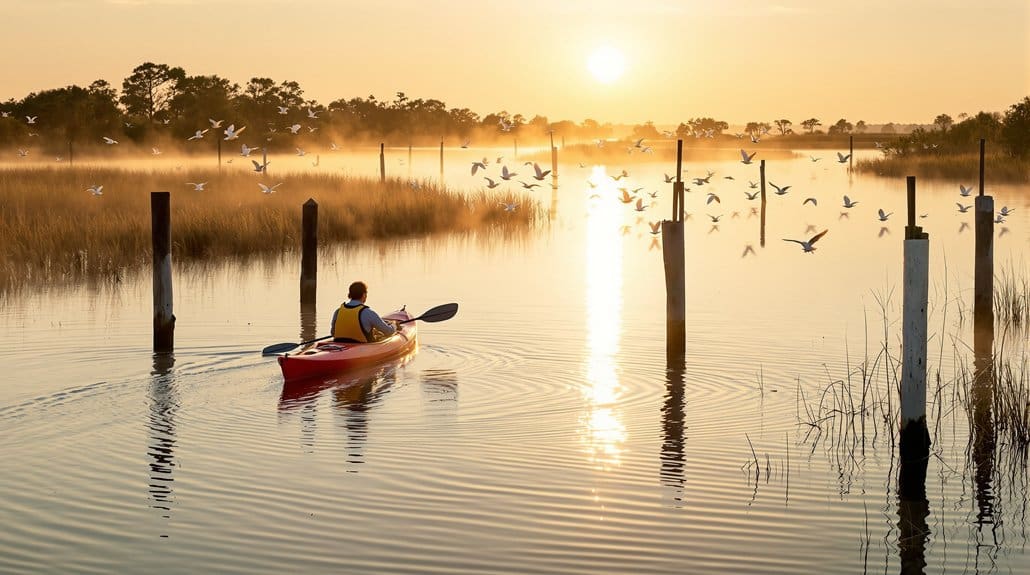
If you want easy, rewarding winter paddling, start by choosing spots where the water stays warm and clear, the wildlife concentrates, and launches are simple, because that makes packing, timing, and enjoying the day a lot easier. You’ll head to places like Crystal River to watch manatees in spring-fed warmth, or the Winter Park Chain when you want calmer lake circuits and convenient launches, and you’ll opt for clear kayaks on guided tours to see beneath the surface without guessing; bring a dry bag, light layers, biodegradable sunscreen, and a small first-aid kit, arrive early for calm winds, check tide or spring flow, follow seasonal wildlife rules, and ask guides about the best lines through mangrove tunnels or shell islands. For longer trips, consider packing a compact folding fishing net and other lightweight gear from a trusted kayak gear guide to save space and stay prepared.
Crystal-Clear Springs for Calm Winter Paddles (Rainbow, Silver, Merritt’s Mill)
When you move from general winter paddling choices to spring-fed rivers and ponds, you’ll notice a different kind of calm—clear water, steady warmth, and wildlife that gathers where the springs bubble up, so start by picking the right spring for the experience you want: Rainbow River near Dunnellon feels almost bath-warm year‑round at about 72°F and is great for relaxed paddles and swims, Silver Springs near Ocala lets you float in glass‑bottom style kayaks with frequent manatee sightings and about two‑hour guided tours, and Merritt’s Mill Pond in Marianna gives you near‑always‑clear water around 70°F with very low chances of gator or snakes and quiet, mirrorlike conditions; when you book, aim for those two‑hour guided trips (they commonly run $75–$99 and often allow free cancellation up to 24 hours), arrive early for calm winds and the best wildlife viewing, bring a dry bag, biodegradable sunscreen, light layers you can peel off for warmer water, and a small first‑aid kit, and be ready to follow the stricter viewing rules around concentrated animals—book ahead, especially in winter, because those manatee and spring tours fill up fast. Many paddlers also treat their kayaks afterward with polish compounds to protect them from salt, sun, and wear; consider kayak care as part of your trip prep.
Manatee Havens to Paddle With Wildlife (Crystal River, Kings Bay, Chassahowitzka)
Because these spring-fed spots hold warm water all winter, you’ll have an excellent shot at paddling among resting manatees at Crystal River, Kings Bay (especially Three Sisters Springs), and Chassahowitzka River, so plan like you mean to protect them and enjoy the show. You’ll want to book a small-group clear-kayak ecotour early, aim for midmorning when animals surface, and carry binoculars, a dry bag, and reef-safe sunscreen; tours usually last 2–3 hours and cost about $55–$99, with free cancellation up to 24 hours. Stay passive—no touching or chasing—follow your guide, keep voices low, and watch for 72°F spring outflows where manatees gather, so you can float, observe, take pictures from a distance, and leave them undisturbed. Consider bringing a well-fitted sea kayak spray skirt to stay dry and comfortable on chilly paddles, especially when waves or wakes are likely; a good spray skirt fit helps seal your cockpit and improves safety.
Mangrove Tunnel Escapes on the Gulf Coast (Caladesi, Weedon Island, Big Hickory Pass)
Slide into a kayak here and you’ll find yourself threading quiet tunnels of red and black mangrove roots, paddling calm water that hides a surprising cast of wildlife—shorebirds, juvenile fish, rays and sometimes dolphins—so plan your start around mid to high tide, bring reef-safe sunscreen and a dry bag, and expect only water access and tight channels in spots. You’ll love Caladesi Island State Park’s tide-sensitive channels from Dunedin or Honeymoon Island, and Weedon Island’s marked estuarine routes near St. Petersburg makes birdwatching easy if you time the tide, while guided trips at Big Hickory Pass give local insight, boost sightings, and handle logistics for you, so launch within two hours of midtide, keep low profiles, and let a guide point out hidden life. Capture the moment with floating camera straps to keep your camera secure while you focus on paddling and wildlife.
Sheltered Bay Islands and Preserves for Easy Winter Paddling (Shell Key, Calusa Blueway, Tarpon Springs)
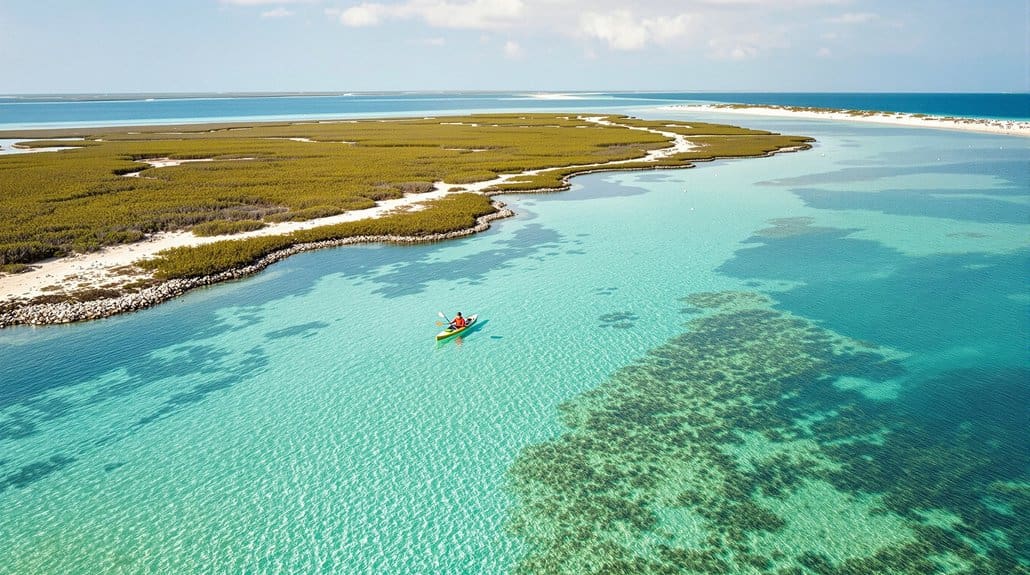
When you head for Shell Key, plan your launch and return around the tide chart so your 3‑mile trip to the undeveloped barrier island stays shallow and easy, bring a clear kayak or binoculars for underwater and bird viewing, and tuck a dry bag with sunscreen, water, and a map of the mangrove channels. On the Calusa Blueway pick a marked route that matches your skill and vehicle setup—many launch sites are RV‑friendly—and watch for manatees and birds in the sheltered channels while keeping to mapped paths to protect nests. At Tarpon Springs aim for calm wind days, join a guided clear‑kayak or mangrove tour if you want more wildlife and local context, and plan a post‑paddle stop at the sponge docks for food and a warm drink. Remember to carry a properly fitted PFD and basic swift-water safety gear like a throw bag and whistle for safer paddling personal flotation.
Shell Key Preserve Access
Head out to Shell Key Preserve by water and you’ll find an easy, sheltered winter paddle that feels more like a nature walk than a sea crossing, with mangrove channels to follow, shell-strewn beaches to land on, and plenty of shorebirds to watch—plan on roughly a 3-mile trip from Tierra Verde or St. Pete Beach, bring a clear kayak if you want to glass the shallow flats, and expect guided options that point out the shell tree and birding spots. Launch early for calm water, carry sun protection, a dry bag with snacks and a whistle, and watch tides so you don’t strand yourself on a sandbar. Paddle slowly, land gently, leave shells, and savor the quiet freedom. Many paddlers opt for lightweight, inflatable models like Sea Eagle kayaks for easy transport and launch, especially when accessing protected preserves like Shell Key inflatable kayaks.
Calusa Blueway Routes
Paddle the Calusa Blueway’s sheltered bays and you’ll feel like you’ve stepped into a quieter, wilder side of Florida—easy put‑ins near Fort Myers, Sanibel, and Captiva lead into mangrove tunnels, shallow flats, and little barrier islands where you can glass for rays, watch dolphins and wading birds, and step onto a shell‑strewn beach without a long open‑water crossing. You’ll follow marked channels across 190 miles of estuary, pick routes through Estero Bay and Pine Island Sound that keep wind and swell away, and aim for clear flats around Shell Key Preserve when you want bright water and easy beach landings. Bring water, sun protection, a pump or bailer, a map or app, and a camera, paddle calmly, respect wildlife, and launch when tides make shoals manageable. Consider bringing essential paddling gear like a map case to keep charts and phones dry on every trip.
Tarpon Springs Mangrove Paddles
If you want an easy, calming winter paddle that still feels like an adventure, try the mangrove creeks and shallow bay routes around Tarpon Springs and Shell Key, where sheltered water, clear seagrass beds, and a good chance of seeing dolphins or wintering manatees make a short outing feel rewarding. You’ll find Shell Key Preserve’s undeveloped shores reachable only by water, quiet landings for birding, and Calusa Blueway markers guiding you through mangrove paddles that stay calmer than open Gulf routes; pick a 1–3 hour tour or rent a clear‑bottom kayak, check tides, carry water, sun protection, and a dry bag, watch for rays and wading birds, and enjoy freedom with safe, steady planning. Gear Up for Water Adventures offers gear and advice for paddlers, including durable eddy bags for shore stops and carrying essentials on day trips, which can help keep your equipment dry and organized during mangrove excursions and coastal paddles; consider their eddy bags when packing for a winter outing.
Lakes and Chain-of-Lakes Near Cities for Quick Winter Outings (Winter Park Chain, Tampa Bay Area Lakes)
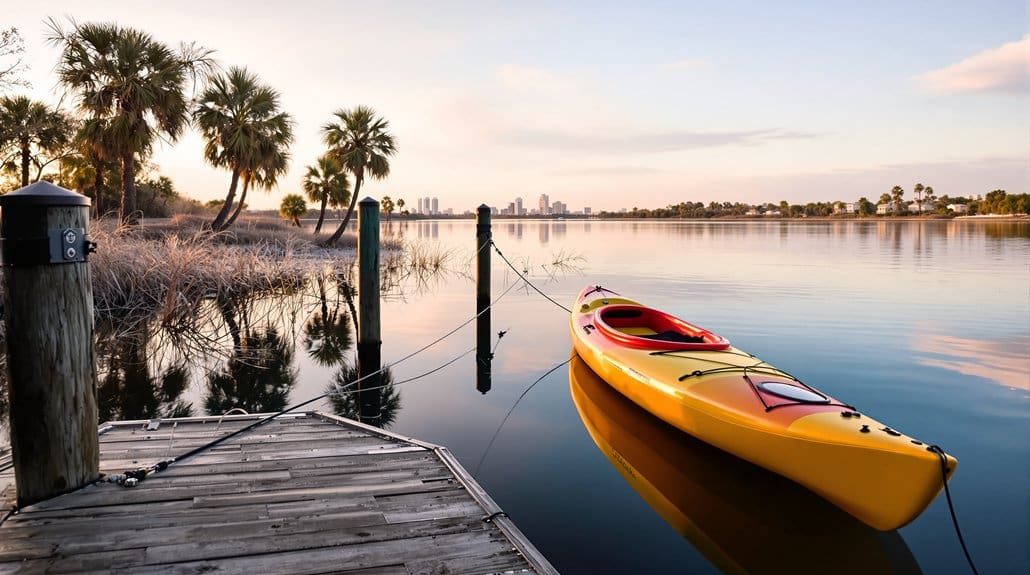
Start at Dinky Dock Park for the Winter Park Chain, where you’ll find a public launch, restrooms, and easy street parking, then paddle the sheltered canals to Lake Maitland for a quick 2–3 hour loop that’s great for family outings or a solo morning trip. In the Tampa Bay area pick parks with marked launches and mangrove‑lined inlets for calm winter conditions, check park hours and nearby facilities before you go, and expect waterbirds and the occasional manatee while you paddle. Before you shove off, wear a PFD, bring sun protection and water, tell someone your route and expected return time, scan the sky for weather changes, and stick to sheltered routes if winds pick up.
Winter Park Chain Access
You’ll find the Winter Park Chain a perfect quick winter outing, with a 4.5-mile round-trip route from Dinky Dock Park that threads Fern Canal, Lake Osceola, the Venetian Canal, and Lake Maitland and even gives you a beach landing at Dog Island, so plan on about two to three hours depending on how much exploring or sunning you want to do. Paddle from Dinky Dock Park for a free, easy launch with restrooms, and note hours are 8 AM–8 PM, so aim for calmer mid-morning or late afternoon water, check for boat traffic in narrow canals, and bring sun protection and water since shade’s limited. Watch tides and local conditions, avoid peak motorboat times, and enjoy short carries, simple parking, and urban freedom.
Tampa Bay Launch Spots
Tampa Bay's launches are nice short escapes you can slip into on a weekend morning or a calm winter afternoon, and you’ll find options from city-proximate lakes to mangrove-lined bays that let you see manatees, birds, and even dolphins without a big trip; for a first pick, think about whether you want urban convenience—like the Winter Park chain’s easy Dinky Dock launch with restrooms and simple parking—or a saltwater day, such as Tierra Verde’s clear-kayak runs out to Shell Key or the mangrove tunnels at Weedon Island, both tide-sensitive so check tide charts before you go. Pick a launch like Fort De Soto Park for calm bays and dolphin chances, bring water, layers, a map or GPS, and tide-aware timing.
Urban Paddle Safety Tips
If you’re heading out on a quick winter paddle around the city, treat the trip like a short solo hike on water—check the park hours and launch rules the night before, know where boat-traffic corridors and restricted docks are, and file a simple float plan with someone who’ll expect you back, because urban lakes and canals can look tame but change fast under bridges or in narrow fern-lined channels. You’ll want to wear layered clothing and stash a windproof jacket in a waterproof dry bag, bring a charged phone in a floatable case, and carry mandated items like a PFD for every paddler, whistle, and light if you might be out near dusk; watch for private docks, nesting birds, and motorboat lanes, and keep exits and timing tight.
Clear-Kayak and Glass-Bottom Options for Underwater Viewing (Shell Key Clear Tours, Silver Springs, Sarasota Night LED Tours)
Often you’ll find that clear- and glass-bottom kayak trips give the kind of up-close, underwater views you can’t get from shore, so start by picking a reputable operator—look for highly rated tours like Shell Key’s clear-kayak trips or Silver Springs’ crystal-water adventures, and for night trips in Sarasota ask about the LED lumen output so you’re actually seeing fish and seagrass below. You’ll want a guided, small-group tour since clear kayaks track differently and guides handle navigation, safety briefings, and wildlife rules—no touching or chasing manatees—bring polarized sunglasses for glare, reef-safe sunscreen, a dry bag for your phone, and expect two-hour trips around $65–$80; book early, cancellations are often generous, and peak season fills fast.
Trip Planning Essentials: Tides, Temps, Rentals, and Manatee-Season Rules
Those clear‑kayak trips are great for spotting fish and seagrass, but before you paddle out you’ll want to check a few practical things: look up tides for any mangrove or shell‑key route since places like Caladesi and Weedon Island can get scraping‑shallow at low tide, note water temps (spring‑fed rivers like Rainbow and Silver stay around 70–72°F year‑round while open Gulf water can dip into the 50s–60s on a cold front), and confirm with your rental or guide that they supply a properly fitting PFD, dry bag, and any clear‑kayak or shuttle details you need. Check NOAA tide tables, watch marine forecasts for wind and daylight, pack layers for changing water temperature, rent from vetted ops, and obey manatee‑season rules: stay in your boat, keep distance, don’t touch or chase, and book guides who enforce no‑swim/no‑approach policies.
Suggested Itineraries and Nearby Amenities (Half-Day, Full-Day, Overnight Options)
When you’re picking an itinerary, think about how much time you actually want to spend on the water and what kind of comfort you need, since half‑day trips give you an easy taste with nearby bathrooms and restaurants, full‑day outings get you farther from shore for better snorkeling or reef access, and overnight paddles mean shuttle planning, campsite reservations, and a bit more gear. If you want a quick freedom fix, book a 1.5–2 hour mangrove kayaking tour near Sarasota or Estero Bay, close to parking and cafes, or a Key West half‑day that adds snorkeling among reefs and springs for $115. For full days, aim for sail/kayak/snorkel trips that include transport and lunch, and for overnight, reserve state park sites early, plan shuttles, and pack cold‑weather layers.
Some Questions Answered
Where Is the Best Kayaking in Florida?
Best kayaking in Florida depends on your vibe: head to mangrove explorations in Sarasota or the Keys for tunnels and calm water, paddle coastal estuaries like the Calusa Blueway for birds and manatees, or try urban paddling around Tampa Bay for easy launches and clear-kayak tours. Bring a life jacket, dry bag, reef-safe sunscreen, and paddle leash, check tides, start at guided tours to learn currents, then strike out on solo runs.
What Are the Three Golden Rules of Kayaking?
The three golden rules of kayaking are simple: master paddle strokes so you can steer, trim, and brace confidently; run a gear checklist before launch—PFD, whistle, waterproof comms, pump or sponge, paddle leash, extra clothing—and stow items accessibly; and plan exit strategies for every leg—know shore options, tide or current changes, and how to self-rescue or signal for help if things go sideways, so you stay free and safe, every trip.
Is Kayaking Emerald Cave Worth It?
Yes, it’s worth it if you want calm, close-up mangrove life, but pick a guided tour to protect wildlife and manage eco tourism impact, since guides know tides and tight spots. Bring polarized sunglasses and a water-resistant bag, use camera settings for low light and motion for photography tips, and ask guides about cave geology insights, roots, and tides, then paddle slowly, watch for fish or turtles, don’t touch habitat.
Where to Kayak in Florida Without Alligators?
Pick saltwater coastal estuaries, island paddling around the Keys or Shell Key, or busy freshwater springs where guides run clear-kayak tours, and you’ll cut gator risk a lot. Look for guided ops, clear water, steady current, and public launch sites, carry a leashed paddle, phone in drybag, whistle, and stay seated, don’t feed wildlife, keep distance, avoid dawn/dusk, and ask locals about recent sightings before you go.