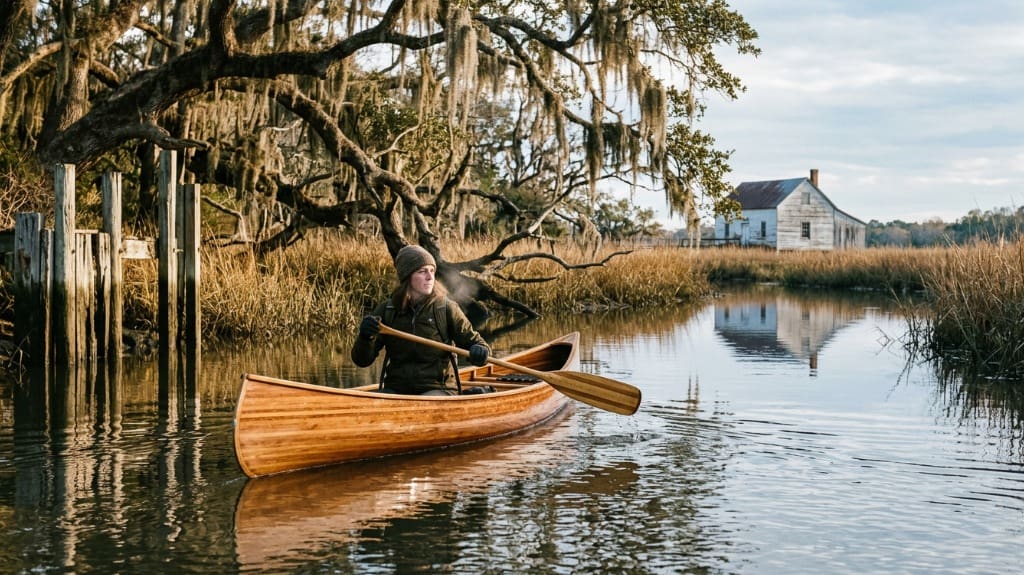
February’s cool, misty Lowcountry is perfect for quiet paddling, so pack layers, a Coast Guard PFD, spare paddle, buoyant phone case or VHF, dry bags, and a map or GPS, then time a Sugar Hill or Cuckhold’s put‑in for mid‑tide to ride currents past tannin‑stained blackwater, rice trunks, and mossy cypress; watch for submerged stumps, hug dikes to spot herons and osprey, land only at marked ramps, and keep voices low to protect middens and Civil War and Combahee River sites — more route, safety, and interpretation tips follow.
Some Key Takeaways
- February offers cooler, misty marsh conditions ideal for quiet wildlife viewing and low-angle morning photography.
- Time launches for the middle third of a tidal change to ride currents and plan 3–4 hour outings around tides.
- Use designated put-ins like Sugar Hill or Cuckhold’s, scout low ramps, and expect short muddy carries at low water.
- Bring GPS, Coast Guard PFD, spare paddle, towline, and cold‑weather layers to manage submerged stumps and hypothermia risk.
- Paddle quietly along dikes and rice trunks to protect fragile cultural sites and maximize sightings of herons, egrets, and winter warblers.
Why February Is Ideal for Lowcountry Paddling
If you head out in February, you’ll find paddling the Lowcountry feels different in the best ways: the air’s cooler so mosquitoes and other biters are mostly off duty, many snakes and alligators are sluggish or tucked away, and the quieter waterways mean you’ll have more room to take photos and watch great blues, egrets, ospreys, and winter warblers without crowds getting between you and the view. You’ll feel freer to drift through cypress swamps and along shell middens, but plan for low tides, exposed stumps, and mudflats, so map your route, scout awkward turns, and pack a paddle float, spare paddle, and dry bag. Move slowly for bird shots, wear layers, check tide charts, and be ready to portage. For added safety and convenience, consider bringing waterproof river maps to navigate tidal creeks and hidden channels.
Where to Launch: Sugar Hill, Cuckhold’s, and Nearby Put‑Ins
You’ll want to pick a put‑in that fits your trip and parking needs, so check Sugar Hill if you’re joining a guided 2.5‑hour tour with gear and narration, choose Cuckhold’s for a self‑launch when the tide’s falling upstream and plan a Steel Bridge pickup for downstream pulls. Think about where you’ll park and who will shuttle—some ramps like Buck Hall and Rimini have dirt or shallow access and may need a short, muddy carry at low water, so bring straps, a tarp for wet gear, and a partner for ferrying cars if you can. Before you shove off, look at the tide table (strongest current hits mid‑tide change), scout the bank for easy loading, and confirm outfitters or pickup points so you don’t get stranded. Also, consider basic launch site safety practices such as checking wind, weather, and gear before setting out.
Put-In Access Options
Start by picking a launch that fits the kind of trip you want, because that choice sets everything else—Sugar Hill Landing is great when you want an easy, guided start with parking and gear ready, Cuckhold’s is better for longer self‑guided runs when the tide’s falling, and nearby ramps like Rimini or Buck Hall open different waterways but come with their own quirks. You’ll want to know first where you aim to go, because Sugar Hill hooks you into narrated tours and local knowledge, Cuckhold’s puts you on the Combahee for downstream mileage timed to an ebb, Rimini can force a muddy portage if water’s low, and Buck Hall links you to the ICW, so carry tide charts, a spare paddle, life jacket, and a simple map. Beginner kayakers should also bring essential gear like a properly fitting PFD, a whistle, paddle leash, and sunscreen.
Parking And Shuttle
Pick the launch that fits the trip you want, because where you park and who shuttles you shapes everything from how long you’ll paddle to what you’ll carry; for a guided, hassle‑free outing roll into Sugar Hill Landing off River Road—Beaufort Kayak Tours will handle parking, gear, and a 2.5‑hour route—whereas Cuckhold’s at White Hall and Combahee Roads is your go‑to for self‑launches aimed at longer downstream runs, but plan a pickup at Steel Bridge (Harriet Tubman Bridge) and time it for an early falling tide so the current works with you. Check whether the boat ramp is paved or a dirt pull, bring a change of clothes and a towline, stash water and a solid map, and expect primitive parking in some spots. Consider bringing an anchor suited to your kayak and conditions, especially a simple grapnel anchor for shortholds and tidal areas.
Route Spotlight: Combahee River to Rice Trunks and Dikes
When you paddle from Sugar Hill or Cuckhold’s toward the Combahee’s rice trunks, watch how the hand-dug canals and wooden trunks steer water across old fields, and bring a sharp, waterproof map or GPS so you can follow narrow cuts without getting turned around. Hug the dikes where birds perch and look for spring blooms like white spider lilies, move slowly past the low walls that now serve as habitat, and keep an eye on tide times—an early falling tide often makes some channels easier to work. Start by launching at your planned put-in, set a clear turnaround or pickup at Steel Bridge if needed, and bring sunscreen, a spare paddle leash, and a dry bag for your phone and historical notes. Check river levels and gauge data with a reliable river level gauge before you launch to ensure safe paddling conditions.
Rice Trunk Navigation
You’ll want to time your run through the rice trunks around the tides, launching from spots like Cuckhold’s Creek on an early falling tide so the water flows out through the trunks and gives you the best chance of paddling down the straight, hand-dug canals; bring a GPS or a waterproof map because the canals make a maze, expect water lilies and other vegetation to slow you down or force a short portage, and keep plenty of water, bug spray, and gear protection handy since depths change with the season and you’ll be close to historic dikes and wildlife. Paddle steady, follow the narrow channels that once fed the rice fields, watch for the wooden sluice gates, aim for known takeouts like Steel Bridge, and travel light but prepared. Consider bringing an anchor rope designed for kayaks to secure your boat when exploring tight or weedy channels and taking breaks, especially near old structures like dikes and gates where currents can be unpredictable and you may need to hold position with a reliable anchor rope.
Dike Habitat Interplay
Along the Combahee, follow the river past old rice plantations and you’ll see how dikes and trunks shape the land, so bring a good map or GPS, plan your tide run for early falling water, and paddle ready to read the landscape. You’ll thread shallow flats and narrow managed channels, spot water lilies and pontederia concentrated by dikes, and watch wading birds, osprey, and ducks work the edges, so stay low, move quietly, and use a paddle float to hedge against a sticky shallow. Check tides, aim downstream as the tide falls, avoid blocked canals at low water, and pick a guided route from Sugar Hill or Cuckhold’s, because those straight, old canals can confuse even bold explorers. Consider bringing a local paddling map from a specialist retailer to help navigate these tidal waterways and historic features (local paddling maps).
Historic Sites Along the Water: Plantations, Rice Canals, and Slave Trail Markers
If you paddle these Lowcountry rivers and creeks, start by watching the waterline and the edges of marsh channels, because that’s where history is easiest to read: you’ll see long, straight rice canals cut by enslaved hands, dikes and rice trunks—those wooden sluice gates that controlled tides—standing in place from the 17th–19th centuries, and elevated shell middens that mark old Native American and colonial meal sites. On your first trip bring binoculars, a camera, a waterproof map, and respect, because Sugar Hill Landing, Hampton Plantation, and river corridors show intact plantation features and slave quarters you can view from your boat, and sites like Cuckhold’s and Steel Bridge landings link to Civil War raids and Harriet Tubman’s Combahee operation, so paddle quietly, note markers, and learn. Also bring a checklist of essential gear to help ensure a safer, more prepared trip.
Planning Your Trip: Permits, Guided Tours, and Access Rules
After you’ve been watching the waterline for rice canals and slave quarters, it helps to get practical about how you’ll actually get on the water, where you’ll park, and what rules will shape the day, because many launch spots are public but some landowners post “No Trespassing” or expect you to use a designated ramp or right-of-way. You’ll check signs at Buck Hall, Rimini, Sugar Hill, and state sites like Hampton Plantation, sort permits and parking before unloading, and consider a guided trip from Beaufort Kayak Tours or Coastal Expeditions if you want gear, local narration, and safer navigation through confusing cypress canals. Time longer self-guided paddles for an early falling tide, watch for unnavigable low-water canals, and carry a map/GPS.
What to Bring in February: Clothing, Safety Gear, and Cold‑Weather Tips
When you head out in February, start with a layered clothing system—a moisture‑wicking base, an insulating midlayer, and a windproof, water‑resistant shell—so you can shed or add layers as the sun and wind change, and consider neoprene splash pants and booties or a wetsuit/drysuit if water’s cold. Stash your extras—phone, camera, and a dry spare set of clothes—in quality dry bags, plus a space blanket and small first‑aid kit in a separate waterproof pack so a capsize or cold spray won’t leave you stuck or soaked. Always wear a Coast Guard–approved PFD, carry a whistle and GPS or map and compass for tricky cypress channels and tidal currents, and treat cold water with respect because quick heat loss makes preparedness your best safety move.
Layered Clothing System
Think layers: start with a thin, moisture-wicking base (synthetic or wool) that pulls sweat away from your skin, add an insulating mid-layer like fleece or a light down for warmth, and finish with a waterproof, windproof shell to block the Lowcountry’s February spray and gusts. You want a layered clothing system,frst, so you can shed or add pieces as wind, sun, and tide change, and you’ll stay free to move without getting clammy or chilled. Bring a neoprene or wool hat, waterproof gloves, and warm socks to stop heat loss from head, hands, and feet, and wear your Coast Guard PFD over layers, not under a bulky coat. Pack a spare insulating layer and an emergency bivy, carry water and sun protection, and check dexterity for self-rescue gear.
Dry Bags & Storage
Packing smart dry bags and organizing your gear will make a cold February paddle feel a lot safer and less stressful, so start by choosing the right sizes and testing them at home: carry a 10–20 L roll-top for electronics and papers, a 40–70 L roll-top for spare clothes and food, and tuck a 2–5 L dry bag inside the big one for extra socks and a spare hat, all because keeping your insulating layers truly dry is the single best way to avoid hypothermia if you get wet. Keep your PFD, whistle, and first-aid kit accessible, stash a waterproof map or GPS in a dry pouch you can reach, and use a buoyant phone case or hard dry box with desiccant for tide info, tied or tethered so nothing drifts away.
Cold‑Water Safety Gear
You’ve already got your dry bags sorted, so next you’ll want to focus on what’s on your body and within easy reach, because staying warm and being able to handle a capsize matters more in February than on a summer day. First, wear layers: a moisture‑wicking base (synthetic or wool), an insulating midlayer, and a waterproof breathable shell to block spray and wind, and don’t skimp on a USCG‑approved PFD that fits over layers. Consider a drysuit or at least a good wetsuit for blackwater creeks, pack a spare dry set, foil blanket, and ziploc for electronics, and protect hands, feet, and head with neoprene gloves, booties or insulated waterproof boots, plus a warm hat. Carry a throw rope, paddle float, bilge pump, whistle, and VHF or charged phone, and watch the tides.
Navigation and Tides: Reading Channels, Trunks, and Oxbows
If you want paddling to feel easier and safer, start by reading the water and the map together before you shove off, since Lowcountry creeks are blackwater systems with strong tides that can flip a gentle paddle into a grind if you go the wrong way at the wrong time. You’ll treat channels like a river running course, note oxbow loops on your GPS, and time launches for the middle third of a tide change when flow is strongest, so you ride with the current instead of fighting slack or reverse flow. Expect trunk canals to be narrow, weed-filled, and gated, be ready to turn where duckweed clogs a side creek, watch green markers near the ICW, and pack patience, a phone GPS, and spare time.
Wildlife and Birding Opportunities on Winter Paddles
Once you’ve read the channels and timed your launch around the tide, turn your attention to the birds and other wildlife that make winter paddles in the Lowcountry so rewarding, because February water and rice dikes concentrate feeding flocks and make sightings more reliable. You’ll glide close to great blue herons and white egrets along the banks, scan creeks and rice canals for prothonotary warblers and anhingas, and watch ospreys and double-breasted cormorants work the tides, while bottlenose dolphins sometimes weave through tidal creeks nearby. Bring binoculars and a waterproof camera in a ziplock, plan around the two highs and two lows each day, pick shallow flats at slack tide, and enjoy quieter reptile activity so you can focus on birds and open water behavior.
Interpreting History Respectfully: Talking About Harriet Tubman and the Raid
History matters here, and you’ll want to bring curiosity and care as you talk about Harriet Tubman and the Combahee River Raid, because what happened in June 1863 is both a tactical feat and a profound human story. When you visit, state verified facts first—date, that over 750 people were freed, Tubman’s role as scout, guide, and nurse, and how small boats used rice canals and tidal creeks made the raid possible—and then acknowledge the pain of slavery without glamorizing violence. Look for landscape clues like old rice trunks and creek channels, carry a map, binoculars, water, and patience, and ask questions about timing, tides, and local knowledge. Center Tubman’s leadership and agency, speak plainly, listen deeply, and honor those who gained freedom.
Leave No Trace on Cultural Landscapes: How to Protect Sites and Artifacts
You’ve just been thinking about people and places, about how actions and landscapes hold stories, so now bring that same care to the ground under your boat: protect the cultural features you’ll see by staying on marked water routes and using designated landings, because even a careless step or a dragged anchor can crush an inch‑deep shell midden, crack an old rice trunk, or erase pottery that tells a family’s story. Paddle one channel at a time, use Sugar Hill or Cuckhold’s landings, and pick sandy beaches or hardened ramps for breaks, since those choices keep fragile sites intact; don’t remove anything, pack out trash and gear, report notable finds to state archives, and honor signs and permits to let these places breathe.
Recommended Day Trips and Loop Routes for Winter Paddlers
If you’re paddling a February day in the Lowcountry, plan on a 3–4 hour outing that keeps distance, tides, and landing choices front and center, so you get a comfortable trip and leave cultural sites intact. Pick routes like Wambaw or Sparkleberry Swamp for about seven miles, launch from Buck Hall or Rimini when water allows, and time your put-in for the middle third of a changing tide so currents help you on tidal creeks. Bring a mapped GPS because blackwater channels with submerged beautiful cypress stumps and moss-draped trees can confuse you, watch shallow canal chokepoints for possible portages, and expect herons, egrets, ospreys, dolphins, or an alligator sunning nearby. For a cultural loop, try Sugar Hill toward Steel Bridge, land respectfully, and keep your pace steady.
Photography and Storytelling: Capturing Misty Marshes and Oral Histories
When you paddle into a February misty marsh, slow down and get your camera ready, because the light, the tannin-stained water, and the mossy cypress will reward a patient eye—start by planning shots for low-angle morning light, bring a polarizer to cut glare and a tripod for crisp long exposures when mist softens the scene, and keep a small recorder or phone handy to capture quick oral-history clips from guides or interpreters you meet along the way. You’ll want to frame Spanish Moss-draped limbs with wide lenses to show scale, add close-ups of pine pollen rings or water-lily blooms, note metadata like Wambaw Creek, February, tide, and record names and dates when someone shares Francis Marion or Combahee River stories to pair image and voice.
Some Questions Answered
Why Do They Call It a Lowcountry in South Carolina?
They call it the Lowcountry because you’re in low, flat tidal plains, where the land meets salt water, marshes, and blackwater creeks, so tides shape every channel and dock. When you go, look for mudflats, cypress swamps, and rice-era dikes, carry waterproof maps, a tide chart, life jacket, and bug spray, and paddle at high or outgoing tide for easier travel—watch birds and currents, and respect private marsh edges.
Where Is the South Carolina Lowcountry?
You’re in coastal southeastern South Carolina, stretching from the Savannah River up past Charleston, where coastal marshes, tidal creeks, and barrier islands shape the land. When you go, bring a reef-safe sunblock, a waterproof map or phone in a dry bag, a life jacket, and spare paddle leash; watch tides and oyster beds, scout launch ramps near Highway 17, and plan routes around low tides so you won’t get stuck.