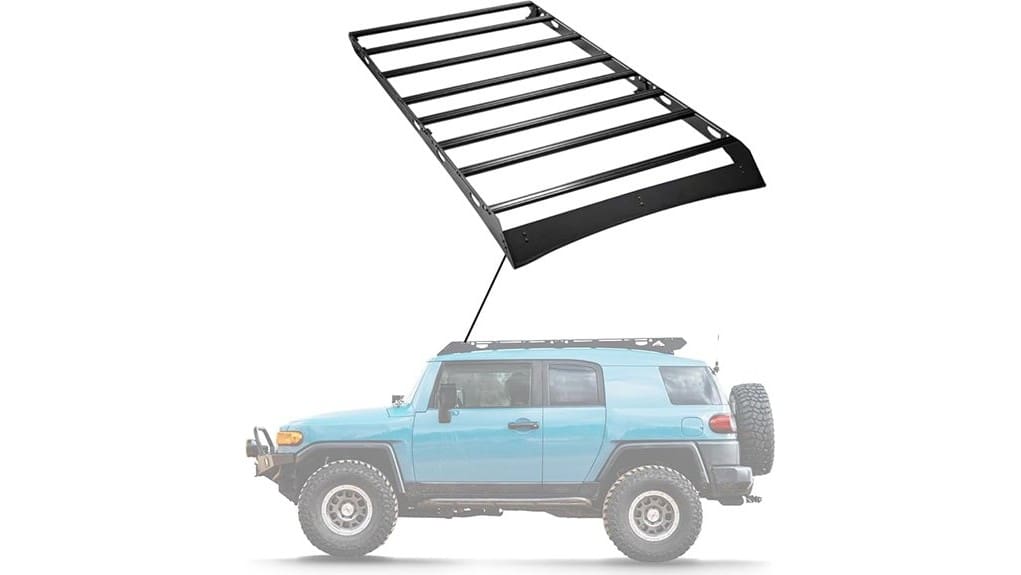

You’ll get a low‑profile, drill‑free roof rack engineered for 2007–2014 Toyota FJ Cruisers that clamps to factory rails, preserves door seals, and minimizes wind drag. It uses 1/4″ aircraft‑grade aluminum side plates, eight anodized crossbars, and stainless hardware for stiffness, corrosion resistance, and low vibration. Rated ~400 lb dynamic (700 lb static), it’s ideal for solo/duo roof tents, bikes, or kayaks while trading decorative flash for engineered durability — keep going to see specifics and fittings.
Some Key Takeaways
- Low-profile, drill-free roof rack designed specifically for 2007–2014 Toyota FJ Cruisers using factory rail interfaces.
- Built from 1/4″ aircraft-grade aluminum side panels, eight anodized crossbars, and stainless hardware for durable, stiff construction.
- Dynamic load rated to 400 lbs (driving) and 700 lbs static (parked) with controlled load distribution across crossbars.
- Low wind drag and reduced noise from slim profile and included fairing, suited for overlanding and kayak or roof-tent use.
- Single-row design limits stacking and cross-vehicle compatibility, but offers repeatable fitment and strong accessory integration.
What the Sherpa Half Height Roof Rack Is and Who It’s For
Meet the Sherpa Half Height Roof Rack: a low-profile, single-row roof system engineered specifically for 2007–2014 Toyota FJ Cruisers that gives you a drill-free, vehicle-specific mounting solution with aircraft-grade aluminum side panels, anodized crossbars, and stainless hardware. You get rugged, precision construction that supports rooftop tents, bikes, and cargo while offering aesthetic upgrades over stock rails. Target user demographics include overlanders, weekend adventurers, and professional outfitters who value reliability and low drag. You’ll appreciate installation tips that emphasize torque specs and hardware checks. In brand comparisons, Sherpa trades decorative flash for engineered durability and repeatable fitment. Smart kayak storage ideas for beginners often include wall-mounted racks and roof rack solutions to maximize space and protect hulls.
How It Fits the 2007–2014 Toyota FJ Cruiser (Drill‑Free Install and Dimensions)
Having covered what the Sherpa Half Height Roof Rack is and who it’s for, here’s how it fits the 2007–2014 Toyota FJ Cruiser: the rack uses vehicle-specific mounting points and precision-cut 1/4″ aircraft-grade aluminum side panels to seat directly onto the FJ’s existing roof rails without drilling or body modification. You’ll find tight panel alignment and controlled mounting clearance engineered to preserve roof contours and door sealing. Install is straightforward: position side plates, engage factory rail interfaces, then torque stainless fasteners to spec. The low-profile footprint keeps wind drag down while giving you secure, repeatable attachment for overland gear. This freestanding design also makes the rack compatible with a range of essential overland and kayak storage accessories.
Materials, Build Quality, and Weather Resistance (Aluminum, Stainless Steel, Finish)
Although the Sherpa Half Height Roof Rack looks minimalist, its core structure uses 1/4″ aircraft‑grade aluminum side panels and eight black‑anodized aluminum crossbar extrusions to deliver high stiffness-to-weight performance you can trust on and off road. You’ll find stainless steel hardware for rust resistance and a premium black textured powder coat finish that limits surface wear. Anodized components add an extra corrosion resistance layer where abrasion matters. Fit and weld quality are precise; tolerances minimize rattle and maintain alignment. The result: a lightweight, rugged system built in the USA that supports your gear and long-range freedom. Designed with kayakers in mind, it integrates well with common outdoor kayak storage setups to keep boats secure and accessible.
Real‑World Performance: Load Capacity, Wind Noise, and On/Off‑Road Use
When you load the Sherpa Half Height Rack, its tested dynamic capacity of up to 400 lbs and static capacity of up to 700 lbs give clear limits for on‑road, off‑road, and parked uses; stay within the dynamic rating for driving to avoid compromising handling or mounting hardware. You’ll notice controlled load distribution across the eight crossbar extrusions and robust side plates, which preserves vehicle balance and mounting integrity. The low‑profile shape limits aerodynamic impact, while the included fairing and edge trim assist noise mitigation at highway speeds. Offroad durability is evident in sustained stability over washboard and rough trails without loosening hardware. Many kayakers and beginners prefer wall‑mount racks and vehicle roof systems that emphasize secure mounting and ease of use, such as wall-mount racks designed for kayaks.
Buying Verdict: Pros, Cons, and Best Use Cases (Roof Tents, Bikes, Kayaks)
Because it balances strength, low profile, and precise fitment, the Sherpa Half Height Rack is a practical choice if you need a durable, vehicle-specific platform for roof tents, bikes, or kayaks. You get aircraft-grade aluminum panels, anodized crossbars, and stainless hardware that support dynamic loads up to 400 lbs and static loads to 700 lbs. Pros: drill-free fitment, low wind profile, rigid mounting surface, good resale value, and compatibility with common mounting accessories. Cons: single-row limits multi-item stacking, model-specific fit restricts cross-compatibility. Best use: solo or duo roof tents, bike mounts, and kayak carriers for freedom-focused adventurers. For secure transport of kayaks, be sure to use proper tie-down straps and follow tie-down strap best practices to prevent shifting and damage.
Some Questions Answered
Can I Add a Solar Panel to the Rack and Wire It Through the Vehicle?
Yes — you can add a solar panel to the rack and wire it through the vehicle. For solar integration, mount the panel to the crossbars or plate using bolts and corrosion‑resistant hardware. For wiring considerations, run marine‑grade, UV‑rated cable through weatherproof grommets, secure it along rack channels, and route to a charge controller, fuse, and battery isolator inside the vehicle. Make certain grounding, ventilation, and compliance with load ratings and electrical codes.
Does the Rack Affect Fuel Economy Estimates or Trip Range Significantly?
Yes — you’ll see some impact, but it’s modest. The low-profile, half-height design and included fairing reduce aerodynamic drag compared with taller racks, so real world mpg drops are smaller. Expect a few percent reduction in highway efficiency depending on crosswind and load; loaded with heavy gear or rooftop tents the effect increases. Plan for slightly reduced trip range and adjust fuel stops when carrying bulky, wind-exposed cargo.
Are Replacement Crossbars or Side Panels Sold Individually?
Yes — you can buy replacement crossbars and side panels individually. You’ll get aircraft-grade replacement crossbars matching the black anodized extrusion and stainless hardware, or 1/4″ thick aluminum side panels with the textured powder coat. Parts are vehicle-specific for the 2007–2014 FJ Cruiser and designed for drill-free fitment. You’ll maintain load ratings and corrosion resistance when swapping components, keeping your rack functional for rooftop tents, bikes, or other gear.
Will the Rack Fit Aftermarket Roof Accessories Like Awnings or Light Bars?
Yes — you’ll find strong mounting compatibility for most aftermarket awnings and light bars. The low-profile, half-height design gives generous accessory clearances while keeping drag minimal. Use the crossbar extrusion pattern and robust side plates to bolt accessories directly; stainless hardware and precision fit maintain alignment. Verify specific awning or light bar footprint and weight against the rack’s dynamic (400 lb) and static (700 lb) ratings before installation.
Is There a Warranty, and What Does It Cover for Corrosion or Damage?
Yes — you get a manufacturer warranty; the warranty duration is typically limited (check your purchase paperwork for exact months/years). It covers defects in materials and workmanship but commonly includes corrosion exclusions for surface wear, sacrificial finish loss, or damage from improper use. You’re covered for structural failures under normal use; you aren’t covered for damage from abuse, collisions, incorrect installation, or aftermarket modifications. Keep records and inspect regularly.


