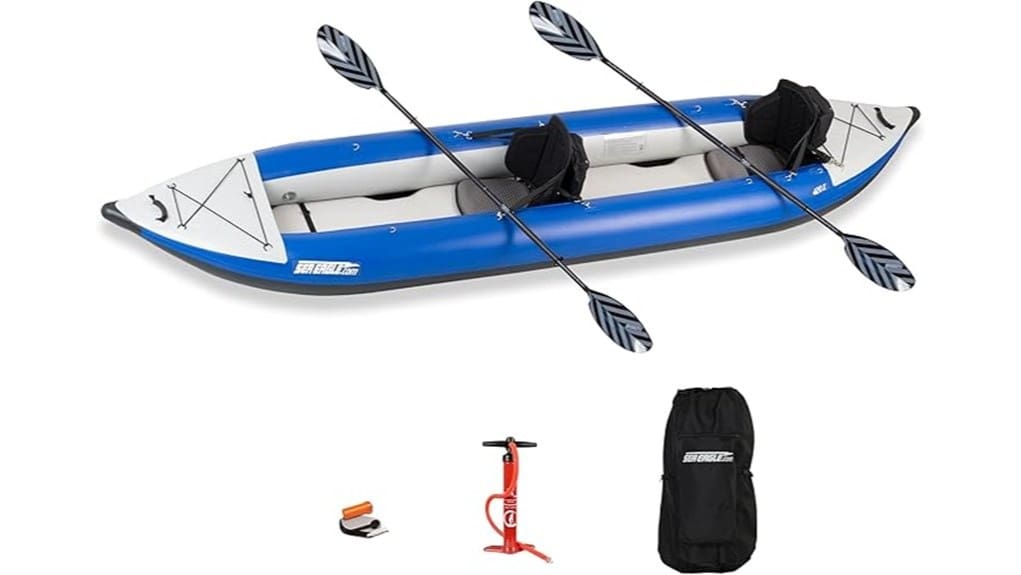
You’ll like the Sea Eagle 420X Explorer if you want a rugged, packable kayak that tracks like a hard shell and still handles surprising whitewater confidence to Class IV. Its 1000‑denier hull, high‑pressure drop‑stitch floor, and welded seams make it durable and repairable, while included seats, pump, skeg, and repair kit get you on the water fast. It’s heavy but high‑capacity, great for touring, fishing, and multi‑day trips—keep going to see detailed setup, performance, and ownership tips.
Some Key Takeaways
- Durable 1000-denier hull and quad-welded seams offer strong abrasion resistance and reduced leak risk for long-term use.
- High-pressure drop-stitch floor provides stiff, flat paddling platform with improved tracking and straight-line performance.
- Comfortable seating, ample legroom, and 855 lb payload suit multi-day touring, fishing, and family outings with gear.
- Packs light (42–54 lb), includes pump, paddles, skeg, repair kit, and carry bag for easy transport and setup.
- Predictable, forgiving stability up to Class IV whitewater, though expect increased effort in big surges and reduced speed versus hard shells.
Real-World Verdict: Is the Sea Eagle 420X Explorer Worth Buying?
For paddlers weighing practicality over polish, the Sea Eagle 420X Explorer delivers a compelling mix of durability, versatility, and value—you get a tough 1000-denier hull, high-pressure drop-stitch floor, and enough capacity (2–3 people, 855 lb) to handle fishing, touring, camping, and even Class IV whitewater. You’ll appreciate the straightforward cost analysis: purchase price versus rugged build and included accessories looks fair. User reviews praise reliability and ease of repair; long term maintenance is minimal if you rinse, dry, and patch promptly. Resale value holds reasonably well among inflatables, so you’re buying freedom, not sunk cost. For beginners choosing drop-stitch kayaks, matching gear like pumps and repair kits to the drop-stitch construction will make ownership much easier.
How the 420X Handles on Water: Performance in Calm Lakes, Touring, and Class IV Whitewater
Having covered value and durability, let’s look at how the 420X actually paddles. You’ll find confident tracking on calm lakes—slide and glide with the skeg engaged, effortless straight-line miles for touring. Maneuvering nuances show up when you need quick pivots; its inflatable tubes and responsive drop-stitch floor let you carve turns without feeling sluggish. In whitewater up to Class IV you’ll appreciate predictable bounce and forgiving stability, though you’ll work the paddle more in big surges. Paddling ergonomics are solid: seating, legroom, and paddle reach keep you efficient all day, freeing you to explore farther, smarter, and bolder. As a fresh paddler, you’ll find hard-shell inflatables like the Sea Eagle ideal for balancing portability with on-water performance, making them a great choice for beginner kayakers.
Build, Materials, and Durability: What the 1000‑Denier Fabric, Drop‑Stitch Floor, and Welded Seams Mean
When you inspect the 420X up close, its build choices tell you exactly what Sea Eagle prioritized: abrasion resistance, structural stiffness, and seam integrity. You get 1000 denier durability in polyester-reinforced fabric that stands up to rocks, docks, and campsite abuse without feeling bulky. The drop-stitch I-beam floor pumps to high pressure for a flat, stiff platform so you paddle efficiently and stand for casting. Quad-overlap, electronic-welded seams deliver welded seam integrity that reduces leak risk compared with glued joints. Overall, the construction balances light packability with ruggedness so you can roam farther, worry less. It’s designed for inflatable kayak enthusiasts who need gear that combines portability with performance, making it ideal for beginner kayaking.
What’s in the Box and How It Performs Out of the Bag: Setup, Accessories, and Inflation Tips
You’ve already seen how the 420X is built to take abuse; now let’s look at what comes in the box and how quickly you’ll get on the water. You unpack seats, paddles, pump, repair kit, skeg and bag. Lay the hull flat, thread the skeg slot, then follow a tidy inflation sequence: side chambers first, floor last. Use steady, even pump technique to reach recommended pressures without overstress. Fit seats and secure accessory placement—paddle clips, rod holders, tie-downs—before launch. For freedom, use a compact storage strategy: dry gear in the bow, pump and kit in the bag, stow loose items. Beginner kayakers often benefit from starter paddle packages that bundle essential gear for convenience and value.
Who Should Buy the 420X and Practical Buying/Ownership Advice (Payload, Size, Warranty, Alternatives)
If you need a tough, versatile inflatable that carries two to three people and their gear without fuss, the 420X is a smart pick — especially if you plan on fishing, multi-day touring, or running up to Class IV whitewater. You’ll appreciate the 855 lb payload for family outings or heavy camping loads; at 42–54 lb it’s portable enough for rooftop or trailer storage. The 3-year warranty gives peace of mind; durable 1000-denier fabric and welded seams mean fewer repairs. If you want lighter solo speed, look at dedicated solo boats; for stability, consider wider inflatables. For beginners seeking gear and guidance, our site offers beginner fitness programs and products tailored to new kayaking enthusiasts.
Some Questions Answered
Does the 420X Fit a Roof Rack or Car Trunk When Packed?
Yes — it fits. For roof compatibility, the deflated pack (31 x 21 x 10 in) easily sits on most roof racks with tie-downs; use soft straps and a roof pad. For trunkability packing method, compress and coil the bag, seats, pump, paddles; you’ll stash it upright or flat in many trunks. Note storage dimensions and weight when loading so you’re balanced and still free to roam.
Can You Fly With the Deflated Kayak as Checked Luggage?
Yes — you can usually check the deflated kayak as checked luggage, but you should confirm airline policies first. Pack it in the carrying bag, pad delicate fittings, and expect potential oversized/oversize fees; carry on options are rare due to size. Buy travel insurance that covers damage or loss in transit. Label the bag clearly, document condition with photos, and arrive early to handle any gate or check-in issues confidently.
Are Dogs and Pets Comfortable and Safe Onboard?
Yes — your dog can be comfortable and safe onboard with preparation. You’ll add a nonslip mat, secure pets with a well-fitted life jacket, and use leash safety by clipping a short tether to onboard tie-downs or a harness (not a collar). Keep water, shade, and breaks handy. Train them to enter/exit calmly and stay centered for balance. With those steps, you’ll enjoy freedom paddling together confidently and safely.
How Cold-Resistant Is the Material for Winter Paddling?
The fabric handles cold reasonably well; you can paddle in winter but shouldn’t expect heavy thermal insulation from the shell. The 1000-denier polyester-reinforced material resists punctures and stays flexible at typical cold-season temps, but prolonged exposure to extreme cold can increase material brittleness. You’ll want to store it indoors when not in use, inflate before launching, and avoid sharp impacts; carry neoprene gear and insulated layers to stay warm and free on the water.
Is There a Recommended Pump PSI for the Floor and Tubes?
Inflate the floor to about 8–12 psi and the tubes to 2–3 psi for proper rigidity and comfort. Check inflation pressure with a gauge as you go and avoid overpressurizing in hot sun. For valve maintenance, keep Halkey-Roberts valves clean, rinse salt or grit, and periodically apply silicone grease to seals. You’ll get better tracking, safer whitewater performance, and longer gear life by staying disciplined about pressure and valve care.