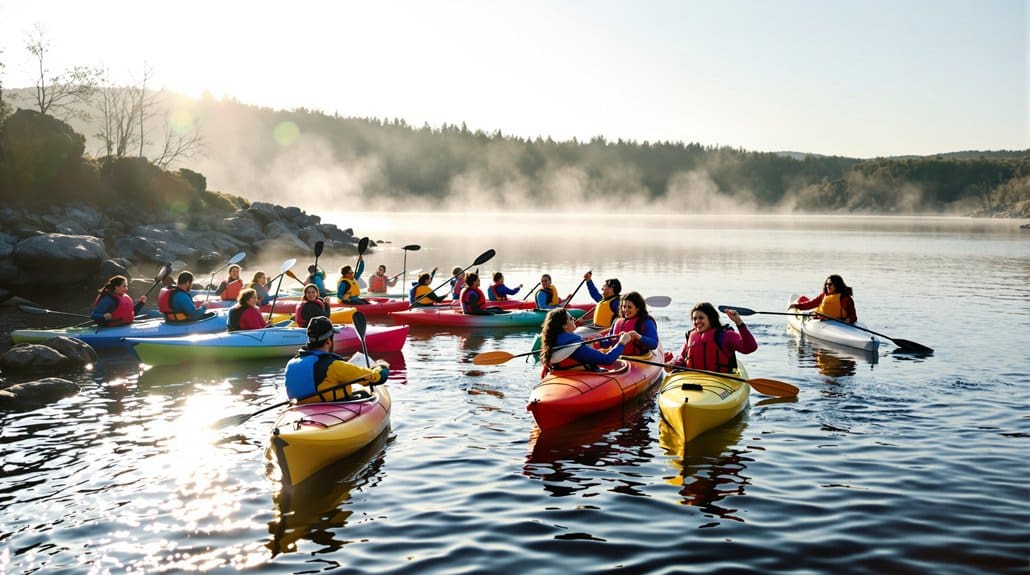
Run a short “Resolution Paddle” to turn vague goals into real outings: pick a sheltered launch and clear route, do a 10‑minute safety brief and man‑overboard drill, bring PFDs, spare paddle, towline and a waterproof log, and ask people to sign up for a monthly paddle or cleanup to keep momentum, plus offer a skills clinic or mentor pairing for beginners; cap numbers, assign a Safety Officer and Kit Coordinator, and plan the next session within 30 days to lock it in.
Some Key Points
- Organise a short, sheltered-water "Resolution Paddle" in Jan–Mar to convert New Year intentions into measurable monthly paddling commitments.
- Use a clear aim (taster, skill clinic, or cleanup), limit numbers for safety, and require lifejackets and spare paddles.
- Start with a brief safety demo (Check‑Clean‑Dry, gear check), sign‑in sheet, and quick SMART goal signup (one activity, one skill, one stewardship).
- Schedule follow‑ups: book a coaching slot, set monthly paddles, log outings with dates/distances, and plan a 30‑day next session.
- Promote with launch nights, market stalls, and social proof; track sign‑ups, survey attendees, and follow up within a week.
Why a New Year Group Paddle Boosts Your Paddling Goals
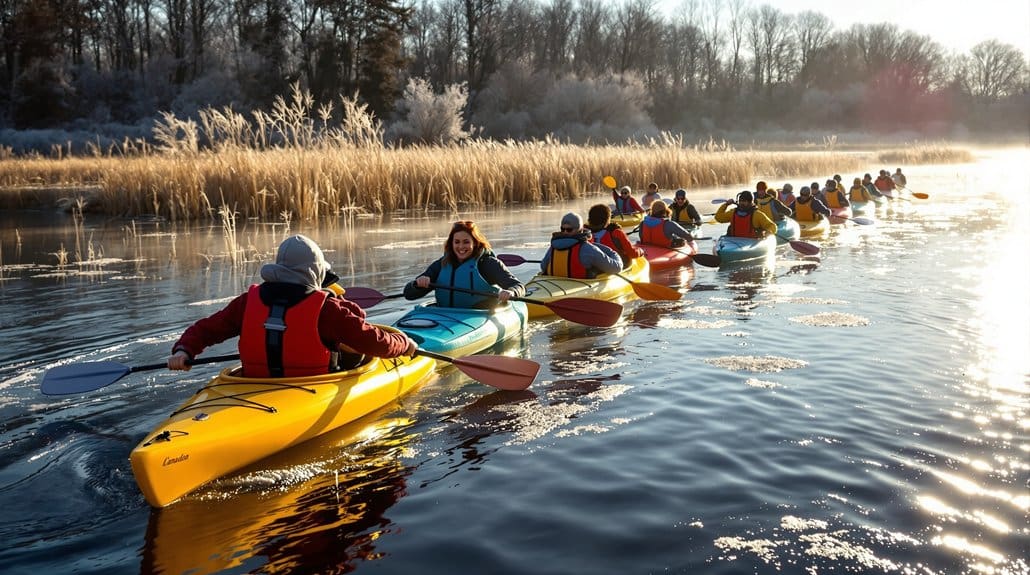
Often a little momentum is all you need to turn "I'll paddle more" into something real, and kicking off the year with a group paddle gives you that momentum, plus structure and company so you actually show up. You’ll find a clear target—show up, sign the sheet, commit to a monthly club paddle—and suddenly vague goals become measurable promises, and that makes you more likely to follow through. Pick a date that fits local tide and weather windows, plan sheltered-water paddling in winter or high-tide estuary launches, bring a basic gear Check-Clean-Dry demo, and offer sign-ups for coaching and cleanups. End with a short paddle cleanup or photo-share, then schedule the next session within 30 days so progress keeps moving. Include a brief essential checklist review so everyone refreshes core safety and gear practices before launching.
Choose the Right Event Type for Your Club or Group
You’ve got that kickoff energy, now pick the kind of event that keeps people coming back, because different goals call for different formats — want to bring families and new paddlers, choose an easy 4–6 km flatwater morning paddle; want to build skills, plan a 90‑minute Clinic & Coffee with a certified coach or an experienced volunteer and limit it to a dozen people so everyone gets attention; want to raise your club’s profile and do some real good, set up a 2–3 hour Paddle & Clean with Clear Waters guidance and tell local media in advance. Then think freedom: pick one clear aim, set a simple route or skill focus, advertise help for newbies, recommend lifejackets, spare paddle, water and sun kit, and cap numbers so people feel safe, welcome, and ready to come back. Also consider recommending essential gear like deck bags, dry bags, and safety equipment to keep everyone comfortable and organized on the water, especially when paddling longer routes or with beginners; see more on essential gear.
Set Three Clear, Achievable New Year Paddling Goals
Pick exactly three SMART paddling goals this year — one skill target like nailing an eddy turn and ferry on Class II water by July, one activity aim such as doing a club paddle every month, and one community/cleanup or stewardship pledge — and write them down with dates, measures, and a simple backup plan for bad weather or closed venues. Schedule regular coaching sessions, pool practice or video review for the skill goal, log each outing or session with dates and distance or skill notes, and plan to meet with the club quarterly to check progress and tweak targets. Start by carrying a small waterproof notebook or phone log, booking one coaching slot and one monthly paddle now, and remember that small, steady steps beat big, vague promises. Consider also packing essential gear like a personal flotation device and spare paddle for safety on every outing, and keep a checklist of these items in your kit essential gear.
SMART Kayaking Targets
If you want your paddling to actually change this year, set three SMART goals that you can check off, like committing to 12 outings, nailing a reliable roll, and completing a Grade 2 run without assisted breaks, and make each one specific, measurable, achievable, relevant to your current skills, and time-bound so you’ve got a deadline. Think about us as your crew: pick goals you can prove, for example 12 paddles with four rivers and two coast days, roll success 8/10 in pool sessions by June, and an unassisted Grade 2 by September, book three coaching sessions and a club trip, plan backups for weather, and review quarterly using simple metrics so you can tweak aims and celebrate progress. Don’t forget essential safety gear like floatation bags to improve boat handling and prevent swamping on outings.
Monthly Paddle Commitments
Start by picking three monthly paddle goals you can actually prove—say, getting out once every month for a 6-mile estuary loop, learning one new skill each quarter like a roll, eddy turn, or ferry glide, and signing up for a guided or coached trip by June—and write down exactly how you’ll measure success, when you’ll do it, and what counts as “done.” You’ll name three launch sites with parking and tide notes, choose backups using PaddlePoints or Go Paddling, and book a regular paddling club night or buddy so you show up. Track outings in a simple log with date, route, duration, skill practiced, and a monthly photo or GPS track, keep a pool rolling option for bad weather, and carry phone, whistle, first aid, and a tow line. Secure your gear and stay safe with proper cam buckle straps for tying down kayaks and equipment.
Coaching And Progression
Thinking about coaching and progression this way will make your goals real and reachable: choose three SMART paddling targets—one safety or leadership aim and two personal-skill goals—then give each a clear deadline, a way to measure success, and a simple action plan you can do every week or month, like booking a one-to-one coach once a month, practicing a specific stroke twice in the pool, and scouting rivers with buddies before runs. Pick goals that’ll help you reach them: maybe a sheltered-water leader award by September, land an eddy-turn on class II in most coached sessions, and join a guided first descent by June, then schedule at least three coached sessions per goal, use video review, set intermediate milestones, and have low-consequence practice options for bad weather. Consider pairing progression goals with the right gear—like a touring kayak or reliable spraydeck—to support skill development and safety on open water touring kayak.
Build a Simple Timeline and Checklist for a Successful Launch Day
On a practical level, getting your launch day right means thinking through the clock, the kit, and who’s doing what well before you show up at the dock, so plan the date 6–8 weeks out (early spring is ideal) and lock in any waterfront or city dock permits 2–4 weeks before the event. You’ll sketch a timeline with 15–30 minute blocks—arrival and check‑in, a short safety briefing, quick equipment demo, two hours on the water, then photo and tidy up—so everyone knows the rhythm and your paddling adventures start smooth. Pack a leaders’ checklist with first aid, spare PFDs and paddles, waivers, weather/tide printouts, and signage, run a 20‑minute volunteer briefing, and email contingency plans ahead. Also include a quick pre‑event gear check to confirm kayaks, paddles, and safety equipment are in good working order.
Assign Roles and Logistics: Who Brings Boats, Kit, and Safety Kit
You’ve already sketched the timeline and packed the leaders’ checklist, so now you’ll want to sort out who’s bringing what and where it’s going to live on launch day, because good role clarity keeps things moving and keeps people safe. Let us start with boats: circulate a sign-up showing kayak/OC1/stand-up make, model and capacity so you can match craft to conditions, and ask paddlers to label personal kit so nothing vanishes. Name a Safety Officer to bring the group first-aid kit, throwbags, spare PFDs and a charged VHF, and pick a Kit Coordinator for spares—extra paddles, towlines, pump and tools. Appoint a Launch Lead to manage shuttles, parking permissions and dollies, estimate one dolly per six boats, and email a waterproof checklist so gaps get covered. Also plan for hatch seal care and have a supply of hatch seal lubricant on hand to keep gear watertight and functioning.
Plan a Safety Briefing That Everyone Understands and Follows
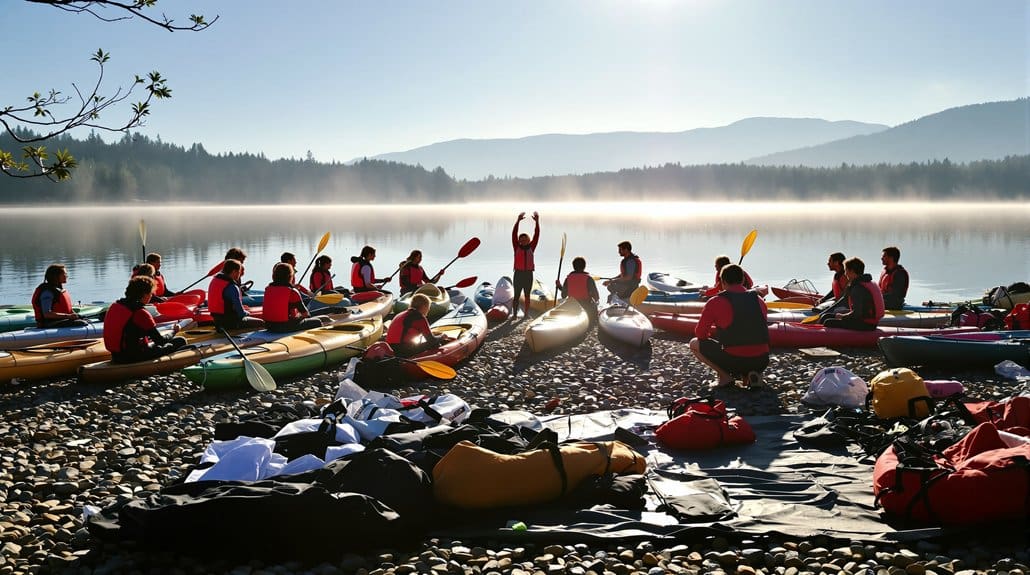
Start every outing by telling everyone the plan, naming the trip leader and sweep, and stating who’s in charge of decisions, headcounts, and starting an emergency, so there’s no guesswork if something changes. Give a short, plain risk rundown — weather, tides or currents, known hazards, and simple abort criteria — and show the checklist at the put‑in (phone/VHF numbers, first aid, towline, spare paddle, buoyancy aids), ticking items off out loud so gear and readiness are shared facts. Finish by running a quick 3–5 minute man‑overboard and tow drill, asking for any medical notes or signal gaps, and confirming an alternate rendezvous and expected return time so everyone knows what to do and when.
Clear Objectives And Roles
Because everyone needs to know exactly what you’re doing and who’s in charge before you push off, open the briefing with a one-line mission — say the route, distance, max wind and expected time — so people immediately grasp the plan and can opt out if it’s not right for them, then name roles out loud: Trip Leader for route decisions, Sweep to stay last and count people, Safety Officer with the first-aid and rescue kit, and Launch Marshall for gear checks, and confirm phone or VHF contacts so there’s no confusion mid-trip. You’ll then Find the perfect balance between freedom and order by reading a visible checklist aloud, naming bailouts, phone scripts for emergencies, who carries the kit, and asking two people to repeat limits and one to show the stop signal so everyone’s clear.
Simple Risk Briefing
When you kick off the safety brief, say plain and quick what the trip is — where you’ll launch, the key waypoints and finish, how long you expect to be on the water, and the nearest sensible exits — so everyone knows the plan and can opt out if it doesn’t fit their skill or kit, then follow with the hard facts: any dams, weirs, tidal gates or shallow bars to watch for, current tide times and heights, river flow or wind speed and direction, and water temperature, because those numbers let people judge risk for themselves. Then name roles—lead, sweep, safety boat—and check competence and kit, PFDs, whistles, helmets or leashes if needed, agree spacing and stay-within-visual-contact, cover call/relay to shore contact or VHF, how to report location, rendezvous point, and simple prevention steps like check-clean-dry and polite passing so everyone who’s interested in starting feels ready and free to go.
Include Community and Recruitment Activities (Launches, Stalls, Taster Sessions)
If you want to pull people in, run regular, low-pressure taster sessions during launch season—think Saturday mornings, 10:00–12:00, and midweek evenings, 18:00–20:00—so newcomers know there’s a dependable time to show up and try paddling without committing, and you can capture casual interest consistently. You’ll lean into New Years Resolutions energy by offering free beginner launch nights with a short safety briefing, a gear demo explaining PFDs, leashes and paddles, then a 15–30 minute guided paddle so they taste success before asking to join. Set up “Launch & Learn” stalls at markets with a banner, photos and sign-up sheet, partner with shops for discount vouchers, track sign-ups and first-return paddlers, tweak timing, and measure what brings people back.
Combine Service With Sport: Running a Paddle Cleanup or Conservation Tie‑In
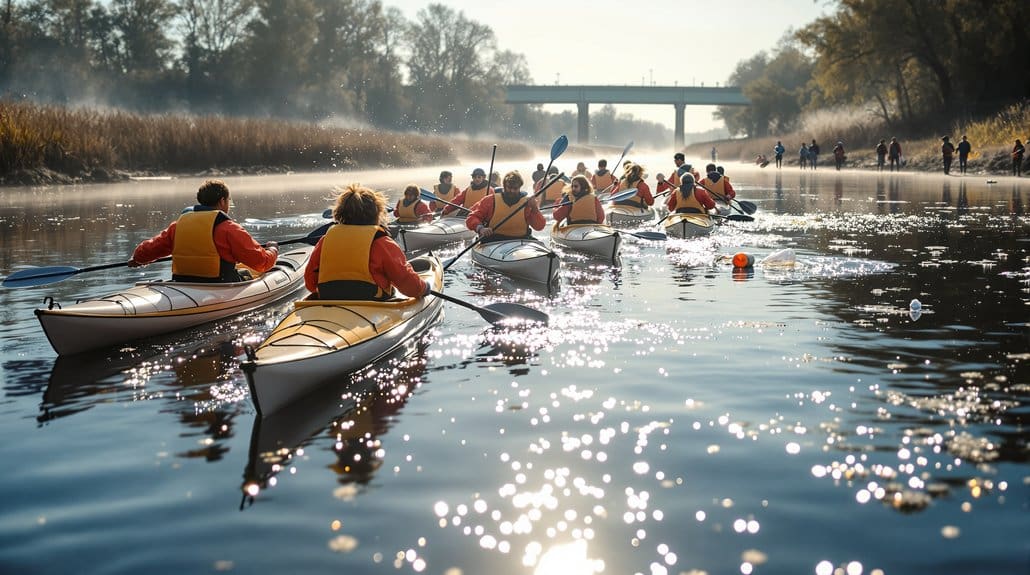
You can build on those taster nights by turning one into a service-oriented paddle—call it a "Resolution Paddle"—so newcomers get to try paddling and help the water at the same time, which makes participation less intimidating and more meaningful. You’ll make sure to schedule it January–March, tie into the Big Paddle Cleanup calendar, and use Clear Access, Clear Waters guidance, so volunteers know the why and how. Keep launches small, eight to twelve paddlers, plan 60–90 minute circuits with mapped pickup zones, and bring mesh bags, gloves, anti‑seafood bins for wet waste, plus signs about Check, Clean, Dry for invasives. Coordinate with shops and authorities for loaner boats and permits, track paddlers, hours, bags and sightings, then share photos and counts to grow interest.
Use Progression Pathways and Coaching to Retain New Paddlers
Because steady progress keeps people hooked, set out a clear, time‑bound pathway that tells newcomers exactly what skills they'll learn and how long it'll take, for example a Beginner → Intermediate → Leadership route where six to eight coached sessions can get someone from zero to basic competency. When someone first started, you’ll want coached group sessions, pool rolling evenings, sheltered‑water clinics and guided flatwater trips so they keep coming, and at least one coached session a month makes a huge difference. Pair new paddlers with a mentor and small cohorts, use SMART goals for wet exits, bracing and ferrying, and train volunteers with formal instructor modules so everyone teaches the same syllabus. Plan indoor backups so progress doesn’t stall when weather bites.
Measure Success and Turn a One‑Off Event Into an Annual Habit
Making the kickoff an annual habit starts with measuring what success looks like, and that means picking one clear, simple target you can actually track—say 50 attendees or 30% of your membership, 10 new sign-ups and five volunteers—and designing every part of the day to hit that mark, from the date on the calendar to the way you ask people to sign in. You’ll schedule a predictable slot, publish it six weeks out across email, Facebook, MeetUp and local boards, and use a simple sign-in plus two-question survey on-site to capture who showed up, what they liked, and whether they’ll return. Document the run-sheet, volunteer roles, gear lists, follow up within a week with photos and save-the-date, and watch a one-day fling grow into a wonderful place people expect each year.
Some Questions Answered
What Is the 120 Rule for Kayaking?
The 120 Rule says you’ll keep about two hours of on‑water buffer, Safety Distances that give you time to reach shore or your put‑in if weather or tides turn, so you set turnaround or abort times, pick shorter routes, and carry VHF/phone, extra layers, and a tow or pump, and watch tide tables and forecasts, so you’ll know when to call it and get everyone home safe without pushing limits.
What Are the Three Golden Rules of Kayaking?
The three golden rules are: wear your PFD, paddle safely, and respect the water. You’ll always wear a fitted PFD and carry a whistle or phone, you’ll practice good stroke technique and match trips to skill and conditions, and you’ll minimize shore impact, follow Check–Clean–Dry, and pick up litter when you can. Start by planning the route, checking tides/weather, and naming a leader and off‑water contact before launch.
What Is the Clap Principle in Kayaking?
The Clap Technique is a quick, deliberate snap of the blade out of the water where you briefly clap your hands to reset grip and timing, keeping torso rotation and momentum, especially in flatwater sprints, you’ll watch for clean claps, not delayed ones that mean you’re overreaching, practice sets of ten clean claps, use a metronome cue or coach’s call, check grip and posture, and repeat until it feels natural.
What Muscle Groups Does Kayaking Target?
Kayaking targets your back (lats and teres major) for the pull, your core engagement muscles (abs and obliques) for rotation and stability, shoulder stabilizers including rotator cuff and rear delts, and arm muscles like biceps and triceps for power and recovery, with forearms for grip, plus lower body hips and glutes for bracing and edging; check for steady core use, pack a pump, spare paddle, and practice slow, controlled strokes first.