You’ll spot ice first in calm pools, backwaters, and sheltered margins, so check those edges, probe seams with a staff, and watch for pillows or deflected flow that hide currents; frazil and anchor ice build in fast, rocky riffles and can clog cobble, shifting flow and creating sudden scour or ice dams that pond water upstream. Carry warm layers, spikes, a PFD, throw rope, thermometer, and a camera, scout from shore, and keep clear at breakups — more practical signs and tactics follow next.
Some Key Takeaways
- Surface ice first forms in slow pools, sheltered margins, and backwaters, then spreads after multiple sub-20°F nights.
- Thin glassy sheets and seams concentrate flow, narrowing open channels and increasing velocity under open lanes.
- Anchor ice (frazil stuck to cobbles) builds in turbulent riffles, reducing near-bed flow and redirecting water toward margins.
- Ice dams and backwater ponds smooth riffles, drop fines upstream, create new pools, and shift scour downstream.
- Rapid anchor-ice growth or sudden breakup rearranges cobbles, scours banks, and can release destructive ice‑wood floods.
When and Where Does a River Start to Freeze in Winter?
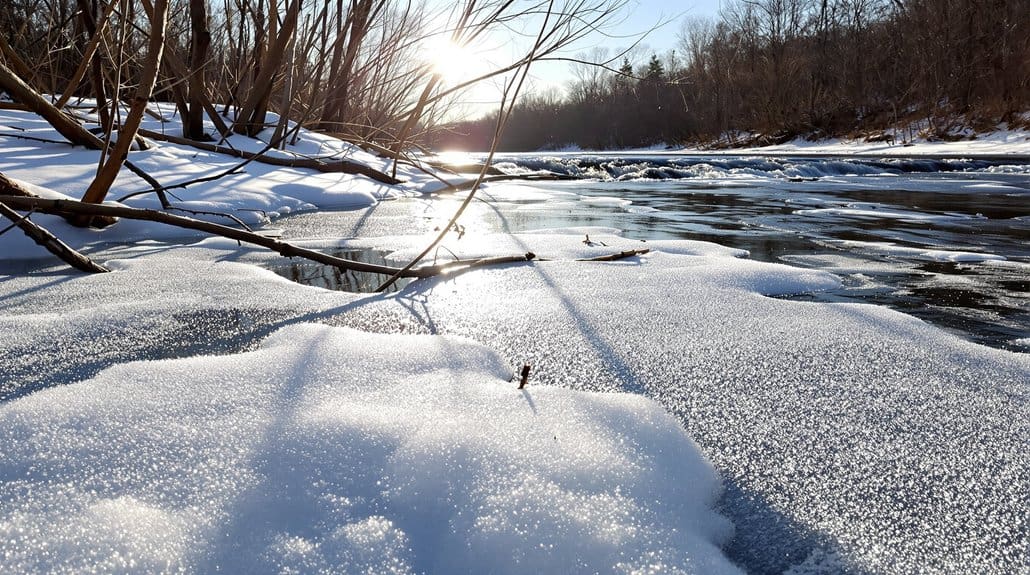
If you want to know when and where a river will first start to freeze, start by watching the slow spots—pools, backwaters, and floodplain slackwater—because those low‑velocity reaches usually ice up first, often by late November to January and at places like Harriman Ranch sometimes as early as Thanksgiving; bring warm layers, a thermometer, and waterproof boots so you can stay comfortable while you check surface ice, and look for thin glassy sheets forming on calm water after a few single-digit nights or a rapid plunge well below 0°F. You’ll learn to read freeze onset by checking sheltered margins, noting several cold days in a row, and timing visits after clear nights, while remembering that anchor ice shows up elsewhere, in fast, turbulent reaches, not as a surface sheet. For anyone assessing ice on or near water, always carry an emergency blanket and know basic hypothermia first aid, as these are essential for water safety and cold-weather paddling; see emergency blanket for more information.
Three Ways Rivers Freeze and Where Each Forms: Surface Ice, Anchor Ice, Ice Dams
You’ve already been looking for the slow spots where surface sheets show up first, so now picture the river like a toolbox with three different tools for making ice—each one works in different places and tells you something useful about what’s happening beneath the surface. You’ll spot surface ice on low-velocity reaches and pools, forming and melting while water still runs underneath, so check edges, bring warm gloves and a walking pole for balance, and step back from thin seams. In faster runs watch for anchor ice, frazil crystals that freeze onto rocks and wood, clogging trout hiding places, so note turbulent cobble areas. Upstream of riffles and constrictions look for ice dams, they can hold water and build thick, so give them space and report hazards. Also bring and use appropriate river gauges to monitor water levels and changes while you’re out.
How Freezing Changes Flow Patterns, Currents, and Scour Lines
When you read a winter river, watch how ice can force the water to take a new path—surface pans and ice bridges will nudge flow laterally and hide where the main current has shifted, so look for slim open seams, carry a long pole to probe downstream edges, and step back before you commit to a crossing. In faster spots, feel for anchor ice and frazil that are gluing onto rocks and filling gaps, because that reduces near‑bed flow and can change where scouring eats away at boulders and trout hiding spots, so touch banks lightly, note fresh gravel bands, and mark risky boils or under‑ice outlets on your map. And when you find an ice dam at a riffle, expect upstream flattening and downstream shear—take photos, flag the altered thalweg, avoid the immediate scour zone, and if conditions look unstable, move your route to higher ground until the channel settles. Also carry essential safety gear like a buoyant floatation bag and a throw rope whenever you paddle near changing ice and currents.
Ice-Induced Flow Diversions
Because freezing water doesn't behave the way you'd expect, pay close attention to where ice first shows up and how it forces the stream to find new paths, and you’ll spot the spots that matter for safety and fishing alike. You’ll see surface ice bridging slow reaches like Harriman Ranch, pushing current into narrow open lanes, and you should collar those seams as high-danger flow lines, carry a pole or wading staff, and avoid standing where ice edges concentrate speed. Upstream, ice dams can backwater long reaches, change access, and create warm outflow lanes from reservoir releases that trout love, so check for thawed corridors. In fast runs, anchor ice and frazil clog the bed, redirecting scour and carving new pools, so watch downstream edges for fresh scour and plan exits accordingly. Consider carrying a para-anchor to help steady your kayak or control drift in changing winter currents.
Anchor-Ice Scouring
You’ll notice anchor ice by watching where the river seems to rearrange itself—riffles and fast runs will collect frazil crystals that glue to cobbles and boulders, and as those mats grow they shrink the flow near the bed, push water toward the surface or channel margins, and speed up the lanes you might normally trust; watch for suddenly sharper seams of current, fresh scour edges downstream of cobble bars, and piles of displaced rocks that tell you the bed’s been reworked. When anchor ice builds quickly, you’ll see flow lift, scour deepen, and cobbles shift, so stay alert, move to safer banks, and mark spots where trout crowd into fewer pools; carry a wading staff, lightweight rope, and a thermometer, note sudden breaks of ice, and expect abrupt hydraulic change. Cold-weather paddlers should also protect hands with neoprene pogies to stay warm and maintain grip on gear neoprene pogies.
Ice Dam Backwater Effects
If an ice jam starts backing water up above a riffle or through a tight bend, you’ll notice the river’s pace change long before the ice itself becomes obvious, so pay attention to where the flow feels sluggish, where shallow riffles have smoothed into mirror-like patches, and where the usual lanes and seamlines you fish have drifted onto the flats. When an ice dam forms, that backwater slows current, drops fines, and reshapes scour lines at the ice edge where flow reaccelerates, so look for new pools downstream, shifting eddies, and anchor-ice build in turbulent shifts. Move gear toward higher, drier access, carry a long net and a stout pole to probe unseen scour, watch banks for sudden breaches, and stay ready to relocate when the river changes. Pack essential safety gear like rescue rope bags to assist in emergency access and river recoveries, especially when shore conditions are icy and unstable rescue rope bags.
How Ice Alters Channel Geometry, Floodplain Connectivity, and Geomorphic Risk
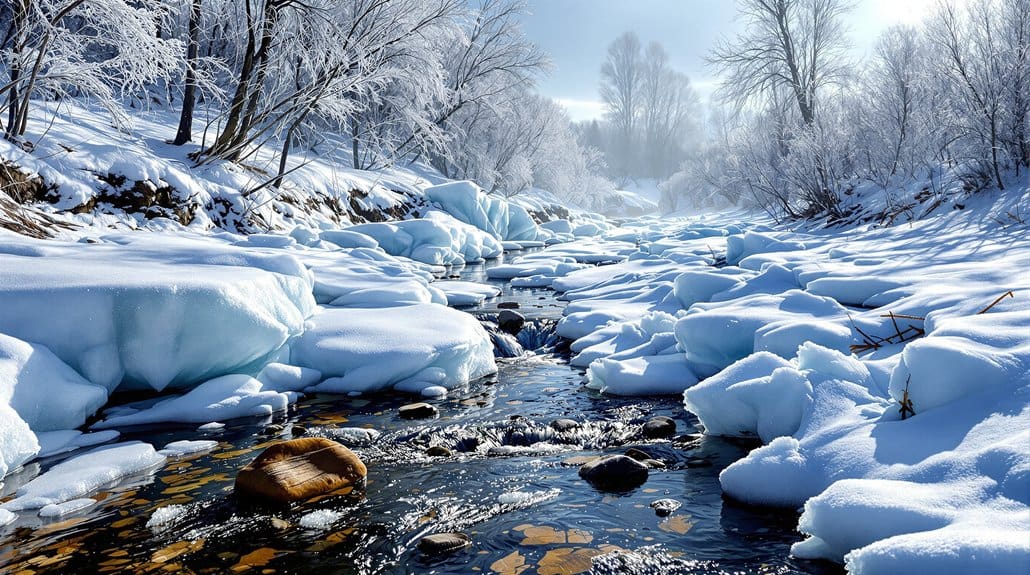
When you walk a winter stream, look for the big signs: ice dams at riffles or narrow spots that back up water for miles and raise upstream stages, anchor ice packed into cobbles that clogs the bed and cuts hyporheic flow for trout, and smooth surface ice over slow water that lets flow continue underneath but shuts off floodplain exchange and daytime warming. Carry warm, waterproof boots, an ice pole or stick to probe and test under-ice flow, and a notebook or phone to record where water’s ponding, where banks look scoured, and where vegetation is being undercut so you can compare conditions after a thaw. If you spot rapidly growing ice or a large impoundment, step back from the edge, mark the location, and notify local land or road managers—those are the places most likely to release a dangerous flood-and-ice surge that will change channel shape and threaten bridges and roads. Also consider carrying a compact stern floatation bag to keep small watercraft and gear safer in case of unexpected ice-related incidents stern floatation.
Ice Dams And Backwaters
Look for ice dams where the channel narrows or shallows, because that's exactly where chunks of frazil and anchor ice pile up, tie the river in knots, and push water out onto the floodplain for days or even weeks. When you spot an ice dam, note rising backwaters that fill side channels and scour holes, smothering cobble hiding spots and uprooting trees, so expect altered pool-riffle shapes and muddied beds downstream. Walk safe angles, carry a stout pole and warm kit, and map where water ponds, because sudden breakups can send a wall of water, ice, and wood that erodes banks and wipes out roads. Watch for concentrated trout in spring pools, resist crossing pooled water, and report large dams near bridges. Also, consider carrying a compact river cleanup kit and kayak-ready gear to safely manage debris and preserve channel access for recreation and restoration efforts, especially when operating near river cleanup.
Anchor Ice Alters Beds
Think of anchor ice as a hidden mattress the stream builds out of frazil and frozen bits that tucks into the gaps between cobbles and stuck wood, and that mattress can raise the bed, shove water sideways, and change where fish can hide. You’ll watch anchor ice form in fast, rough riffles, plug pore spaces in beds, and make shallow lanes that push flow onto the floodplain, so you should scan cobble runs, note blocked channels, and mark likely lateral overflow paths. Carry waterproof notes, a wading staff, and a camera, check for raised gravel, and when breakup comes, stand clear of sudden releases of mats and wood that can scour pools and jam downstream infrastructure.
Surface Ice Modifies Flow
You’ve just seen how anchor ice can lift beds and shove water sideways, and now you’ll want to watch what happens once the stream gets a solid skin of surface ice, because that ice changes the whole channel and the way water finds its way across the floodplain. You’ll notice ice forming first where flow slows, then a continuous cover narrows open channels, boosting flow velocity beneath seams, so check those seams and wear waterproof boots and a spike if you probe edges. Snow atop ice insulates and keeps overbank flow confined, so walk the banks to spot submerged benches behind ice dams, measure water rise with a stick, and note riffles turned to ponds. When breakup comes, stand back, radio-ready, and expect sudden, powerful releases.
What Ice and Cold Do to Trout: Metabolism, Winter Holding, and Habitat Loss
When water drops into the 30s and 40s°F, trout slow way down, so you’ll see fewer fish moving and feeding, with small trout becoming almost inactive in the low 40s and larger adults shutting down closer to the 30s; that means your best first move is to look for places that stay a little warmer and deeper—slow pools, spring-fed runs, or sections influenced by groundwater that often don’t ice over—and plan to focus effort there, because fish concentrate in those refugia and won’t usually move far from them through mid-November to late February. Watch how water temperatures change along a bank, note where ice forms but flow continues underneath, and pick access points near deep cover, carry lightweight gear for longer, slower drifts, and expect less action while you protect those key spots.
Recognizing River Features and Hazards Under Ice: Reading Water for Safe Travel
Now that you’re looking for the warmer, deeper pockets where trout hold up, you also need to read the river for safe travel and hidden hazards under ice, because the same spots that hold fish can hide danger. You’ll watch where ice forms first—calm pools and backwaters—and where it stays thin, like over rapids and riffles, so open fast water can show safer flow beneath, but don’t be fooled. Probe edges, scout from shore, and watch for pillows, deflected flow lines, or missing surface deflection near rock faces that signal undercut banks or cavities. Remember frazil and anchor ice can pack into cobble and woody debris, creating sieves, and ice dams can make sudden currents, so carry a probe, PFD, and a plan.
Field Cues and Quick Checks Anglers and Paddlers Can Use Before You Go
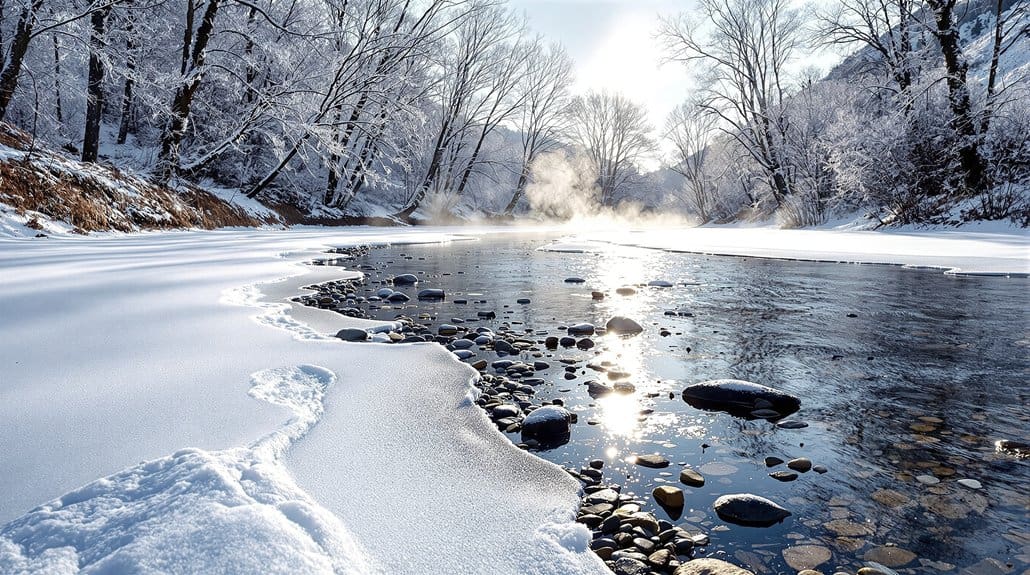
Before you step onto the ice or into your boat, take a deliberate minute to do a quick field check — look up the recent temperatures and air trends, scan the river for where ice forms first (calm pools, backwaters, flats) versus where water stays open (rapids and riffles), and feel confident probing edges and seams for weak spots; those warm-looking pockets near springs or outflows often hold trout, but they can also hide undercuts or current seams that make footing and ice brittle. Check multi-day lows — single digits or highs under 20°F mean surface freeze, and sudden plunges below zero can lock things in fast. Use a quick water temperature read, watch for frazil or anchor ice in runs, and mind ice-damming at constrictions, carry a probe, spikes, and a plan.
Some Questions Answered
What Happens to Rivers in the Winter?
Rivers slow and change in winter, you’ll see surface ice, frazil and anchor ice, and sometimes ice jams that back water up, so watch pools and riffles for blockages. Expect winter turbidity after melt pulses or ice breakup, so carry a thermometer, sturdy boots, and a pole to probe banks. Stay clear of ice dams and changing channels, note channel migration risks, and move downstream slowly if water or ice shifts underfoot.
At What Temperature Do Rivers Freeze?
Rivers usually start to freeze when air temps drop toward 0°F to 20°F, but freeze thresholds vary with flow and sun, so you’ll watch ice formation and surface dynamics closely; slow, shaded reaches freeze first, turbulent spots resist, and warm springs or outflows stay open. Check shallow edges, carry ice picks and a rope, test with a pole before stepping, and back off if you see frazil, slushy seams, or rapid cracks.
How Does Cold Affect Water?
Cold makes water denser, slows flows, raises surface tension so slick ice skins form, and boosts thermal stratification so warm layers sit under cold ones, which can trap fish; higher solute concentration freezes at lower temperatures, so salty runoff stays liquid longer. Watch edges for frazil or anchor ice, carry warm layers and grips, probe ice before stepping, and when fishing, try deeper seams and slower pools where trout will linger.
Where Do Fish Go in Rivers in Winter?
They head to deep pools, submerged logs, and spring seeps where warmth and cover concentrate them, so you’ll want to search those spots first, along tailwaters and spring-fed reaches, feeling for slower current and softer banks, carry a small probe or pole to test depth and log access, wear layered gear, move quietly, fish slowly with small baits or nymphs, and expect concentrated, sluggish fish you can target carefully.