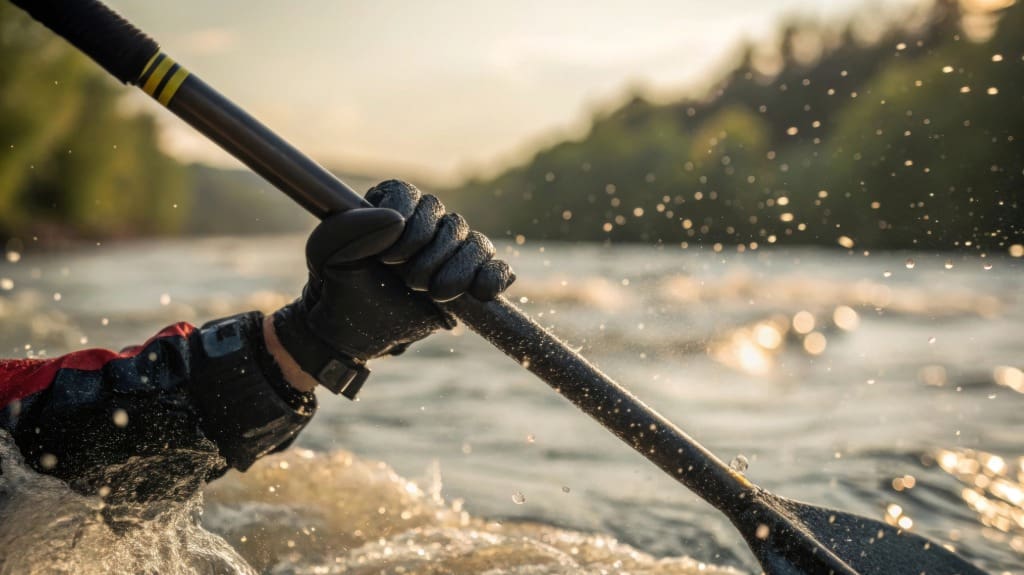
You’ll want pogies when you need constant shaft contact, paddle feel, and quick hand exits on long tours, since they let you keep skin on the shaft and retain vibration and grip control, but carry insulated mitts or 3–5 mm neoprene gloves for below‑freezing stops, rescues, or hands‑off work where shared finger warmth beats tactility; fit pogies where your hands naturally fall, try a thin neoprene liner under them, stash dry spares on deck, and keep practicing swaps to stay safe—keep going to learn how to layer and set up.
Some Key Takeaways
- Pogies let bare hands contact the shaft for superior paddle feel and lower grip fatigue on long strokes.
- Thick neoprene mitts/gloves keep hands warmer below freezing and when hands frequently leave the paddle.
- Layer thin neoprene liners under pogies for extra warmth with minimal loss of tactile feedback.
- Carry dry spare gloves/mitts and practice rescues in your chosen setup for safety and comfort.
- Choose pogies for continuous paddling, mitts for cold stops or hands‑off tasks; combine both for mixed conditions.
When Pogies Beat Gloves

Think about pogies as a warm, roomy mitten that you slide over your paddle shaft so your bare hands stay tucked inside a neoprene or insulated shell while still touching the paddle—this setup keeps more heat in and gives you better circulation than most thin neoprene gloves, so if you spend most of a paddle stroke-to-stroke on the shaft, you’ll feel warmer and less grip fatigue. You’ll pick pogies when you want freedom on long tours, they keep paddle feel and let you paddle longer without thumb and finger strain, and you can wear thin neoprene gloves under them for backup insulation. Check fit so the shaft contacts your skin, practice quick hand exits, stow them on deck bungees, and ditch them only when you need full fingertip use. Many paddlers also carry a throw bag as essential gear for safety on the water.
When Gloves or Mitts Beat Pogies
When you know you'll be off the paddle a lot, or when temps drop below freezing, reach for mitts or thick gloves instead of pogies — they hold heat better because your fingers share warmth, and a 3–5 mm neoprene mitt or an insulated creek mitt will keep your hands working longer than thin gloves or an open pogie ever could. If you're scouting, hauling, or prepping a rescue, gloves or mitts keep you ready when your hands leave the shaft, so pack a pair that insulates even when damp, or bring a dry backup for emergencies. Look for thick neoprene or insulated creek mitts, consider open-palm styles for grip, and change into dry gloves after heavy wet work to avoid numbness. For extended outings on the water, pairing mitts with reliable neoprene pogies improves warmth and wind protection.
How Paddle Feel and Control Change
You’ll notice right away that pogies keep your skin on the shaft, so you get the most direct feel for blade angle and subtle adjustments, which matters when you’re feathering or edging in chop. Even thin gloves will add a bit of diameter and dampen that feedback, so expect to grip a touch harder and check your wrists for extra fatigue on long strokes, and thicker mitts can make fine control blunt enough to change how you steer. For a quick test on the water, try a few strokes with bare hands in pogies, then swap to thin pre-curved palms or gloves under pogies and pay attention to how much shaft feel you lose, which will tell you whether to trade a little sensitivity for warmth or carry thinner layers for precise work. Pogies also pair well with other cold-weather kit like layered jackets and paddling gear to keep your core and hands comfortable on long outings.
Direct Shaft Sensitivity
Feel how the paddle talks to your hands — that’s the first thing you’ll notice with pogies, because your bare skin stays on the shaft and you keep the fine vibration and subtle pressure changes that tell you exactly when the blade catches, feathers, or slips, which is huge for precise touring strokes, rolls, and re-entries. With pogies you keep tactile feedback, so you can sense catch timing and small slips, and you won’t have to squeeze harder to feel the shaft, which keeps your wrists looser and fatigue down. If you switch to gloves, watch for dulled vibration, a thicker effective grip, and slower hand slips, so test control in calm water first, adjust pressure, and practice repositioning until it feels natural. Also consider pairing pogies with a compatible neoprene spray skirt for warmer, drier long-distance paddles.
Grip Diameter Changes
Pay attention to how the paddle feels in your hands, because even a few millimeters of extra material changes everything: thicker neoprene gloves or mitts add roughly 2–6 mm per hand, which makes the shaft feel fatter, reduces fingertip contact, and usually makes you squeeze harder to get the same control, so start by testing grip and feathering in calm water to spot what’s different. If you want freedom to tweak strokes, notice if thicker gloves force a rounder grip that limits fine adjustments, or makes your wrists tire faster; pogies preserve skin-to-shaft contact and keep feel, while thin neoprene liners under pogies give warmth with only ~1–2 mm added. Try combinations, adjust hand position, and practice short drills before committing to a route. Consider pairing pogies with cushioned accessories like gel seat pads for longer outings to maintain comfort and reduce fatigue.
Materials and Construction That Matter
When you’re choosing gear for cold-water paddling, start by looking at the materials and construction, because those details decide whether your hands stay warm, dry, and functional; neoprene is the baseline—usually 3–5 mm for gloves or thicker for mitts—because it traps a thin layer of water warmed by your hands and cuts conductive heat loss, while a nylon or neoprene outer shell on pogies blocks wind and lets you keep direct contact with the paddle shaft for better feel. Pick neoprene pogies if you want direct shaft feel and easy on/off, check for reinforced palm/thumb areas and sealed seams so they last, and choose gloves with synthetic leather or textured palms if you need grip, but expect thicker neoprene to dull sensitivity. For paddlers who spend lots of time on the water in cold seasons, consider pairing neoprene booties and pogies for overall warmth and protection on longer outings where shore access may be limited, especially if you value gear from a trusted outdoor retailer.
Fit and Setup

You’ve picked the right materials, now you’ll want to make sure they actually work together on the paddle: start by mounting the pogies where your hands naturally fall on the shaft, wrap the Velcro snug enough so the pogie won’t wander during normal strokes but leave a bit of give so you can slide your hand in without fumbling, and check that the cuff opening is wide or snap‑open so you can get your hand in and out quickly, even with thin gloves or frozen fingers. Then test on land and calm water with thin neoprene gloves, confirm you can reach the shaft center without changing your grip, and adjust tension so pogies stay put under effort but still move with a purposeful tug. Consider how your drytop and layering system affect wrist seal performance to keep water out and warmth in, especially when paddling in cold conditions with minimal bulk; this is a key part of proper paddling setup and drytop fit.
Layering Strategies
Layer your hand gear so you can add or shed warmth without stopping the boat, because cold hands turn a fun paddle into a slow, miserable slog; start with a thin, moisture‑wicking liner next to your skin to keep sweat away, then put on a slim insulating glove—think Thinsulate or 2 mm neoprene—for feel and basic warmth, and finish by sliding into pogies or a mitten that give most of the insulation while letting you keep good paddle feel. You’ll pair a thin neoprene liner gloves under a pair of pogies for top warmth-per-weight, carry a dry spare or disposable over-liners in a drybag, and match layer thickness to water and air temps so you’re ready to shed or add layers fast. Consider using specialized winter paddling gloves designed for cold-water conditions to maximize warmth and dexterity.
Safety and Rescue Considerations
Because numb hands wreck your ability to do the things that keep you and your boat safe, treat your hand system as a piece of safety gear, not just comfort clothing: have a plan for what you’ll wear while paddling, what you’ll use for any hands‑off tasks, and what you’ll swap to for rescues, and practice those swaps until they’re quick and sure. You’ll know you must keep my hands protected because fine motor skills vanish fast in cold water, so paddle with pogies for warmth and carry dry gloves and mitts for hands‑off work or rescue, try rescues wearing the exact setup you plan to use—pogies alone, gloves, or pogies over gloves—and in near‑freezing water bring a waterproof spare and paddle with buddies who can help when dexterity fails.
Season-by-Season Recommendations

As the seasons change, you’ll want a clear, simple plan for layering and hand protection that matches what you’ll be doing, so start by thinking about temperature, how often you’ll take your hands off the paddle, and how long you’ll be out. In spring use a thin liner under a light glove or bring a thin pogie for chilly mornings, in summer favor sun-protective or fingerless options to keep UV off your skin while keeping dexterity, and in true winter switch to insulated mitts or thick neoprene pogies over liners, always carrying a dry spare and dressing to swim. For mixed conditions or long touring where your hands stay on the shaft, consider combining gloves and pogies so you’ve got grip when you need it and warmth when you don’t.
Spring Transition Layering
Spring paddling often flips between mild and chilly in a single outing, so you’ll want a hand plan that’s flexible, simple, and easy to change on the water: start the season with a thin 2 mm neoprene glove or a lightweight fleece liner that you can wear inside pogies for extra warmth, carry thin-palm neoprene or synthetic-leather gloves for when the day warms up, and keep thicker 3–5 mm neoprene gloves or mitts stowed away for any stretch where water stays around or below about 45°F (7°C). You’ll pack a thin neoprene glove plus pogies so you can combine them when a cold wind or splash hits, then peel a layer off when the sun comes out, and always have warmer mitts handy if water stays near freezing.
Summer Sun Protection
After you've swapped out thicker neoprene and mitts for lighter spring layers, shift your gear mind to sun protection for summer paddles, since long hours on flat water can roast the backs of your hands and wear down grips faster than you'd think. You’ll want lightweight sun gloves, polyester with silicone or synthetic-leather palms, UPF 30+ and mesh panels, they block UV, stop blisters, and still vent so you don’t sweat into sticky hands. Consider fingerless or convertible styles for phone, snacks, or quick rescues, and keep a thin 1–2 mm neoprene or hydroskin pair in your hatch for cool mornings that aren’t cold enough for pogies. Packable sun gloves are tiny, so bring them, size snug for feel, and swap as conditions change.
Winter Pogies And Mitts
Heading into true winter paddling, thinking in layers will save your hands more than hoping for a miracle mitten — you’ll want to match gear to how you paddle, so if you’re doing long, steady strokes on flat water, pick pogies that slip over the shaft and let your bare hands grip the paddle for the best on‑shaft warmth, but if you’re standing cold water or expecting long stops, carry thick neoprene mitts for maximum insulation. You’ll choose pogies for sustained contact, they trap warm, slightly wet air and preserve paddle feel, but carry mitts when temps drop below freezing, knowing they cut dexterity for tasks like unclipping a skirt or a rescue. Try glove+pogies, pack a dry backup, and practice transfers before you need them.
Common Problems and Fixes
You'll run into a few predictable annoyances on cold-water paddles, and knowing how to spot and fix them will keep you paddling longer and safer, so let's get into what to look for first: if your pogies are hard to get your hands into, they're probably got tight cuffs—trim them a little or swap to a model with an open or snap‑back cuff (or use a neoprene sleeve sized for easy don/doff), and you'll stop fighting the entry; next, if water sloshes in and chills you, choose neoprene pogies or add thin 1–2 mm neoprene liner gloves to cut convective loss, and you’ll notice warmth back faster. If gloves tire your hands, try pre‑curved palms or thinner 2–3 mm neoprene with synthetic‑leather palms to save grip effort. Repair wear with heavy thread and Aquaseal or add a leather patch, carry a dry spare, and practice rescues while geared up.
Some Questions Answered
Is It Better to Wear Gloves or Mittens on a Very Cold Day?
Mittens are usually better on very cold days, they hold shared heat so you stay warmer, but polar dexterity drops, so carry thin dexterous gloves for tasks, and consider thermal testing of combos before you go. Pick thicker neoprene or insulated mitts for warmth, stash lightweight gloves inside or in a dry bag, practice switching them, and bring chemical warmers or a spare pair for long trips, you’ll stay safe and flexible.
What Keeps You Warmer, Gloves or Mittens?
Mittens keep you warmer because they boost thermal insulation by letting your fingers share heat, while gloves, with separated fingers, lose warmth faster, though they give better finger dexterity for tasks. Pick thick neoprene or fleece-lined mitts, carry thin dexterity liners you can pull on for fine work, and stow waterproof pogies or a spare pair, so you can swap layers fast and stay nimble when you need to.
Do Glove Liners Keep Your Hands Warmer?
Yes, glove liners keep your hands warmer, because a layering strategy adds insulation close to skin, cuts conductive heat loss, and wicks moisture so outer gloves or pogies stay effective, right? Choose thin neoprene or fleece/polypropylene liners for material comparison, carry a dry spare in a drybag, and pair liners with thicker gloves or pogies below freezing; expect better grip, less fatigue, and a handy backup if outer layers get wet.
How to Keep Hands Warm During Winter?
You keep your hands warm by layering: wear thin liners under mitts or pogies for paddle feel, add thicker neoprene if you’ll be off the shaft, and carry spare dry gloves for rescues, because numb hands ruin gear work. Use heated grips if you want active warmth, and wear layered socks to keep overall circulation strong; warm feet help your hands. Practice quick glove changes and pick gear that balances dexterity and insulation.