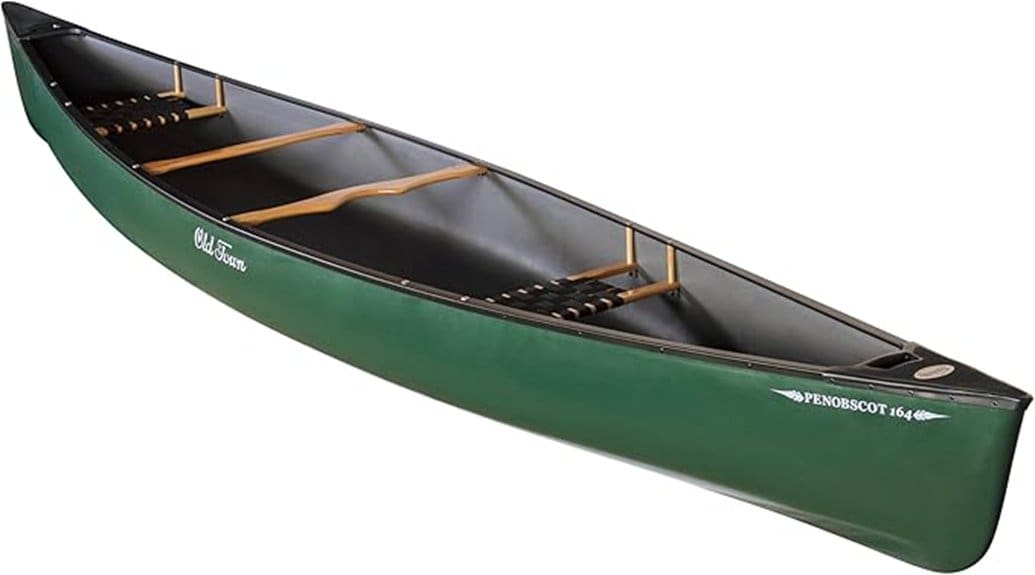
The Penobscot 164 gives you a roomy, stable touring ride with a shallow‑arch hull and light rocker, so it tracks well on lakes, handles rivers, and carries multi‑day loads without fuss; expect good primary stability, decent speed for its class, and nimble turns with trim or feathered strokes. Bring a spare paddle leash, bilge sponge, balanced fore‑to‑aft packing, and a simple camp kit (seat pad, tarp, stove), test‑paddle before buying, and you’ll find more practical tips ahead.
Some Key Points
- Shallow-arch hull with slight rocker gives lively, predictable ride and good tracking for lakes, rivers, and multi-day trips.
- Excellent primary stability and roomy cockpit support fishing, tandem paddling, or solo with heavy gear.
- 1,250-pound capacity and centralized gear storage make it ideal for loaded camping and family outings.
- Durable three-layer polyethylene resists knocks; inspect seams, gunwales, and carry a basic repair kit.
- Compare weight for portaging and test-paddle to confirm fit; consider lighter composites for frequent car-top carries.
How the Penobscot 164 Performs on Lakes, Rivers, and Trips
When you shove off in the Penobscot 164, you’ll notice right away how the hull’s shallow arch and slight rocker keep the canoe lively but predictable, so whether you’re crossing a calm lake, threading a gentle river, or packing in for a multi‑day trip you’ll have control without a lot of fuss. You’ll aim for easy shore access, scouting beaches or low banks to land, packing gear storage near the center for balance, and keeping binoculars handy for wildlife viewing, then set up a simple camping setup fast—seat, tarp, stove—so you can relax and roam. Paddlers who appreciate Old Town designs will find the Penobscot 164 aligns with that paddling heritage and outfitting approach.
Stability, Tracking, Speed, and Handling: What Paddlers Will Feel
Because the Penobscot 164 balances a shallow‑arch bottom with a touch of rocker, you'll feel steady underfoot for fishing or moving about, yet lively enough that small corrections with your paddle make a real difference, so start by getting a sense of its initial (primary) stability—sit low and shift your weight slowly, notice how it resists tipping, then practice a few modest leaning braces to learn the threshold before you try more aggressive moves. You'll notice solid tracking on calm water, good speed for its class, and refined maneuverability when you trim, feather strokes, or use light J‑strokes, so carry a spare paddle leash and a bilge or sponge, paddle relaxed, and let the canoe respond. Wilderness Systems sells boats and gear for paddlers, so consider checking their kayak selection when looking for complementary equipment.
Comfort, Load Capacity, and Fit for Solo Versus Tandem Use
If you plan to paddle solo or with a partner, you'll want to think through how the Penobscot 164's roomy cockpit and 1,250-pound capacity actually translate to comfort and balance on the water, so start by imagining your typical load—two people plus gear for a day trip, or one paddler with a big cooler and camping packs—and set up accordingly before you shove off. You’ll check seat ergonomics first, adjusting nylon mesh seats or adding pads for hip support, then plan load distribution fore-to-aft so tracking stays straight, trim feels balanced, and you can shift gear without rocking. For outfitting and gear options that fit Lifetime Kayak-style adventures, consider compatible storage and comfort accessories like day hatches and seat pads for extended trips with a lifetime kayak focus.
Construction, Durability, and Maintenance for Long-Term Ownership
Although the Penobscot 164’s three-layer polyethylene hull is built to take knocks and scrape through rocks without complaining, you’ll want to get familiar with what that toughness means in day-to-day care so the boat stays reliable for years, not just seasons. Inspect seams, gunwales, and the ash thwart for cracks after rough trips, keep a repair kit for plastic welding or epoxy on hand, and learn basic patching so small gouges don’t grow. Ask about materials sourcing if you need parts, rinse saltwater, dry fully before seasonal storage, and rotate mounting points to avoid permanent wear. For owners who also paddle kayaks, consider complementary gear and accessories for sea eagles to expand your on-water options.
Who Should Buy the Penobscot 164 : Alternatives and Final Buying Recommendations
When you’re deciding whether the Penobscot 164 is the right canoe for you, think about how you'll use it most often and what trade-offs matter — do you want a stable platform for fishing and loaded tripping, a boat that’s light enough for frequent car-top carries, or something nimble for river runs and quick course changes? If you crave freedom on lakes, rivers, or multi-day routes, this canoe fits solo or tandem use, handles family outings, and carries lots of gear, but check weight and roof-rack fit. Consider budget options if cost matters, compare lighter composite models for portaging, and test-paddle before buying. Our shop stocks a range of kayak and canoe gear to outfit adventurous paddlers.
Some Questions Answered
Can It Be Transported on a Car Roof Without Special Racks?
Yes, you can roof transport it without special racks, but you’ll need good padding requirements, solid straps, and care. Lay thick foam or folded blankets under the hull, center the canoe, tie bow and stern lines, and use cam straps over the hull, not thin rope that can cut into the gunwales; protect aluminum rails where straps touch. Check straps, slow down on bumps, and re-tension after a few miles, that’s your safest path.
Are Life Jackets or Flotation Devices Included?
No, life jackets aren’t included, so you’ll want to pick your own PFD compatibility and fit before you head out; check shoulder and chest clearance for tandem or solo use, verify buoyancy testing (look for USCG approval or equivalent), and choose the right type for paddling, tripping, or river running. Bring spare straps, a throwable device if required, and try jackets on with the clothing you’ll wear, so you paddle safe and free.
Can You Install a Motor or Electric Trolling Motor?
You can fit a small electric trolling motor, but you’ll need a proper motor mounting plate and plan battery storage carefully, since the hull isn’t factory-equipped for motors. Start by choosing a transom or clamp mount rated for lightweight canoes, secure a marine battery box with straps, keep weight centered and low, carry a spare tethered paddle and bilge pump, and check local rules, for safety and better range.
Is There an Option for Closed-Cell Foam Flotation Added?
Yes, you can add closed-cell foam flotation, and you’ll want to plan foam installation so it fits under seats or in bow/stern compartments; pick marine-grade, closed-cell blocks, secure them with adhesive and waterproof tape, then do buoyancy testing on calm water to verify positive float when swamped. Bring basic tools, gloves, a tarp, and a friend for lifting, and consider professional help if you’re unsure about interior structure or warranty impacts.
What Colors or Finish Options Are Available?
You’ll usually find the Penobscot offered in factory colors, but you can request custom paints, wood grains, varnish finishes, or metallic accents through dealers or custom shops, and they’ll advise what holds up on polyethylene hulls, what panels accept varnish-like treatments, and what won’t. Ask dealers for samples, get UV-resistant coatings, carry touch-up kits, and plan simple prep work if you want a true wood-grain or metallic look.