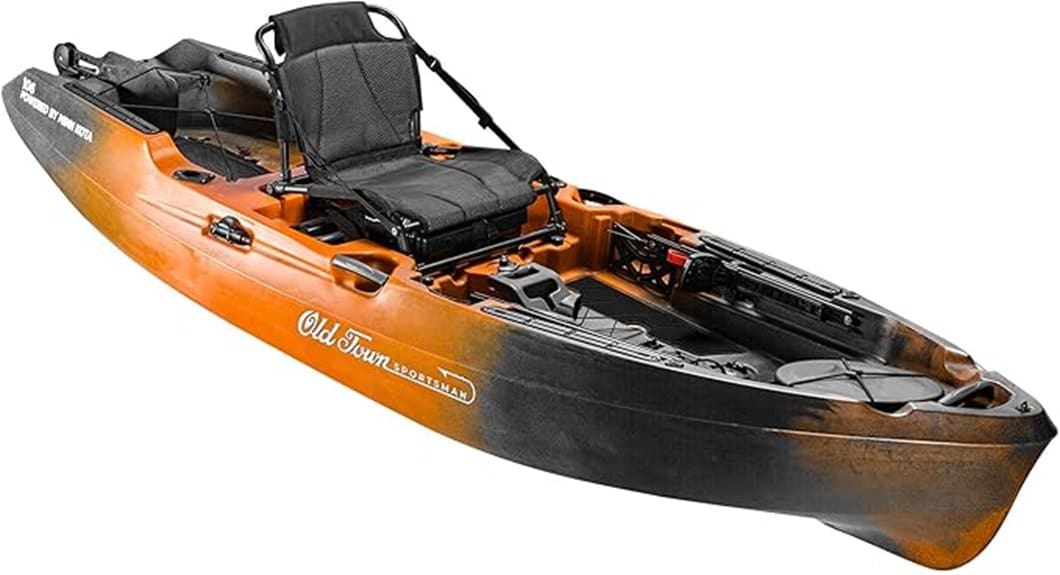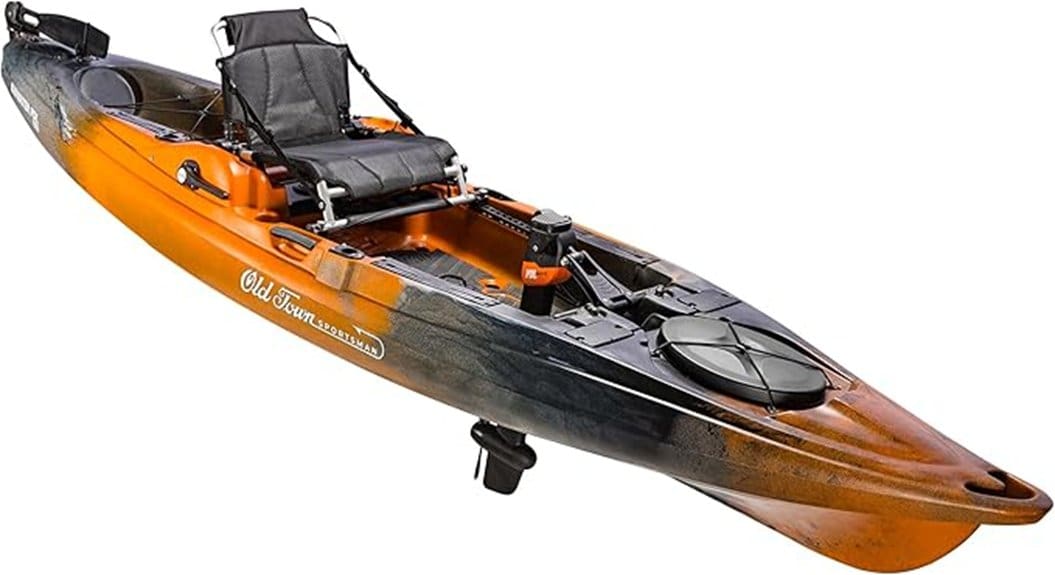
You’ll find the Lifetime Triton sit-on-top is built for newer kayakers and casual anglers who want fuss-free paddling. It tracks steadily thanks to deep channels and chine rails, and feels stable for standing or casting while still turning responsively. The quick-release padded seat and multiple footrest positions keep you comfortable on longer outings. Molded storage, paddle keeper, and durable polyethylene mean low upkeep. Keep going and you’ll uncover specific handling, gear tips, and upgrade options.
Some Key Takeaways
- Stable sit-on-top hull with deep tracking channels and chine rails offers predictable tracking and confidence for beginner anglers and casual paddlers.
- Adjustable quick-release seat back and padded seat plus multiple footrest positions improve comfort and reduce fatigue on longer outings.
- Durable UV-protected high-density polyethylene shell resists sun damage and requires low maintenance, though surface scuffs are possible.
- Useful storage features include a rear tankwell with bungee, molded paddle keeper, and reliable paddle retention for easy day-trip gear access.
- Lightweight for transport with T-handles and center grip; consider a kayak cart and upgraded seat for extended trips or touring needs.
Lifetime Triton Overview: Who It’s Built For and What’s Included
While you’re newer to kayaking or just want a trouble-free paddle, the Lifetime Triton fits the bill: it’s a stable, sit-on-top designed for casual anglers and recreational paddlers who value comfort and ease of use. You’ll appreciate features aimed at beginner anglers and family outings: adjustable quick-release seat back, cushioned pad, multiple footrest positions, tankwell storage with bungee, paddle keeper, and T-handles for carrying. The polyethylene shell feels durable and low-maintenance, so you’ll spend more time exploring than fussing. It’s a practical, freedom-forward package that gets you on water quickly with sensible gear security and comfort. It also comes with essential gear recommendations for sit-on-top kayakers, including storage and comfort accessories like essential gear.
How the Triton Tracks and Handles: Stability, Hull, and Chine Rails
Because the Triton’s hull combines deep tracking channels with pronounced chine rails, you’ll notice it slices a straight line without feeling twitchy underfoot. You’ll trust its tracking dynamics when you relax into open water, letting strokes steer while the hull resists yaw. The chine performance adds predictable edge-hold as you lean or brace, boosting initial stability so you can move confidently. Wind and small wakes nudge rather than upset you, and corrective strokes stay minimal. Overall, handling feels liberated: stable enough to stand or fish, responsive enough to cruise, and forgiving when you push pace. Discover more about stable wide-beam designs for confident paddling with wide-beam stability that benefit beginner kayakers.
Comfort and Fit on the Water: Seat, Footrests, and Ride Ergonomics
Often you’ll forget you’re sitting in a budget-friendly kayak because the Triton’s adjustable quick-release seat back and padded seat keep your hips and lower back supported on longer trips. You’ll appreciate seat adjustability that lets you tune posture quickly, pairing with multiple footrest positions so your knees aren’t cramped and your stroke stays efficient. The ride feels planted; hull stability lets you focus on the rhythm of your strokes. Ergonomic paddling comes through in how the cockpit lets you sit relaxed yet engaged, reducing fatigue on big days. It’s a simple, freeing setup that keeps you on the water longer. Many paddlers enhance comfort further with kayak seat cushions designed for longer sessions on the water.
Storage, Accessories, and Practical Use: Tankwell, Paddle Keeper, and Transport
With practical touches that keep gear organized and accessible, the Triton makes day trips easier: the rear tankwell offers generous space and a bungee lacing system that holds dry bags and coolers tight, the molded paddle keeper secures your blade when you need a hand free, and the trio of T-handles plus a center carry grip speed up loading and launches. You’ll appreciate straightforward gear organization that keeps essentials reachable without cluttering your cockpit. Paddle retention works reliably during breaks. Carry points simplify launch logistics, letting you move the kayak solo or with a partner. It’s functional, freeing, and built for simple outings. For easier launches and overland moves consider adding a kayak cart with durable all-terrain wheels to transport the Triton from car to water.
Durability, Materials, and Final Verdict: Construction, Pros/Cons, and Buying Recommendation
Those practical features hold up because the Triton’s construction won’t. You’ll appreciate the UV-protected high-density polyethylene that resists UV degradation, keeps hull stiffness, and survives bumps. It’s light enough to carry yet solid on wind-swept lakes. Expect reliable tracking from the molded channels and durable chines. Pros: stable ride, simple maintenance, sensible warranty coverage. Cons: plastic scuffs, limited speed for long treks, basic comfort compared with premium seats. Verdict: buy if you want freedom, affordability, and rugged reliability for casual to weekend adventures; upgrade only if you demand high-performance touring gear. For beginners looking into hard-shell inflatables as an alternative, consider how the Triton compares on portability and storage with hard-shell inflatables.
Some Questions Answered
Does the Kayak Come With a Warranty and What Does It Cover?
Yes—you get a manufacturer warranty that offers limited coverage. You’ll appreciate the peace of mind: it covers defects in materials and workmanship for a set period, but it won’t cover normal wear, UV damage from neglect, or mishaps. You’ll want to register and keep proof of purchase. If you value freedom on the water, this limited coverage still helps protect your investment so you can get back paddling sooner.
Can the Triton Fit in a Standard Roof Rack or Car Trunk?
Yes — you can usually fit the Triton on a standard roof rack and often in larger car trunks, but check dimensions first. For roof rack compatibility, use proper pads, straps, and a bow/stern tie-down to keep it secure; it rides confidently thanks to its design. Trunk fitability depends on vehicle size; you’ll appreciate how the kayak’s manageable weight and carry handles make loading and unloading feel freeing and straightforward.
Is the Paddle Adjustable for Left- or Right-Handed Paddlers?
Yes — the paddle’s adjustable grip lets you set feather and hand position so you can paddle comfortably whether you’re left- or right-handed. You’ll notice better control as you tweak the grip to match your stroke technique, and it feels natural after a few minutes on the water. You’ll appreciate the freedom to fine-tune reach and angle, improving efficiency and comfort on longer outings without fiddling with tools.
Are There Recommended Accessories for Fishing or Photography Setups?
Yes — you’ll want rod holders and camera mounts for fishing or photography setups. Add a couple of sturdy rod holders near your seat and a low-profile camera mount on the centerline for stable shots. Choose quick-release mounts and tethered cases so you can move freely and secure gear. Consider extra bungee straps in the tankwell and a paddle keeper to minimize clutter while you chase fish or frame the perfect waterborne horizon.
Is Assembly or Simple Maintenance Required Before First Use?
Yes — you’ll do a quick pre launch inspection and simple assembly before you push off. Check fittings, seat, footrests and carry handles, secure the paddle keeper and bungees, and wipe any mold-release residue. Do an initial hull cleaning to remove dust or shipping grime and inspect for defects. Routine maintenance is light: rinse after saltwater, store out of UV when possible, and you’ll be ready to roam.