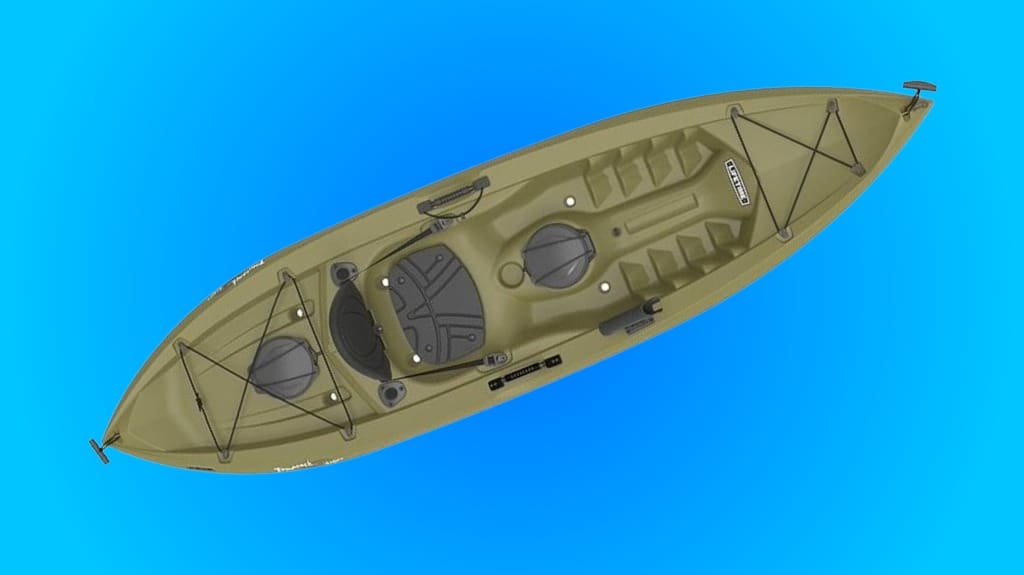

You’ll like the Lifetime Tamarack Angler if you want a roomy, stable 10-foot sit‑on‑top that’s built for casual weekend fishing and learning to stand, with a flat HDPE hull for steady tracking, two flush rod holders plus a top‑mount, and center and rear hatches for tackle and anchor line; bring a paddle leash, tighten the seat and footrests, rinse after salt use, and pack a small repair kit, and keep going below for gear tips and alternatives.
Some Key Points
- Stable, flat-bottom HDPE hull offers excellent steadiness for standing and casting, ideal for beginners and weekend fishers.
- Wide, roomy design includes padded seat, adjustable footrests, and multiple storage hatches for comfortable day trips.
- Fishing-focused features: two flush rod holders, one top-mount holder, rear shock cords, and dedicated rod storage.
- Tracks reasonably well for a budget sit-on-top thanks to chine rails and tracking channels, but can yaw in wind.
- Durable UV-protected construction with routine care recommended and a 5-year limited warranty for peace of mind.
Lifetime Tamarack Angler at a Glance : Specs, Price, and Who It’s For
If you’re scouting a straightforward, budget-friendly fishing kayak that won’t make you wrestle it into the water, the Lifetime Tamarack Angler is worth a close look, because it balances simple, durable design with the basics every angler needs: a stable, flat-bottom HDPE hull for predictable tracking and a 275 lb capacity that fits most solo paddlers and their gear. You’ll get a roomy 120" kayak, basic rod holders, storage hatches and a padded seat, all at a price that wins on affordability comparison, so think about buyer demographics—casual weekend fishers, beginners, and freedom-seeking solo paddlers. Check weight, transport, and warranty. Lifetime also offers a range of compatible kayak accessories to outfit your Tamarack Angler for different water adventures.
How the Tamarack Performs on Water : Stability, Tracking, and Comfort
You’ve already seen the Tamarack’s specs and who it’s best for, so now let’s look at how it actually behaves on the water: the Tamarack’s wide, flat-bottom hull gives you a very steady platform for standing up to cast or hauling in fish, and those chine rails plus the deep tracking channels help it hold a straight line more than you’d expect from a budget sit-on-top; still, don’t confuse stability with speed—this kayak won’t sprint across a lake, so plan on steady, relaxed paddling, use the multiple footrest positions to brace yourself for longer casts, and expect some yawing in windier conditions where leaning your weight or using short corrective strokes will keep you tracking better.
When you launch, practice simple launch techniques to avoid tipping, carry a paddle leash for paddling efficiency, sit low and center at first to test balance, tighten the seat for comfort on longer days, and adjust footrests for power on each stroke so you can savor the freedom without fighting the boat.
Paddling with the right gear from a specialty shop can make trips more enjoyable, especially when you match your kayak to your paddling style.
Fishing Features and Storage : Rod Holders, Hatches, and Gear Access
When you start rigging the Tamarack for a day of fishing, focus first on how the rod holders and hatches fit your typical setup, because they’ll shape how you stow gear, reach your rods, and move around the cockpit; the Tamarack gives you two flush-mounted holders for trolling or parking poles, plus a top-mount holder for quick access, so decide whether you want a ready rod at your hip or a stowed backup behind you, tighten the padded seat and test reach to each holder, then practice switching rods while seated to see which position feels fastest and safest. Use the center and rear hatches for rod storage and anchor line, keep tackle organization tight with small trays in the center hatch, strap bulky items under rear shock cords, and move light gear into the front space so you stay balanced, comfortable, and free to roam. Check Reel Yaks for accessories and replacement parts that fit the Tamarack kayaks and gear.
Durability, Build Quality, and Warranty : What to Expect Long Term
Because the Tamarack's body is molded from UV-protected high-density polyethylene, you can expect a hull that's tough against dings, sun fade, and everyday scrapes, but it still needs a little care to stay serviceable for years—check seams and scuffs after each season, rinse salt off thoroughly, and store it out of direct sun when you can. You'll appreciate the material resilience on rough launches and rocks, but inspect hatch seals and fittings, carry a repair kit for gouges, and tighten hardware regularly. Know the 5-year limited warranty expectations, register your kayak, keep receipts, and document damage promptly. Wilderness Systems owners often value durability for long-term paddling enjoyment.
Should You Buy It? Pros, Cons, and Best Alternatives by Use Case
If you're weighing whether the Lifetime Tamarack Angler is the right kayak for your outings, think about what kind of paddling you do most often and match the boat to that use—it's a sturdy, budget-friendly sit-on-top that handles calm lakes, slow rivers, and casual fishing trips well, but it isn't built for rough surf, long expeditions, or paddlers over its 275 lb limit. You’ll like its stability, simple rigging, and low transport logistics needs, but expect modest resale value and basic comfort, so buy it if you want affordable freedom for short trips, bring a good PFD, cartop straps, and a crate. This model fits well with other recreational offerings popular among outdoor enthusiasts who enjoy water adventures and budget-friendly options like Sun Dolphin kayaks.
Some Questions Answered
Does It Come With a Paddle or Do I Need to Buy One Separately?
No, it doesn’t include a paddle, you’ll need to buy one separately or choose an optional purchase bundle where offered. You’ll want a durable, lightweight paddle sized to your height and kayak width, ideally aluminum or fiberglass with a touring blade for efficiency, carry a spare, and pack a leash and PFD, too. Try a local shop to test feel, measure blade length for your reach, and pick something that balances weight and control.
Can the Seat Be Upgraded to a Higher-Back Chair?
Yes — you can upgrade to a higher backrest, but pick a seat made for sit-on-top kayaks, check mounting points, and measure width and hull contours first so it fits snug and won’t shift. Look for aftermarket cushions and bolstered seats with straps or mounting brackets, bring tools and extra straps when installing, and test comfort and balance on calm water before long trips, adjusting footrests and position as needed.
Is This Kayak Suitable for Saltwater Use?
Yes, you can use it in saltwater, but you should plan for corrosion resistance and carry flotation aids; rinse thoroughly with fresh water after each outing, lubricate or swap metal fittings for stainless, and check rod holders and cradles for salt damage regularly. Bring a PFD, bilge sponge, and small toolkit, avoid rocky surf, and store it out of sun when possible, that way you’ll keep it serviceable and enjoy more worry-free trips.
How Easy Is It to Transport on a Roof Rack or Car Top?
Pretty easy — you’ll strap it to a roof rack with foam blocks, feed roof straps over the hull, and use a bow lift or quick release tether up front for safety, then cinch stern straps tight. Carry a friend for lift, center the kayak on the blocks, and check straps before driving, re‑tightening after a few miles. Bring extra webbing and a spare quick release clip, just in case.
Are Replacement Parts Available From Lifetime?
Yes — you can get replacement parts from Lifetime, and you’ll want to check the manufacturer warranty first, since some repairs or parts may be covered, otherwise third party suppliers sell hatches, seats, and rod holders, so start by noting your model number and part type, contact Lifetime for warranty/parts, then compare costs and fit with reputable third party options, keep photos and measurements, and order spares you can carry on trips.


