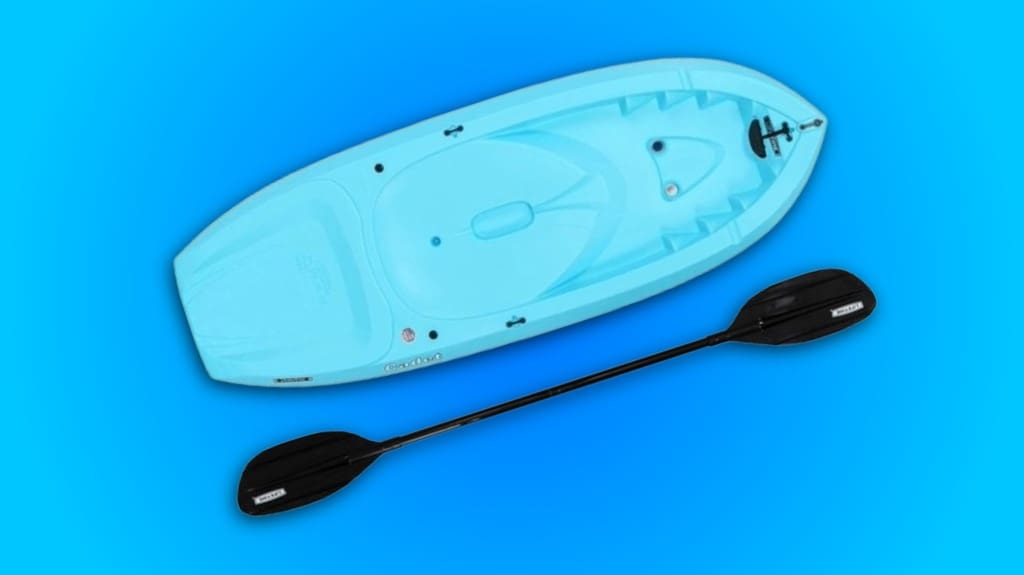
The Lifetime Cadet is a tough, no-frills youth kayak you’ll like if you’re teaching a smaller child basic paddling and safety, since it’s made from UV-protected HDPE, holds about 100 pounds, and has a reverse chine plus twin fins for steady tracking; check seams and flex for quality, rinse self-bailing scuppers, pack a lightweight PFD, whistle and spare grip, and practice re-entry near shore—keep it simple and durable, and you’ll want to learn more details next.
Some Key Points
- Durable UV‑protected HDPE hull resists knocks, sun damage, and handles beach landings and dock bumps well.
- Designed for ages 5+ with 100 lb capacity, ideal for young beginners and smaller tweens.
- Reverse chine and twin fins provide strong stability and good straight-line tracking.
- Comfort features include molded seat/backrest, multiple footrest positions, and an adjustable backrest.
- Self‑bailing scuppers and swim‑up deck aid safety; rinse scuppers and practice re‑entry drills before outings.
Lifetime Cadet Youth Kayak at a Glance: Who It’s For and Key Specs
If you’re shopping for a first kayak for a child, the Lifetime Cadet is a solid, easy-to-understand choice, so start by matching the basics to the kid: it’s made from tough, UV-protected high-density polyethylene, holds up to 100 pounds, and is recommended for ages 5 and up with adult supervision, which means it’ll work for most young beginners and smaller tweens, but won’t carry a full-grown adult or extra gear. You’ll want lightweight portability for easy car-tossing and colorful aesthetics that excite them, check fit with footrests, test balance in shallow water, and plan short, supervised outings to build confidence. Lifetime also offers other kayaks and gear for water adventures that can grow with your child.
Build, Materials, and Stability: HDPE Shell, Reverse Chine, and Twin Fins
Because the Cadet’s shell is molded from high-density polyethylene, you’re getting a hull that’s built to take knocks, shrug off sun damage, and keep its shape with very little fuss, so start by running your hands along the cockpit and rails to check for any manufacturing rough spots and imagine the routine it will face — beach landings, dock bumps, and the occasional rock. That HDPE durability means you can push boundaries, so inspect seams, press for flex, and expect low upkeep, while the reverse chine gives excellent chine stability for steady paddling, and twin fins help tracking, so bring basic repair tape. Wilderness Systems also offers accessories and gear designed for paddlers of all levels, including fit and comfort options for youth kayaks.
Comfort and Usability for Kids: Seating, Footrests, Handles, and Swim-Up Deck
You’ll notice right away how the Cadet’s cockpit is shaped to keep a child comfortable and in control, so start by seating your kiddo and checking that the molded seat and backrest sit them snugly without pinching, letting them wiggle a bit to make sure the fit won’t rub during a longer paddle; use the multiple footrest positions to match leg length, slide their feet into the position that gives a slight bend in the knees for better paddling leverage, and tuck the paddle into the molded cradle to see how easily they can reach it and stow it when not in use. You’ll appreciate the adjustable backrest, it lets you tweak posture for longer trips, and the molded finger handles make carrying solo easy for bigger kids, while the kid friendly aesthetics—bright colors, fun lines—encourage exploration; check the swim-up deck so they can practice a simple self-help re-entry with your supervision, bring a lightweight PFD, sunscreen, and a small spray bottle for rinsing seats after play. The Cadet pairs well with other solo kayak essentials for day trips and learning to paddle.
On-Water Performance and Safety: Tracking, Self-Bailing Scuppers, and Re-Entry
Now that you’ve checked seating and foot position, notice how the Cadet handles once you push off, because tracking, scupper drainage, and easy re-entry are what keep a short paddle calm and a longer one enjoyable. You’ll feel the twin fins help it hold a straight line, so steer with small strokes, shift weight to brace in wind, and practice Re entry drills near shore, so you’re confident if you tip. Keep Scupper maintenance simple, rinse sand and debris, and check holes before launch. Bring a whistle, paddle float or spare grip, and rehearse returning to the swim-up deck calmly. Many paddlers choose lightweight, inflatable options like Sevylor kayaks for easy transport and storage on car trips and trailered launches.
Should You Buy It? Value, Alternatives, and Final Recommendation
If you want an affordable, kid-friendly boat that’ll actually stay serviceable through seasons of backyard practice and family outings, the Cadet is worth serious consideration, since its tough HDPE shell won’t fade or crack and the twin fins plus reverse chine give surprising tracking and stability for a beginner craft. You’ll get great value if you want durability over frills, but do a price comparison with similar youth hulls, check warranty terms for impact and UV coverage, bring a PFD and sunscreen, practice re-entry drills nearby shore, and consider a sit-on-top option if you want faster drying. Our shop also carries complementary gear and accessories to outfit young paddlers, like life vests and paddles, for safe and enjoyable outings on the water with kayaks and accessories.
Some Questions Answered
Does It Come in Different Colors or Patterns?
Yes, it comes in a few color options and modest pattern variations, so you can pick a bright hue or a simple camo-style look that suits your kid’s personality, whether they want to stand out or blend in. Check product listings and photos for current choices, note any limited runs, and when you buy, carry sunscreen, a PFD, and a small repair kit, then test stability close to shore first.
Is Assembly or Any Tools Required Out of the Box?
No assembly’s required, you’ll get the kayak ready to launch right out of the box, though there are optional accessories like a paddle or life jacket you might add. Read the user instructions, check footrest positions and molded handles, stow small gear, and test balance in shallow water first. Bring a pump or tarp for transport, sunscreen, and adult supervision, and tighten any loose fittings before your first short paddle.
Are Replacement Parts or Fins Available From the Manufacturer?
Yes, you can get manufacturer parts and fin availability from Lifetime, so first check their parts page or contact customer service, ask specifically for replacement fins and part numbers, then match the twin fin design and measurements before ordering, carry basic tools and a spare fin or repair kit on trips, and keep proof of purchase handy for warranty questions, because being prepared keeps you paddling without surprises, right?
Can It Be Transported on a Car Roof Rack Without Special Carriers?
Yes, you can transport it on a car roof rack without special carriers, but check roof stability and vehicle compatibility first, make sure crossbar spacing fits the hull, and use proper tie downs front and rear plus a bow/stern line, you’ll want padding under the kayak and to test fit and tension before driving, drive slower, recheck straps after a few miles, and carry basic straps and a small wrench for quick adjustments.
Is There a Warranty and How Long Does It Last?
Yes, you get a limited warranty, usually covering defects in materials and workmanship for a specified period, so check coverage details on your receipt or the manual. Keep your proof of purchase, note any serial or model numbers, and inspect the hull for UV or stress issues before use, then register the kayak online if available; that helps claims, speeds service, and lets you ask about repairs or replacement confidently.