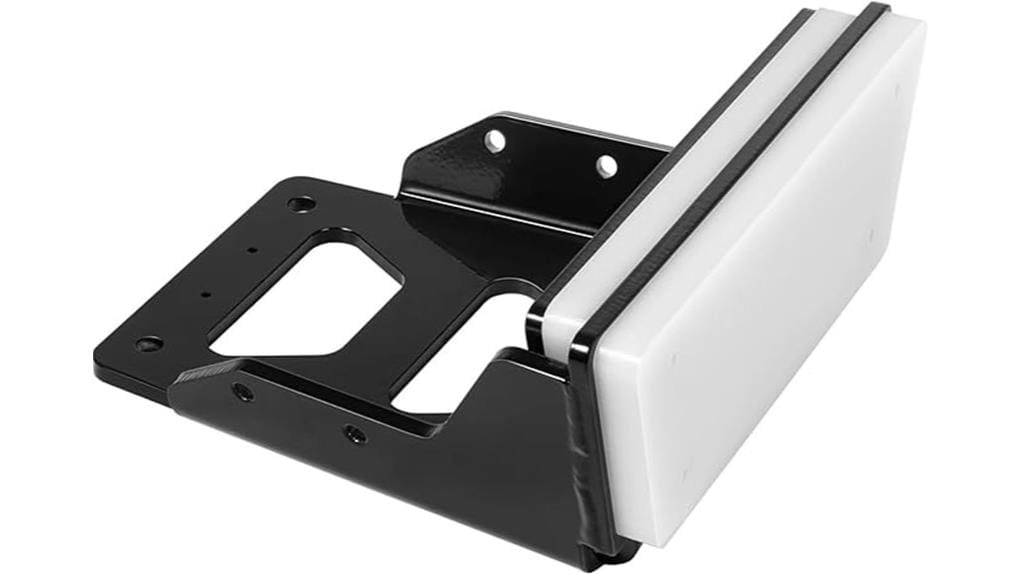
You’ll find this clamp-on transom mount fits most sit-on-top and rigid-hull kayaks with a flat, reinforced transom and a 3.75 x 4.75 in bolt pattern; confirm transom thickness and clearance before you buy. It secures electric outboards up to about 70 lb thrust (≈3 HP) and installs with basic tools and corrosion‑resistant fasteners. Expect firm holding power, good steering response, and routine corrosion checks; avoid thin, curved, or inflatable transoms and heavier engines — keep going to see full installation and limits.
Some Key Takeaways
- Check that the mount fits a flat, reinforced transom and matches the 3.75 x 4.75-inch bolt pattern before buying.
- Confirm the clamp-on bracket supports up to 70 pounds thrust (≈3 HP) and suits electric trolling motors only.
- Inspect transom thickness, clearance, and avoid thin polyethylene or highly curved surfaces that may crack.
- Use corrosion-resistant fasteners, progressive tightening, sealant, and tools (socket set, drill, torque wrench) for secure installation.
- Rinse after saltwater use, check hardware routinely, and consider heavier-duty mounts for motors or loads beyond the limits.
Compatibility Checklist: Which Kayaks and Motors Fit the Kayak Trolling Motor Transom Mount
What kayaks and motors will work with this transom mount? You can fit most sit-on-top and rigid-hull kayak models that offer a flat transom; confirm transom thickness and clearance before buying. The clamp-on bracket secures electric outboards only, supporting up to 3 HP or 70 pounds thrust—check motor weights against that limit. Aluminum and plastic construction resists corrosion for freshwater and saltwater use. The mount matches common bolt pattern dimensions for motor attachment, but it won’t accept internal-combustion engines. You’ll get straightforward, liberated propulsion when you pair compatible kayak models and compliant motor weights. For sectional and modular kayaks, verify hull interface and mounting points to ensure a secure fit with the transom mount and kayak design, especially on models designed for sectional kayaks.
What to Expect During Installation: Clamp, Bolt Pattern, and Tool Checklist
After confirming your kayak’s flat transom and motor weight fit the mount, you’ll focus on securing the clamp-on bracket and aligning the motor to the 3.75 x 4.75 in bolt pattern. You’ll position the clamp, tighten progressively to avoid stress, and verify drill alignment for any pilot holes. Use corrosion-resistant fasteners provided or rated stainless steel. Bring a socket set, drill with appropriate bits, torque wrench, and sealant. Fit handle padding before final torque to protect grips and reduce vibration. Check clearances for steering and prop clearance. Final inspection: confirm secure fit, no movement, and clean sealant beads. Consider using an all-terrain cart to help transport the kayak and motor setup safely over varied surfaces.
Performance and Durability on the Water: Holding Power, Steering, and Corrosion Resistance
When you mount the transom bracket properly and stay within the 70-pound thrust limit, the unit holds firmly under typical kayak loads and moderate chop. You’ll notice consistent holding power from the aluminum clamp and reinforced bolt pattern; it resists rotation and minimizes slippage during thrust changes. Steering responsiveness remains direct with small electric trolling motors, giving precise course corrections without excessive play. Corrosion-resistant aluminum and engineered plastics tolerate freshwater and saltwater if rinsed and inspected regularly. Routine hardware checks preserve function and freedom to roam; maintain fastener torque and sacrificial anodes as preventive measures. Consider pairing the transom mount with motor-ready accessories to ensure compatibility and optimal performance.
Limitations and When to Avoid This Mount: Engine Types, Weight Limits, and Kayaks to Skip
Although the mount works well for small electric outboards, avoid it for internal-combustion engines and any setup that exceeds the 70-pound thrust or 3 HP limit; exceeding those specs risks structural failure or rapid wear. You shouldn't fit motors that create high engine vibrations or continuous torque spikes. Check hull compatibility: thin polyethylene, inflatable, or heavily curved transoms may deform or crack under clamp pressure. Don't use on kayaks lacking a reinforced transom or with mismatched bolt pattern. Stay within weight and power ratings, secure clamps per instructions, and choose a different mount if your rig demands higher thrust, rigid attachment, or prolonged heavy use. Consider selecting anchors and mounts designed for kayaks with reinforced transoms to ensure safe, long-term performance.
Final Verdict and Buying Tips: Who Should Buy, Alternative Options, and Quick Purchase Advice
If your setup stays within the 70-pound thrust/3 HP limit and your kayak has a reinforced or flat transom that matches the 3.75 x 4.75-inch bolt pattern, this mount is a solid, corrosion-resistant choice for clamp-on electric outboards; otherwise look for heavier-duty transom systems or purpose-built motor mounts. You should buy it if you value simple installation, lightweight corrosion resistance, and predictable angle adjustment for trim. Prioritize battery management and secure wiring runs to maximize range and safety. Alternatives include full-length transom plates or dedicated motor brackets for heavier motors. Buy from reputable retailers, confirm bolt pattern, and keep spare fasteners. Consider also pairing the mount with a purpose-built anchor system designed for kayakers to improve stability and holding power.
Some Questions Answered
Can I Mount This on a Sit-Inside Kayak Cockpit Coaming?
Yes — you can, but it needs proper sit inside modifications and likely coaming adapters. You’ll mount the clamp-on bracket to a reinforced coaming surface or adapter plate using the 3.75 x 4.75 inch bolt pattern, ensuring structural support for up to 70 lbs thrust. Use corrosion-resistant fasteners, distribute loads, and verify clearance for cockpit access. If unsure, reinforce the coaming or consult a technician to preserve safety and freedom on the water.
Does It Interfere With Fishing Rod Holders or Gear Placement?
It generally won’t interfere with rod holders or gear placement if you position it carefully; you’ll retain rod clearance and clear gear access behind the transom. Mount height and lateral placement determine clearance, so set the bracket to avoid obstructing rod angles and reach to tackle boxes. Because it clamps on and uses a common bolt pattern, you can adjust fore/aft and side-to-side to optimize rod clearance and maintain unobstructed gear access.
What Warranty or Return Policy Does the Mount Have?
The mount typically includes a one-year warranty length and a 30-day return window. You’ll get coverage for manufacturing defects within the warranty period; you’ll need proof of purchase and photos for claims. Returns are accepted within the stated return window for refunds or exchanges if unused and in original packaging. You’re responsible for return shipping unless retailer policy specifies otherwise. Check retailer terms for variations.
Can I Transport My Kayak With the Motor Still Mounted?
Yes — you can transport your kayak with the motor mounted, but you’ll need to follow trailering safety practices. Secure the transom mount and motor, lock moving parts, and use straps to prevent torque and vibration. Confirm roof rack compatibility and clearance; clamp-on mounts add length and weight that affect load balance. For highway speeds, remove the motor if excessive drag or instability occurs to maintain freedom and safety on the road.
Are Spare or Replacement Plastic Parts Available Separately?
Yes — replacement components for the plastic parts are available separately from the manufacturer and select dealers. You can order individual plastic brackets, clamps, and fasteners to keep your mount serviceable. For maintenance tips, regularly rinse parts after saltwater use, inspect for cracking, and swap worn pieces promptly to retain secure mounting. Keep spares aboard so you can quickly replace failing pieces and maintain your freedom to fish or explore.