You’ll know it’s time when you see open pockets merging, slushy rotten ice, and surface temps creeping toward 50°F, so start with short near‑shore shakedowns, tell a shore contact your route and return time, and keep two weather sources handy; wear a drysuit or thick wetsuit if water’s 40–50°F, a Type III PFD, whistle and strobe, and carry a charged VHF, spare battery, knife, bilge pump and flotation bags, test electronics and rigging onshore, then run a quick launch and gear check — more practical steps follow.
Some Key Points
- Confirm open water by checking recent lake reports or satellite imagery before planning early-season trips.
- Prioritize thermal safety: wear a drysuit or thick wetsuit, layered insulation, and a Type III PFD for water 40–50°F.
- Pre-check and charge electronics and spare batteries, test sonar/GPS on shore, and pack waterproof comms (VHF + phone).
- Rig a secure, centered crate for battery/tackle, bolt rod holders 18–24" apart, and leash paddles and nets.
- Tell a shore contact your route and turnaround, keep initial outings short and near shore, and rehearse self-rescue.
Why Ice-Out Matters: When to Move From Winter Gear to Open-Water Prep
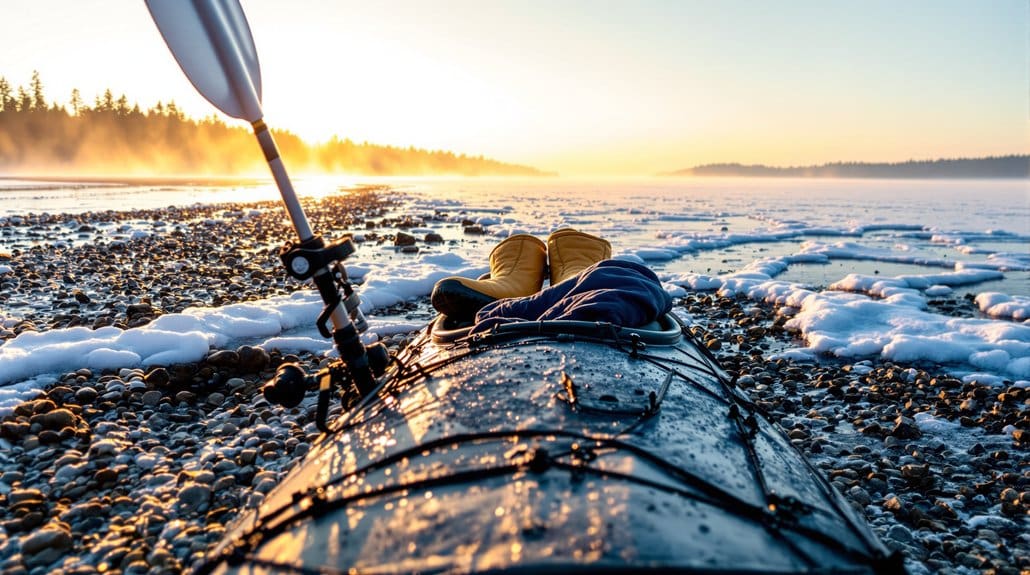
When the ice starts breaking up, pay attention—those first open patches tell you when to start shifting out of full winter immersion gear and into lighter, open-water prep, because trout and bass will move into the shallows as water warms and daylight grows, and you don't want to be over- or under-dressed for that change. You watch for merging open pockets, rotten slush, and steady surface water temps near 50°F, and you'll use lake reports or a quick satellite check to confirm, right? Gradually swap layers, service reels and fittings onshore, and install rod holders or a fishfinder before you push off, but keep a PFD, VHF, knife, and an immersion layer handy until several trips show stable Ice-out and warmer water. Also double-check your kayak's fittings and accessories and consider adding rod holders or storage designed for paddling and fishing gear.
Quick Decision Checklist: Is It Safe to Paddle the First Trips?
Before you shove off, check that both air and water temps are above about 50°F so your survival time without immersion gear doesn’t drop fast, and scan at least two forecast sources for wind and gusts that could make a short trip feel unsafe. Make sure you’ve got the three essentials within reach—a Type III PFD rigged with a radio and knife, a VHF or waterproof phone, and a drysuit or wetsuit suited to the water temperature—and tell someone ashore your route and a turnaround time. Finally, run a nearby shakedown: a short launch to test the hull, rudder, batteries and comms, avoid any slushy or rotten ice and be ready to haul out if conditions start to close in. Also double-check your kayak and gear list against an essential gear checklist specialized for whitewater and early-season paddling.
Air And Water Temps
Out on the launch, start by checking both the air and water temps, because cold water can knock you out fast even if the sun feels warm; use the simple 50/50 rule—don’t paddle unless both air and water are above 50°F—to cut your risk of cold-water incapacitation, and if the water’s 40–50°F treat the day as high-risk, suit up in a drysuit or a thick wetsuit, wear a Type III PFD, stay close to shore and keep the trip short. You want freedom, not risk, so verify Ice: Fishing spots are truly clear, watch for slushy patches, check short-term wind forecasts, and remember cold wind multiplies chill. If temps drop below 40°F, plan shore-only runs or get an escort, and postpone solo missions. Consider carrying floatation bags and other essential gear to improve safety on early-season outings floatation bags are crucial.
Communication And Gear
Want to know if today’s trip is truly safe? Check gear and comms first: carry a VHF radio and a fully charged cell phone in waterproof cases, confirm fresh batteries and antenna/range, and attach the VHF radio to your PFD so it's immediate if things go sideways, and yes, wear your PFD. Tell a shore contact your route and return time, and plan your first outings within visual or phone range while ice-out is sketchy. Check NOAA and local forecasts and tide and wind within an hour or two of launch, avoid winds above your comfort minus five knots or big gust spikes, bring a whistle, strobed light, and a knife on the PFD, and skip solo trips if water’s under ~50°F. Also consider outfitting your kayak with purpose-built VHF marine radio accessories to keep communications reliable and hands-free.
Electronics & Power: Inspecting Batteries, Fishfinders, and Wiring
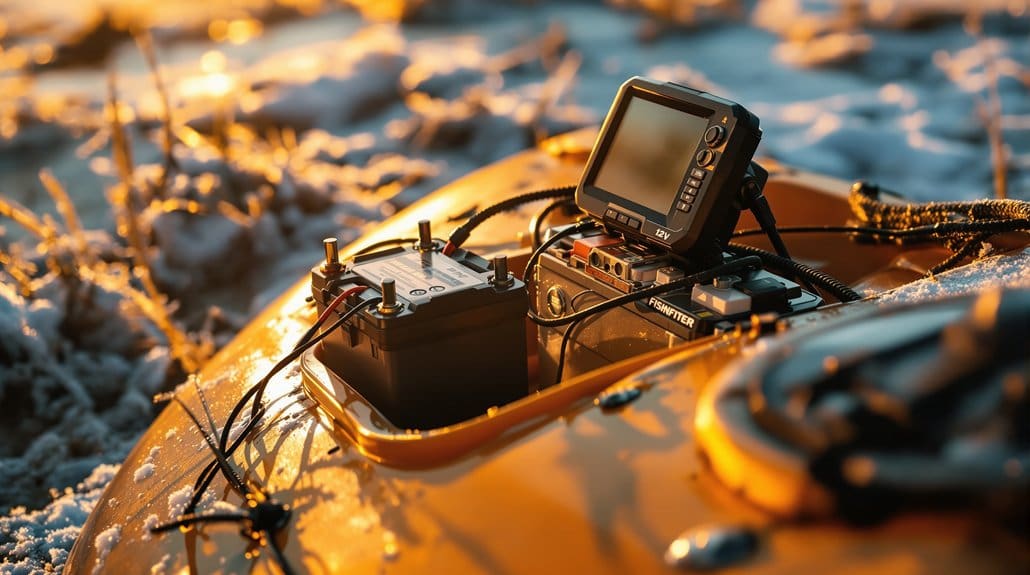
Start by giving every battery and fishfinder a full charge and a quick on-shore power-on, because stored batteries often sag over winter and you don't want to find low voltage or a dead unit once you're afloat; carry at least one spare battery or a charged 12V power bank and keep voltage above about 12.2V for best sonar performance. Then pull and dry any transducers and connectors, look closely for corroded terminals, cracked insulation, or rodent nibble marks, replace or re-seal bad joints with dielectric grease and heat-shrink or marine-grade silicone, and secure wiring runs with UV-resistant zip ties and chafe protection routed away from footwells. Finally, test boot-up, GPS lock (shoot for six or more satellites), and sensor calibration on shore and plan a short nearby shakedown paddle to confirm depth, speed, and temp readings under real conditions. Consider also checking compatibility and mounting options for any marine GPS units you plan to use so your electronics layout fits your kayak and your fishing style.
Battery Care And Testing
You’ll want to make battery care one of the first pre-trip checks, because a dead fishfinder or flaky wiring can turn a good morning into a long paddle home, so charge everything fully before the season, then store spare batteries at about 40–60% if you won’t use them for more than a month to keep their life longer. After that, make sure you load-test 12V lead‑acid or AGM packs with a multimeter and a 10–15A draw for 10–15 seconds, voltage should hold above 12.0V under load, resting over 12.6V means good charge. Carry a fully charged spare or USB power bank, mount a quick voltmeter near the battery, bench-test the fishfinder on shore, and keep dielectric grease handy.
Wiring And Connector Inspection
Before you shove off, give every wire and connector a close once-over, because a small nick or loose terminal can turn a calm morning into a long tow home—look for cracked insulation, exposed copper, and any white or green corrosion at battery posts and inline fuse holders, tighten anything loose, and replace terminals with more than about 10% visible corrosion or a sloppy fit. You’ll load-test fishfinder and battery packs with a multimeter under a realistic draw, swap any cell that falls below 12.4 V or maker spec, and secure wiring runs to the hull with UV-rated ties every 12–18 inches so chafe doesn’t bite you mid-trip. Replace exposed connectors with marine-grade sealed plugs, grease joints, label leads, pack a spare fuse and adhesive-lined heat shrink in your crate, and if you fish in cold water, stow your dry suit where it won’t squish connectors. Also make sure you have a dependable rescue rope bag stowed and accessible in case you need quick retrieval or assistance on the water rescue rope bag.
Rigging and Storage: Setting Up Rod Holders, Crates, and Speed-Rig Systems
Get your kayak set up so stuff’s easy to reach and won’t go sailing off when the wind picks up: start by centering a sturdy crate behind your seat—think Hobie H‑Crate or YakAttack Black Pac—because that gives you a stable platform for tackle, a spare fishfinder battery, and a waterproof case for electronics, and you’ll want to measure the crate’s interior (they’re usually 12–14" deep) so your gear actually fits before you buy. For Kayak Fishing on your first trip, bolt at least two rod holders with stainless fasteners and backing plates, space them 18–24" to avoid tangles, fit a speed-tray with labeled leader tubes for sub‑60‑second lure swaps, seal wiring through glands to a switch panel, and secure paddles and nets with lockable bungees and a leash anchor. Consider adding a modular tackle system like a tackle bag system to keep everything organized and adaptable to different trips.
Safety Gear First: PFDs, VHF, Immersion Apparel, and Accessible Knives
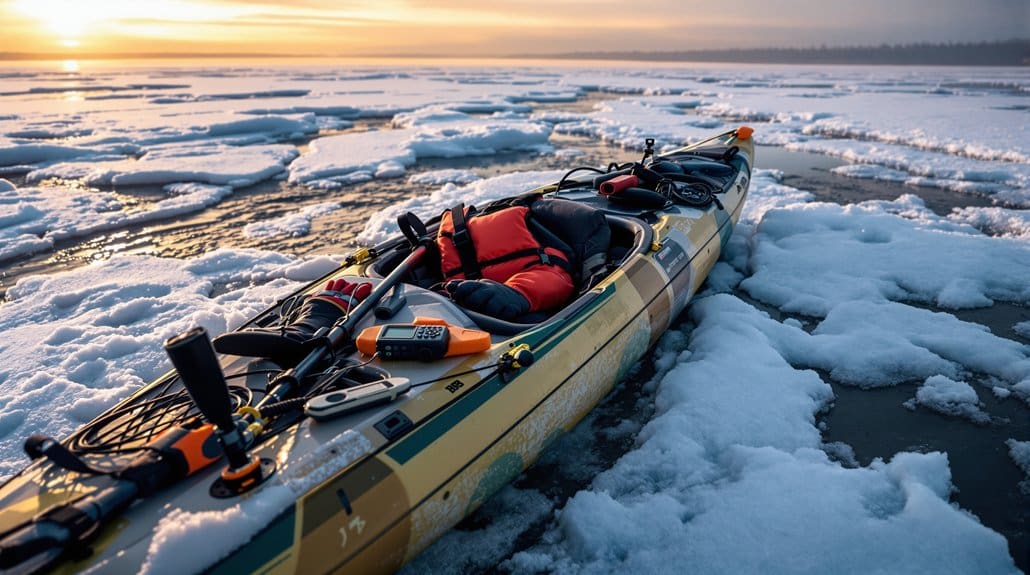
Often the simplest safety choices make the biggest difference out on cold water, so start by sorting and wearing the gear that’ll keep you alive and get you home: pick a properly fitting Type III PFD that lets you cast and move your arms without riding up, check it for rips, cracked webbing, or compressed foam, and clip a sharp rescue knife to it or stow one where you can reach it instantly if lines or straps wrap you up after a flip. Add a strobe and whistle for low light, tuck a charged VHF where you can grab it from your seat with a waterproof phone as backup, and plan a shore contact and return time so you can enjoy Fishing Season and still stay safe. Also make sure you carry essential paddling and safety gear like life jackets and a bilge pump to handle unexpected swamping.
Clothing & Thermal Strategy: Drysuit vs. Wetsuit and Layering for Legs and Core
When you're gearing up for early-season paddling, think of your clothing as your first line of survival and comfort, so pick the system that matches the water temp and how long you'll stay out: if you expect cold water or a long day, choose a drysuit and plan layered insulation underneath—fleece midlayer, then a down or synthetic jacket for warmth—because keeping your core dry and warm buys you time and keeps your hands and feet working; if you're dipping into late-spring conditions or want a lower-cost option, a 5/3 or 4/3 wetsuit will do short trips, but remember it traps water against your skin and gets uncomfortable when you sit for hours. Put core insulation first, add leg insulation with insulated ski pants or base layers under a drysuit, or neoprene leggings with a wetsuit, and rehearse self-rescue and re-entry in your full setup so you know how the gear moves and how to get back aboard.
Tackle, Lures, and Bait: Early-Season Choices (Jigs, Sucker Meat, Vertical Setups)
Starting your early-season tackle plan with small, sharp jigs and a clear game plan will save you time and cold hands, so load a couple of light spinning rods with 1/16–1/8 oz tungsten or Gitzit-style jigs, tip them with sucker or crayfish meat, and be ready to fish vertically in pockets of open water or near ice edges. You’ll want two rod setups, one light 2–6 lb outfit for finesse vertical work and a stouter 7–12 lb rig for bigger jigs or sucker chunks, carry 6–18 inch fluorocarbon leaders for stealth or 12–20 lb when toothy trout are present, match jig color to water clarity, vary cadence slowly, and keep lines tight so strikes don’t get missed on your next fishing trip.
Practice Runs: Close-to-Home Shakedown Trips and What to Test
Before you head farther afield, take a short 1–3 hour shakedown within 10–20 minutes of home so you can test the things that matter most — battery charge and how long your fishfinder actually runs, how fast you can swap a spare battery, and whether your VHF and spare electronics boot up reliably. For getting on the water, do one paddle-and-drift circuit to check rudder or skeg adjustment and steering response, time deploy and stow of leash or skirt, and practice a quick launch and pack-up in 10–15 minutes, strapping rods and staging spares. Load your full tackle crate, make three casts and a landing to verify reach and ergonomics, rehearse a seated self-rescue and VHF call, and build the checklist you’ll trust on real trips.
Trip Planning & Team Habits: Weather, Tide/App Scouting, Communication, and Staging
Even if the sky looks calm, check more than one forecast and pick a clear go/no-go window, so you don’t get surprised by a sudden wind shift or a tide you didn’t expect; compare NOAA, Windy and Windfinder, make sure sustained winds fall below the limit you’re comfortable with (knock 5 kt off your warm-weather threshold for cold water), and expect gusts up to about 5 kt higher than that sustained number before you commit. When you plan, confirm tide timing and heights for launch and route, avoid wind-over-tide chop by shifting windows, and scout apps for current lines. Stage gear day before, charge and waterproof VHF and phone, stash a spare battery in your vehicle, tell a shore contact your plan, and do a close shakedown near open water before venturing farther.
Some Questions Answered
What Is the 120 Rule for Kayaking?
The 120 Rule says you shouldn’t paddle farther from shore in feet than the air temperature in °F times 120, so at 40°F you’d stay within 4,800 feet, which keeps you safer if you flip, limits hypothermia risk, and helps you preserve stroke efficiency for a steady return. Carry a PFD, phone or VHF, warm layers, quick-release gear, and choose routes that let you get back fast, okay?
How to Winterize Your Kayak?
You winterize your kayak by rinsing the hull, checking for scuffs, cracks, and loose rivets, then fitting cover plugs and applying UV protectant, you remove electronics and batteries, label wiring, deflate inflatables, unclip rack straps and store indoors on padded cradles to avoid warping, you clean and lubricate cables, check bungees and hatch gaskets, service PFDs and soft gear, and replace corroded fittings so it’s ready come spring.
How Cold Is Too Cold for Kayak Fishing?
You shouldn’t fish when water’s near or below 50°F unless you’re fully prepared, because hypothermia hits fast, so follow a solid layering strategy, wear a drysuit or thick wetsuit, pick glove selection that balances warmth and dexterity, always wear a PFD, carry a VHF radio and knife, and practice self‑rescue, since those steps cut risk and give you freedom to paddle confidently, right? Check temps, gear, and skills before you launch.
When Should You Not Go Ice Fishing?
You shouldn’t go ice fishing when ice looks slushy, rotten, or covers most of the lake, when air or water temps are under 50°F, or when forecasts show sustained winds above your cold-water comfort limit, because hypothermia and sudden breaks happen fast; check ice safety, bring a charged VHF and waterproof phone, never go solo, carry immersion gear and a Type III PFD, and pick rod selection suited for short, strong strikes like a stout jigging rod.