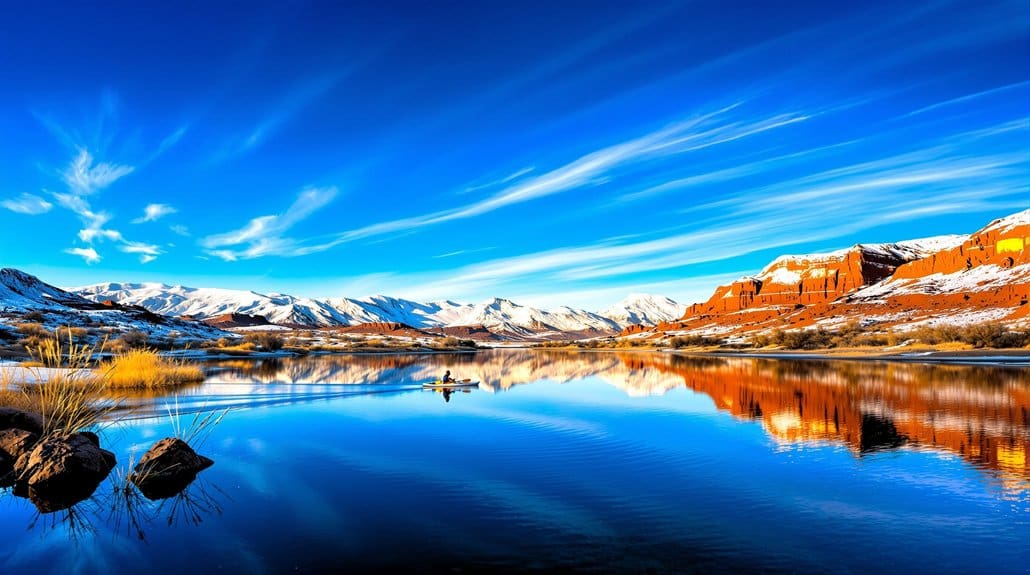
Pick a high‑country trout lake like Big Lake or Blue Ridge for quiet pine‑fringed coves, or choose Lake Pleasant or Patagonia for warmer, island‑lined winter runs, and start early when mornings are glassy; put in where canyon walls or granite boulders cut the wind, paddle short 30–90 minute sheltered loops, wear layered, quick‑dry clothing plus neoprene booties, bring a snug PFD, spare paddle, dry bag with phone and whistle, tell someone your route, and you’ll find detailed launch spots and tips ahead.
Some Key Takeaways
- High‑elevation reservoirs (Blue Ridge, Big Lake) offer cool, clear water and pine‑fringed solitude ideal for winter paddling and fishing.
- Lower desert reservoirs (Lake Pleasant) provide canyon‑lined runs, islands, and calm morning conditions for sheltered 3–4 mile loops.
- Patagonia Lake and Watson Lake are winter‑friendly for birding and short scenic outings with sheltered launches and on‑site rentals.
- Choose short, sheltered coves and morning launches to avoid afternoon winds and boat traffic on Arizona reservoirs.
- Pack cold‑season gear: PFD, layered clothing, neoprene booties/gloves, spare paddle, dry bag, phone case, and emergency kit.
Best Desert Reservoirs for Winter Paddling (Top Picks and Why)
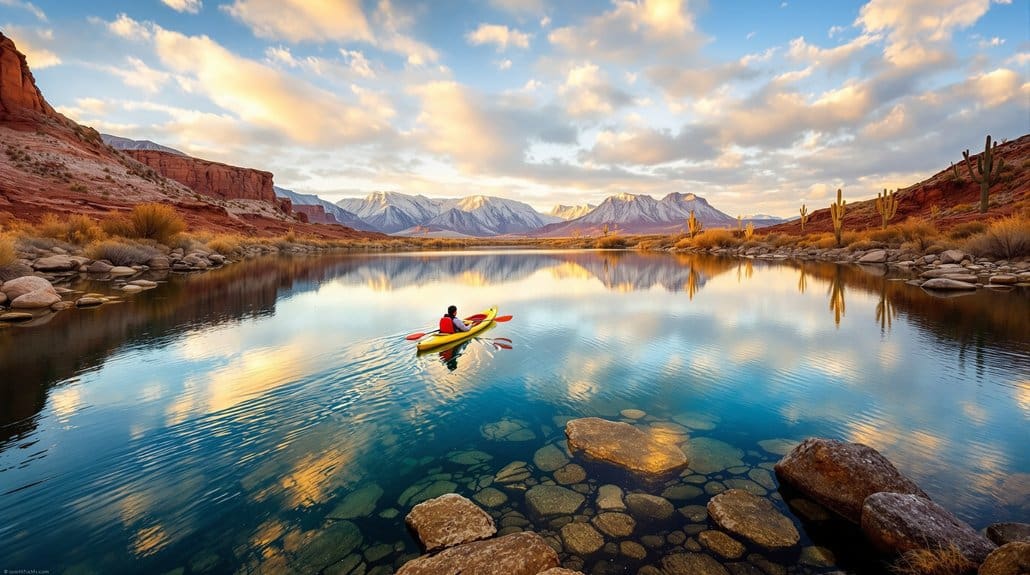
If you want calm, scenic winter paddling without the crowds, start by picking a reservoir that matches how adventurous you feel and what gear you’ve got—Blue Ridge (Happy Jack) and Big Lake sit up high with cool, clear water and pine or spruce shorelines so bring layers, a dry bag for your phone, and a low-profile kayak or canoe that handles narrow coves; Lake Pleasant and Patagonia sit lower and usually warm enough for comfortable paddles, so you can explore islands and bird-rich inlets with just a light jacket, binoculars, and a basic paddle leash; and Watson Lake’s short, protected routes among giant granite boulders are perfect if you want a quick, scenic outing with rentals available, so scope the launch and wind forecast, tell someone your route and expected return time, wear a PFD, and plan to stay near shore until you know the local chop and current. You’ll choose Blue Ridge Reservoir for solitude among pines, Big Lake for trout-filled, clear water, Lake Pleasant for canyon-lined warmth and island runs, and Patagonia Lake for birding and mellow, boat-in campsite access, so pack layers, a phone dry bag, water, and a simple first-aid kit before you push off. Gear up with a touring jacket and accessories for the full paddling experience, including reliable waterproof protection.
Which Lake Fits You : Choose by Difficulty, Scenery, and Access
Pick the lake that matches your skills and what you want to see: if you want an easy, family-friendly outing go for Fool Hollow with its calm water and rentals, if you’re up for longer, choppier canyon runs try Lake Pleasant but stay near shore to avoid powerboats, and if you want quiet, high-elevation fishing or pine-framed channels consider Big Lake or Blue Ridge (bring cold-water gear and plan for remoteness). Before you launch, check wind and boat-traffic reports, wear or carry a proper PFD and layers for cold water, and pack a whistle, pump or bailer, and a small first-aid kit so you’ll handle surprises; think about access too, some spots have boat-in campsites or limited parking. Start simple if you’re new, scout a short route and time of day with calmer conditions, then build to longer trips as you gain confidence and gear. Consider also bringing a GoPro and reliable mounting options to capture your trip and keep equipment secure.
Skill Level & Conditions
When you’re choosing a winter paddle, think about what you can handle and what you want to see, because that will steer everything from the gear you pack to the launch you pick; bring layers you can shed, a PFD you’ll actually wear, a dry bag with a spare hat and phone in a waterproof case, and a small pump or bilge for tricky stretches. For paddling in Arizona pick a lake that matches your skill level and appetite for solitude: beginners will like calm waters and no‑wake coves at Fool Hollow or Patagonia, families can rent and stay sheltered, intermediates enjoy Lake Pleasant’s long canyon runs or Blue Ridge’s narrow, technical arms where motorboats aren’t allowed, and experienced paddlers should expect high altitude, colder water, and quick weather changes at Big Lake. We also recommend carrying a basic bilge pump and other essential gear for safe outings on desert reservoirs, especially when access and services are limited, so consider bringing basic bilge pumps on your trip.
Scenery & Accessibility
Because scenery and access shape the whole trip, start by deciding how much driving, solitude, and shoreline variety you want, and then match that to the lake that fits your skills and gear. If you crave canyon walls and easy ramps, Lake Pleasant gives varied shorelines and short drives, bring a map of launch points and a spare paddle. Want quiet, pine-fringed channels, and a no-motor vibe? Blue Ridge Reservoir on the Mogollon Rim rewards patience, but check seasonal closures and park only in designated spots. For high-country solitude try Big Lake, dress for cold water and altitude. Fool Hollow sits under ponderosa pines with rentals and easy access, while Patagonia offers birding and boat-in campsites for slow, scenic days. Also remember to pack cleaning supplies like durable sponges and drying towels to keep gear and kayaks ready between outings and protect local waters from contaminants, especially when moving between lakes — a good habit for responsible paddlers and clean-up essentials.
Exact Put‑Ins and Short Winter Routes to Try Today
Start at easy shoreline launches like the Granite Dells ramp at Watson Lake or the north ramp at Patagonia Lake where you can get on the water quickly, stash a spare paddle and warm layers in a dry bag, and scope the mouth of coves for sheltered lines that form short, 1–3 or 2–6 mile loops. Pick routes that hug the shore or follow pine‑lined arms at Blue Ridge Reservoir or the Playa del Sur fingers at Lake Pleasant so you’re never far from land if the wind builds, and check rules and current access (reservoir closures or no‑wake zones) before you put in. If you want the simplest day, choose a main boat ramp like Fool Hollow’s, paddle a shoreline loop, watch for afternoon gusts, and turn back early if conditions change — you’ll get a short, scenic outing without getting stuck. For more comfortable winter trips, consider a stable touring kayak and gear suited to cold-weather paddling, like layered clothing and a reliable dry bag for spare gear and safety items, which helps beginners and experienced paddlers alike stay prepared on the water; see stable touring kayak resources for guidance.
Easy Shoreline Launches
You’ll often find these easy shoreline launches are the quickest way to get on the water in winter, so plan to arrive with your boat, PFD, and a small safety kit ready, scan the shoreline for a low‑slope pebble or sandy spot to set in, and expect short, sheltered paddles that let you warm up and explore without committing all day. Head to Blue Ridge Reservoir’s pebble-and-grass edges off Forest Road 751 for a protected 1–2 mile pine canyon paddle, or stroll from Watson Lake’s main parking launch into the Granite Dells to weave among boulders for a quick, scenic outing, and don’t miss Patagonia Lake’s Greenway sandy entry for an easy birding paddle; check access, dress in layers, secure gear, shove off gently, and stay near shore. Also consider bringing quick-dry shorts for comfort and faster drying when you get off the water with essential gear.
Short Loop Routes
If you want a short, satisfying paddle without fuss, pick one of these quick loop routes and plan to be on the water within an hour, bringing a PFD, a dry bag with a warm layer, a small safety kit (whistle, phone in a waterproof case, and a paddle leash), and a map or app showing the put‑in so you don't wander into open water on windy days. Launch Sandy Beach at Lake Pleasant for a sheltered 3–4 mile loop around coves and islands, stick close to shore when winds rise. At Patagonia Lake use the campground launch to cruise the protected east no‑wake zone for birdwatching. Fool Hollow Lake’s west marina gives you a ponderosa‑lined 2–3 mile loop, rentals make it easy if you travel light. Don’t forget to bring appropriate clothing and gear from our selection of paddling essentials, like quick‑dry shirts and safety accessories for kayak adventures.
Winter Wind Shelters
Winter days often bring steady winds, so pick launch spots that tuck you into pockets of calm, like the FR‑751 day‑use lot at Blue Ridge Reservoir where steep pine canyon walls shelter northern coves, the Granite Basin or Watson Lake Park ramps in the Granite Dells where big boulders block gusts, the northeast Shoreline access at Lake Pleasant that drops you into narrow, cliff‑lined inlets, Fool Hollow’s main ramp that opens into ponderosa‑backed coves, or the Mesa/Fountain Hills side of Lake Saguaro that leads into river arms lined with cottonwoods. You’ll look for obvious wind shelters, put in where canyon walls or boulders cut fetch, plan short sheltered coves loops, wear layers, secure a VHF or phone, and paddle with a partner, aiming for calm 30–90 minute outings. Consider choosing a stable day‑touring kayak designed for beginner‑friendly tracking and comfort, such as those featured in our day‑touring kayak selection.
Gear, Clothing, and Safety Checklist for Cold‑Season Paddling
Because cold water and wind change the game fast, start by planning what you’ll wear and bring as if staying dry and warm is mission one, since hypothermia can sneak up even on mild days. You’ll wear a Coast Guard‑approved PFD that fits snugly, layer clothing with a moisture‑wicking base, insulating midlayer, and windproof shell, and stash spare dry bits in a waterproof dry bag so a surprise dunk doesn’t end the day. Bring neoprene booties and gloves when temps drop, pack phone in a case, whistle, compact kit, insulated bottle and emergency bivy, and carry a VHF or charged cell with power bank. Check wind and water temps, file a trip plan, add high‑vis gear for low light, and stay free, smart, and ready.
Rentals, Fees, and Launch Logistics by Lake
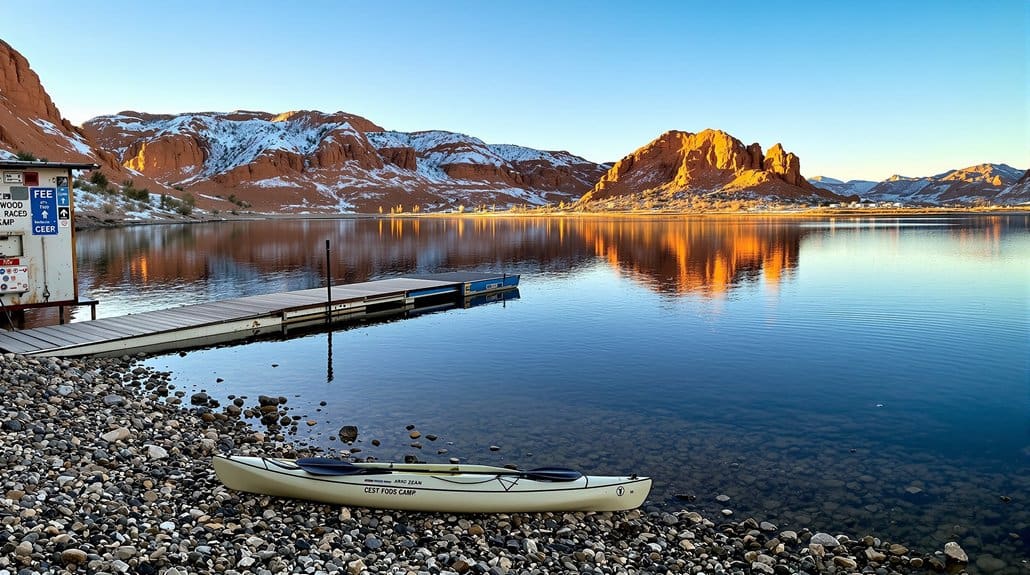
Now that you’ve sorted clothing, safety gear, and a dry bag, next look at where you’ll actually get on the water and what it’ll cost, because launch setup and rentals change how you plan your day. At Watson Lake, Prescott Outdoors rents solo and tandem kayaks and SUPs for about $15/hour, with a small launch and nearby parking, so arrive early for a good spot. Fool Hollow charges about $7–$10 per vehicle, J&T’s rents kayaks and canoes near $20/hour, so factor entrance fees into timing. Blue Ridge has no motor rentals and limited FR 751 parking, so pack light and expect a simple launch. Lake Pleasant varies by ramp and marina, and Patagonia Lake State Park through Arizona State Parks offers on-site kayak rentals and standard day-use fees.
What You’ll See : Wildlife, Water Conditions, and Best Months
When you push off the shore, keep your eyes peeled and your pace relaxed, because quiet winter mornings give you the best shot at wildlife and calm water—scan tree-topped ridges for bald eagles and osprey, watch rocky inlets for trout tailing near the surface, and sweep sheltered coves for herons, ibis, and flocks of ducks. Head to Blue Ridge Reservoir in December–February for minimal motor traffic and eagle sightings, paddle Big Lake December–March to spy rainbow and brook trout near rocks, and aim for Lake Pleasant’s glassy mornings December–February before afternoon breezes arrive. Bring polarized sunglasses to spot fish, a light wind jacket, spare paddle, and a VHF or phone in drybag, move slowly, and keep noise low to increase encounters.
Some Questions Answered
What Are Arizona's Best Kept Secrets?
Arizona’s best kept secrets are quiet desert oases and Tribal waterways where seasonal wildlife shows up, you’ll paddle calm coves, watch herons and migratory ducks, and find freedom from crowds, so check access rules, carry permits, layers, water, and a whistle, and bring a lightweight kayak or paddleboard with a pump and leash; start at nearby boat ramps early, respect tribal rules, pack binoculars, and plan for sudden weather changes.
Where to Go Kayaking in Arizona?
Go kayaking at Lake Pleasant for canyon paddling and calm islands, or try Blue Ridge for quiet, no‑motor stretches, Fool Hollow for rentals and gentle wildlife viewing, Big Lake for trout and alpine solitude, and Patagonia for warm winter birding and desert springs nearby; pack layered clothes, PFD, dry bag, basic repair kit, binoculars, and water, check closures and weather, launch early, paddle conservatively, and leave no trace.
What Part of Arizona Stays Warm in Winter?
The southern lowlands stay warm in winter, so head to Lake Havasu, Lake Pleasant, and Parker-area reservoirs, or relax at desert golf resorts and nearby thermal springs when you want milder weather and paddling options. Bring layers, a dry bag, warm hat, water, and a pump or repair kit, check wind and water temps above 50°F, launch early for calm, and scout birding and launch spots first, don’t push limits, stay safe.
Where to Kayak on Lake Powell?
You’ll paddle Lake Powell from Wahweap or Glen Canyon marinas, explore Antelope and Lone Rock for easy trips, or plan backcountry launch sites for multi-day canyon runs, camping on cliffs and searching Navajo ruins while you’re ashore. Check wind forecasts, bring water, a dry bag, pump, maps, permit info for overnight backcountry, and a means to call for help, and aim for early launches so winds don’t ruin a crossing.