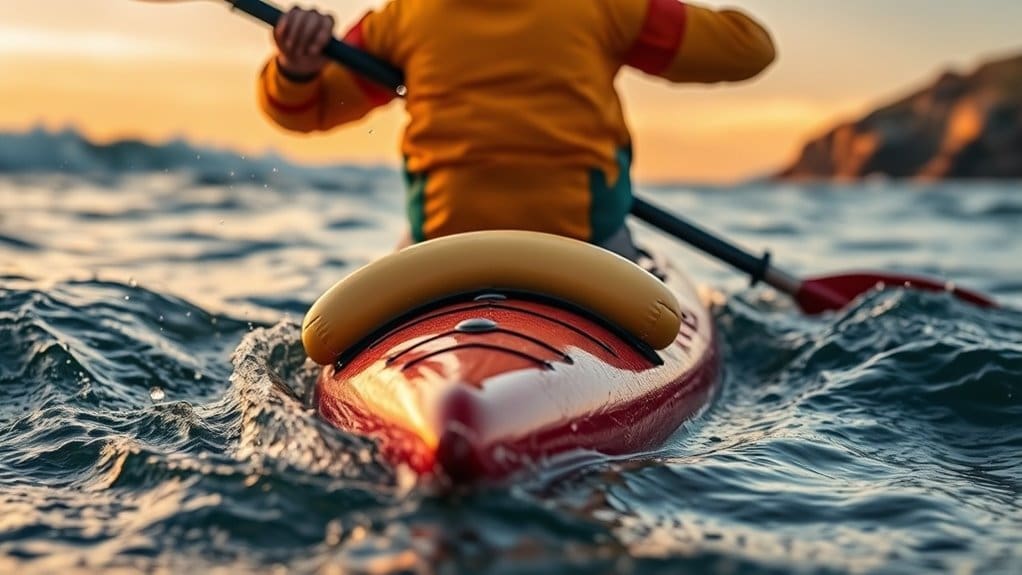
You’ll want a compact high‑buoyancy paddle float, a spare foam float or tape, a small high‑volume pump, stirrup or rope loop, PFD and throw bag, and a whistle or VHF, and you’ll use them in a calm, practiced sequence: hold the kayak, hook a knee in the cockpit, secure the paddle and fit the float, rig a stirrup under the shaft, press down on the float, step up and swing your legs in, then pump out and trim to paddle away — follow the next steps to master timing and troubleshooting.
Some Key Takeaways
- Secure paddle and paddle float immediately, keeping one hand on the coaming and the paddle shaft across the cockpit to stabilize the kayak.
- Partially inflate the paddle float, slide the blade fully into the slot, then finish inflating until firm but slightly compressible.
- Feed and position a stirrup or rope loop under the hull, adjust length for a 20–30 cm knee height above the coaming.
- Use a floating stirrup or shaft-under-bungees as a re‑entry step, keeping one hand on the coaming and one on the shaft for balance.
- Practice staged progression (shore assembly → static on-water → ankle-depth solo → deep-water) until eight to ten consistent successes.
Who This Tutorial Is For and the Problem It Solves
If you can’t reliably roll and you paddle in places deep enough that you can’t just stand up, this tutorial is for you, because it gives a simple, repeatable way to get back in solo using a paddle float as an outrigger. You’re likely a sea kayaker who loves open water and freedom, and you need a self rescue that doesn’t rely on a buddy, a perfect roll, or shallow shores. This method stabilizes a flooded or wobbly boat by adding lateral buoyancy with an inflated paddle float or a drybag substitute, letting you shimmy onto the rear deck and slide back in. Practice inflation, attachment under calm, warm conditions, keep your float under deck rigging, and rehearse the sequence until it’s natural. An inflatable paddle float provides reliable lateral buoyancy to stabilize the kayak during the re‑entry.
Quick Overview: Paddle-Float Deep Water Re-Entry in 8 Steps
You’ve practiced inflating and fitting a paddle float on shore, so now think of this quick overview as the short map you’ll follow when you’re wet and the kayak’s not cooperating. After a wet exit, hook your knee into the cockpit to keep the boat close, retrieve your paddle and paddle float, and fit the float over one blade quickly, like you did on land. Turn the kayak upright by reaching under the hull, push up on the far coaming and pull the cockpit toward you, then lay the paddle shaft across the stern with the float in the water to form an outrigger. Shimmy onto the rear deck using the shaft for purchase, swing your legs into the cockpit, stabilize, stow the float and pump out water. Choosing the right rescue gear, like a properly rated rescue throw bag, improves your chances of a successful re-entry.
Essential Gear Checklist: Paddle Float, Stirrup, Pump and Safety Kit
Before you head out, check that your paddle float (inflatable or foam) is stowed where you can reach it quickly, that a floating stirrup or rope loop is ready to clip on, and that a compact hand pump rated for cockpit evacuation is within easy reach so you won’t fumble in the water. Wear a well‑fitting PFD, keep a whistle and a waterproof VHF or personal locator beacon on your person, dress for immersion, and practice inflating the float on shore so you know the partial‑inflate, slot‑paddle trick before you try it in the surf. Finally, clip a short rescue cord or carabiner to secure the blade or buddy up for assisted re‑entries, and make a habit of rehearsing kit layout and pumping drills until they’re smooth and automatic. Choose a paddle float that is inflatable and sized to your paddle and kayak for reliable buoyancy and easier re-entry.
Paddle Float Setup
Start by laying out the gear you’ll actually need and placing it where you can grab it without digging through hatches, because in a re‑entry every second and easy reach matter; carry both an inflatable paddle float—choose a compact, high‑buoyancy model that packs small but gives solid support—and, if you can, a solid‑foam spare clipped to the seat or tucked under deck bungees, plus a lightweight stirrup (a floating rope ladder made for marine use) and a small hand pump or bilge pump within arm’s reach so you can set a step and pump out the cockpit after you’re back in. Before launch practice fitting the paddle float, inflate it briefly to find leaks, learn to attach to paddle blade using the partial‑inflate trick, and stow gear so you can deploy without opening hatches. Keep a dedicated throw bag nearby for rescues and quick reach‑assists throw bag.
Safety Kit Essentials
You already practiced fitting the paddle float and rigging a stirrup on shore, so now think about what you’ll actually have on you when you end up in the water: bring an inflatable paddle float (or a small foam spare), a floating stirrup or rope loop you can clip to the paddle blade, and a high‑volume hand pump that moves at least about a liter per stroke so you can push water out fast and bring the boat back to trim. Pack those items where you can reach them with one hand, under foredeck bungees or clipped to the coaming, and wear a well‑fitted PFD rated for sea use, because buoyancy keeps you free to work. Add a compact safety kit—whistle, waterproof VHF or PLB, spare leash, basic repair bits—and practice it all often. For safer sessions, review Essential Paddle Float Tips before heading out so you keep beginner safety fundamentals in mind.
Pre-Capsize Prevention and Immediate Actions After Flipping
Before you shove off, practice balance drills like hip snaps and edging in calm water, stow the paddle float under deck rigging so it’s quick to grab, and steer clear of choppy currents, big wakes, or windy spots when your self-rescue gear or skills aren’t sharp. If you do flip, stay calm, perform a controlled wet exit keeping the paddle, float on your back with one leg hooked in the cockpit to keep the kayak close, then locate the paddle and float right away. Start stabilizing by sliding the float onto a blade (partially inflate if needed), keep a foot in the cockpit for contact, and prepare to right the boat before you try to climb back in. Bringing essential gear like a spare paddle and a bilge pump can make the rescue quicker and safer—store them where they’re easily reachable, such as under deck rigging or in a dry hatch.
Preventive Balance Drills
Practicing balance drills on calm water will pay off every time you paddle, because those few minutes of low braces, edge control, and shallow lean-to recoveries teach your body to correct a wobble before it becomes a capsize, and they let you rehearse the exact motions you’ll need if you flip. You should practice static balance for 5–10 minutes, working low braces and deliberate edge control, then run sets of 6–10 shallow lean-to recoveries to build muscle memory, because quick corrective strokes stop rolls early. Do wet exits twice per session, keep one leg hooked so you retain the boat, and time yourself finding paddle and paddle-float gear under 20–30 seconds, finish with a 60–90 second gear check. Consider keeping a properly rated rescue throw rope accessible on your deck for added safety and assisted recoveries.
Immediate Stabilization Steps
If a roll feels inevitable, try a low brace first, keeping your elbows bent and the paddle blade flat to deflect the water and slow the roll, because those quick, shallow corrections usually stop a flip before it happens; if you do go over, float on your back with your feet toward the kayak, hook one knee into the cockpit coaming to keep the boat close, and hold onto the paddle while you get your bearings, since staying attached to the kayak and paddle makes every next step easier. Before you launch stow a paddle float where you can grab it, practice attaching it on land so you won’t fumble, then after a wet exit keep contact, retrieve and rig the float, form an outrigger and use it to right the boat, your core self-rescue skills ready. Carry a spare prusik cord for prusik cord safety to secure your kayak or assist in stabilizing the paddle float when conditions get rough.
Securing Your Paddle and Stabilizing the Kayak Before Rigging the Float
Get your paddle under control right away, since a loose blade or a drifting boat makes the whole float setup harder and slower—hook a leg into the cockpit, keep your head up at the surface, and grab the far coaming so the kayak stays close while you sort the paddle. Reach for the paddle shaft, slide a blade under the hull or along the cockpit rim so it’s reachable and perpendicular, and if it’s free, swim to it, orient one blade upstream, then snap the shaft across the stern so the blade sits where you’ll mount the paddle float. Tuck the shaft under deck bungees or a deck line, keep fingers on the cockpit coaming and a firm grip on the shaft, and don’t let the boat roll while you rig.
How to Fit and Inflate a Paddle Float Correctly (Blade, Tension, Leak Check)
Once you’ve got the paddle positioned across the stern, slide the blade fully into the float’s slot so the tip meets the float’s inner end and the shaft sits centered in any sleeve, because that keeps the float from slipping when you climb back on. Tighten the buckle or strap so the float won’t rotate, leaving about 2–4 cm of shaft exposed for your grip, and if you like, tuck that bit under a deck line to steady things. Part-inflate to slot the blade in rough or cold conditions, then inflate the float until firm but slightly compressible—around 80–90%—check valves, and do a shore-based leak check by listening and feeling seams, or submerge briefly. Practice this until it’s second nature.
Rigging a Stirrup Under the Hull and Positioning for a Safe Step-In
Now rig the stirrup so it runs under the hull from your side toward the far side, with the knot or pulley facing you and the loose loop tucked under the boat, because that orientation gives you a jammed, secure step when you put weight on it instead of a rope that slips off. After your paddle float is clipped and inflated and the shaft lies across the cockpit, feed the stirrup loop between the paddle shaft and hull so it won’t ride outside and slip, then adjust length so the standing knee sits about 20–30 cm above the coaming, this lets you swing a leg without heaving the boat. Keep one hand on the shaft, one on the coaming to counterbalance, trim slack and hold pressure on the paddle float as you prepare to step-in.
Step-by-Step Deep Water Re-Entry: Enter the Stirrup, Swing the Leg, Slide and Sit
You’ll start by clipping the stirrup under the paddle shaft and facing the stern so you can grip the far cockpit coaming with one hand and the paddle with the other, making sure your knee will land close to the cockpit rim when you step up. Slip your knee over the shaft into the stirrup, press your foot down and drive that knee up while pushing the paddle down and pulling the coaming toward you to lift your hip onto the rear deck, then shimmy forward keeping steady downward pressure on the paddle float so you resist roll. Once your chest is on the deck and your legs are pivoted into the cockpit, sit up, stow the float or skirt as needed, pump out any water and settle your balance before you paddle away.
Enter The Stirrup
After you’ve got the paddle float secured to one blade and the stirrup looped under the shaft so the step sits up by the cockpit rim, get yourself into position with purpose and calm—face the cockpit, grip the coaming with both hands, hold the paddle shaft steady and keep the float braced perpendicular to the hull so it acts like an outrigger; that extra width matters when you put your foot in the stirrup. Slide the stirrup rope until the loop’s knot is secure and the step faces you, then slip your foot in while keeping downward pressure on the shaft and float so the boat won’t roll away. Feel for stable bite against the coaming, engage the braced foot, and breathe—this steady base buys you the freedom to complete the next moves safely.
Swing The Leg
Swing your free leg up and forward, using a strong kick and keeping your hands braced on the coaming and paddle shaft so the float stays steady, because that controlled motion is what gets your weight back onto the boat without tipping it. Plant one foot in the stirrup under the hull, keep steady downward pressure on the paddle float with your hands, and push down hard while you kick the free leg up onto the rear deck, shimmying it across as you lean slightly toward the float to counterbalance. Move slow, breathe steady, and expect a few tries if you’re tired or cold, repositioning the stirrup or paddle float if the boat rolls, aiming to get both legs into the cockpit before finishing the climb.
Slide And Sit
Keep your chest low over the stern and your hands tight on the coaming and paddle shaft, because that close, controlled position is what lets you slide onto the deck without tipping the boat; keep the paddle float pressed down with your foot in the stirrup, extend that leg to lift your knee to deck level, and maintain firm, steady downward pressure so the float stays stable. Swing your free leg up and hook it on the rear deck, then shimmy forward, sliding your hips and torso onto the deck while you keep bracing, feel for the cockpit rim and pivot, and slide into the cockpit until you can kneel and stabilize. Once seated, secure or stow the paddle float, pump out water if needed, check trim, and breathe.
Bailing and Pumping Technique to Regain Trim and Mobility After Re-Entry
Getting water out quickly will make the rest of the recovery a lot easier, so grab your hand pump or sponge, lean one knee across the cockpit rim for stability, and start short, strong strokes with the pump hose pointed over the stern so water leaves cleanly and the boat tips back toward level; you’ll want to pump until the waterline is well below the coaming so your next roll won’t swamp you, but don’t spend forever—especially in cold conditions, aim for enough freeboard to paddle safely and finish drying once you’re sheltered. Keep a paddle float pressed down if you’re using one, watch trim as you pump and move loose gear forward to raise the stern, then stow pump and float, reattach skirt, and test paddle.
Partner-Assisted Variations and When to Use Single Versus Assisted Re-Entry
When conditions or your energy tell you to accept help, pick the partner-assisted option, because it buys stability, speed, and a lot less shivering if the water’s cold; look first at wind and chop, how much water’s inside the kayak, and whether the boat’s sides are high or oddly shaped, and if any of those are a problem call for that extra hand. You’ll use partner-assisted when waves, cold, or a tall hull make single work risky, one person steadies the bow while the other braces the far cockpit so you shimmy onto the rear deck and slide in, that extra grip dumps water and steadies roll fast. If you’re alone, set a paddle float and stirrup, step up, then haul yourself in, single-assisted only when calm, warm, and confident.
Troubleshooting Common Failures and Progressive Drills to Build Confidence
If your paddle-float re-entry keeps stalling, pause and take a quick, calm inventory—look for a soft or leaking float, a twisted or trapped skirt, your leg stuck under the rim, or the kayak sitting with the bow or stern too low—and fix those before trying again. When you train, practice the partial-inflate/slot method on calm water so setup time falls to thirty to sixty seconds under stress, and carry a small pump and a spare valve or tape for quick fixes. Use a stirrup or rope loop under the shaft to step up, it saves your upper body and makes sliding in repeatable, especially with cold, buoyant legs. Progress from shore assembly to static setup, partner back-deck help, ankle-depth solo, then deep water until you nail eight to ten straight successes.
Some Questions Answered
What Is the 120 Rule in Kayaking?
The 120 Rule says you should stop solo re-entry attempts after about 120 seconds, you’ll secure yourself to the kayak, signal for help, and conserve energy instead, because fatigue and cold sneak up fast. Practice so your paddle-float or stirrup re-entry stays well under that time, keep rescue signaling gear working, follow kayak etiquette by not endangering others, and do routine gear maintenance so your float, pump, and leash perform when you need them.
What Is the Correct Order for a Water Rescue?
Start with a quick risk assessment, call for help and use clear verbal communication so everyone knows roles, then attempt self rescue if you can safely, keeping your paddle and gear, make a controlled wet exit and rig a paddle-float or stirrup to re-enter, bail or pump water, stow equipment, and reassess conditions before moving on; if conditions or injuries forbid, prioritize flotation, signal for assisted rescue and wait.
How to Re-Enter a Kayak in Deep Water?
You re-enter a kayak in deep water by stabilizing the boat, fitting a paddle float to form an outrigger, then using the paddle for deep water balance as you shimmy onto the stern, pivot, and slide in. Hook a leg to keep the kayak nearby, keep calm to save energy, kick horizontally while levering down on the paddle float, then sit, stow the float, pump out water, and practice this with a partner until it feels natural.
What Muscles Does 1 Hour of Kayaking Work Out?
One hour of kayaking works your upper back, lat muscles and rear delts, brings your core and obliques into constant use for rotation and balance, taxes your forearm grip and biceps from holding and feathering the paddle, and recruits hip flexors, glutes and quads for bracing and hip‑snap power, while leaving you breathy enough for a steady burn; check for shoulder fatigue, carry a spare paddle and stretch afterwards.


