You paddle winter swells smart when you read swell angle and period—look for long NW/WNW groundswell (14–18s+) that wraps past the Channel Islands—match it to mid‑to‑high tide and an offshore E–NE breeze, pick points/reefs for long periods or protected beaches for shorter windswell, bring a step‑up board, sealed 4/3 suit, leash and reef boots, warm up and scout from shore, bail if onshore gusts, lightning, heavy runoff or scary shorebreak, and keep going for more tips.
Some Key Points
- Paddle when long-period NW–WNW groundswell (14–18s+) aligns with local swell angles and buoy heights indicating island wrap or direct energy.
- Wait if onshore winds exceed 15–20 mph or gusts blow out faces, creating chopped, unpredictable conditions and unsafe paddle-outs.
- Prefer mid-to-high tide windows for most Santa Barbara/Ventura points; avoid low tides that expose reefs and close out peaks.
- Stand down for strong rip currents, heavy rain runoff, lightning, or water-quality advisories that significantly increase risk.
- Match your board, fitness and leash setup to expected wave faces; if you can’t sprint 100–200 yards or handle hold-downs, don’t paddle.
Read the Forecast: Which Swell Angles and Periods Actually Reach Santa Barbara?
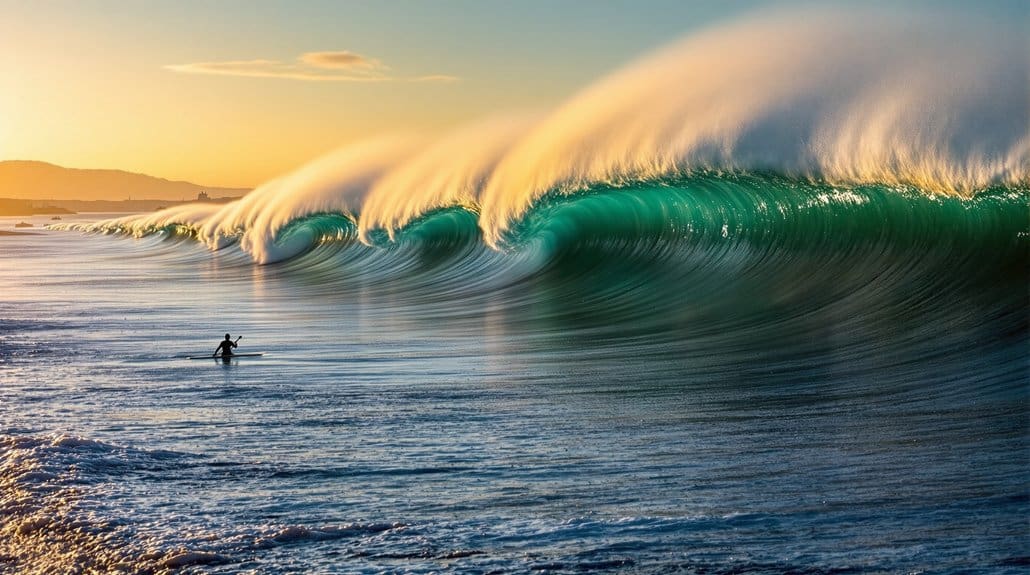
If you want to know whether a swell will actually light up Santa Barbara, start by reading the direction and period on the buoy and swell model. You’ll watch for North Pacific swells that carry a long-period swell, because 14–18+ seconds are what bend through the Channel Islands and charge the point breaks, while short-period windswell under 10–11s just makes chop. Focus on swell angle, true NW–WNW or a WNW swell around 290°–330°, and match that with swell period and size at the offshore buoy, since 12+ ft at 16–18s often means waves will refract around the islands. Check timing, trust the model’s angle, and plan to paddle when the buoy, tide, and local access line up. For safer, more controlled paddling when conditions are busy, consider choosing a kayak with a rudder-equipped setup to help track and steer through variable swell and wind.
Match Tide and Wind: When Offshore Winds and the Right Tide Make Winter Swells Rideable
Scanning the wind and tide together will tell you whether a promising swell actually turns into a rideable session, so start by checking the wind forecast for steady offshore breeze—usually east to northeast—around 5–15 knots and the tide chart for your specific break, because points in Santa Barbara and Ventura like mid-to-high tides while beach breaks often want a falling tide; aim to arrive 30–90 minutes before the swell and peak tide so you can see how the wind is settling, how the swell period (14–18+ seconds is what really wraps around the Channel Islands) is filling in, and whether any onshore gusts or very low water are going to close out the peaks, and bring a jacket, a leash, and a little patience to wait for the cleaner sets rather than charging into sloppy waves. You’ll watch the tidal window and wind together, pick the right moments to paddle out, favor longer swell period energy for point breaks at mid-to-high tide, avoid onshore blow or very low tides that wreck peaks, and scout a bit before committing, because freedom on a good winter swells day starts with smart timing and calm judgment. Also consider bringing reliable lighting and safety gear for early or late sessions, including a headlamp for kayaks.
Choose the Right Spot: Picking Beach, Point, or Reef Breaks for Winter Groundswell
When you’re picking a spot for winter groundswell, match the break to the swell period and direction—points and reefs will shine on long-period NW/WNW swells that wrap and peel, while beach breaks can be safer when the swell is short or inconsistent. Check the tide and local shielding first, plan to paddle out at a mid-to-high tide for smoother takeoffs at points and reefs, and bring a board that can handle longer, drawn-out faces or punchy shorebreaks depending on what you expect. Start by scanning swell period and wind, consult charts or locals for reef hazards and current windows, and if you’re unsure pick a protected beach where shifting sandbars let you practice without getting worked. Also consider your craft and gear—river kayaks and related safety equipment can make a big difference on varied winter surf, so choose what fits your plan and skill level, especially when paddling unfamiliar breaks with river kayak basics.
Match Break To Swell
Don’t overthink it—start by matching the swell’s period and direction to the type of break you’re headed to, because that first choice usually tells you whether you’ll have a fun session or a frustrating one. For winter swells, read the swel period and pick beach breaks for shorter, choppier 8–12s windswell when peaks are messy and forgiving, point breaks for 14–20s groundswell that wants to peel with speed, and reef breaks only for 16s+ energy when you can handle hollow power. Match swell direction to the coast, check tide windows and bathymetry so points and reefs aren’t flat at low, and bring the right board, leash, and local patience, scouting from shore first—then paddle out if the break and conditions truly match you. Also consider your fin box setup and compatibility with replacement fins for performance and safety fin box options.
Tide And Wind Timing
If you want the best shot at a fun winter groundswell session, start by matching tide and wind to the break you plan to surf, because those two things will usually decide whether waves peel or just dump on you; aim for mid- to high-tide at exposed beach breaks so the sandbars don’t close out, but pick mid-to-low for many points and reefs where the bottom can funnel the swell into longer, cleaner lines. You’ll want morning offshore winds for point breaks and reef breaks, they groom faces while onshore wind will mush groundswells, so check tide tables and wind forecasts, look at swell period on buoy reports, and watch surf cams, then pick your first choice and two alternates, pack a reef boot if needed, and go. For safety and convenience, bring a compact bilge pump and basic repair kit so you can manage minor water ingress and small gear failures on the water, especially during winter sessions where conditions change quickly and help can be farther away; consider a small bilge pump as part of your kit.
Gear and Fitness Checklist: Board, Fins, Wetsuit, and Paddling Readiness for Big Winter Surf
Start by thinking through the kit and your fitness like you're packing for a purposeful mission: pick a step-up shortboard that’s about 2–6 inches longer than your everyday board and has a bit more volume so you can paddle into 8–15+ foot winter faces without getting left behind, check whether a thruster will give you the control you want on point breaks or a quad will give you extra drive and hold on hollow WNW swells, and make sure your fin setup feels right by testing it in smaller days or rentals before you trust it on a big one. For winter surf, confirm board volume gains of about 5–15% so you still duck dive, wear a wetsuit 4/3 with sealed seams plus booties for longer sessions, and build paddling fitness with paddle intervals and core work so you’ll stay safe and free out there. Also make sure you’ve got reliable kayak lighting and gear if you plan to paddle after dark, especially for fishing or navigation on winter outings with low light safety essentials.
Know Your Limits: How to Decide If a Session Is Beyond Your Skill Level
Start by being brutally honest about size: if waves are head‑high or above with strong shorebreak and close sets, ask whether you can comfortably duck‑dive, make the outside peaks, and handle long hold‑downs before you paddle out. Check the swell period and direction, watch for long‑period NW sets that push faster and harder, gauge rips and tide-driven currents, and think about whether your board and fitness match those demands — if you can’t catch and ride two consecutive waves in those conditions, it’s a clear sign to sit this one out. Bring the right gear, tell a buddy your plan, warm up, and if anything feels beyond your usual control, choose a smaller spot or a mellow day to build skills safely. Also make sure you have an up-to-date essential checklist to confirm you’ve packed safety and paddling gear appropriate for winter conditions.
Assess Wave Size Honestly
When you’re sizing up a winter swell, treat your own limits like gear you wouldn’t loan out—be honest and conservative, because head-high surf (about 1.0–1.5 times your height) and anything beyond brings stronger currents, steeper takeoffs, and punchier closeouts that amplify risk quickly. Look for consistent double-overhead sets or waves that feel like they’ll bury you, and ask yourself if your paddle fitness and breath-hold ability match the task, can you sprint 100–200 yards and survive multiple 20–30 second hold-downs? If you wouldn’t trust a step-up board or longer, higher-volume board in these conditions, don’t try it on a small shortboard. Factor in rip currents, strong offshore winds, wetsuit thickness needs, and unfamiliar break behavior, and drop your acceptable wave size at least one level unless your skill level and kit match. Also remember to wear appropriate protective gear like a properly fitted kayak helmet to reduce head injury risk while paddling winter swells and other surf conditions, and consider checking reputable retailers for quality options such as those catering to kayak helmet users.
Match Conditions To Ability
You’ll usually know pretty quickly if a session is past your pay grade, so trust what your eyes and body tell you: if the faces are routinely twice your board length or the NW swell period is long and punchy, that’s not just bigger surf, it’s a different animal that needs advanced timing, stronger paddling, and faster decision-making, so either pick a mellower break or sit this one out. Check local reports for swell period, tide conditions, and which surf spots bite hardest, because long-period winter swells make waves steeper and more powerful, rift currents can yank you off line, and mid-to-low tides can hollow up point breaks. Do a quick safety assessment, factor wetsuit thickness and mobility, respect surf etiquette, and don’t paddle into a session beyond your skill level.
Lineup Strategy and Crowd Management: When to Chase Lesser-Known Breaks or Stay Home
If you’ve got a big WNW swell on the forecast, don’t rush straight for the obvious Santa Barbara points, take a breath and think through the odds first—check buoy periods (16–18s and heights 10–15 ft mean the Channel Islands will reel a lot of energy toward those points), look at the swell angle and tide chart, and if the buoy shows a small angle or the islands are positioned to block the fetch, plan to stay home or drive to Ventura or SLO where waves and crowds will be more forgiving; scout multiple spots early, even pre-dawn, because a south wrap or tide-dependent peak can flip a hole-in-the-wall break from flat to firing later in the morning, and if you do end up chasing a crowded lineup, arrive early, pick a spot with easy paddle-outs or obvious rip channels, size up how many folks are in the water so you can match the group to your comfort level, and favor lesser-known beach breaks on smaller swells when you want more waves and fewer local politics.
Last-Minute Red Flags: Weather, Shorebreak, Rip Currents, and When to Cancel
You can be ready to walk away before you even strap a leash on, which is smart—after scouting peaks and deciding where you’ll sit, do a quick once-over for weather and water warnings that change a good plan into a dangerous one. If onshore winds are gusting over 15–20 mph you’ll get blown-out, choppy surf, so think twice and maybe cancel the session, especially with big NW swells wrapping into the coast. Watch for shorebreak, those knee-to-head closeouts that dump hard and can break spines, and scan for rip currents, which strengthen in long-period winter swells; if you’re not trained to fight them, don’t go. Avoid lightning storms, heavy rain runoff that fouls water quality, and sudden tide extremes that expose reefs.
Some Questions Answered
What Is a Good Swell Period?
A good swell period is usually a long period, around 14–18+ seconds, because that ideal period brings more swell energy and cleaner rides, while a short period under ~12s makes choppy, mushy waves. Check period measurement in forecasts, watch period variation and tide for the spot, factor beach slope and local wave predictors, carry leash and wax, and paddle early or wait for the peak, depending on crowd and conditions.
What Is the 12 Second Rule in Surfing?
The 12-second rule says if wave timing is under about 12 seconds it's usually a wind swell—choppy, fast-decaying, and local—while 12+ seconds means longer-period groundswells with more energy transfer and cleaner faces, so adjust paddle technique, board selection and rhythm training accordingly; watch tide effects and wind influence, use forecasting tools, follow safety protocols, manage crowds, bring step-up gear and fitness, and start with conservative lines until you read the wave.
When's the Best Time to Surf in California?
You’ll find the best time to surf in California in winter for big swell and challenge, and late spring–summer for mellower waves, warmer water, and smaller crowds. Check best tides for your local breaks, water temperature and wind patterns, scout entry points and parking logistics, learn spot knowledge and surf etiquette, watch light conditions for visibility, bring a wetsuit, leash, and patience, then paddle out when conditions match your skill.
What Is a 20 Second Swell?
A 20‑second swell is long‑period ocean energy from distant storms, you’ll see it in buoy readings and long range forecasts, it carries more period energy so waves group and hit harder, deepwater refraction and swell decay change how it shows at your break, check storm source and fetch length for power, watch the swell window and wave forecasting, bring a solid board, leash, and respect heavy, fast sets when they wrap in.