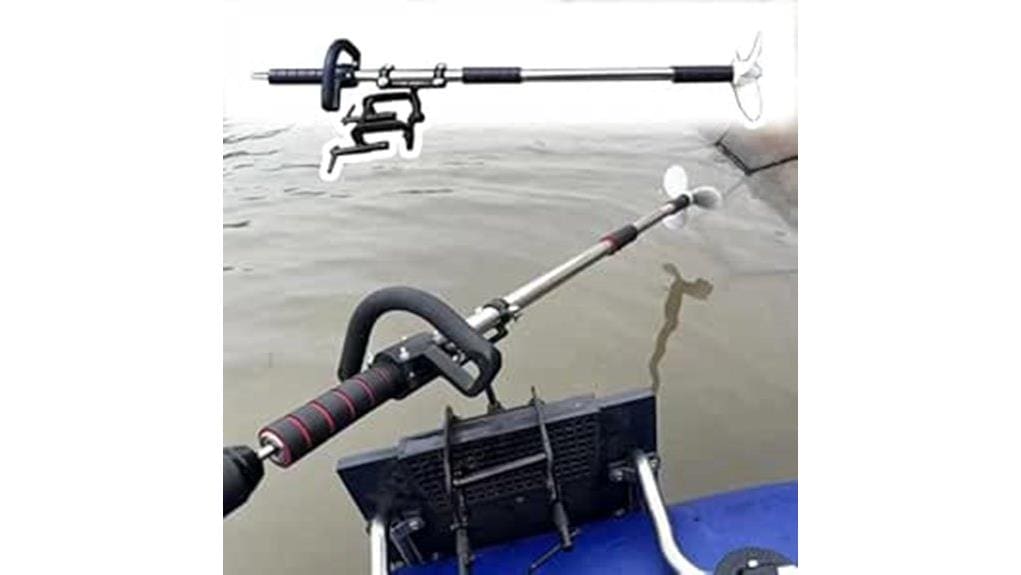

If you want a cheap, portable backup for a kayak or canoe, this aluminum alloy drill-prop kit converts a high‑torque cordless drill into a lightweight trolling prop in minutes. It clamps to a transom or gunwale, assembles fast, and gives short bursts of thrust good for emergencies, calm trips, or paddler beginners. Expect limited top speed, quick battery drain at full throttle, and modest vibration; rinse and store dry to limit corrosion. Keep going to see installation tips, performance notes, and buying advice.
Some Key Takeaways
- Lightweight aluminum alloy kit converts a cordless drill into a compact trolling motor for kayaks, canoes, and inflatables.
- Performance depends on drill torque and prop size; expect modest speeds and short bursts, not full electric-motor power.
- Mounting clamp and shaft are quick to install but require proper alignment and safety checks to minimize vibration.
- Corrosion-resistant finish and disassembly make it portable and low-maintenance, but rinse and dry after use.
- Best as an emergency backup or occasional use; consider dedicated outboards for regular or heavy-duty boating.
What the Aluminum Alloy Drill Propeller Kit Is and Who It’s Best For
While it attaches to a cordless drill, the Aluminum Alloy Drill Propeller Kit effectively turns your drill into a lightweight, portable trolling motor, giving you an affordable and simple propulsion option for small craft. You get lightweight portability without bulky batteries or complex mounts, so you’ll move a kayak, canoe or inflatable with minimal gear. It’s ideal if you want freedom on lakes, need backup when your main motor fails, or prefer a compact alternative to traditional trolling motors. Compared to heavy electric units it’s cheaper, easier to store, and perfect for emergency propulsion, short trips, and adaptive use. It’s a great match for inflatable kayaks and beginner kayaking enthusiasts who value compact, essential gear.
How to Install and Use the Drill-Powered Propeller (Step-by-Step)
Begin by gathering your drill, the propeller kit, and the included clamp or bracket—having basic tools (hex key or screwdriver) handy speeds the process. Mount the clamp to your transom or gunwale, attach the aluminum shaft and blades for quick assembly, and tighten hardware snugly. Perform safety checks: secure drill in chuck, confirm blade rotation clears the hull, wear gloves and eye protection. Verify shaft alignment with the hull to reduce wobble and vibration. Trial briefly in shallow water, then apply waterproofing steps on connections and fasteners. Detach easily for handheld use or storage when you want freedom. Consider adding a dedicated anchor system to improve stability while using the drill-powered propeller.
Real-World Performance: Speed, Handling, Battery Drain, and Noise
Because the drill-powered propeller converts your cordless drill into a direct-drive thruster, expect performance that hinges on drill torque, prop size, and mounting alignment rather than on integrated motor gearing or hydrodynamic tuning. You’ll get decent top speed on small kayaks if you use a high-torque drill and larger blades, though it won’t match dedicated electric motors. Handling stays intuitive; quick reversals and brief bursts work well, but sustained steering needs paddle input. Battery longevity depends on drill capacity and throttle use—full throttle drains fast. Watch prop wash and vibration levels; modest vibration can reduce thrust efficiency but stays manageable for casual trips. For casual kayakers and beginners, pairing this setup with a reliable basic bilge pump is a sensible safety and convenience choice.
Durability, Fit and Finish: Materials, Corrosion Resistance, and Portability
If you want a portable, long-lasting backup thruster, the aluminum alloy construction delivers the right balance of lightness and strength while resisting rust better than plain steel. You’ll notice a clean surface finish that sheds water and cuts drag; the anodized oxide layer adds corrosion resistance if you rinse after use. Edge tolerances on blades and rods stay tight, so vibrations stay low and performance stays predictable. Parts disassemble quickly and pack into a small transport case, letting you choose freedom over bulk. For inland use and emergency propulsion, the kit’s fit and finish feel sensible and deliberate. For kayakers looking to protect their gear between outings, consider durable outdoor kayak storage options to keep components dry and organized.
Should You Buy It? Pros, Cons, Alternatives, and Buying Tips
While it won’t replace a dedicated outboard, this drill-propeller kit gives you a lightweight, portable backup that’s ideal for canoes, kayaks, and inflatables; you’ll get good thrust, easy storage, and simple drill-powered operation at a fraction of the cost and weight of small motors. You should buy it if you want freedom, emergency propulsion, or a low-cost troll option. Pros: portable, versatile, inexpensive, simple fit. Cons: limited power, drill-dependent, generic support. Alternatives: small electric outboard, gas trolling motor, paddle. Buying checklist: drill compatibility, clamp fit, blade condition, weight. Check warranty concerns and return policy.
Some Questions Answered
Will This Propeller Work With Corded Drills or Only Cordless Drills?
It’ll work with corded drills if they match the propeller’s chuck and power delivery, but it’s designed for cordless use. You’ll want to compare torque and RPM: corded compatibility depends on drill speed and shaft size. Consider drill adapters for nonstandard chucks or shaft fittings. You’ll prefer a cordless for portability and water freedom, but a powerful corded drill with proper adapters can drive the propeller reliably in calm inland waters.
Is a Safety Kill Switch or Tether Included or Recommended?
No, a kill switch or safety tether isn’t included, and you should use one. You’ll want a kill switch or safety tether for quick engine cut-off if you’re tossed or the drill slips. Compared to relying on hand control alone, a tethered kill switch gives freedom to roam with less risk. Pick a durable, water-resistant switch or tether that clips to you and to the clamp/bracket for reliable emergency shutdown.
Can the Propeller Be Legally Used in Motor-Restricted Waterways?
Sometimes — it depends. You’ll need to check local legal considerations and access restrictions before using the drill propeller in motor-restricted waterways. Some jurisdictions treat drill-powered thrusters as motors and ban them; others allow human-powered or low-speed battery-assisted devices. Compare local rules, signage, and enforcement policies. If you value freedom, prioritize compliance: choose routes where propulsion is permitted or use the kit as a handheld/paddle aid to avoid violations.
How Loud Is the Propeller Compared With Electric Trolling Motors?
You’ll find the drill propeller quieter than many gas motors but louder than purpose-built electric trolling motors. Noise comparison: it produces noticeable whirring from the drill and blade, especially at high RPMs. Vibration levels can be higher because cordless drills aren’t balanced like marine thrusters, so you’ll feel more hand or hull buzz in handheld or clamp setups. If you value stealth, an electric trolling motor still runs quieter and smoother.
Are Spare Blades or Replacement Parts Available Separately?
Yes — you can usually get spare blades and replacement shafts separately, though availability varies by seller. You’ll find generic aluminum blades and shafts from aftermarket suppliers or the manufacturer’s support; OEM parts may be limited. Compare options for fit, corrosion resistance, and weight before buying. You’ll want spares if you value independence on the water, so carry at least one blade and a spare shaft for quick field repairs and continued freedom.