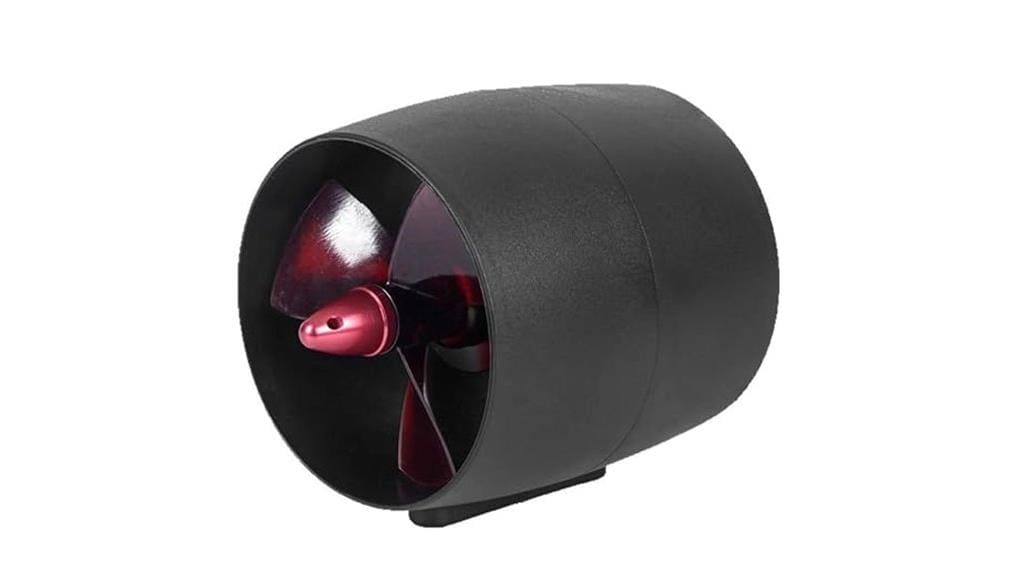
You’ll find the Aboiled 400W underwater thruster is a compact, energy‑efficient auxiliary motor for kayaks and SUPs that’ll give you roughly up to 5 kg of thrust and steady assistance at 12–24 V. It typically draws about 20 A nominal with 40 A peaks, so expect limited sustained performance in strong currents and some cavitation near full throttle. It’s best for assisted paddling and light towing; keep battery and mounting constraints in mind if you want full details.
Some Key Takeaways
- Delivers up to 5 kg thrust, suitable for assisted paddling on kayaks and SUPs, not full replacement for outboards.
- 400 W brushless motor runs on 12–24 V, drawing ~20 A nominal with 40 A peak under heavy load.
- Real-world speeds about 4–6 km/h solo in calm water at 60–80% throttle with cavitation near full throttle.
- Compact plastic build and 2.5 cm screw spacing require reinforced mounting and careful alignment to avoid vibration.
- Runtime with a 10–20 Ah battery typically 1.5–4 hours; monitor battery heating and voltage sag.
Quick Verdict: Is the Aboiled 400W Underwater Thruster Worth It?
While it won't replace a full-sized outboard, the Aboiled 400W underwater thruster gives you a compact, energy-efficient boost for kayaks and paddle boards, delivering up to 5 kg of thrust at 12–24 V with a rated 20 A draw; it's a practical choice if you need light auxiliary propulsion, easy installation, and low weight, though its limited thrust and plastic construction mean it's best suited for recreational or small craft use rather than heavy-duty or high-speed applications. You’ll appreciate predictable performance, modest impact on battery longevity, and straightforward fitment. User feedback notes reliability for calm conditions and clear limitations in strong currents. This makes it a sensible match for paddlers using waterproof marine charts and lightweight gear on day trips.
What the Specs Actually Mean for Kayaks and Paddle Boards
When you translate the Aboiled 400W thruster's specs into real-world use, focus on three practical limits: thrust, electrical demand, and mounting/size constraints. You’ll see 5 kg thrust as an upper bound suitable for assisted paddling, not full propulsion. Rated 12–24 V and 20 A (max 40 A) mean you must match battery efficiency to expected draw; choose batteries and wiring that minimize voltage sag and heat. Compact dimensions and 2.5 cm screw spacing restrict mounting locations and limit propeller size choices, so plan bracket strength and clearance. These specs define realistic performance envelopes for kayaks and paddle boards. Consider how an all-terrain kayak cart could help move your rig between shore and vehicle when using a thruster on shore-launch trips.
Real-World Performance: Speed, Thrust, Battery Draw, and Range
Having covered how thrust, electrical demand, and mounting define the Aboiled 400W's practical limits, now focus on what those limits mean on water: expected speed, actual usable thrust, battery draw under typical loads, and resulting range. You’ll see roughly 4–6 km/h on a solo kayak in calm water using 60–80% throttle; peak 5 kg thrust is brief. Expect steady current near 20 A at moderate speeds, spiking toward 40 A under load—monitor battery heating. Prop cavitation appears near maximum throttle, reducing efficiency. With a 12–24 V battery pack (10–20 Ah), practical range is 1.5–4 hours depending on throttle and conditions. For safe and reliable outings, pair the thruster with appropriate safety gear and a quality pump.
Installation, Mounting Tips, and Compatibility Checklist
Because proper mounting and electrical setup determine performance and safety, you should plan the installation before you bolt the Aboiled 400W onto your kayak or paddle board. Position the unit so motor alignment keeps the propeller axis parallel to the hull; misalignment increases drag and vibration. Use the supplied screw-hole pattern (2.5 cm spacing) or fabricate a reinforced plate for plastic or wooden decks. Route cables away from abrasion points and fit waterproof connectors at the junction to protect against corrosion. Verify voltage (12–24 V), current capacity (20 A nominal, 40 A peak), and weight distribution before final fastenings. Consider adding kayak floatation bags to maintain buoyancy and proper weight balance when installing motors on small watercraft like kayaks and paddle boards for added safety buoyancy aids.
Who Should Buy This Thruster : Use Cases, Alternatives, and Final Recommendation
If you paddle regularly in open water or need reliable low-speed maneuvering for long outings, you’ll find the Aboiled 400W thruster well suited to small to medium kayaks and SUPs; it delivers up to 5 kg of thrust from a compact, 400 W brushless motor that runs on 12–24 V and draws 20 A nominal (40 A peak). You should buy it if you prioritize compact, energy-efficient auxiliary propulsion for fishing trips, towing light loads, or maintaining position while using fishing accessories. Alternatives include higher-thrust pod motors or electric trolling motors for heavier craft. Carry emergency signaling and spare power components; overall recommendation: practical, mission-focused choice. Surf ski paddlers and beginner kayaking enthusiasts will appreciate how it complements lightweight craft and fishing setups, especially when added auxiliary propulsion helps maintain course and conserve energy.
Some Questions Answered
Is a Remote Control Included With the Motor?
No — a remote control isn't included with the motor. You’ll rely on external controls and wiring to operate it; the package contains only the motor unit. If you want remote features like a battery indicator or bluetooth pairing, you’ll need to add compatible controllers or modules that support those functions. Choose components rated for 12–24 V and up to 40 A, and install them following marine electrical safety standards to preserve your freedom on the water.
Can the Thruster Be Submerged Continuously for Extended Periods?
Yes — you can submerge it, but you shouldn’t assume indefinite immersion. You’ll enjoy extended underwater use if you maintain continuous sealing and perform periodic inspections to prevent long term corrosion. Check seals, wiring entry points, and mounting for wear after each season. If you operate in saltwater, rinse, dry, and apply corrosion inhibitors more often. Treat the unit as regularly serviceable equipment, not a permanently sealed deep-submersion device.
What Warranty Does the Manufacturer Provide?
The manufacturer warranty isn’t specified in the listing, so you’ll need to contact the seller for exact service terms. You should expect limited coverage for manufacturing defects and a defined warranty period; exclusions likely include water damage from improper installation and misuse. Request written manufacturer warranty details and clarify repair, replacement, and return procedures under service terms before purchase so you retain freedom to choose alternatives if coverage is inadequate.
Are Spare Propellers or Replacement Parts Available?
Yes — you can obtain spare propellers and replacement parts, but availability is limited. You’ll need to source components from the manufacturer (BTMFHOA) or third‑party sellers that list compatible brushless underwater thruster parts. Verify screw hole spacing (2.5 cm) and propeller direction (counterclockwise) before ordering. Keep voltage, mounting dimensions, and thrust ratings handy to confirm compatibility. If you want, I can search for current listings or suggest compatible part specifications.
Does the Motor Include Built-In Overheat or Short-Circuit Protection?
No — the motor listing doesn't specify a built-in thermal cutoff or dedicated short-circuit protection. You should assume the unit lacks integrated overheat or electronic fault safeguards and plan external protections: add a thermal cutoff, appropriate fuses or a circuit breaker, and make certain proper electrical isolation between power, controls, and hull. That lets you stay safe, preserve battery and motor, and maintain operational freedom when you install and use the thruster.


