
You’ll find the Wilderness Systems Tarpon 120 paddles predictably and tracks straight, so you’ll make minimal course corrections while enjoying crisp spins and confident carves. It’s a stable, sit-on-top platform with a comfy Phase 3 Air Pro seat, adjustable footrests, and roomy rear well for gear. It glides efficiently on lakes, calm coasts, and slow rivers but isn’t for heavy tidal runs. Keep going and you’ll get full details on fit, specs, and alternatives.
Some Key Takeaways
- Stable, predictable sit-on-top hull with solid initial stability and confident secondary stability for casting and edging.
- Efficient 12.3 ft hull provides good glide and speed for lakes, calm coasts, and slow rivers, but not heavy tidal or offshore conditions.
- Comfortable Phase 3 Air Pro seat and ventilated foam deliver long-session support; large adjustable footrests improve leg drive.
- Ample storage: large rear well, front hatch, Dry Tec box, sectioned tray, and Sidetracks rails for rod holders and accessories.
- 63 lb weight, 350 lb capacity, limited lifetime hull warranty; best for beginner anglers and versatile solo touring.
Performance and Handling: How the Tarpon 120 Paddles, Tracks, and Maneuvers
When you paddle the Tarpon 120 it feels fast and efficient, slicing through flats or open water with straight, predictable tracking that keeps you headed where you want without constant correction. You notice subtle tracking nuances when wind or chop nudges the bow; minor corrections with clean strokes restore course. The hull rewards confident inputs, so you can explore further without fatigue. Paddling ergonomics are excellent: adjustable Phase 3 seating, reachable foot braces, and paddle-friendly cockpit let you stay out longer. Maneuvers feel crisp—spin, carve, or sprint—giving you freedom to chase lines, fish, or roam with control. The Tarpon 120’s stable sit-on-top design makes it especially well-suited for beginner kayaking and touring anglers.
Stability, Speed, and Suitability: Who the Tarpon 120 Is Best For (Rivers, Lakes, Coastal)
You’ll notice the Tarpon 120’s tracking and responsiveness carry over directly to how it behaves across water types, shaping who will get the most from it. You’ll get solid initial stability for casting and confident secondary stability when edging, so you’ll stand or lean without feeling unstable. Its speed and efficient glide suit lakes and calm coastal outings, while agility lets you handle slow rivers. If you’re a beginner anglers or value freedom to roam, it’s forgiving. Avoid heavy tidal currents or exposed offshore runs; for those, you’ll want a longer, more sea-oriented hull. This sit-on-top model also pairs well with essential gear for kayakers like dry storage to keep your gear safe on outings.
Comfort and Cockpit Features: Phase 3 Air Pro Seat, Footrests, Carry Handles, and Ergonomics
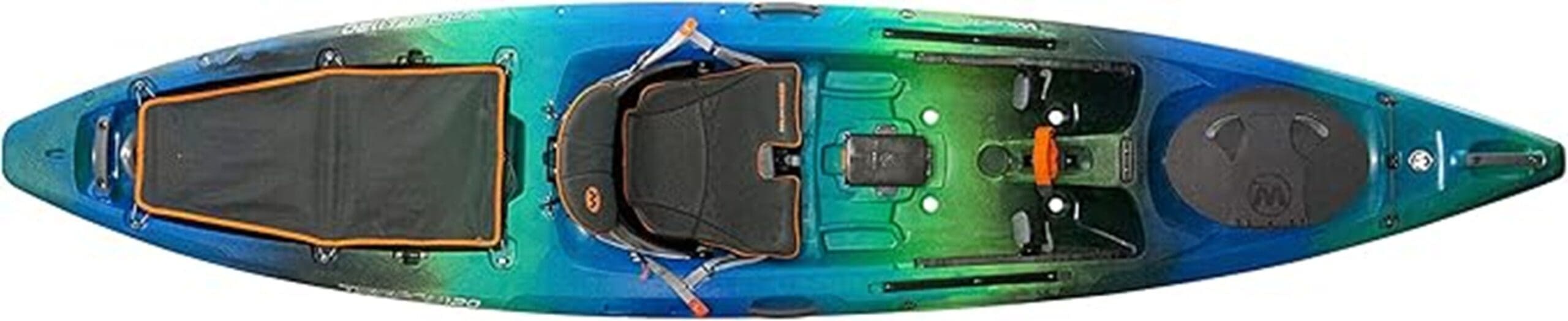
Built around the Phase 3 Air Pro seat, the Tarpon 120 puts comfort and control where you need it most: you get a 3-point adjustable frame, ergonomic 3D foam, and ventilated honeycomb fabric that keeps you cooler and supported during long sessions. You’ll appreciate the large padded footrests with an easy locking lever that dial in leg drive and posture, reducing fatigue. Carry handles are rigid and thoughtfully positioned—handle placement balances load for solo launches and portages. The cockpit layout favors freedom of movement, and basic seat maintenance is straightforward: remove, rinse, air dry, and check fasteners before each trip. Many beginner kayakers also prioritize comfortable kayak seats when choosing a boat for longer outings.
Storage, Accessories, and Rigging: Rear Well, Dry Boxes, Sidetracks, and Mounting Options
After getting comfortable in the Phase 3 Air Pro seat, you’ll find the Tarpon 120’s storage and rigging systems keep gear organized and accessible so your focus stays on fishing. The large rear well swallows crates, coolers or camping gear and secures with versatile bungee rigging for easy access on the move. A front hatch plus Dry Tec removable dry box provides hatch organization for valuables and small items, while the sectioned tray keeps lures and sunscreen sorted. Sidetracks rails deliver strong accessory compatibility—rod holders, cameras, GPS mounts—so you outfit the kayak for freedom and mission-focused angling. This makes the Tarpon 120 a great fit for beginner kayaking starter packs looking to bundle essential gear and accessories.
Buying Checklist and Verdict: Specs, Weight/Capacity, Warranty, Who Should Buy (and Alternatives)
While weighing specs against needs, focus first on the Tarpon 120’s core numbers: a 12.3 ft hull, 31 in beam, 63 lb weight, and 350 lb max capacity—figures that make it easy to transport, stable for casting, and roomy enough for a full-day load of gear. Check the limited lifetime warranty details on hull/deck and one-year coverage for accessories. If you’re an angler who values comfort, stability, and gear space, this fits buyer demographics seeking freedom on water. Recommended if you prioritize solo fishing, occasional gear-hauling, and versatility; consider lighter touring kayaks or higher-capacity sit-insides as alternatives. Beginners should also pack and wear essential safety gear like a personal flotation device and whistle when paddling, as essential gear improves safety for new kayakers.
Some Questions Answered
Can the Tarpon 120 Fit Inside a Standard Roof Rack or Kayak Trailer?
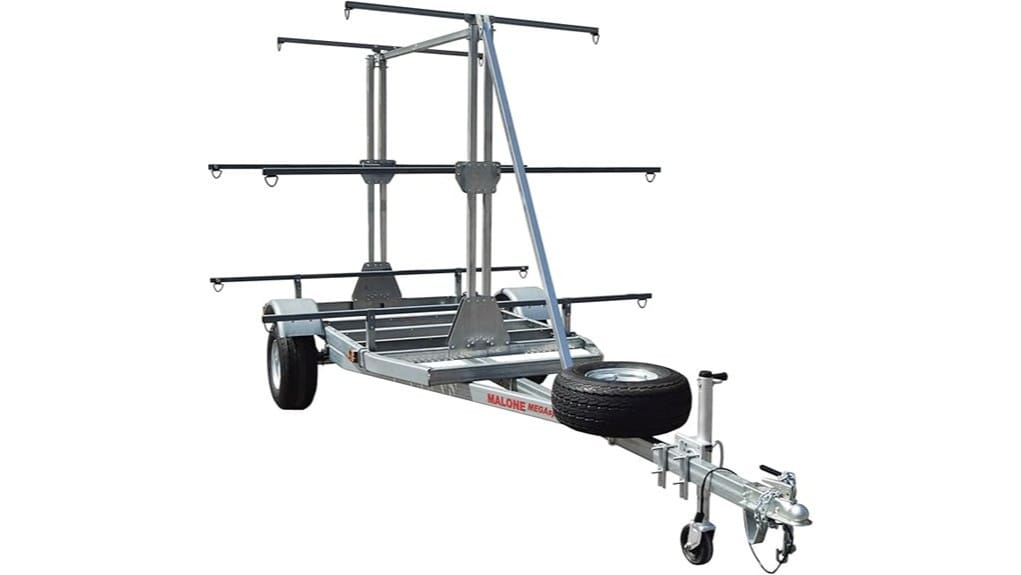
Yes — you can fit the Tarpon 120 on a standard roof rack and on most kayak trailers. Its 12.3 ft length and 31 in width work with common crossbars and cradles; use proper pads, straps, and a bow/stern tie-down. For trailer compatibility, secure the hull to prevent shifting and check trailer bed length and tie points. Always follow weight limits and rack manufacturer guidelines for safe transport.
Is the Tarpon 120 Suitable for Tandem Paddling With a Child?
Yes — you can tandem with a child, but it’s primarily a single-seat kayak. You’ll enjoy excellent tandem stability thanks to its wide hull and solid initial/secondary stability, so short trips work well. Use a secure child seating setup, life jacket, and position the child forward of your seat to keep balance. Keep gear light, avoid rough water, and practice loading/unloading to maintain safety and freedom on the water.
How Difficult Is Transporting the 63 Lb Kayak by One Person?
You can manage the 63 lb kayak solo with practice; it’s doable but requires care. Use a single handed carry for short moves and adopt the shoulder strap technique for longer hauls to distribute weight and free a hand. Bend at the knees, keep the hull close to your body, and pivot with your feet. Consider a cart or roof-rack assist to reduce strain and expand your freedom to transport it often.
Are Replacement Parts Like the Skid Plate and Hatch Readily Available?
Yes — replacement hardware like the skid plate and hatch are generally easy to find. You can get OEM parts through Wilderness Systems dealers or order aftermarket accessories and replacement hardware from kayak retailers and online marketplaces. That gives you freedom to repair, upgrade, or customize quickly. Keep part numbers handy (or your model info) so you’ll match fittings and mounting points, and expect warranty support for OEM components when applicable.
Does the Kayak Include Scupper Plugs for Reduced Drainage/Noise?
No, it doesn’t come with dedicated scupper plugs, but you can add them. You’ll want to perform routine scupper maintenance to prevent clogging and fit aftermarket plugs that match the hull’s scupper size. Adding plugs cuts water intrusion and improves noise reduction and comfort when you want quiet cruising. Install removable plugs so you can quickly return to full drainage when conditions call for it, keeping your freedom on the water.