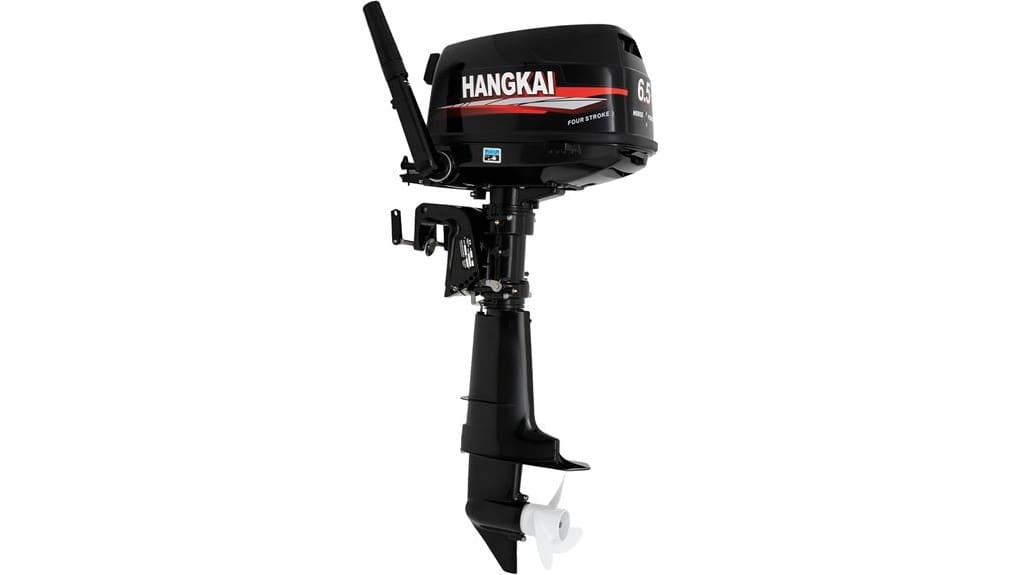
You’ll find the Hangkai 4‑stroke 6.5HP is a compact, no‑frills outboard that’s best for inflatables and small dinghies; it’s light, easy to mount, and offers simple tiller control with manual trim. Expect cruising around 15–20 km/h, about 2 L/h fuel burn from the 12 L tank, and linear throttle response. The single‑cylinder 123 cc engine uses CDI ignition and water cooling for reliability. Keep basic spares and safety gear handy, and continue for full specs and maintenance tips.
Some Key Takeaways
- Compact, lightweight 6.5HP four‑stroke ideal for inflatables, kayaks, and small dinghies with easy tiller control.
- Real‑world cruising speeds about 15–20 km/h, top speeds depend on hull, load, and trim.
- Fuel-efficient ~2 L/h from included 12 L tank, offering reliable range for solo or duo outings.
- Simple 123 cc, water‑cooled CDI engine with 40 cm shaft and recommended 3–7″ x 9″ three‑blade prop for balanced thrust.
- Good value with basic accessories and one‑year warranty, but limited parts network and short warranty period.
Quick Verdict and Ideal Use Cases for the Hangkai 4‑Stroke 6.5HP
Although compact and simple, the Hangkai 4‑stroke 6.5HP delivers reliable, fuel‑efficient propulsion for small craft—you’ll get about 15–20 km/h and roughly 2 L/h fuel consumption from a 123 cc single‑cylinder engine with manual start and tiller control. You’ll appreciate compact portability and straightforward mounting when you outfit inflatable boats, kayaks, or small fiberglass dinghies. It’s tuned for solo or duo outings, leisure fishing, and river or lake runs where range and simplicity matter. Manual trim, water‑cooled CDI ignition, and a 12 L tank keep maintenance low so you can stay mobile, independent, and on the water longer. Consider carrying a GPS backup battery for longer trips to ensure navigation stays powered, especially when paddling remote lakes or rivers with limited access to charging backup batteries.
Real-World Performance: Speed, Fuel Economy, and Handling on Small Boats
On small boats you’ll find the Hangkai 6.5HP delivers predictable, efficient performance: expect cruising speeds around 15–20 km/h (9–12 mph) depending on hull shape, load, and trim, with fuel burn near 2 L/h from the 12 L tank for multi‑hour outings. You’ll reach a reasonable top speed on lightweight inflatables; heavier loads lower peak. Throttle response is linear and steering via tiller stays direct, so handling is intuitive. Real world mpg converts to roughly 11–12 mpg (US) under cruising throttle on planing skiffs. For independent runs, you’ll get dependable range, easy control, and simple servicing. Consider pairing this outboard with an all‑terrain kayak cart for easier transport to and from the water.
Technical Breakdown: Engine Specs, Cooling/Ignition, Propeller and Shaft Details
One clear advantage of the Hangkai 6.5HP is its simple, serviceable single‑cylinder 123 cc four‑stroke design, which delivers a maximum output of 4.8 kW at 5,000–6,000 rpm while keeping fuel consumption near 2 L/h. You get water‑cooled CDI ignition for stable spark timing and corrosion resistance; that aids consistent starting and steady combustion under load. The short 40 cm shaft pairs with a three‑blade prop recommended at roughly 3–7 in x 9 in, offering balanced thrust and maneuverability. Its straightforward layout supports basic engine tuning and practical noise reduction measures without complex electronics.
Installation, Operation, and Maintenance Tips for Reliable Service
Having covered the engine, cooling, and propeller basics, you’ll now focus on installation, operation, and maintenance practices that keep the Hangkai 6.5HP running reliably. Mount the short shaft securely to the transom using the supplied clamps, check clamp width and torque, and align propeller pitch to load. Use #93 gasoline and four‑stroke oil; prime fuel lines and bleed air. Run a pre-start safety checklist: kill switch, gear in neutral, cooling water flow. After use, flush with fresh water, change oil per hours, inspect seals, and prepare seasonal storage with stabilized fuel and fogging as required. Always carry essential safety gear including a personal locator beacon for kayaking emergencies and be familiar with its operation personal locator beacon.
Value Assessment: Warranty, Included Accessories, Common Pros and Cons
Although the Hangkai 6.5HP comes with only a one‑year warranty and a voluntary 30‑day return window, you’ll find it includes essential accessories—fuel tank, oil pipe, funnel, installation hardware, and an English manual—so you can mount and run the motor immediately. You’ll want to verify warranty transferability before purchase; one year is standard but limits long‑term resale confidence. Accessory quality is adequate for immediate use; consider upgrading hoses or clamps for endurance. Check customer support responsiveness and spare parts availability in your region—those factors define long‑term value. Pros: light, efficient, affordable. Cons: limited warranty, parts network variability.
Some Questions Answered
Is This Engine Compatible With Electric Start Conversions?
Yes — you can pursue a starter retrofit, but you’ll need to fit an appropriate starter ring gear, mounting bracket and starter motor, plus battery integration for reliable cranking. You’ll modify the manual start housing, secure wiring, add a solenoid and fuse, and guarantee charging or battery maintenance. It’s a technical job; if you want freedom on the water, plan parts, torque specs and professional help to avoid damage and guarantee safe operation.
Can This Motor Run on Ethanol-Blended Gasoline Safely?
Yes — you can run ethanol‑blended gasoline, but ethanol compatibility is limited and you should be cautious. Use low‑ethanol fuel (E10 or less) when possible, drain carbs and fuel lines after storage, and add fuel stabilizers to reduce phase separation and corrosion. Inspect rubber parts and fuel system regularly, replace ethanol‑sensitive components with marine‑grade alternatives, and follow maintenance intervals so you’ll keep the motor reliable and independent on the water.
Are Replacement Parts Readily Available Locally?
Yes — you can usually find replacement parts locally. You’ll want to check marine shops, small‑engine dealers, and online vendors that stock Hangkai/HinLIaDa spares; aftermarket support is common for carburetors, gaskets, props, and control cables. Keep part numbers and basic measurements handy to speed sourcing. If you value independence, buy spare consumables and establish a parts contact so you’re not stranded when you need urgent local availability.
Can It Be Used in Saltwater With Corrosion Protection?
Yes — you can use it in saltwater if you apply correct corrosion protection. You’ll need marine coatings on exposed aluminum and steel, install sacrificial anodes on the lower unit, flush with fresh water after each use, and rinse cooling passages. Carry spare anodes and inspect mounting hardware regularly. Follow torque and sealing practices to prevent galvanic corrosion; this keeps your motor free to operate reliably in brackish and marine environments.
Is There a Recommended Break-In Procedure for New Engines?
Yes — you should follow a break‑in routine. You’ll run multiple warm up cycles, keep revs low, and use gentle throttle for the first 5–10 hours. Vary load and RPMs; avoid prolonged full throttle. Check oil and cooling, inspect fittings, tighten fasteners, and change oil after the initial 5–10 hours. This practical approach protects the engine, lets components seat properly, and gives you confident, free operation on the water.