
You can protect fish and catch more by rigging your kayak for quick in‑water work: keep a rubberized net, tethered pliers or dehooker, cutters, lip gripper and a measuring board within arm’s reach, match tackle to species to shorten fights, and use barbless or circle hooks to avoid deep hooks; land fish low in a net or cradle, keep them horizontal and wet, revive them facing current until gills pump and they kick off hard, and follow limits and seasons for best results—more tips follow.
Some Key Takeaways
- Minimize fight time by matching tackle to species so fish tire less and survive release.
- Keep fish supported and wet—use a submerged rubberized net or cradle during handling and photos.
- Use non-offset circle or barbless single hooks and long dehookers to speed safe hook removal.
- Organize gear and tether tools at arm’s reach to reduce air time and fumbling during landing.
- Revive fish facing current with gentle support and only release after strong gill movement and a hard kick.
What Catch-and-Release Aims to Solve for Kayak Anglers
Thinking about catch-and-release from your kayak starts with minimizing the stress you put on a fish, so you’ll want to match your tackle to the species and water you’re fishing, fight them just long enough to tire them but not to exhaustion, and have the right tools ready so you can get them back in the water fast; bring appropriately weighted rods and heavier line where needed, a rubberized landing net or scoop that won’t strip slime, long-nose pliers or dehookers to remove hooks quickly, cutters to snip gut hooks, and a soft towel or gloves only if you know they won’t rub off the slime coat, because keeping the fish wet, supported, and in the water for photos and hook removal makes a big difference in survival. You, as Kayak anglers, aim to minimize stress, follow legal limits and seasons, and practice careful fish handling so catches live to fight another day, leading fish into the net, avoiding gill contact, and reviving a fish by moving it through water until it swims off strong. Consider outfitting your kayak with adjustable rod holders to keep tackle secure and hands-free when landing and releasing fish, especially for beginners adjustable rod holders.
Gear That Reduces Handling Time (Nets, Pliers, Lip Grippers, Knives)
Start by rigging your kayak so the tools you need are literally at arm’s reach, because quick, steady hands cut stress for the fish and for you; a rubberized landing net—preferably with a long handle if you fish from the stern or need extra reach—lets you keep fish in the water while you work, it won’t strip that protective slime, and it makes gentle support and photos much easier. Keep landing nets, dehooking pliers, lip grippers, and a sharp line-cutting knife tethered and clipped where you sit, so you can grab them without fumbling, and use long-handled pliers for deep or toothy hooks, lip grippers for secure holds with belly support, and a knife to cut gut hooks quickly to reduce handling time and boost survival. Essential gear like a fish measuring board is also useful for recording catches without prolonged handling of the fish and for meeting kayaker-specific measurement needs.
How to Land and Control Fish From a Kayak Without Harm
When you bring a fish alongside your kayak, keep a calm, deliberate routine so neither of you panics: lead it gently into a rubberized net you’ve already got tethered behind your seat and keep the net low and submerged to protect that slimy coat and give you time to grab pliers or a knife, and if the fish’s body won’t fit, secure it with a lip gripper or cradle it by hand for non‑toothed species while supporting its belly horizontally—never dangle it by the gills or let it hang vertically. Stay ready with long needle‑nose pliers or a dehooker, work quickly while the fish’s skin is wet, cut line if gut‑hooked, and minimize air time by organizing camera gear beforehand, then revive exhausted fish by pointing it into current or moving your kayak slowly until gills and fins recover before release. Mastering stroke and balance techniques from expert technique videos will help you control fish and your kayak safely.
Quick, Fish-Friendly Dehooking and Photographing Techniques
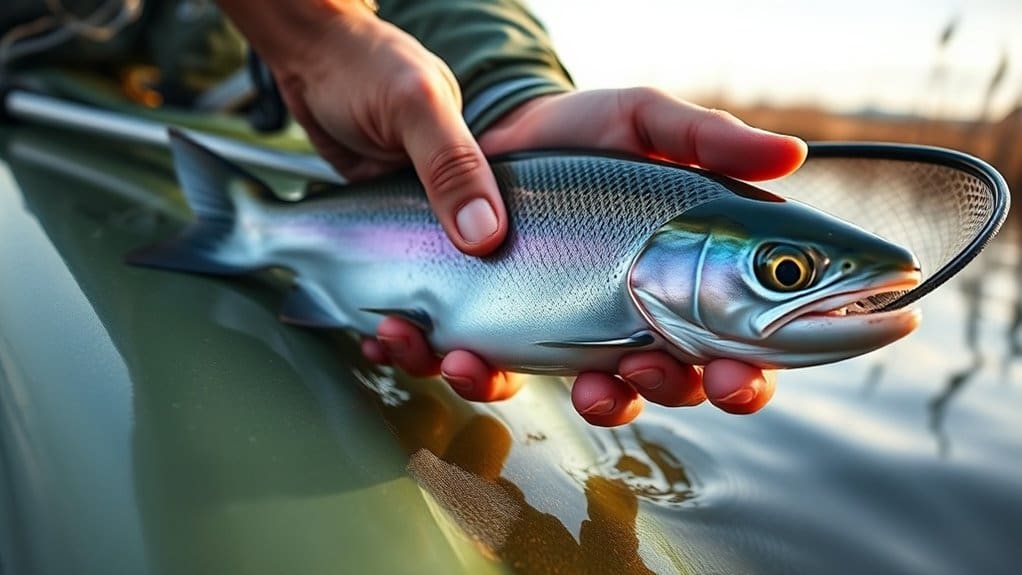
When you land a fish, have quick dehooking tools like long needle‑nose pliers or a tethered dehooker ready and keep the fish in a rubberized net, submerged in the mesh while you prep so removal and photos take just 30–60 seconds to cut air time. Designate a photographer before you lift the fish, plan one fast in‑water shot with the fish supported horizontally (one hand under the belly, one at tail or lip), and if the fish looks tired, revive it first by pointing its head into current or moving the kayak slowly until you see fin lift and strong tail beats. If a gut‑hook happens, cut the line close to the hook instead of trying deep removal, use barbless non‑offset circle hooks and crimp or remove extra trebles to speed handling, and trust quick, calm actions will give the fish the best chance to swim off healthy. Keep these tools and supplies organized in a compact marine first aid kit for quick access marine first aid.
Quick Dehooking Tools
Keep a rubberized landing net and a long‑shaft dehooking tool or needle‑nose pliers tethered within arm’s reach on your kayak, so you can deal with a fish fast, keep it mostly in the water, and cut the time it’s out of its element; for fish with sharp teeth or spines, use a longer dehooker or a lip gripper that lets you hold the fish steady and unhook from a safe distance, matching the tool’s length to your kayak’s gunwale height so you don’t have to stretch or lift awkwardly. You’ll want barbless circle hooks and a compact dehooker ready, so you can remove hooks quickly, or if a hook is deep, cut the line close to the hook and release, minimizing internal damage. Pre‑position tools and a photographer so you’re swift, calm, and free to keep fishing. Store these items in waterproof tackle cases secured to your kayak so they stay dry and are always accessible.
In-Water Photo Prep
Start by getting organized before the fish ever reaches the kayak: position the net or have the angler hold the fish alongside the hull, have your camera pre‑set and ready in hand, and make sure pliers, a lip‑grip or dehooker, and gloves are already tethered within arm’s reach so you don’t fumble. When it’s time, keep the fish partly submerged in a rubberized net or beside the hull, designate a photographer who’s practiced the single in‑water photo, and support the fish horizontally with one hand at the tail and one under the belly or jaw so you don’t stress it. Use a dehooking tool or long needle‑nose pliers for quick removal, cut the line if gut‑hooked, and minimize air exposure while you snap one clean shot and get the fish back to freedom. For kayakers, having an essential landing net ready can make the whole process safer and faster, so keep an appropriate landing net close at hand.
Minimize Out-Of-Water Time
Setting up for fast, fish-friendly out-of-water work means you want everything in hand and practiced so the fish barely leaves the water, so have your camera pre‑set and clipped to your life vest, a rubberized net ready at the hull, and pliers, line cutters or a dehooker tethered within reach — designate who’s taking the photo and who’s handling the fish ahead of time, and rehearse that single in‑water shot you’ll take. You’ll want to minimize out-of-water time, keep fish submerged in that rubberized landing net while you use dehooking tools, cut leaders on deep hooks, and only lift larger fish briefly, supported under the belly, never in the gills. If tired, recover and revive fish by moving them gently through water until they swim off; limit photos to a few seconds. Consider mounting your gear for quick access using horizontal rod holders to keep rods and hands free for safe handling horizontal rod holders.
Revival Methods: Getting Fish to Kick Off Strong Before Release
When you’re ready to revive a fish, hold it facing into the current or gently move your kayak forward so water flows steadily over the gills, supporting the belly and tail so it sits horizontal and can breathe easily. Keep it in the water, look for gill plates pumping and fins coming erect, and if it’s tired use a slow figure‑8 or steady forward motion to force water through the mouth until you see strong, regular tail beats. If the fish is listless, tickle the tail or lift it gently to trigger a swim response, and only let go when it kicks off hard and holds depth, which gives it the best shot at surviving. For kayak anglers, using a portable fish finder can help locate deeper resting areas to avoid prolonged fights and improve fish welfare.
Hold Fish Facing Current
Facing the current, line up your kayak or ease forward a bit so water flows through the fish’s gills, and hold it gently in the water, horizontal, with one hand supporting the belly and the other near the tail or lip; this simple positioning helps oxygenate a tired fish fast, lets you watch for rhythmic gill movement and fin activity, and gives you a clear sense of whether the fish is recovering or still too weak to go. You’ll want to hold the fish steady, support belly with a soft grip, and if it’s big or spent, keep it in a rubberized net or cradle while you revive it, gently tickle the tail to prompt a kick, and watch for strong, steady fin beats.
Move Water Through Gills
Gliding water through a tired fish’s gills is the single most practical thing you can do to help it recover, so get ready to move gently and deliberately: support its belly with one hand and cradle the tail or lip with the other, point the fish slightly head‑first into the current or nudge your kayak forward, and keep it level so water flows steadily through the mouth and across the gill plates without bouncing or twisting the body. When you submerge the fish, face it into flow or use a slow figure‑8 if there’s no current, keep revive motions smooth so oxygen reaches the gills, support the fish’s belly and avoid wringing, watch for rhythmic gill cover movement, then wait for strong tail beats, upright fins, and self‑propelled swimming before release.
Tackle Choices and Fight-Time Strategies That Improve Survival
Choosing the right tackle and shortening the fight will do more for a fish’s chance of survival than almost anything else you can change, so think about the species you’re after and match your gear—heavier-class rods, stronger lines, and stout leaders—when fish are getting tired, because shorter fights cut lactic acid buildup and stress. You’ll want to match tackle to target species, lean on non-offset circle hooks and barbless hooks when you can, and swap treble hooks for singles or file points to reduce deep hookups, so you land fish quickly with stout leaders and terminal tackle. Carry long dehooking tools or needle-nose pliers, and if a fish is gut-hooked, don’t fight forever—cut the line close and release fast to give it the best shot.
Some Questions Answered
Can I Keep a Fish Briefly in a Livewell While Photographing It?
You can, but keep photography ethics and livewell stress in mind, you’ll limit handling duration to seconds, not minutes, and aim for quick release; check water temperature and oxygen, keep anatomical care by supporting the fish gently, avoid gills and belly pressure, and follow legal limits if any. Carry a shallow, aerated livewell or wet towel, a ruler, and a camera ready, then photograph fast and return the fish to the water immediately.
Are Rubber Gloves Acceptable for Handling Slimy Fish?
Yes, rubber gloves can be acceptable if you pick the right glove material, like thin nitrile over thick latex, because you’ll keep tactile sensitivity, avoid dexterity loss, and lower contamination risk; you should test grip technique wet, carry spares, rinse them in freshwater between fish, and avoid powdered or scented gloves that harm fish and increase environmental impact, so you’ll stay nimble, protect the slime, and get the shot or release cleanly.
How Do I Handle Deep-Hooked Fish Ethically From a Kayak?
You’ll aim to remove a deep hook quickly, calm the fish, and decide if mouth extraction’s possible without harm, using short leadering to keep control; if it’s too deep, prioritize bleeding control and cut the hook, don’t force it, and avoid gut-piercing venting unless trained, since venting ethics matter. Carry long-nose pliers, cutters, gloves, and a dehooker, work in the water when you can, and revive before release.
Is Using Barbless Hooks Always Legal in My Area?
Not always—local regulations vary, seasons can add restrictions, private waters or tribal jurisdictions may ban or allow barbs differently, and permit requirements or conservation exceptions can change rules for certain species or areas, so check before you fish. Start by carrying a current rulebook or app, call the agency or landowner if unsure, pack barbless hooks and pliers, note seasonal closures, and respect tribal or private rules to stay legal and free to fish.
Can I Release Small Baitfish Used as Chum From the Kayak?
Yes, you can release small baitfish used as chum from the kayak, but check local regulations first, because baitfish release can spread pests or disease and harm ecosystem balance. When you do, use a net or wet hands, untangle quickly, and aim for kayak escape toward cover, not open water where predators gather; note predator attraction, avoid high-density dumps, and report unusual fish or smells to local authorities for safer, smarter outings.