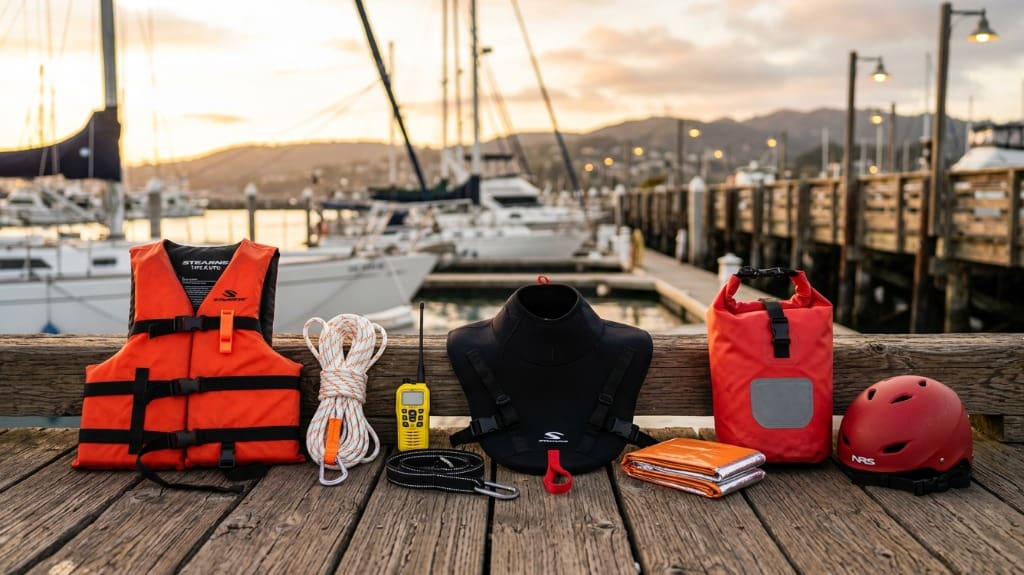
You should always wear a USCG‑approved PFD that fits snugly—have someone lift the shoulder straps and make sure it won’t slip over your head—and clip on a whistle, knife sheath, and light. Bring an impact helmet for rocky rivers or surf, a paddle leash, and a paddle float or stirrup for self‑rescue, plus float bags and a bilge pump or bailer to keep the boat riding high. Pack a tow line or throw bag, VHF/phone, strobe, and a dry first‑aid kit; more tips follow.
Some Key Takeaways
- Wear a properly fitted, USCG‑approved PFD designed for paddling, with adjustable straps and reachable accessories (whistle, light, knife).
- Carry and practice with self‑rescue gear: paddle float, stirrup, paddle leash, and a reliable bilge pump or bailer.
- Install snug bow and stern float bags or internal flotation to keep your boat high if swamped.
- Bring an assisted‑rescue tow system: a floating 10–30 ft tow line with soft attachments and a throw bag for swimmer recovery.
- Pack communication and signaling: whistle, waterproof light/strobe, VHF or charged phone, and PLB/EPIRB for remote trips.
Personal Flotation Devices (PFDs): Choose, Fit, and Wear One Every Time
Always wear a proper PFD when you’re on the water, and start by choosing one that’s made for paddling—kayak, canoe, or SUP designs have big armholes for paddling and a fit that won’t ride up when you lean or roll. You want a USCG‑approved Personal Flotation device, the right buoyancy for your weight, and straps you can tighten so it rides high but won’t jam under your chin, test it by having someone lift at the shoulders, it shouldn’t slip over your head. Wear your PFD every trip, attach a whistle, small knife sheath, and a light within reach, inspect for compressed foam, torn fabric, or corroded buckles, replace any life jacket that shows reduced flotation, and treat it like essential gear. Learn the basics of basic life jackets so you pick the right model for kayaking.
Head Protection and Clothing: Helmets, Wetsuits/Drysuits, and Sun Layers
You’ve already made a smart choice with a reliable PFD, now think about protecting your head and dressing for the water so one unexpected flip or chilly swim doesn’t ruin the day. Pick a helmet that fits snugly, is impact-rated, and fastens under the chin, wear it in rapids, rocky rivers, or surf zones, and adjust straps so it won’t shift if you capsize. Dress for temperature: a wetsuit for moderate cold, a drysuit for long or very cold outings, and build layers—moisture-wicking base, insulating midlayer, waterproof shell—so you can shed or add as the weather changes. Don’t forget sun-protection, paddling gloves, water shoes, and a hat or gaiter, all kept accessible while you paddle. Choose a helmet based on impact-rated standards to ensure appropriate protection.
Basic Rescue Gear for Self-Rescue: Paddle Floats, Stirrups, and Paddle Leashes
If you capsize, your first priority is getting back in the boat, and that’s where a few simple rescue items make a big difference—bring a paddle float to turn your paddle into an outrigger, a stirrup (webbing loop) to give you a steady foot or hand hold at the cockpit, and a paddle leash so your paddle stays with the boat instead of drifting away. You’ll want an inflatable paddle float for max buoyancy or foam if you want quicker assembly, fit a stirrup around the coaming so you can lever yourself in, and clip a paddle leash that won’t let the blade go. Practice the paddle-float re-entry in calm water until it’s reliable, and inspect rescue gear before each trip for leaks, wear, and secure attachments. Foam paddle floats provide faster setup and quick assembly for situations where speed matters.
Assisted-Rescue and Tow Equipment: Tow Lines, Throw Bags, and Throwables
When you pick your assisted-rescue kit, start with a tow line in the 15–30 ft (4.5–9 m) range for kayaks, clip it to your cockpit coaming or a tow belt with a quick-release carabiner or brummel hook, and check for chafe, UV damage, and worn stitching before every trip. Learn to throw a 30–50 ft (9–15 m) throw bag by aiming past a swimmer so they can grab the rope under tension, practice hauling and deploying in moving water, and consider a tow with a shock-absorbing section or float to keep the line off the surface and reduce hard jerks. Keep both tools clipped where you can reach them from your deck or PFD, use secure knots like a figure-eight loop or a quick-release attachment, and rehearse the whole assisted-tow sequence with your group so everyone knows who does what first. Many paddlers find that having a dedicated tow line setup tailored to kayaks increases confidence and safety on group trips.
Tow Line Selection
Think about a tow line as one of the first pieces of kit you reach for in an emergency, so pick one that’s easy to grab, floats, and won’t snap your arm off if the boat jerks; you’ll want 10–30 feet (3–9 m) of floating rope with a breaking strength around 1,000–2,000 lbs (450–900 kg), a bright color for visibility, and either a quick-release clip or a soft loop/brummel splice to attach to a cockpit coaming or tow belt without creating hard points that can injure someone during a dynamic tow. Choose a combo that packs into a throw bag or mesh pouch so it stays neat, store one clipped to your deck or PFD, and in moving water pick a line with a shock-absorbing bungee section to soften sudden loads. Practice rigging and stow it ready to go. For convenient on-water access and organized storage, many paddlers keep their tow lines and throw bags with other throw rope essentials.
Throw Bag Techniques
You’ve picked a good tow line, now think about the throw bag as the reach-out tool that actually gets the rope to someone in trouble, so keep one handy and practice with it until the motions feel natural. You’ll carry a coiled floating throw bag, about 30–50 ft, clipped to the boat or PFD so it’s ready, inspect the rope for wear each season, and replace it when it shows abrasion or UV damage. When you deploy, pull a few feet free, aim past the swimmer so the line unrolls toward them, then use throw and stop by halting the line with your foot or hand, or belay it from a secure point to control tension. Practice live-water throws often, and clip to the boat before you send it. Beginners should also consider keeping essential throw bag gear accessible and learning how each item supports a safe rescue.
Proper Attachment Methods
Clip your gear to solid points and double-check them before you hit the water, because how you attach a tow line or throw bag can make the difference between a clean rescue and a nasty tangle. You’ll want Tow lines tied or clipped to strong attachment points like the cockpit coaming, grab loop, or a waist belt, using a secure knot or a marine-rated locking carabiner, and include a quick-release or shock section to soften jolts, right? Keep Throw bags clipped to your PFD or within reach, throw underhand while you brace, and rig to bow or stern grab loops on the assisted boat, not flimsy fittings. Inspect webbing, knots, bag seams, and stow lines coiled to avoid chafe, snags, and tangled drama. Consider carrying a dedicated tow belt as a reliable attachment point and safety backup.
Boat Flotation and Water-Removal: Float Bags, Sponsons, Bilge Pumps, and Bailers
When you check your boat before heading out, make sure float bags sit snugly in the bow and stern compartments or in split canoe designs so trapped air will keep you riding high if the hull floods, and if your kayak has bulkheads those do the same job. Bring a hand bilge pump you can clip or lash near the cockpit, practice pumping water over the rim so you can clear a swamped boat quickly, and carry a simple bailer or sponge for small leaks and routine water management. If you paddle an inflatable or whitewater rig, add sponsons for side buoyancy, keep your pump secured with foam collars so it won’t sink if you drop it, and habitually check placements and straps before launch—sound familiar, and easy to make routine? Add a compact, user-friendly bilge pump designed for kayakers and beginners to ensure you can remove water efficiently while paddling.
Flotation Bags Placement
For a solid start, think about where the air will do the most good and tuck your float bags into those tight forward and aft spaces so the boat rides high instead of dragging water, because a bag stuffed into a corner or folded over won’t trap air properly and can’t help when you need it most. You’ll push Flotation bags into the bow and stern, snug against hull curves, so they fill voids and give buoyancy where the boat wants to sag, and if your sea kayak has bulkheads you can still add a bag to non-bulkheaded gear for extra reserve. Keep a bilge pump handy within reach, practice re-entry and towing with the bags in place, and check fit before every launch.
Bilge Pumps & Bailers
You’ve already thought about stuffing float bags where the boat wants to sag, and now you’ll want to think about how you’re going to get the water out once it’s in, because flotation and water removal work hand in hand; a pump or bailer keeps the hull riding high and your boat manageable after a re-entry or a big splash. Choose a hand-operated bilge pump that’s compact and sturdy, ideally with a foam collar so it won’t sink if you drop it, and practice pumping a full cockpit until you know your pace. For bigger boats or long trips consider electric or foot pumps if you can handle the weight and install them. Carry a simple bailer or cut jug for rapid, gravity-driven water-removal, and pair all of it with flotation devices for real peace of mind.
Communication, Signaling, and Emergency Tools: Whistles, Lights, Radios, Flares, Knives, and First-Aid Kits
Ever wondered which signals and tools you’ll actually reach for if things go sideways on the water? Carry a USCG-approved whistle clipped to your PFD, use three blasts for distress, and keep it reachable, because sound travels far in calm conditions. Pack a waterproof flashlight or headlamp and a flashing strobe on your PFD for night visibility, since white lights may be required. Bring a VHF radio that gets weather and two-way calls, or a charged waterproof phone and consider an EPIRB or PLB for remote trips. Store flares dry, check expiration dates, and follow local rules before firing. Keep a waterproof first aid kit and a corrosion‑resistant rescue knife, blunt-tipped for inflatables, within reach to treat injuries or cut entanglements.
Some Questions Answered
What Piece of Safety Equipment Is Required on Every Kayak?
A U.S. law says you must have a Coast Guard–approved personal flotation device on every kayak, so you’ll want a well-fitting PFD, with a whistle attachment and places to clip a personal locator or knife, plus deck lines for re-entry; wear thermal layers under it, choose helmet selection if you paddle rough water, and carry a bilge pump to bail water, check fit, straps, and keep gear accessible before you shove off.
What Equipment Do You Need for a Paddle?
You’ll need a good paddle—Paddle selection matters, match shaft length to your height and boat, bring a spare, and leash it; choose Clothing choices that suit water temp, layers that dry fast; pick sturdy Footwear options that grip wet surfaces; stash essentials in Dry bags, include Navigation basics like a map or GPS and a compass; carry Hydration systems, water bottle or bladder, plus a basic first-aid and ditch plan.
What Are the Necessary Safety Equipment?
You need personal flotation, a stocked firstaid kit, and knife accessibility for quick cuts, plus communication devices like a waterproof phone or VHF and a GPS, and weather awareness gear so you check forecasts and clouds before launch, and night signaling like a strobe or flashlight and whistles for low‑light. Carry a bilge pump or paddle float, tow line, and keep everything dry and reachable, so you can act fast and stay free.
Which Safety Equipment Is Required to Be Carried by All Vessels No Matter Their Size?
All vessels must carry a USCG‑approved personal flotation device for each person, a sound‑producing device, and navigation lights or a white light when required, and if applicable, a fire extinguisher; you’ll also want a personal locator, weather radio, throw bag, signal mirror, boarding ladder, and engine cutoff for safety and recovery, so check labels, keep gear accessible, test devices, and stow items where you can reach them quickly.