
You can use the off-season to make your cockpit snug and confident: raise the seat with thin minicell shims for height and warmth, carve hip pads so your hips lock to the pillar for clean edging and rolls, shape thigh braces or masik wraps to hook the rim, and tweak pedals and heel wedges so your feet hit pegs with solid leverage; bring contact cement, a sureform, sandpaper, and gloves, test often and shave little by little, and keep going for step-by-step adjustments if you want more detail.
Some Key Takeaways
- Raise seat height with thin minicell/Ethafoam strips and a thicker front block to improve leg position and paddle leverage.
- Install hip pads and thigh braces shaped to nearly touch hips/thighs for secure contact and direct edging feedback.
- Sand seat and pads to a suede finish and carve a shallow channel to keep you above pooled water and improve grip.
- Fit heel wedges or stacked footwell pads while wearing paddling boots to ensure correct pedal reach and solid leverage.
- Use H2Glue or DAP contact cement for permanent bonds, trim gradually, vacuum foam dust, and store removable pads cool and labeled.
Raise and Cushion the Seat for Better Height, Warmth, and Control
If your seat feels low or leaves your thighs dangling so you don’t get a good brace on the cockpit rim, raise and pad it a little—start by gluing a thin strip of minicell or Ethafoam (about an eighth to a quarter inch) under the seat with contact cement, and if the seat’s really too short add a thicker foam block under the front to take pressure off your hamstrings and lengthen the sitting surface. You’ll want a snug seat pad that lifts you for better visibility and paddle leverage, carve a shallow channel so you sit above pooled water, sand for a suede finish that grips, install in the off-season and test iteratively, shave small amounts until feet sit on pegs and thighs contact the rim, hip pads come next. Comfortable kayak seats are especially valuable for beginner kayakers who prioritize support and warmth.
Shape and Install Hip Pads to Lock Your Hips for Edging and Rolls
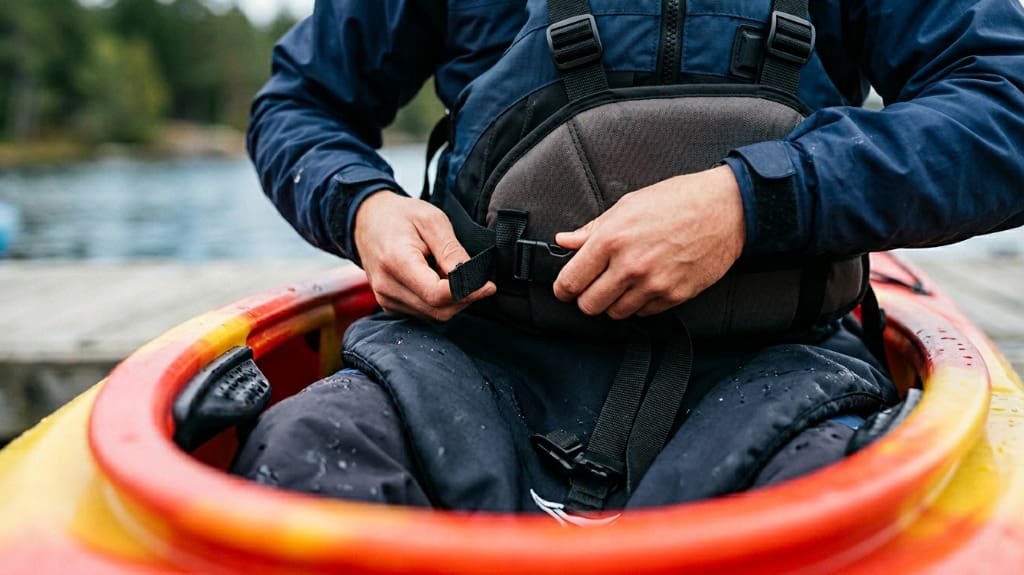
Grab your foam and glue and sit down in the boat to start shaping hip pads that actually lock you in: you want pads that fill the gap between your hips and the seat pillar so you get immediate, solid contact without pain, not huge bulges that squeeze your legs or cut off circulation. Cut minicell or Ethafoam to almost touch your hips, glue them with H2Glue or DAP contact cement, then shape with a sureform and 80-grit sandpaper until the surface feels slightly suede-like for grip. For advanced rolls, craft wrapover pads that tuck over the thigh edge, test by getting in and out, shave small amounts if needed, and repeat until edging and rolling feel direct and confident. Consider adding a stern floatation bag to your kayak during off-season storage to maintain safety and buoyancy stern floatation.
Build Custom Thigh Braces and Masiks for Precise Knee-to-Rim Contact
You’ve shaped hip pads so your butt and pelvis sit solidly, now it’s time to make your thighs do the same work, because knee-to-rim contact is what gives you precise edging and clean rolls. You’ll carve minicell or Ethafoam thigh braces to hug the inner thigh, aiming for near-contact at neutral so you get instant feedback when edging, and you’ll use 1/4″–1/2″ shims glued with contact cement to fine-tune fit, shaving conservatively because foam’s hard to replace. For a masik-style thigh wrap, shape larger blocks to hook over the thigh and sand to a suede finish for grip, but leave room for a gloved hand for wet exits, test seated and on edges, rework until every lean transfers to the cock-pit rim without hotspots. Consider keeping a basic fiberglass repair kit handy for quick fixes to the cockpit coaming or seat if the outfitting process scuffs or compresses foam unexpectedly, especially when working with older or thinner coamings that may need minor repairs.
Adjust Feet, Pedals, and Heel Wedges to Restore Proper Leg Leverage
Start by sitting in the boat in the shoes or boots you actually paddle in, press your feet to the pedals and note where the balls of your feet land and how your knees feel—comfortable bend with solid contact means good leverage, toes-only contact or a stretched knee means you need to add height. If you miss with the balls of your feet, glue a thin minicell foam wedge to the pedal or floor, or add a 1/8″–1/4″ minicell pad under the heel for heel support, which also stops sand wear. For deep boots or short legs, build up the footwell with stacked minicell/Ethafoam blocks, shape and sand them smooth, then test reach to the footpeg and mark ideal plate spots for different socks. Properly outfitted foot braces improve control and comfort for beginners and experienced paddlers alike, and can be customized with foot brace options to suit different boats and foot shapes.
Final Trimming, Adhesives, Tools, and Off-Season Prep Checklist
When you’re down to final trimming and packing up for the season, work methodically and keep a few key tools and supplies within arm’s reach so nothing surprises you: a tube of H2Glue or DAP Weldwood Contact Cement GEL for permanent bonds, a Stanley Sureform or similar shaping tool with 80-grit paper for that suede-like finish on carved minicell, latex gloves and rags to keep glue off your hands and hull, and a shop vacuum to clear foam dust before you stick anything back down. Trim the seat and hip/thigh pads slowly, shave little by little so Minicell almost touches you, test fit often, apply thin even coats of adhesive, wait until tacky, press firm, cure fully, then follow an off-season checklist: dry, inspect seams, top off airbags, store foam cool and labeled for an easy spring refit. Consider adding removable seat cushions to increase comfort and simplify storage.
Some Questions Answered
Can I Outfit Multiple Cockpits for Different Paddling Styles?
Yes, you can outfit multiple cockpits for different paddling styles, and you’ll want Adjustable backbands for support, Quick change skirts for easy swaps, Modular thighhooks to change control, and Removable footplates to tune leg length, so start by mapping each style’s needs, carry a toolkit and spare parts, practice installs on shore, and label components for fast swaps, because you’ll switch setups faster and stay comfortable on every trip.
How Do I Prevent Mold in Foam Pads During Storage?
You stop mold by drying pads fully, then using vacuum sealed storage with moisture absorbing desiccants, but don’t seal wet gear, okay? Wrap pads in breathable fabric covers first, check for damp spots, and store where temps stay steady. Every few months you’ll do periodic airing and flipping, inspect seams, and replace desiccants when clumped, so you’ll avoid surprise rot and keep your cockpit comfy for next season.
Are There Hypoallergenic Materials for Sensitive Skin?
Yes, you can choose hypoallergenic foams and breathable covers, they cut dust and flare-ups, and you’ll want sensitive skin adhesives that won’t irritate when you swap pads, plus antimicrobial treatments to limit mold and bacteria. Start by feeling fabric samples, carry a small patch kit with adhesive strips and a breathable cover, wash covers often in cool water, and air the foam fully before storing, so you stay comfy and free to roam.
Can I Install Outfitting While Wearing Paddling Gloves?
Yes, you can install outfitting while wearing paddling gloves, but expect some glove dexterity loss, so pick thin, grippy gloves that limit grip compromise. Watch for seam abrasion against velcro or rough edges, and prioritize fastener access by testing zips, snaps, and hook-and-loop before you start. Carry a thin pair of bare-finger mitts or fingertip cut gloves, a small screwdriver, and good light, then work slowly, checking fit as you go.
How Often Should I Re-Seat and Re-Trim Hip Pads?
You should re-seat and re-trim hip pads at least once each season, and sooner if you notice weight shifts, new wear patterns, or comfort tweaks needed after trips. During a seasonal inspection, check foam compression, seam wear, and pad movement, carry extra shims, adhesive, and a small trim tool, and adjust incrementally while paddling to test fit, making small changes until your hips sit solid and your freedom to move feels right.