Start with short, sheltered paddles close to shore, pick calm two‑hour loops or cottage hops, and set a clear turnaround rule so outings stay fun not frantic; fit every child with a USCG Type III PFD (crotch strap, snug under the chin) and kid‑sized paddle, bring spare layers, snacks, whistle, throw bag and a phone or VHF, check weather and exits, rehearse a simple assisted reentry and tow on shallow water, use 10–20 minute bursts and games to build skills, and keep backups ready — more practical tips follow.
Some Key Takeaways
- Start with short, sheltered two‑hour loops and frequent shore breaks to match kids’ energy and build confidence.
- Require properly fitted USCG Type III PFDs with crotch straps for every child and adult, worn at all times on the water.
- Use child‑sized paddles and boosters so feet reach footrests, hands sit shoulder‑width, and kids can brace and steer.
- Run simple safety drills (wet‑exit, reach assist, paddle‑float reentry) on calm shallow water until motions are automatic.
- Keep outings routine: predictable launch/exit, 10–20 minute paddling bursts with snacks and games to maintain engagement and stamina.
Plan Trips That Match Energy, Time, and Safety
If you want your kid to love kayaking, start by matching the trip to everyone’s energy, time, and safety needs so the day feels fun, not like a test. You pick short paddling legs for first outings, aim for 10–30 minutes on the water with frequent shore breaks so young children stay curious, not cranky, and paddling parents don’t burn out, and you choose calm, sheltered water close to exits. Think local two‑hour loops or cottage trips with short daily hops rather than one long expedition, assess worst‑case weather or separation scenarios and set a friend or tow on standby, keep launches easy and snacks ready, use tandems or towlines for backup, and make outings repeatable to build real skill. Choose launch sites that match your group’s experience, access needs, and safety priorities, and consider basic launch site features when planning.
Choose Kid-Sized Gear and Dress for Immersion
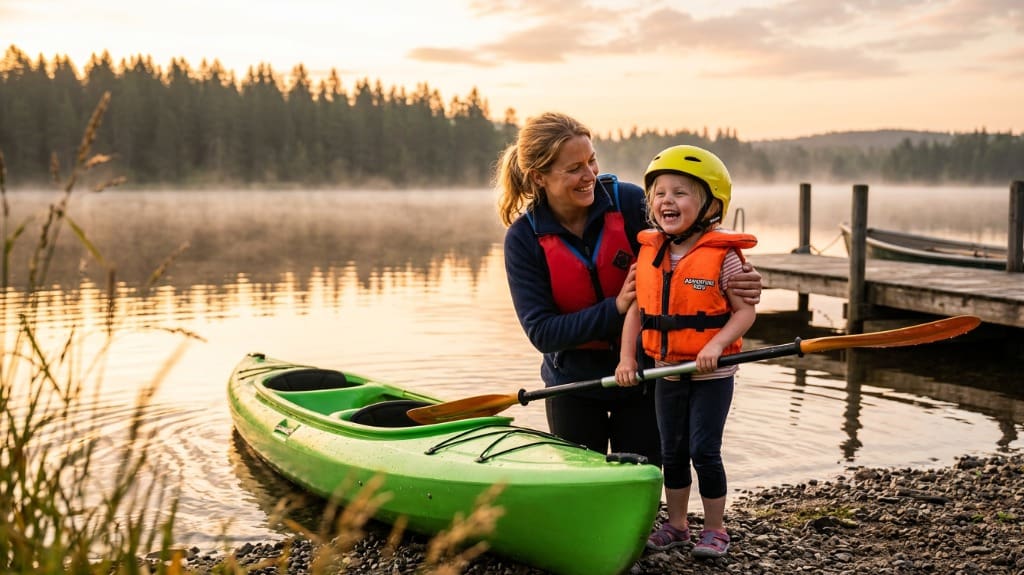
You’ve planned a short, safe outing, now make sure the gear fits the kid so the fun keeps rolling and a spill doesn’t turn cold or scary: pick a kayak that lets their feet reach the footrests or add a small dry‑bag booster so they can brace and steer, choose a paddle that’s noticeably shorter and lighter than an adult blade so their hands sit about shoulder‑width and they can turn with their torso instead of stretching with their arms, and put them in a properly fitted USCG Type III (Level 70) life jacket with a crotch strap and lift handle—worn at all times on the water because getting one on in the water is tough. Dress for immersion: no cotton, layer synthetic or wool, and use a wetsuit or drysuit in cold water, pack a whistle on the PFD, sun protection, and snacks to keep young kids comfy and confident. Consider bringing kid-sized gear to ensure comfort and safety throughout the trip.
Perform Pre-Ride Checks and Learn Basic Rescue Skills
Before you shove off, check gear and fit — make sure every kid’s USCG‑approved PFD fits snug, paddle leashes or spares are stowed, spray skirts or grab handles are secure, and floatation or dry bags hold your phone, whistle, and first‑aid kit so nothing surprises you on the water. Spend time practicing rescue basics on shore with short, controlled wet‑exit and re‑entry drills and simple companion moves like a reach or paddle‑float re‑entry and a bow or stern tow with a 12–15 ft towline, because three calm repetitions teach more than a long talk; who’s doing what, and who’s ready to be the rescuer, should be clear before you go. Finally, agree on your route and exit plan, check the weather and currents, pick a shore pickup spot and whistle signals, and keep everyone inside the planned distance so you can manage a quick, safe recovery if someone gets cold or tired. Bring essential checklist items like spare paddles, a bilge pump, and signaling devices in an organized pack for easy access and safer kayaking trips.
Gear And Fit Check
Start by checking the basics like a pro: make sure each child’s USCG‑approved Type III (Level 70) life jacket fits snugly with the crotch strap fastened and the grab handle easy to reach, then confirm the kayak will float if swamped by looking for sealed bulkheads or properly installed float bags in bow and stern and making sure cockpit drain or scupper plugs are secure. You’ll want the Type III life,jacket at all times, matched paddles to each child so hands sit about shoulder‑width with blades vertical, and boosters like a dry bag or pad that lift them enough for the paddle to clear the cockpit rim, then pack a whistle, spare paddle, towline, pump or sponge, and a waterproof phone or radio before pushing off. Choose a Type III PFD with proper buoyancy and comfortable fit for safer paddling.
Rescue Basics Practice
You checked gear and fit, now make the safety practice part of your routine before you push off, because knowing how to handle a capsize or a tired paddler makes the trip calmer and safer for everyone. Before launching, confirm each person has a properly fitted USCG‑approved Type III life jacket with crotch strap, a whistle, and that boats have float bags or sealed bulkheads and an accessible tether or throw bag, because those small checks save big trouble. On calm shallow water, rehearse wet‑exits, adult‑to‑adult assisted reentry and tows, and adult‑to‑child hip‑grab or towing sling reentries until kids can self‑reenter, keeping commands clear and calm. Carry a quick‑release towline, a 60–80 ft throw bag, and a bilge pump or sponge, and run simple scenario drills so responses feel automatic. Consider practicing with a rescue throw bag so everyone knows how to deploy and use it effectively.
Route And Exit Planning
On your walk‑through of the route, look for safe exits every 500–1,000 meters or at any obvious landmark like a beach, dock, or bridge so you can shorten the trip if wind, tide, or tired kids force you to bail early, and mark one or two guaranteed spots where everyone can get ashore easily. Before launch, check wind direction, gusts, and tides, avoid long open crossings if winds top 10–15 knots for getting kids, and pick an offshore‑safe return path, and do a quick gear check: fitted PFDs, spare paddle, towline, whistle, bilge sponge, dry bag with phone and water. Practice assisted re‑entry and a simple self‑rescue until calm, set a clear turnaround rule, and stick to it. Also pack and inspect essential safety gear like a throw bag, signaling device, and repair kit to ensure preparedness on every family paddle Essential Safety Gear.
Use Games, Routines, and Short Activities to Keep Kids Engaged
Keeping outings short and playful will do more for your kid’s confidence than long, rigid lessons, so plan for 10–20 minute paddling bursts broken up with shoreline play and snacks, and you’ll see focus and smiles return quickly. Treat early trips like training wheels for freedom: keep things young-friendly and light, bring one snack pouch per child, a whistle, properly sized PFD, and a simple toy, and pick the same launch and snack stop each time so routines settle in. Use small games—“sharks and minnows” to practice sweep strokes, drip-count races for rhythm, or nature “I spy”—and let kids invent one game, you guide, they lead, and you’ll build skills, autonomy, and steady engagement without a lot of prep. Consider including a basic starter pack with essential gear like a properly sized PFD and whistle to make outings safer and simpler for beginners essential gear.
Teach in Stages: S.E.L. (Safety, Enjoyment, Learning)
Start every outing by putting safety first: make sure each kid wears a properly fitted USCG‑approved PFD, check wind, weather and tide, brief a simple rescue plan, and stay close to shore until they’ve got basic self‑rescue skills. Keep things playful by planning short paddling bursts under about 30 minutes with snack and game breaks—use simple drills like “sharks and minnows” to teach strokes without it feeling like practice. Progress in stages, watching whether a child is unaware, aware but shaky, getting it with effort, or doing it automatically, and match your coaching from lots of demo and patience early to more mileage and creative challenges later. Consider outfitting everyone with adult PFDs designed for kayaking to ensure proper fit and flotation for adult-sized paddlers accompanying kids, and check the manufacturer’s sizing guidelines for each vest USCG‑approved PFDs.
Safety First, Always
Before you shove off, make safety the thing you set up first—fit everyone with a properly sized, USCG‑approved Type III (or equivalent Level 70) life jacket and have them put it on while still at the car, because trying to don one in the water is hard and dangerous; check straps, zips, and that it rides snugly under the chin without cutting in, and give each child a quick mirror check so they can feel confident about the fit. For your first time out, start paddling on calm, sheltered water, keep outings short so kids don’t get cold or tired, teach a simple rescue plan—stay calm, count heads, use a buddy boat or towline—and carry a whistle, two‑way radio, insulating layers, and a hot drink.
Keep It Playful
You’ll want to make safety your first move, but do it in a way that feels like part of the game—fit everyone with a USCG‑approved Type III PFD (with a crotch strap), check straps and zips while you’re still on land, glance at the sky and wind, and tell someone your route and return time so you’ve covered the basics before you even push off. Then keep it playful: pick short, clear goals like a nearby rock or beach, plan snacks and a quick shore break at 20–30 minutes, and use boats and paddles that are easy to paddle so kids feel in control, add simple drills—“sharks and minnows” sweep strokes—and praise specific progress, with a tow or pickup plan if energy drops.
Progress By Stages
You’ve got the fun part down—short goals, snacks, games—and now you’ll shape that play into steady progress by teaching in clear stages: Safety, Enjoyment, Learning. Start with Safety as non-negotiable: insist on properly fitted USCG Type III (Level 70) life jackets, stay close to shore, set a simple rescue plan and buddy system before you push off, and keep launches efficient so kids feel secure. For Enjoyment, keep first paddling adventure outings under 30 minutes on calm, familiar water, pack snacks, and aim for a nearby beach or play spot within ten minutes. Teach Learning in gradual steps—unconscious incompetence to unconscious competence—using games to practice strokes, celebrate small wins, then add mileage and gentle challenges as skill grows.
When to Pause, Adapt, or Tap Community Resources
If a trip starts feeling risky or your confidence in handling a rescue fades, stop and reassess—ask yourself, “What’s the worst that could happen, and am I willing to live with that?” You’ll want to watch kids for clear signs they need a change: heavy breathing, shivering, glassy or glazed eyes, or when a youngster who was doing fine suddenly gets fidgety, confused, or says they can’t keep up; those are cues to shorten the paddle, stay closer to shore, swap to a tandem, or throw a towline on before things get worse. If you’re lucky enough to paddle every year, plan backups: shorten routes, carry spare layers, snacks, and a throw bag, and pause new skills when interest fades. When you or a child need structure, tap clubs, camps, or outfitters for coached sessions, rentals, or guided trips, they’ll build competence faster and keep freedom alive.
Some Questions Answered
What Is the 120 Rule for Kayaking?
The 120 Rule says you’ll stay within two hours of shore or a safe exit, so you can reach land before fatigue, weather, or nightfall hits, which also ties into kayak etiquette and distance keeping so you don’t strand others. Plan round trips for about 75–90 minutes out, factor wind, currents, kids’ stamina, carry towline, VHF or phone, life jackets, snacks, and a simple bailout plan.
What Are the Three Golden Rules of Kayaking?
The three golden rules are: wear your life jacket always, paddle with good technique, and plan for simple rescues. You’ll pick a USCG‑approved PFD that fits, learn paddle technique—proper grip, steady strokes, brace—and keep trips short, near shore, with a buddy and a towline or shuttle ready. Check weather, dress for immersion, tell someone ashore your route, and practice one easy rescue before you launch, got it?
Can I Put My Kid in My Kayak With Me?
Yes, you can, if you prioritize tandem safety and proper weight distribution, pick a stable boat with bulkheads or float bags, and fit your child with a USCG‑approved life jacket that has a crotch strap and grab handle. Boost small kids for visibility, keep trips under 30 minutes, plan stops, carry a towline and dry clothes, avoid cold or choppy water, and be ready to perform a quick rescue if needed.
At What Age Can a Child Start Kayaking?
You can start as a passenger very young, but independent kayaking usually begins around age 5 when age milestones like balance development, shoulder reach, and attention span line up; by 6 kids often handle a small sea/touring craft in calm water with supervision. Watch for shoulder-width reach for a child paddle, fitted USCG PFD, short practice bursts, booster cushions, towline, and lots of breaks, and build skills gradually, confidently.