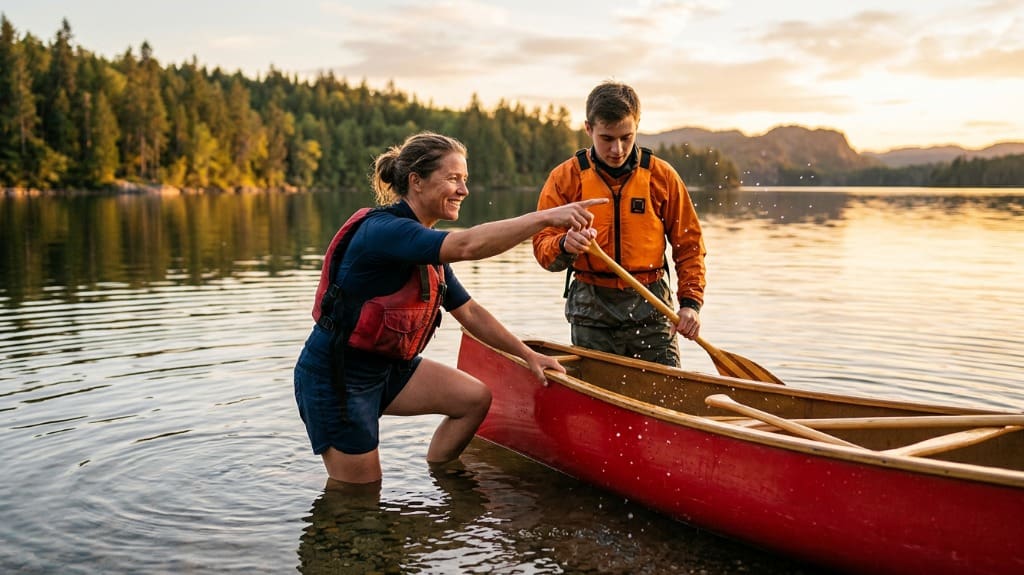

If you want to guide newcomers, start safe and simple: insist on a well‑fitted PFD and helmet, teach a compact forward stroke and low brace, then practice eddy‑catches and wet exits on calm water before moving to gentle current, and rehearse throw‑rope casts and partner rescues so everyone knows their role; carry spare paddles, a throw bag, whistle, knives, route map and an emergency plan, run a quick risk check before launch, coach in small groups, and you’ll learn clear next steps here.
Some Key Takeaways
- Prioritize safety-first mentoring: enforce fitted PFDs/helmets, pre-trip risk checks, and conservative venue selection.
- Teach a few high-impact skills first: forward stroke, low brace, wet exit, and basic river reading.
- Progress deliberately from calm water to gentle current using measurable skill gates and repeat coached hours.
- Run short, focused drills and laps (eddy catches, sweeps, wet exits) with small instructor-to-student ratios.
- Equip and rehearse rescue systems: throw bag practice, buddy checks, spare paddle, written emergency plan, and designated lead/sweep.
Why Mentorship Matters: Safety, Confidence, and Lifelong Paddlers
Because paddling has real hazards, you’ll learn faster and stay safer when someone who’s done it before shows you the ropes, points out the local trouble spots, and coaches you through the basics, so look for a mentor who’ll spend time on guided days teaching self-rescue (how to get back in after a swim), river‑reading (where currents and eddies hide), and simple gear use like a throw rope, and expect them to start you on gentle water, correct sloppy technique on the spot, and check in regularly so you build confidence without taking oversized risks. A good mentor meets you where you are, shows hands-on skills, explains local hazards like strainers, checks your kit, sets small goals, and plugs you into community trips so you gain skills, friends, and pathways into programs or work. Also, mentors often emphasize basic water safety practices—wearing a life jacket, knowing weather and current conditions, and carrying essential safety gear—because these reduce risk and help beginners enjoy paddling more safely.
Who Beginners Are and What Skills They Actually Need First
Most beginners are recreational paddlers with very little time on the water, so you should teach expecting under‑ten to under‑a‑hundred hours of experience and focus on the basics that stop trips from going wrong. Start with simple strokes and boat control, practice wet exits and re‑entries plus assisted rescues and throw‑rope use until they’re confident, and introduce moving‑water awareness like eddy catching and current lines only after a controlled lake day. Make PFD fit and helmet use nonnegotiable, point out strainers and other hazards, and build fun, short practice scenarios that let learners see clear progress without overwhelming them. Also make sure they have essential gear like a properly fitted PFD and paddle that match their size and the type of kayaking they’ll do, as basic equipment greatly improves safety and comfort essential gear.
Beginner Skill Priorities
Start by picturing the kind of beginner you’ll usually meet: someone who’s excited to try kayaking, has maybe a few hours in a boat if that, and hasn’t yet built instincts for currents, balance, or what to do when things goes wrong, so you’ll want to focus first on a short set of practical, high-impact skills that keep them safe and having fun. You’ll teach basic paddling strokes, bracing, and simple boat control first, then wet exits and assisted rescues with a throw rope, so they can recover without panic; emphasize proper PFD fit, how to spot strainers and read gentle current or eddies, and keep choices conservative—lake days before moving water—while practicing partner skills to build confidence and a habit of returning. Also include an easy-to-follow checklist of essential gear and safety items to bring on trips.
Realistic Risk Awareness
When you’re teaching beginners, assume they’ve got almost no hours on the water, so keep your first lessons tightly focused on the few skills that actually stop mishaps: how a properly fitted PFD should sit, basic forward and sweep strokes to steer and slow down, a solid low brace to prevent capsizes, and simple self- and assisted-rescue moves like a calm wet exit and using a throw bag to get someone back to shore—teach those in easy, repeatable steps, show the signs of common hazards like strainers and shallow undercuts, and choose venues where they can practice without big consequences, such as a protected lake cove before a slow-moving river eddy; you’ll build confidence faster if you prioritize comfort and success, coach partners to back each other up, and keep the first days about safety, fun, and a few clear, practiced moves rather than trying to cover every stroke or theory at once.
You’ll treat this as a beginners guide: assume many have under ten hours, focus on wet exits, re-entry options, throw-rope drills, recognizing hazards, and picking safe sites, so they get freedom on the water without unnecessary risk. Keep in mind that recommending beginner paddling dvds can reinforce classroom practice and build confidence between outings.
Core On-Water Skills Mentors Must Teach First (Eddy-Catch, Forward Stroke, Bracing)
Think of the very first lesson on the water as triage for your students’ safety and confidence, because if they can catch an eddy, keep a steady forward stroke, and brace reliably, everything else gets easier—so you’ll show them how to read the seam of the current, put the bow into the flow, and use a short stern or forward sweep to pull into slower water, then teach a compact, efficient forward stroke with a straight-tracked torso and full hip rotation so they’ve got the momentum to punch through currents or slip into eddies, and finally introduce low and high braces starting with dry or static wet‑exit and re‑entry drills before moving into dynamic practice in Class I–II until they can recover without panicking; watch for clean blade placement, consistent cadence, and calm body language, carry a paddle leash and helmet for every paddler, give clear measurable goals like catching 4 of 5 eddies, holding form for two minutes of steady paddling, and making an 80% high‑brace recovery, and run short laps that chain the skills together—forward stroke into eddy catch, then brace when a wave or turn destabilizes them—so the sequence becomes instinctive. Also recommend properly fitted personal flotation devices and helmets from reputable suppliers before any on‑water training session.
Essential Rescue Basics to Model and Train (Self-Rescue, Throw Rope, Strainer Avoidance)
You’ll start by mastering self-rescue basics—practice confident wet exits and re-entries in calm water until you can heel-hook back in solo, then add simple brace and roll drills and quick T-rescue swaps so you can right a boat or get into a spare craft within minutes. You’ll also train throw-rope technique with controlled underhand, low pendulum throws and coil work, doing at least ten short and long casts per session and always anchoring yourself safely so you don’t become the next problem. And you’ll learn to spot and avoid strainers by reading water for angled branches, flat upstream “stiller” zones and debris lines, using stern-first ferrying and eddy-hold exits, and sticking to clear rescue rules—never throw or swim into a strainer, keep distance, wear checked PFDs and helmets, and brief your team before any on-water rescue. Be sure to choose a properly rated throw rope designed for paddling rescues to ensure reliable performance.
Self-Rescue Fundamentals
Because staying safe on the water starts with the basics, make the wet exit and simple self-rescue moves your first priorities, practicing them in calm, shallow water until you can unclip a skirt and roll out while breathing steadily in about 10–15 seconds; after that, work on righting the boat (T‑rescue or paddle‑float), remounting with a heel‑hook or cowboy method, and getting back into paddling position, drilling each step until it feels smooth and low‑stress. You’ll train calmly, carry a spare paddle and tow, wear a PFD and helmet, and set conservative limits so practice matches where you actually paddle. Focus on steady breathing, cueing heel‑hook placement, checking cockpit fit, spotting strainers from afar, and repeating drills until they’re second nature. Carry an appropriate throw bag and know how to deploy it effectively as part of your rescue kit.
Throw Rope Techniques
Now that you’ve got wet exits and remounts feeling like muscle memory, start practicing throw‑rope work so you can reach someone from shore or a boat without fumbling when seconds matter. Pack a 30–50 ft bag for most rivers, longer for bigger runs, coil it figure‑eight or butterfly, clip it to your PFD with a quick‑release carabiner so it feeds cleanly, and carry a spare plus knife and whistle; that gear gives you options when White Water turns fast. Stand solid, lock your torso, aim just downstream of the swimmer’s chest and use a two‑handed pendulum to send a loop they can grab, teach them to cross arms and slide one hand under, never wrap the line, practice quarterly with reel‑in drills. Choose a bag with durable construction and a reliable throwing rope designed for quick deployment, and consider length and buoyancy when selecting a rescue throw bag.
Strainer Recognition Skills
When you scan a section of river, make it a habit to look for the telltale V‑shaped flow lines that point into anything that could trap you—fallen trees, root wads, bridge pilings, or a tangle of branches—and steer wide of the downstream throat where the current will pin boats and people, because that’s where entrapment happens fastest. You’ll teach students a quick 3‑second safety check: spot strainers, read moving water speed and eddies, and pick an upstream escape line or eddy to exit, before committing. Model calm wet exits and remounts in shallow spots, carry a 20–30 m throw rope packed for fast use, rehearse anchored and moving‑water pickups, and always favor routes that keep everyone away from narrow timbered channels.
How to Structure a Two-Day Beginner Session (Lake Day Then Moving-Water Day)
Start the weekend with a clear plan so everyone feels safe and can learn: begin Day 1 on the lake with a short shore-side safety briefing and gear check—make sure PFDs fit snugly, helmets are on if you’ll need them later, throw ropes and whistles are stowed, and clothing will handle cold water—then spend three to four hours on calm water teaching basic strokes, bracing, and wet exits in shallow conditions, work up to self-rescue drills like re-entries and assisted rescues, and give about 15–20 minutes to orient folks to local hazards and rules before you launch; keep your groups small, no more than six students per instructor, and use progressive practice—start with boat control and edge work, add low brace, then run a supervised 30–45 minute session on throw-rope use and avoiding strainers so people build confidence in a steady, measured way before you move on to Day 2.
On Day 2, do a short land review of river reading, flow features, eddy catches and ferrying, then move into controlled current so new paddlers practice catching eddies and basic maneuvers, keep rescue roles clear, finish with a debrief that offers next steps, skill benchmarks, and local resources so folks keep learning freely.
Using Progressive Challenge: Scaffolding Skills From Calm to Current
Start your progression on calm, flat water—think pool or a sheltered bay—so you can teach and watch for consistent forward stroke, effective sweep turns, and confident wet-exits before you ever put students into current, and carry a throw bag, paddle float, and a plan for assisted re-entry on every session. Once those markers are reliable, nudge them just outside their comfort zone with small current features like eddy lines and peel-outs, coach specific drills such as eddy catch practice and throw-rope repeats, and watch how controlled, short exposures build confidence faster than one big jump. Keep the focus on team skills too—river-reading, clear on-water calls, and quick assisted rescues—so risk stays managed while you raise the challenge step by step.
Gradual Skill Progressions
Because confidence and control grow fastest when you move in small, planned steps, you’ll want to build skills on calm water first, then add current and complexity as you prove comfort and technique; think of it like learning to walk a beam—steady on flat ground, then try a low rail, then a higher one once you’ve nailed balance. Start with local kayaking sessions teaching forward, reverse, and sweep strokes and boat control on flat water, then introduce gentle current for eddy-catching and ferrying, practice wet-exit and re-entry in a pool or warm lake, move to partner-assisted rescues in shallow flow, and teach throw rope use and strainer avoidance. Keep objectives small, coach at one-to-four ratio, pair newcomers with mentors, and book repeat coaching to build freedom safely.
Controlled Risk Exposure
You’ve practiced balance and basic strokes on calm water long enough to feel steadier and more confident, so now you’ll slowly add current in ways that protect you and let you learn—think of it like easing onto a moving sidewalk instead of being dropped into a river. You’ll follow a plan that keeps most time in flat water, use clear skill gates—confident sweeps, wet exit, assisted self-rescue—before moving to eddy practice, then gentle Class I current, saving harder moves for later, and you’ll watch objective markers like hours on-water and coached sessions so you don’t rush past that risky <100-hour window. Keep small groups, ropes and spotters, stage rescues, and coach the next generation with steady, measured exposure.
Communication and Feedback Techniques That Accelerate Learning
When you’re coaching on the water, you’ll often get better results from short, clear exchanges than long lectures, so try the “ask–tell–ask” loop: first ask what the paddler was aiming for, then give one specific observation (for example, “your forward stroke is short and low on the catch”), and finish by asking how they think they can fix it—this nudges them to reflect, keeps focus sharp, and makes the correction stick. Keep feedback to one technical goal per drill, tell them the metric you want (for example, 80–90% clean stern draws in ten minutes), demo at normal speed then let them try with assisted practice for one to three reps, use video or slow‑motion clips for visual proof, and speak in outcome terms so they know what freedom feels like on the water.
Creating an Inclusive, Community-Based Program That Retains Paddlers
Building a program that actually keeps people coming back starts with recruiting and training community leaders who look like and live with the folks you want to reach, because trust and familiarity are what turn a first try into a habit; think about who’s already paddling in neighborhoods you want to serve, invite them to lead sessions, give them clear teaching tools and modest pay or scholarships, and watch enrollment and retention rise. You’ll offer free or low-cost beginner days that focus on comfort, wet exits, self-rescue and throw-rope skills, invite families so parents learn PFD use too, and link participants to guide scholarships or jobs, promote on kayaking Facebook groups, track progress, adjust teaching, and celebrate small wins to keep people coming back.
Recruiting Beginners: Outreach, Messaging, and Approachable Entry Points
Now that you’ve got community leaders and beginner programs in place, it’s time to get paddlers in the seats—start by making your outreach feel like a friendly invitation, not an audition. You’ll highlight lake days, calm bays, and pool sessions in flyers and social posts, avoid extreme runs, and call out that many newcomers have under 100 hours, so they won’t feel out of place. Partner with local groups and leaders who mirror your community, promote two-day beginner formats that pair a flat-water day with a moving-water day, and emphasize practical skills like self-rescue and basic strokes. Use family touchpoints, Facebook groups, beginner festivals, and guinea-pig days to connect curious folks to mentors and low-pressure Adventure Sports entry points.
Safety Systems Off and On the Water (Risk Checks, Emergency Plans, Equipment)
If you want everyone home the same way they left, start by running a quick, formal risk check before you even load boats—scan who’s coming (how many hours they’ve got on the water), what the weather and flow look like, where strainers or cold pockets sit, and whether your leader-to-group ratio matches the river or lake you picked, and don’t be shy about scaling back the plan if more than about 30% of folks fall below the skill threshold for the run. You’ll carry a written emergency plan and route map, make sure two leaders can recite it in two minutes, and pack redundant gear—PFDs, whistles, helmets, throw bag per four individuals, knives, spare paddles—then run buddy checks, designated lead and sweep roles, hand signals, eddy rendezvous, and regular rescue drills so response times stay sharp.
Mentoring Pathways: Moving Students Into Clubs, Scholarships, and Careers
When you want to help a promising paddler move beyond a one-off trip, start by connecting them to the local club scene and practical supports that make the next steps realistic, because clubs often have loaner boats, regular coached outings, and people who’ll take a new paddler under their wing—look for clubs that run beginner nights, have clear mentorship pairings, and post schedules so newcomers can plan around school or work. Then help them apply for need-based scholarships, like guide-school funds that cover training, so finances don’t block a calling, and design step-up programs that move families and youth into teen cohorts, seasonal trips, or overnight mentorship adventures, which expose them to careers, stewardship, and community leadership—recruit leaders who mirror participants to keep momentum and make pathways really good.
Troubleshooting Common Beginner Problems and When to Refer On
You’ve helped a paddler get plugged into a club, found scholarships, and set up longer-term mentorships, and now you’ll start watching how they actually handle being on the water, because spotting trouble early keeps people safe and keeps them coming back. Notice repeated capsizes or failed wet exits after two or three coached tries, and be ready to say, I’m happy to share this—let’s send you to a pool clinic for controlled repetition and partner support, it builds confidence. If they can’t catch eddies or read current, step back to sheltered moving water or suggest Swiftwater Rescue 1–2. Panic, refusal of briefings, or team rescue gaps mean pause progression, refer to comfort-first programs or formal rescue courses.
Some Questions Answered
What Is the 120 Rule in Kayaking?
The 120 Rule in kayaking keeps about a 120° forward sector clear so you can see hazards and react, think of your Launch Angle for entries and lines, aim the bow so you’ve got 60° each side, and don’t hug blind corners. Watch for waves, strainers, and other boats, carry a throw rope and whistle, pick lines that preserve your sight, and practice ferrying and backup moves before you commit.
What Are the 3 C’s of Mentoring?
The three C’s of mentoring are Competence, Coach, and Care, and your Guidance Compass should steer you toward clear goals, regular hands-on teaching, and safe, inclusive support. You’ll set measurable skills like wet exits first, run short coached sessions often, and model risk checks and rescue gear use so newcomers progress without danger. Carry a throw rope, helmet, PFD, and patience, and check progress against timelines, adjusting pace as needed.
What Are the Three Golden Rules of Canoeing?
The three golden rules of canoeing are wear your PFD, stay in the boat, and read the water. You’ll practice good Stroke Technique, keep your PFD snug, and carry a throw rope and bailer, so if you flip you can brace, wet‑exit, or get assisted without panic. Pick calm water for beginners, position stronger paddlers downstream of novices, and coach simple strokes and eddy catches before you push into moving water.
What Are the 7 Roles of a Mentor?
You fill seven roles: Teacher, Safety Ambassador, Connector, Advocate, Coach, Role model, and Organizer, and you’ll coach basics, enforce PFDs and rescue gear, link people to clubs and courses, recruit underrepresented paddlers with subsidies, set goals and give steady feedback, model calm behavior on the water, and plan trips and “guinea pig” days. Start by checking gear, choosing calm venues, carrying throw-rope and spare paddle, then teach and celebrate small wins.