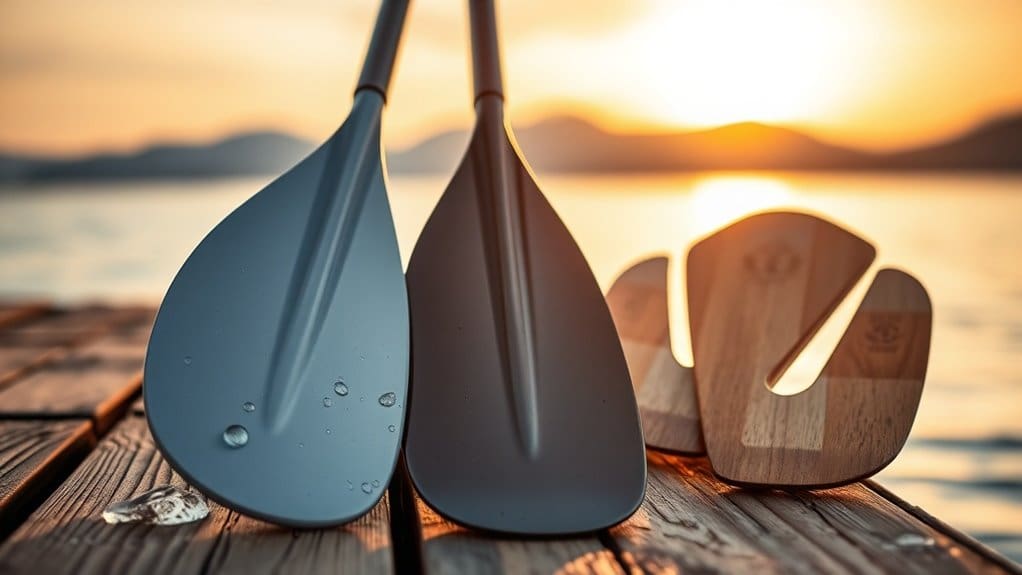
Pick a paddle by measuring your height and your kayak’s widest point, then choose a length that matches the hull width and your stroke angle—longer for low‑angle cruising, shorter for high‑angle power—try two lengths on water for 10–15 minutes each, and add or subtract ~5 cm for high seats or wide cockpits. Choose nylon for toughness, fiberglass for balance, carbon for lightness, check ferrules and feathering, pack a spare, and test comfort and shoulder strain to learn more.
Some Key Takeaways
- Match paddle length to your height and kayak width using a sizing chart, then fine‑tune ±5 cm for seat height and stroke style.
- Choose blade shape for your stroke: long/narrow for low‑angle cruising, shorter/wider or wing for high‑angle power and maneuvering.
- Select material based on use: carbon for lightest weight and low fatigue, fiberglass blends for balance, nylon/plastic for durability and cost.
- Test at least two paddle lengths and blade styles on the water for 10–15 minutes each, checking comfort, cadence, and shoulder strain.
- Prefer adjustable or multi‑piece paddles for beginners/groups, and carry a durable spare for rocky or long trips.
How to Pick the Right Paddle Length for Your Height and Kayak Width
Start by measuring your kayak at its widest point and comparing that number to your height, because those two things together tell you most about the paddle length you’ll need; if your boat is a wider recreational model (about 26–30 inches) you’ll usually end up near 220–240 cm, while a narrow touring hull (roughly 22–25 inches) tends to suit 200–215 cm, and you can use your paddler height plus about 5–7 inches (13–18 cm) as a quick starting point before you tweak for style. Use a Kayak Paddle Sizing chart to match kayak width and paddler height, then adjust shaft length for comfort, add ~5 cm if you paddle relaxed/low‑angle or have a wide or high seat, subtract ~5 cm for aggressive/high‑angle setups, and remember whitewater paddles follow their own sizing, so try before you commit. Many beginners find measuring both kayak width and personal height and consulting a paddle sizing chart helps avoid costly returns and improves comfort on the water.
Which Blade Shape Fits Your Paddling Style: Low‑Angle, High‑Angle, Wing, or Greenland
When you’re choosing a blade shape, think first about whether you want low-angle efficiency or high-angle power, because that decision steers your paddle length, stroke, and how tiring trips feel. If you want easy, relaxed cruising on a touring or wide rec kayak, look for longer, narrower blades and a longer shaft that let you use a gentle, sweeping stroke and save energy over miles; if you need quick bursts, tight maneuvering, or whitewater control, pick shorter, wider blades with a shorter shaft so you can plant the blade more vertically and drive harder. Try each style on the water if you can—bring one low-angle and one high-angle option, test a few strokes, note effort and control, and choose the shape that matches how you want to paddle most of the time. For beginners, also consider paddle options specifically designed for greenland paddles and starter kayakers to match technique and comfort.
Low‑Angle Efficiency
Think about low‑angle paddling as the easy‑cruise option that keeps your shoulders happy on long outings, where you use a longer paddle with narrower, longer blades and hold your hands below shoulder height to get a relaxed, efficient stroke; aim for paddles around 210–230 cm with blade areas near 80–90 in² (about 516–581 cm²) so you can maintain a steady cadence without tiring or overloading the shoulders, and favor blades shaped for sweep and rolling strokes rather than vertical power. You’ll want a mid‑to‑small blade size for touring rigs, a paddle length that lets you sit tall yet reach slightly forward, and consider fiberglass blades for forgiving flex and durability over stiff carbon fiber if you value comfort; think about feather angle for wind, but beginners often stick to 0°. Many lightweight touring paddles are designed specifically for beginner kayakers to balance comfort, durability, and price.
High‑Angle Power
If you’ve been enjoying low‑angle cruising but want more punch for faster tours or rougher water, you’ll want to shift toward high‑angle paddling, which uses a shorter paddle and a wider, more vertical blade to give you strong, efficient pulls—so first look for a blade that feels broad and solid in the water, or a wing‑style scoop if you want extra lift for each stroke. You’ll choose a shorter paddle, often around 5 cm less than low‑angle charts, and favor wider blades or wing blades to drive you forward with powerful strokes, carbon paddle options give stiffness and lightness, and whitewater paddlers prefer short, strong setups. Practice a steeper paddle stroke, tighten your torso work, test paddle length on flat and rough water, and carry a spare ferrule or tape for quick fixes. Many beginners find straight‑shaft paddles are a great starting point because they offer consistent control and simple, reliable performance.
What Paddle Material and Weight Mean for Performance and Budget
You’ll want to balance weight against durability and cost: lighter carbon paddles cut shoulder fatigue on long trips but cost more and can chip if you strike rocks, while plastic or fiberglass options are cheaper and tougher but feel heavier and flex more, making long days harder. Start by handling paddles in a shop or at a demo, check the actual weight and construction notes (is it thin pre‑preg carbon or a heavier “carbon” with a foam core?), and choose something lighter if you plan multi‑hour touring, or a sturdier, slightly heavier paddle if you mainly paddle casually or in rough water. Carry a budget backup or a tough plastic spare if you’ll be in rocky areas, and prioritize how many hours you’ll spend paddling each trip, not just the sticker price. For beginners looking to outfit themselves affordably, consider starting with entry-level models from reputable brands to learn what blade shape and shaft feel suit you.
Weight Versus Durability
Because paddle weight and material shape how far you’ll want to go and how long your shoulders will forgive you, start by matching what you plan to do to what you can afford: lighter, top-end carbon paddles drop swing weight a lot—sometimes down near 14 ounces—so they’ll save your shoulders on multi-hour tours, but they’re stiffer, pricier, and more brittle, so if you paddle shallow, around rocks, or in whitewater you’ll want something tougher; for most recreational or weekend touring, a fiberglass shaft with a composite blade gives a sensible middle ground of durability, reasonable weight, and cost, and it’s smart to carry a durable spare (a nylon or 4-piece backup) on longer trips since even high-end carbon can fail under extreme hits. Choose by balancing weight, stiffness, and durability, check construction notes for carbon shaft layups versus plastic/nylon blades, and plan a spare paddle. Adjustable-length paddles are especially useful for beginners and groups with varying paddling styles, because you can quickly adapt blade length and feathering to suit different users or conditions, making them a versatile choice for recreational kayakers.
Cost Versus Performance
When you’re weighing cost against performance, think about how often and how far you’ll paddle, because that will tell you whether it’s worth spending more for lighter, stiffer gear or sticking with something tougher and cheaper; for regular long tours, a carbon or carbon/fiberglass paddle—light enough to cut fatigue on multi-hour days—usually justifies the higher price, while casual paddlers who stick to short outings or rocky shores do better with plastic or fiberglass options that take hits and cost a lot less. Decide your touring goals, then match material to mission: choose carbon for lowest weight and best stiffness if you log long miles, pick glass/fiberglass blends for balance, or go plastic/nylon for max durability and low cost. Carbon fiber paddles also offer exceptional reduced fatigue on long outings, making them a favorite for serious kayakers.
Adjustments and Fit Tweaks: Ferrules, Feathering, Bent Shafts, and Seat Height
If you want a paddle that actually fits your boat and keeps your wrists happy, start by checking the ferrule (the joint where a 2- or 3-piece paddle comes apart), the feather angle, whether the shaft is straight or bent, and how your seat height and cockpit width change the effective length you need. Inspect the ferrule system for a solid lock, because multi-piece, adjustable paddles are great for travel or sharing but add a possible weak point, and set feathering to 45–90° if you paddle windy water to cut wrist torque, or 0° for simple rolling and braces. Try a bent shaft if your wrists protest, and add or subtract about 5 cm to paddle length depending on seat height and cockpit width, then test on water. Also consider paddle material and weight when choosing to ensure durability and comfort, especially if you’ll be doing long paddles with adjustable paddles.
Choosing Between Recreational, Touring, and Whitewater Paddle Categories
Pick the paddle category that matches where you’ll actually spend time on the water, because the right blade and shaft make paddling feel easier and prevent sore arms; for casual lake trips or slow rivers, go with a wide, heavier recreational paddle that gives stability and is cheap to replace, for longer distance flatwater or coastal miles choose a lighter, stiffer touring paddle (carbon or fiberglass) that saves energy and pairs best with narrower boats, and for rivers with rapids pick a short, tough whitewater paddle built for quick strokes and abuse—if you want to do a bit of everything, favor a touring/enthusiast model or a 3‑piece adjustable so you get lighter swing weight for distance and the option to break it down for travel or share it with different paddlers. Match paddle length to boat width and stroke style, consider blade shape for high-angle vs low-angle strokes, check shaft material like carbon shaft for weight savings, and try an adjustable 3–piece if freedom to travel matters.
Practical Testing Tips: Try, Measure, and What to Bring Home (Spare, Backup, and Care)
As you head out to try paddles, treat each demo like a mini‑test drive: bring your kayak’s widest measurement and your height, test at least two lengths for about 10–15 minutes each so you can compare cadence, comfort, and any shoulder strain, and paddle at your normal speed while trying both high‑ and low‑angle strokes plus a few bracing and turning moves to spot wrist or shoulder trouble. When you try paddles on the water, pick sizes that match charts, adjust length by +/-5 cm for seat height and stroke, and notice how each paddle size changes cadence and power. Bring a compact spare or backup (four‑piece or cheap plastic), check ferrules for play, inspect blade tips, rinse and dry, and test locks and feathering for easy long‑term care.
Some Questions Answered
How Do I Transport and Protect My Paddle During Travel?
You’ll pack and protect your paddle by first slipping it in a soft sleeve or paddle tube, adding blade guards and a humidity pack, then stowing that inside a travel case or quick dry bag, secured with padded straps and tie downs, and bringing a disassembly kit for split paddles, which lets you break it down and cushion joints for flights or cars; treat it gently, check seals, and air it before stowing.
Can I Rent a Paddle Before Buying to Test Long-Term Comfort?
Yes — you can rent a paddle to try beforebuy, many shops offer rental availability, short term rentals, demo programs, or even long term trials, so you can do ergonomic testing and comfort assessments over multiple sessions. Ask about rental exchange options for different shaft lengths or blades, get posture feedback from staff, note hand placement and fatigue, carry a small grip tape and measuring tape, and track how the paddle feels after several outings.
Are There Eco-Friendly Paddle Material Options?
Yes, you can pick eco-friendly paddles, and you should look for bamboo shafts or reclaimed wood for stiffness, flax fiber or bio resin blades for weight and strength, cork grips or hemp wraps for comfort, and recycled plastics or aluminum alternatives like composites to cut waste, with biodegradable coatings for finish. Check labels, ask makers about sourcing, carry a simple care kit, try a demo, and favor repairable, locally made options first.
How Do Blade Repairs Affect Performance and Warranty?
Repairs can help blade longevity, but they can also harm structural integrity and cause flex changes, so you’ll want to weigh fixes carefully, right? Check for cosmetic damage first, then probe for cracks that change vibration transfer or weight distribution, because small fixes may restore hydrodynamic efficiency, while poor repair techniques can weaken the blade and risk warranty voidance. Carry epoxy, fine sandpaper, and photos, document damage, and ask the maker before fixing.
What Accessories Improve Paddle Storage and Handling?
You’ll want paddle hooks or wall racks to keep gear off the floor, foam sleeves and blade covers to stop dings, and silicone caps for shaft ends, so parts don’t grind or cut, right? Add shaft grips for comfort, leash clips and hanging straps for quick secure storage, and a padded travel case for trips, so you can grab, stow, or pack fast, protect blades, and carry confidently without fuss.


