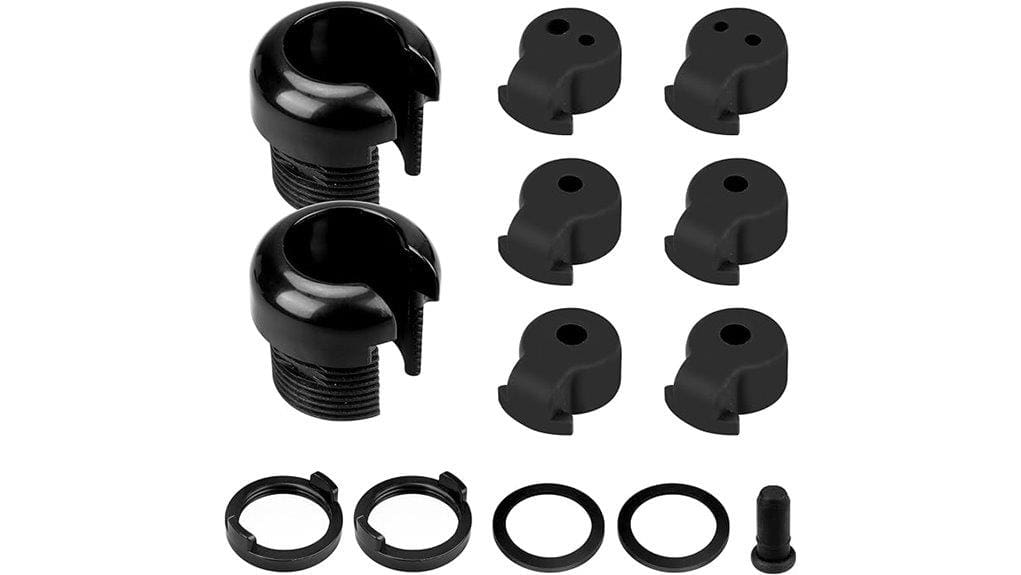
You’ll get a compact, marine-grade through-hull wiring kit that fits a 1-3/8" hole and accepts hulls up to 1/2" thick, with six inserts for cable diameters from 1/8"–5/16". It’s molded tough for UV and salt, uses two water-resistant fittings, and gives tidy, removable-pod routing when sealed and torqued correctly. Installation is straightforward but hole tolerances matter—misalignment or over-compression ruins the seal. Keep going and you’ll find step-by-step install tips, pros/cons, and alternatives.
Some Key Takeaways
- Fits removable pods needing a 1-3/8" hole and hull thickness up to 1/2".
- Includes two water-resistant fittings and six inserts for cable sizes 1/8"–5/16".
- Marine-grade plastic construction resists UV, salt, crush, and flex in normal use.
- Proper installation (dry-fit, sealant, torque, routing) is critical to prevent leaks.
- Good budget option for tidy, reversible installs; alternatives include bulkhead glands or custom molds.
Does This Wiring Kit Fit My Kayak or Pod? (Hole Size, Hull Thickness, and Cable Diameter)
If you're checking fit, start by measuring: the kit needs a 1-3/8" hole, accepts hulls up to 1/2" thick, and includes six fittings that cover cable diameters from 1/8" to 5/16". You'll verify hole tolerances against your pod flange and hull material; a snug, true hole prevents movement and water intrusion. The six inserts let you match cable outer diameters precisely, simplifying cable management and minimizing play. You won't need messy sealants for basic installs if tolerances are met. Measure twice, choose the right insert, and you'll gain clean routing and the freedom to reconfigure gear quickly. Our shop supports paddlers with product selection and advice, especially about transducer arms for kayakers.
What’s in the Box and How Rugged Is the Build? (Materials, Fittings, Waterproofing)
When you open the package you'll find a single through-hull wiring kit from Ophjerg that includes two water-resistant fittings and a set of six interchangeable inserts covering cable diameters from 1/8" to 5/16", all molded in marine-grade plastic. You get smooth-edged components sized for a 1-3/8" hull port and hulls up to 1/2" thick. Material durability is high for UV and salt exposure; wall thickness resists crush and flex under load. Sealing effectiveness relies on the water-resistant fittings and snug inserts; paired with proper compression they prevent seepage. The kit is minimal, rugged, and freedom-oriented. This kit is well suited to paddlers and beginners who need reliable components compatible with common kayak materials and basic marine adhesives.
Step-by-Step Installation for Common Setups (Fishfinder, Transducer, Removable Pod)
Because proper routing and sealing make the difference between a neat, watertight install and future headaches, start by dry-fitting the Ophjerg through-hull kit into a 1-3/8" hole to verify hull thickness (≤1/2") and select the insert that matches your cable bundle diameter. Use mounting templates to mark pod, transducer, and fishfinder locations. Feed cables through chosen insert, confirm alignment tips for transducer face and pod lip, then torque hand-tight. Apply marine sealant per spec and snap the cap. Route cable management inside hull with clips, label ends for remote troubleshooting, and test electronics before finalizing. For kayak-specific installs, consider using purpose-built mounts and accessories designed for stability and easy removal.
Real-World Pros and Cons After Use (Clutter Reduction, Water Resistance, Potential Issues)
Cut clutter quickly by routing your fishfinder, transducer, and accessory cables through the Ophjerg through-hull kit—you'll see cables disappear into the hull and remain secured against snagging and tripping. You gain tidy cable management, cleaner decks, and unobstructed movement—ideal when you want open space and control. Water-resistant fittings block spray and brief immersion; seals held up in routine use. Watch for installation errors: misaligned holes compromise sealing, and compressing thick hulls can deform gaskets. Monitor for salt corrosion on exposed metal contacts despite plastic housing; rinse and inspect regularly. Overall trade-offs favor utility if you maintain it. For best results, include a simple kayaking checklist to verify seals and clean contacts before and after outings.
Is It Worth Buying? Pricing, Alternatives, and Who Should Pick This Kit
If you want cleaner deck space and reliable cable protection without a custom install, the Ophjerg through-hull wiring kit is worth considering: it’s affordable compared with full wiring harnesses, fits most removable pods with a 1-3/8" hole, and uses durable marine-grade plastic and water-resistant fittings to reduce snagging and spray intrusion. You’ll find clear pricing tiers: budget single-kit purchases or multi-pack savings for fleet use. Alternatives include heat-shrink pass-throughs, bulkhead glands, or custom molded solutions. Buyer demographics favor anglers and small-boat owners seeking simple, reversible installs that preserve freedom on the water. This kit is especially popular among paddlers who want an organized deck setup with an easily mounted map case deck-mount map cases.
Some Questions Answered
Will This Kit Void My Kayak Warranty?
Possibly — you’ll need to check your kayak’s warranty terms and consider warranty transferability. Installing this through-hull wiring kit can be seen as a modification; some manufacturers void coverage for hull alterations unless you get prior manufacturer notification. You should notify the manufacturer, document the install, and keep original parts to restore if needed. That minimizes risk to coverage and preserves options if you value freedom to revert changes.
Can I Run Power and Data Cables Through One Fitting?
Yes — you can run power and data cables through one fitting, but avoid mixed signals and interference by separating power and sensitive data lines when possible. Use the kit’s multiple sized inserts or a shared conduit with proper shielding, twisted pairs, and ferrite beads. Keep high-current cables on one side, data on the other, and maintain secure strain relief. You’ll preserve signal integrity and retain installation flexibility.
Are Replacement Seals or Parts Available Separately?
Yes — you can get replacement seals and spare grommets separately; contact the seller for availability and part numbers. You’ll receive marine-grade seals sized for the six fitting diameters; they match the 1/8"–5/16" cable range and the 1-3/8" hull cutout. Keep hull thickness (≤1/2") in mind when ordering. Request shipping details and expected lead time so you can maintain water resistance and minimize downtime while preserving your installation freedom.
Can I Install This Without Drilling (Adhesive Option)?
No — you’ll need to drill the 1-3/8" hole for correct fit; adhesive-only mounting isn’t recommended. If you insist on a non-drilled approach, test adhesive longevity and sealant compatibility carefully: use marine-grade structural adhesives and compatible sealants rated for plastic and continual water exposure. Expect reduced mechanical strength and potential leaks over time. Prefer drilling for secure, water-resistant installation and to maintain clearance for the specified fittings and cable diameters.
Is It Safe for Saltwater and Long-Term UV Exposure?
Yes — you can use it in saltwater and long-term UV exposure with caution. You’ll benefit from marine grade corrosion resistance in the plastic and water-resistant fittings, and uv resistant coatings reduce degradation. Still, you should rinse after salt exposure, inspect seals periodically, and replace fittings if cracking appears. Proper installation and maintenance preserve performance and your freedom to fish and explore without frequent failures at the hull pass-through.